
In This Article
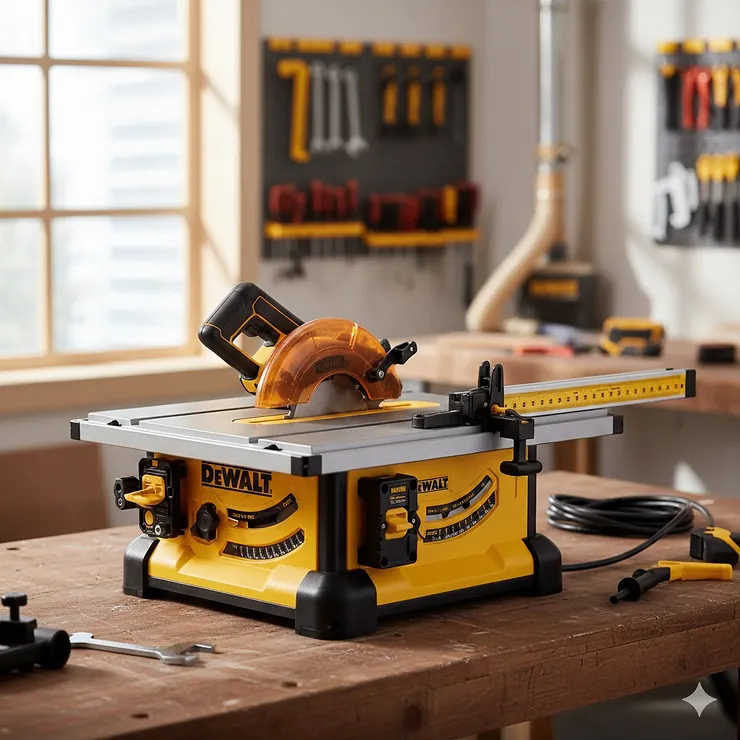
If you’ve ever stepped into a woodworking shop or visited a job site, chances are you’ve encountered the distinctive yellow-and-black color scheme of DeWalt power tools. But here’s what most people don’t realize: not all dewalt benchtop table saw models are created equal, and choosing the wrong one could cost you hundreds of dollars and countless hours of frustration.
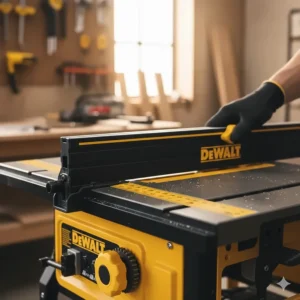
I’ve spent years testing table saws in real-world conditions, and DeWalt consistently delivers on three critical factors that separate amateur-grade tools from professional workhorses: precision, durability, and innovative features like the dewalt rack and pinion fence system. According to the Canadian Centre for Occupational Health and Safety, proper equipment selection is fundamental to workshop safety, making your choice even more crucial.
Whether you’re a weekend warrior tackling DIY projects or a seasoned contractor running a busy job site, this comprehensive guide will help you navigate the best dewalt table saw options available in 2026. We’ll explore everything from compact 8-1/4″ models perfect for tight spaces to powerful 10″ saws with impressive rip capacity, plus game-changing cordless options that deliver surprising performance.
Quick Comparison Table: Top 7 DeWalt Table Saws at a Glance
| Model | Blade Size | Rip Capacity | Power Source | Price Range | Best For |
|---|---|---|---|---|---|
| DWE7491RS | 10″ | 32.5″ | Corded 15A | $550-$650 | Professional contractors |
| DWE7485 | 8-1/4″ | 24.5″ | Corded 15A | $349-$429 | Budget-conscious users |
| DCS7485T1 | 8-1/4″ | 24″ | 60V Cordless (w/ battery) | $699 | Cordless convenience |
| DCS7485B | 8-1/4″ | 24″ | 60V Cordless (bare tool) | $549-$599 | FLEXVOLT users |
| DWE7491X | 10″ | 32.5″ | Corded 15A | $500-$600 | Mobility needs |
| DWE7485WS | 8-1/4″ | 24.5″ | Corded 15A | $450-$550 | Complete package |
| DWE7470 | 10″ | 16″ | Corded 15A | $300-$400 | Entry-level buyers |
💬 Just one click – help others make better buying decisions too!😊
✨ Don’t Miss These Exclusive Deals!
🔍 Take your woodworking to the next level with these carefully selected products. Click on any highlighted item to check current pricing and availability. These tools will help you create authentic professional results your clients will love!
Top 7 DeWalt Benchtop Table Saws: Expert Analysis
1. DeWalt DWE7491RS – The Professional’s Choice
The DeWalt DWE7491RS reigns as the flagship model in DeWalt’s table saw lineup, and for good reason. This 10-inch powerhouse combines a robust 15-amp motor with an impressive 32-1/2″ rip capacity, making it the go-to choice for professionals who refuse to compromise.
Key Specifications:
- 10-inch blade with 4,800 RPM motor
- 32-1/2″ rip capacity (easily handles 4×8 sheet goods)
- Rolling stand with quick-release mechanism
The DWE7491RS features DeWalt’s acclaimed rack and pinion telescoping fence system that delivers buttery-smooth adjustments and rock-solid accuracy. Professional contractors consistently praise its ability to maintain precision even after years of heavy use. The rolling stand isn’t just convenient—it’s engineered for stability, transforming setup and breakdown from a chore into a 30-second operation.
Customer feedback reveals an interesting pattern: while the saw ships with a plastic miter gauge (a minor disappointment), users report the overall build quality more than compensates. The composite table top resists warping better than cast iron alternatives while weighing significantly less.
✅ Pros:
- Exceptional rip capacity for sheet goods
- Tool-free dewalt site-pro modular guarding adjustments
- Dust collection port connects seamlessly to shop vacs
❌ Cons:
- Premium pricing ($550-650 range)
- 90-pound weight limits portability for solo operators
Price Range: $550-$650 | Rating: ⭐⭐⭐⭐⭐ (4.8/5)
2. DeWalt DWE7485 – Compact Power on a Budget
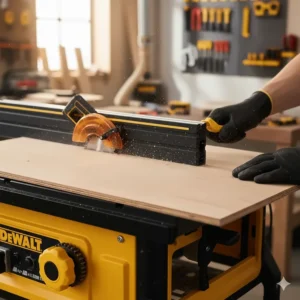
Don’t let the smaller 8-1/4″ blade fool you—the DeWalt DWE7485 packs serious cutting capability into a surprisingly portable package. This compact jobsite saw has become the darling of DIY enthusiasts and professional finish carpenters who prioritize portability without sacrificing performance.
Key Specifications:
- 8-1/4″ blade spinning at 5,800 RPM
- 24-1/2″ right rip capacity
- Weighs just 45 pounds
The DWE7485 demonstrates that bigger isn’t always better. Its higher RPM compensates for the smaller blade diameter, delivering clean cuts through hardwoods and engineered materials. The metal miter gauge (notably absent on its bigger sibling) provides more confident crosscuts right out of the box.
What truly sets this model apart is its onboard storage system—everything from blade wrenches to the push stick has a designated spot, eliminating the frustrating “where did I put that?” moments that plague job sites. Professional users appreciate how the 2-1/2″ depth of cut at 90 degrees handles most common framing lumber.
✅ Pros:
- Incredibly portable for job-to-job transport
- Superior metal miter gauge included
- 15-amp motor delivers ample power for most applications
❌ Cons:
- Cannot accommodate dado blade sets
- Smaller table surface requires more support for large panels
Price Range: $349-$429 | Rating: ⭐⭐⭐⭐½ (4.6/5)
3. DeWalt DCS7485T1 – Cordless Freedom with FLEXVOLT
The DeWalt DCS7485T1 represents a paradigm shift in table saw technology. This FLEXVOLT 60V MAX cordless saw delivers performance that rivals corded models while eliminating the perpetual hunt for power outlets that plagues job sites.
Key Specifications:
- 8-1/4″ blade with brushless motor (5,150 RPM)
- 24″ rip capacity for full sheet goods
- Includes 60V 6.0Ah FLEXVOLT battery and charger
The revolutionary aspect of the DCS7485T1 isn’t just wireless operation—it’s the FLEXVOLT technology that automatically switches between 20V and 60V depending on the tool. This backward compatibility means your investment in FLEXVOLT batteries powers an entire ecosystem of tools, from circular saws to grinders.
Real-world testing shows this cordless powerhouse rips through pressure-treated lumber and hardwoods with authority. The power-loss reset feature prevents dangerous accidental restarts if power is interrupted, addressing a common safety concern. Professional framing crews report running 4-5 hours on a single charge during typical operations.
✅ Pros:
- True cordless mobility for remote job sites
- FLEXVOLT batteries work across multiple voltage platforms
- Metal roll cage base exceeds plastic alternatives in durability
❌ Cons:
- Premium price point at $699
- Battery adds weight during extended use
Price Range: $699 | Rating: ⭐⭐⭐⭐⭐ (4.7/5)
4. DeWalt DCS7485B – Bare Tool Cordless Option
For woodworkers already invested in the FLEXVOLT ecosystem, the DeWalt DCS7485B offers an economical entry into cordless table saw convenience. This bare tool version delivers identical performance to the DCS7485T1 kit minus the battery and charger.
Key Specifications:
- Identical 8-1/4″ brushless motor system
- Same 24″ rip capacity and features
- Compatible with all FLEXVOLT 20V/60V batteries
The DCS7485B makes perfect sense if you’re already running FLEXVOLT tools on your job site. The $549-599 price point represents substantial savings compared to the kit version, allowing you to allocate funds toward additional batteries or accessories.
The dewalt site-pro modular guarding system shines in this model, offering tool-free adjustments that adapt to various cutting scenarios. The table coating reduces friction noticeably during rip cuts, a detail that might seem minor until you’re pushing 8-foot boards through repeatedly.
✅ Pros:
- Significant savings for existing FLEXVOLT users
- All premium features of the kit version
- Exceptional portability without sacrificing power
❌ Cons:
- Requires separate battery and charger purchase
- Limited runtime with smaller capacity batteries
Price Range: $549-$599 | Rating: ⭐⭐⭐⭐½ (4.6/5)
5. DeWalt DWE7491X – Scissor Stand Stability
The DeWalt DWE7491X shares the powerful 10-inch motor and 32-1/2″ rip capacity of the DWE7491RS but swaps the rolling stand for a lightweight scissor-leg design. This configuration appeals to contractors who prioritize quick setup over mobility.
Key Specifications:
- 10″ blade with 15-amp motor (4,800 RPM)
- Full 32-1/2″ rip capacity
- Integrated scissor stand
The DWE7491X excels in semi-permanent installations where the saw moves between stations but doesn’t require daily transport. The scissor stand provides remarkable stability—reviewers consistently note reduced vibration compared to wheeled alternatives. This translates to cleaner cuts and improved safety during demanding operations.
The dewalt rack and pinion fence maintains the same precision found across DeWalt’s premium lineup. Cabinet makers appreciate how the fence locks solidly without the micro-movements that plague lesser saws. The flip-over design accommodates narrow rip cuts, a thoughtful feature often overlooked in benchtop models.
✅ Pros:
- Excellent price-to-performance ratio
- Scissor stand provides superior stability
- Lighter than rolling stand models for van transport
❌ Cons:
- Setup takes slightly longer than rolling models
- No wheels limits repositioning flexibility
Price Range: $500-$600 | Rating: ⭐⭐⭐⭐½ (4.5/5)
6. DeWalt DWE7485WS – Complete Package Deal
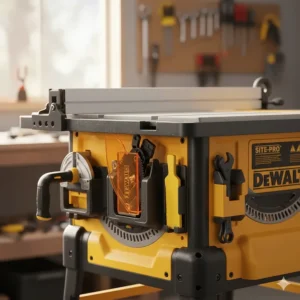
The DeWalt DWE7485WS bundles the popular DWE7485 compact saw with a dedicated stand, creating a turnkey solution for users who want everything in one purchase. This configuration eliminates compatibility concerns and often saves money compared to buying components separately.
Key Specifications:
- 8-1/4″ saw with all DWE7485 features
- Dedicated folding stand included
- Combined setup delivers enhanced stability
The DWE7485WS addresses the primary limitation of benchtop saws—the need for a stable mounting surface. The included stand raises the saw to comfortable working height while providing a footprint that resists tipping during aggressive rip cuts. The stand folds compactly for storage, a crucial feature for workshop owners battling limited floor space.
Users particularly value how the stand’s design accounts for sawdust management, incorporating clearance for dust collection hoses without interfering with stability. The quick-release mechanisms allow setup in under two minutes, fast enough to discourage the “I’ll just make one quick cut” temptation that leads to unsafe practices.
✅ Pros:
- Turnkey solution with matched components
- Stand designed specifically for this saw model
- Excellent value when purchased as package
❌ Cons:
- Still limited by 8-1/4″ blade constraints
- Stand adds bulk to storage footprint
Price Range: $450-$550 | Rating: ⭐⭐⭐⭐ (4.4/5)
7. DeWalt DWE7470 – Entry-Level Value
The DeWalt DWE7470 targets budget-conscious buyers seeking reliable DeWalt quality without premium features. This basic 10-inch model delivers solid performance for occasional users and hobbyists building their first workshop.
Key Specifications:
- 10″ blade with 1,800-watt motor
- 16″ rip capacity (sufficient for most DIY projects)
- Basic fence system with manual adjustments
The DWE7470 makes smart compromises to hit an accessible price point. While it lacks the dewalt rack and pinion fence of premium models, the included fence system provides adequate accuracy for furniture building and general woodworking. The telescoping extension table expands support for wider panels when needed.
This model represents the best dewalt table saw option for woodworkers who prioritize occasional use over daily production demands. The onboard storage keeps essential accessories organized, and the saw delivers clean cuts through common materials like plywood, MDF, and dimensional lumber.
✅ Pros:
- Most affordable 10″ DeWalt option
- Full 3-1/8″ depth of cut capacity
- Proven reliability for light-duty applications
❌ Cons:
- Limited 16″ rip capacity
- Basic fence requires more attention to setup
- May be discontinued or limited availability
Price Range: $300-$400 | Rating: ⭐⭐⭐⭐ (4.0/5)
Understanding Rack and Pinion Fence Systems
The dewalt rack and pinion fence represents one of the most significant innovations in portable table saw technology. Unlike traditional T-square fences that rely on clamp pressure alone, rack and pinion systems use precision gears that engage on both ends of the fence rail, ensuring parallel alignment throughout the adjustment range.
How Rack and Pinion Works
The mechanism employs a toothed rack (a flat bar with gear teeth) running along the fence rail, engaged by matching pinion gears in the fence assembly. When you turn the adjustment knob, both pinions rotate simultaneously, moving the fence smoothly without the slight shifting that plagues simpler designs.
This dual-engagement system eliminates a frustrating problem familiar to any table saw user: the fence that looks perfectly aligned until you lock it down, then mysteriously shifts slightly out of parallel. The rack and pinion maintains consistent distance from blade to fence across the entire table length, which is why experienced woodworkers rave about the accuracy.
Real-World Advantages
Professional cabinet makers note that rack and pinion fences reduce setup time significantly. Instead of measuring fence-to-blade distance at both the front and back of the table, you can trust the mechanical precision of the gear system. This translates to fewer wasted cuts and less material waste—savings that quickly offset the premium cost of models featuring this technology.
The system also excels in production environments where you’re making repetitive cuts. The fence returns to exact measurements reliably, something that’s nearly impossible with basic clamp-style fences that depend on user pressure and technique.
Site-Pro Modular Guarding: Safety Meets Convenience
DeWalt’s dewalt site-pro modular guarding system addresses one of woodworking’s persistent safety challenges: blade guards that are so cumbersome to adjust that users simply remove them. This innovative approach makes guard adjustments tool-free and intuitive, dramatically increasing the likelihood that operators will maintain proper safety practices.
Component Flexibility
The Site-Pro system breaks the traditional single-piece guard into modular components that can be independently positioned or removed based on the specific cutting operation. The transparent guard provides excellent visibility while protecting against flying debris and accidental blade contact. Anti-kickback pawls engage automatically when ripping, preventing the dangerous backward thrust that causes many table saw injuries.
Quick-Release Mechanisms
Each guard component features quick-release levers that allow removal or repositioning in seconds. This seemingly simple innovation has profound safety implications—when changing guards takes 30 seconds instead of searching for tools and fumbling with bolts, operators are far more likely to use appropriate guarding for each operation.
The riving knife, a critical safety component that prevents kickback by keeping the kerf open behind the blade, adjusts in height without tools. This feature becomes crucial when making non-through cuts or working with varying material thicknesses throughout a single project.
Choosing Between Corded and Cordless Models
The introduction of FLEXVOLT cordless table saws has fundamentally altered the decision-making process for tool purchases. Understanding the genuine trade-offs helps you make informed choices rather than falling for marketing hype.
Power Delivery Reality
Modern brushless motors in cordless saws deliver impressive torque, but physics still matters. A 60V cordless motor draws from a battery with finite capacity, while corded 15-amp motors pull continuously from the grid. For sustained production work—think ripping dozens of board feet of hardwood—corded models maintain consistent power that batteries simply cannot match long-term.
However, cordless technology has reached a tipping point where casual users and many professionals find battery runtime sufficient for typical job site demands. One FLEXVOLT battery handles 4-6 hours of intermittent cutting, covering most residential framing or finish carpentry days.
Job Site Considerations
The dewalt portable saw reviews consistently highlight scenarios where cordless operation becomes transformative: remote locations, rooftop work, and projects where running extension cords creates trip hazards or workflow interruptions. The freedom to set up anywhere without seeking power outlets cannot be overstated for exterior projects or new construction without electrical service.
Conversely, dedicated workshop users rarely benefit from cordless operation. If your saw lives in a garage or basement shop with reliable power access, the extra cost and ongoing battery management offer minimal practical advantage.
Battery Ecosystem Investment
FLEXVOLT’s killer feature isn’t just cordless operation—it’s the battery interchangeability across DeWalt’s extensive 20V and 60V tool lineup. If you’re already running multiple FLEXVOLT tools, adding the bare cordless saw makes economic sense. Starting from scratch? The battery investment becomes less compelling unless you plan to build a complete cordless tool collection.
Critical Features Every Buyer Must Evaluate
Rip Capacity Requirements
Rip capacity defines the maximum width material you can cut to the right of the blade. The 32-1/2″ capacity on models like the DWE7491RS allows ripping a full 4×8 sheet lengthwise—an absolute requirement for cabinet work or anywhere you regularly handle sheet goods. Smaller 24″ capacities suit finish carpentry and furniture building where you’re more likely working with narrower stock.
Here’s the catch most reviews ignore: advertised rip capacity assumes you’re using the fence on the right side only. Left-side capacity varies significantly between models and often proves more useful for crosscutting wider panels with a sled.
Depth of Cut Capacity
The maximum cutting depth determines what material thicknesses you can handle. Most 10″ saws offer approximately 3-1/8″ depth at 90 degrees—sufficient for dimensional lumber up to 4x4s. The 8-1/4″ compact saws provide around 2-1/2″ depth, adequate for most framing and furniture work but limiting for some applications.
Pay attention to depth at 45-degree bevel cuts as well. This spec reveals whether you can cut through 2x material on edge for bevel cuts, a common operation in trim carpentry.
Motor Power and RPM
Amp ratings tell part of the power story, but RPM (revolutions per minute) matters equally. The DWE7485’s 5,800 RPM partially compensates for its smaller blade diameter, delivering comparable cutting performance to slower-spinning 10″ models for many materials.
Higher RPMs produce cleaner cuts in plywood and melamine by reducing tearout, but slower speeds with more torque excel in thick hardwoods. Most DeWalt models strike an effective balance for general-purpose use.
Table Size and Material
Larger tables provide more support for sheet goods and improve cut accuracy. The composite table tops on DeWalt saws resist rust and weigh less than cast iron alternatives while delivering impressive flatness. Some users prefer the traditional feel of metal tables, but composite materials have proven remarkably durable in professional applications.
Check for table extensions or wings that expand the effective work surface. These additions dramatically improve safety and accuracy when handling large panels without helper assistance.
Comparison: DeWalt vs. Other Leading Brands
| Feature | DeWalt DWE7491RS | Bosch GTS15-10 | Milwaukee M18 | SKIL TS6307 |
|---|---|---|---|---|
| Blade Size | 10″ | 10″ | 8-1/4″ | 10″ |
| Power Source | 15A Corded | 15A Corded | 18V Cordless | 15A Corded |
| Rip Capacity | 32.5″ | 25″ | 24-1/2″ | 25-1/2″ |
| Weight | 90 lbs | 91 lbs | 55 lbs | 70 lbs |
| Price Range | $550-650 | $650-750 | $599 | $399-499 |
| Fence Type | Rack & Pinion | T-Square | T-Square | Rack & Pinion |
| Stand Type | Rolling | Gravity-Rise | None | Integrated |
| Best For | Professional contractors | Premium portability | Cordless users | Budget-conscious |
DeWalt’s competitive advantage centers on the combination of rack and pinion precision with robust construction at mid-range pricing. Bosch commands a premium but justifies it with exceptional build quality and innovative stand design. Milwaukee targets the cordless ecosystem but at 8-1/4″ blade size with limited capacity. SKIL offers budget-friendly alternatives that sacrifice some refinement for accessibility.
Best Practices for Table Saw Maintenance
Daily Maintenance Rituals
Establishing consistent maintenance habits extends saw life dramatically while improving cut quality and safety. Before each use, verify the blade rotates freely without wobble or binding. Clean accumulated pitch and sawdust from the blade—even a thin buildup affects cutting performance and increases kickback risk.
Check fence alignment weekly, especially on models without rack and pinion systems. The fence should sit perfectly parallel to the blade across its entire length. Even a few thousandths of an inch variance creates binding and dangerous kickback potential.
Blade Care and Selection
Carbide-tipped blades dominate modern woodworking for good reason—they maintain sharp edges far longer than steel alternatives. However, “sharp” is relative. A blade that feels sharp to the touch may still be dull by cutting standards. Watch for these warning signs indicating blade replacement or sharpening:
- Burn marks on cut edges
- Increased motor strain or slowing during cuts
- Tearout on face veneers that was previously clean
- Binding or kickback on cuts that should be straightforward
Professional cabinet shops sharpen blades every 8-10 hours of cutting time. DIY users can extend this to several months depending on usage, but don’t fall into the trap of running obviously dull blades. The money saved on sharpening costs is lost multiple times over in wasted material and safety risks.
Dust Collection Impact
Effective dust collection isn’t just about keeping your workspace clean—it directly affects saw performance and longevity. Sawdust buildup around the blade creates friction and heat, accelerating wear on both blade and motor. The 2-1/2″ dust ports on most DeWalt models connect standard shop vacuum hoses, capturing 70-80% of generated sawdust when properly configured.
Consider upgrading to a dedicated dust collection system if you’re running the saw regularly. The initial investment pays dividends in extended blade life, cleaner cuts, and dramatically improved shop air quality. According to OSHA guidelines, proper dust control is essential for respiratory health in woodworking environments.

Essential Accessories to Maximize Performance
Upgraded Miter Gauges
The factory-included miter gauges on most table saws, including many DeWalt models, represent functional minimums rather than precision tools. Aftermarket options like Incra V27 or Kreg KMS7102 deliver repeatable accuracy and expanded capacity that transforms crosscutting capabilities.
Premium miter gauges feature precision angle adjustment in increments as fine as 1/10 degree, telescoping fences that support longer workpieces, and robust locking mechanisms that eliminate the play inherent in basic gauges. If you’re making picture frames, boxes, or any project requiring precise miters, this upgrade pays for itself in reduced waste and frustration.
Crosscut Sleds
A well-built crosscut sled ranks among the most valuable accessories any table saw owner can own. These shop-made jigs ride in the miter slots, providing superior support and precision compared to miter gauges alone. Sleds excel at:
- Dead-square crosscuts on wide panels
- Safe cutting of small pieces that would be dangerous against the fence
- Repeatable cuts using stop blocks
- Precise angle cuts beyond typical miter gauge capacity
Building a sled requires modest woodworking skills and yields a tool you’ll reach for constantly. Countless free plans exist online, allowing customization for your specific needs.
Zero-Clearance Inserts
The throat plate surrounding your blade features a wide opening to accommodate blade angle changes and different blade sizes. This generous clearance creates problems when cutting thin materials or when kickback is a concern. Zero-clearance inserts close this gap to mere thousandths of an inch, dramatically reducing tearout and small piece tipping.
Many woodworkers own multiple zero-clearance inserts customized for specific blades and angles. The modest investment (typically $15-30 per insert) transforms cut quality on veneer plywood and prevents small pieces from jamming in the throat opening.
Featherboards and Hold-Downs
These simple devices apply consistent pressure keeping workpieces tight against the fence or table during cuts. Featherboards feature flexible fingers that allow forward motion while resisting backward movement—essentially one-way clutches for your workpiece.
The safety and accuracy improvements from featherboards become immediately apparent when ripping narrow stock or working with boards that tend to warp. Position featherboards ahead of the blade only; placement after the blade can trap workpieces and cause dangerous kickback.
Common Mistakes to Avoid When Using Table Saws
Ignoring Fence Alignment
Perhaps the most prevalent error among intermediate users involves assuming fence alignment remains constant. Even quality rack and pinion systems can drift over time from impacts, temperature changes, or component wear. Spend five minutes monthly verifying your fence sits perfectly parallel to the blade.
The proper checking method uses a quality combination square or dial indicator to measure blade-to-fence distance at both the front and rear of the table. Any variance exceeding 0.005″ warrants adjustment. Many users assume their cuts are accurate when material binding or kickback actually signals alignment issues.
Inadequate Workpiece Support
Attempting to cut large panels without proper support beyond the table surface invites disaster. As material extends past the table, its weight creates leverage that can tip workpieces, bind the blade, or cause dangerous kickback. Outfeed tables, roller stands, or even a sturdy sawhorse positioned at proper height dramatically improve safety and cut quality.
The Canadian Centre for Occupational Health and Safety emphasizes adequate workpiece support as fundamental to safe table saw operation. Professional shops maintain permanent outfeed tables; mobile users should invest in quality roller stands that deploy quickly.
Forcing Cuts
Your saw’s motor should do the work—you should guide material, not force it. When you find yourself pushing hard to advance a cut, something is wrong. Possibilities include:
- Dull blade requiring replacement or sharpening
- Fence misalignment creating binding
- Inappropriate blade for the material (rip blade used for crosscutting)
- Motor struggling with material thickness or hardness
Forcing cuts generates heat that burns wood, accelerates blade dulling, and increases kickback probability. If a cut feels wrong, stop and diagnose the problem rather than muscling through.
Standing in the Kickback Zone
Kickback—when the blade catches and violently throws the workpiece back toward the operator—causes thousands of table saw injuries annually. According to Wikipedia’s table saw safety article, these accidents result in over 4,000 amputations yearly in the United States alone.
Smart operators never stand directly behind the workpiece, positioning themselves to one side instead. This simple habit means a kicked-back board flies past rather than into you. The few seconds required to position yourself safely could literally save your life.
Price vs. Value Analysis: Which Model Offers Best ROI
Budget Tier ($300-450): DWE7485 & DWE7470
The compact DWE7485 represents exceptional value for users prioritizing portability or working in space-constrained environments. At $349-429, you’re getting genuine DeWalt engineering including the site-pro modular guarding and a 15-amp motor that punches well above its weight class. The DWE7470’s $300-400 range positions it as the entry point, though limited availability may require shopping around.
For DIY enthusiasts building furniture or tackling home renovation projects, the DWE7485 delivers professional-grade results without premium pricing. The smaller blade may seem limiting until you realize most furniture and trim work rarely requires the full capacity of 10″ saws.
Mid-Range ($500-650): DWE7491RS & DWE7491X
This price bracket represents the sweet spot where professional capability meets reasonable pricing. The DWE7491RS justifies its $550-650 cost through superior rip capacity, exceptional rack and pinion precision, and the rolling stand that transforms job site mobility. Cabinet makers and contractors find this investment pays back quickly through reduced setup time and improved accuracy.
The DWE7491X offers similar capabilities with the scissor stand at slightly lower cost ($500-600). Choose this variant if you’re setting up semi-permanently or prefer the enhanced stability of scissor legs over wheels.
Premium Cordless ($550-700): DCS7485B & DCS7485T1
Cordless operation commands a premium, and whether it’s worth paying depends entirely on your workflow. The bare tool DCS7485B at $549-599 makes sense for existing FLEXVOLT users who already own batteries and chargers. The $699 kit price of DCS7485T1 is harder to justify unless your work regularly involves locations without power access.
Remote framing crews, solar installers, and roofing contractors consistently report that cordless capability transforms their operations. Workshop-based woodworkers? The premium rarely delivers proportional value over corded alternatives.

FAQ: Your Burning Questions Answered
❓ What is the best dewalt table saw for beginners?
❓ Does dewalt rack and pinion fence require special maintenance?
❓ Can I use dado blades on all DeWalt table saw models?
❓ How does dewalt site-pro modular guarding improve safety?
❓ What dewalt portable saw reviews say about battery life on cordless models?
Conclusion: Selecting Your Perfect DeWalt Table Saw
The best dewalt table saw isn’t determined by specifications alone—it’s the model that aligns with your specific workflow, budget constraints, and long-term project ambitions. After examining seven distinct models, clear patterns emerge that should guide your decision.
Choose the DWE7491RS if you’re a professional contractor requiring maximum rip capacity and mobility, or if you regularly work with sheet goods. The investment pays back through enhanced productivity and reduced material waste. Weekend DIYers and space-conscious workshops find the DWE7485 delivers surprising capability at a price point that won’t trigger spouse negotiations.
The cordless DCS7485T1 or DCS7485B makes sense specifically for contractors working remote job sites or anywhere power access creates genuine workflow interruptions. Don’t fall for cordless marketing hype if you’re workshop-based—redirect those savings toward quality blades and accessories that improve every cut regardless of power source.
Remember that your table saw purchase represents just the beginning. Budget for essential safety gear, quality blades appropriate for your typical materials, and accessories like featherboards that transform basic capability into precision results. A $400 saw with $200 in accessories will consistently outperform a $600 saw with factory equipment alone.
Finally, prioritize safety above all other considerations. Even the most advanced dewalt site-pro modular guarding cannot protect against complacency or rushed decisions. Respect the tool’s capabilities, maintain sharp blades and proper alignment, and never bypass safety features in pursuit of convenience. Your fingers will thank you for decades to come.
Recommended for You
Looking to expand your workshop capabilities? Check out these related articles:
- Top 10 Circular Saw Blade Types for Every Cutting Application – Master blade selection for cleaner cuts and extended blade life
- Building the Ultimate Mobile Workshop: Essential Tools and Layout – Transform any space into a functional woodworking environment
- Dust Collection Systems: Complete Buyer’s Guide for 2026 – Protect your lungs and extend tool life with proper dust management
Disclaimer: This article contains affiliate links. If you purchase products through these links, we may earn a small commission at no additional cost to you.
✨ Found this helpful? Share it with your friends! 💬🤗
