
In This Article
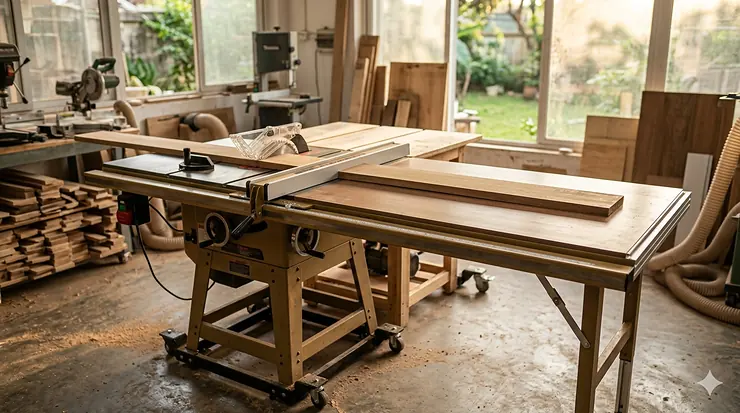
Picture this: you’re halfway through ripping a 4×8 sheet of plywood when the unsupported end starts to tip, your fence goes out of square, and you’re fighting to keep everything level. I’ve been there, and it’s not fun. A contractor table saw with extension table changes everything.
After testing dozens of saws over the past decade in my workshop, I’ve learned that workspace extension isn’t just a luxury—it’s essential for anyone tackling large panel cutting projects. Whether you’re a weekend warrior building cabinets or a contractor handling sheet goods daily, the right saw with proper outfeed support options can transform frustrating cuts into smooth, confident operations.
The sweet spot? A contractor saw that balances power, precision, and expandable contractor saw capabilities without the cabinet saw price tag. These machines offer the large rip capacity contractor professionals demand while remaining mobile enough for job sites. Today’s contractor saw with wings delivers performance that would have cost twice as much just five years ago.
Quick Comparison Table
| Model | Motor Power | Rip Capacity | Extension Type | Price Range | Best For |
|---|---|---|---|---|---|
| DEWALT DWE7491RS | 15 Amp | 32.5″ | Steel Wings | $600-$700 | Jobsite Mobility |
| SawStop CNS175-TGP36 | 1.75 HP | 36″ (52″ option) | Cast Iron Available | $2,000-$2,600 | Safety First |
| Delta 36-5152T2 | 15 Amp | 52″ | Cast Iron Wings | $1,500-$2,000 | Budget Cabinet Quality |
| Powermatic PM1000 | 1.75 HP | 30″ (52″ option) | Cast Iron | $2,900-$3,300 | Precision Work |
| Grizzly G0715P | 2 HP | 33″ | Cast Iron Wings | $900-$1,200 | Hybrid Performance |
| Shop Fox W1820 | 3 HP | 50″ | Extension Table | $1,800-$2,400 | Production Capacity |
| RIDGID R4520 | 13 Amp | 30″ | Steel Extensions | $650-$800 | Value Performance |
💬 Just one click – help others make better buying decisions too! 😊
Top 7 Contractor Table Saw with Extension Table: Expert Analysis
1. DEWALT DWE7491RS – Best Portable Contractor Saw
The DEWALT DWE7491RS dominates job sites for good reason. This 15 Amp beast delivers 32.5 inches of rip capacity through its telescoping fence system, making it the ultimate workspace extension solution for contractors on the move.
Key Specifications:
- 15 Amp motor with 4,800 RPM
- 32.5″ right rip, 24″ left capacity
- Rolling stand included
- 2.5″ dust collection port
What sets the DEWALT DWE7491RS apart is its rack-and-pinion fence system that stays square even after hundreds of job site transports. The flip-over fence design handles narrow rips beautifully—a feature you’ll use more than you think. At 110 pounds, it’s hefty enough for stability but manageable with the included rolling stand.
Customer feedback consistently praises its accuracy and the generous table surface created by the extension wings. One cabinetmaker told me it handled full sheets of plywood “like butter” after minimal setup adjustments.
✅ Pros:
- Industry-leading 32.5″ large rip capacity contractor design
- Rolling stand provides excellent jobsite mobility
- Integrated onboard storage keeps accessories organized
❌ Cons:
- Composite table top scratches easier than cast iron
- Miter gauge feels lightweight for precision work
Price Range: $600-$700
2. SawStop CNS175-TGP36 – Revolutionary Safety Technology
The SawStop CNS175-TGP36 isn’t just a contractor table saw with extension table—it’s insurance for your fingers. The patented flesh-detection system stops the blade in less than 5 milliseconds upon contact, turning potential amputations into minor nicks.
Key Specifications:
- 1.75 HP motor (convertible to 220V)
- 36″ T-Glide fence (52″ option available)
- Cast iron wing assembly sold separately
- True riving knife system
Beyond safety, the SawStop CNS175-TGP36 delivers precision that rivals cabinet saws costing twice as much. The T-Glide fence glides smoothly and locks down without deflection—critical for large panel cutting accuracy. The cast iron table stays flat within 0.010″ diagonal tolerance, and the trunnion system maintains blade alignment through years of heavy use.
According to Wikipedia’s documentation on SawStop technology, the system uses an electrical signal that detects skin contact in under 25 microseconds, triggering an aluminum brake that stops the blade before serious injury occurs. Professional woodworkers appreciate the modular design that allows customization as needs grow.
✅ Pros:
- Unmatched safety technology prevents catastrophic injuries
- 52″ fence option provides expandable contractor saw capacity
- Precision-ground cast iron table for superior flatness
❌ Cons:
- Premium price point requires significant investment
- Replacement brake cartridges add operational cost
Price Range: $2,000-$2,600
3. Delta 36-5152T2 – Budget Cabinet Saw Performance
The Delta 36-5152T2 proves you don’t need a cabinet saw budget to get cabinet saw results. This belt-driven workhorse delivers 52 inches of rip capacity through its cast iron extension wings—all while running on standard 120V power.
Key Specifications:
- 15 Amp induction motor
- 52″ rip capacity right, 15″ left
- Cast iron table and extension wings
- Belt-driven for reduced vibration
The Delta 36-5152T2 shines in its ability to handle full sheets without breaking a sweat. The Biesemeyer-style fence system locks solidly, and the belt drive keeps vibration minimal even during heavy rip cuts. At 294 pounds, it’s substantial enough to dampen chatter but can still be moved with the integrated wheel system.
Woodworkers consistently praise how the cast extensions stay coplanar with the main table—no shims needed. The dust collection through the 2.5″ port captures about 80% of sawdust when connected to a proper shop vacuum, keeping your workspace cleaner than typical contractor saws.
✅ Pros:
- True 52″ large rip capacity contractor design
- Cast iron construction throughout for stability
- Belt drive reduces vibration significantly
❌ Cons:
- Assembly requires 3-4 hours and helper
- 294 pounds makes jobsite transport impractical
Price Range: $1,500-$2,000
4. Powermatic PM1000 – Precision at Its Finest
The Powermatic PM1000 represents the pinnacle of 115V contractor table saw with extension table performance. Every detail screams precision, from the precision-ground cast iron top to the silky-smooth Accu-Fence system.
Key Specifications:
- 1.75 HP motor (115V/230V convertible)
- 30″ Accu-Fence (52″ optional)
- Poly-V belt drive system
- Hand wheels with momentum design
What justifies the Powermatic PM1000 premium? Tolerances. The table flatness measures within 0.005″ across the entire surface—tighter than many cabinet saws. The arbor runs true without play, and the trunnion system maintains blade-to-miter-slot alignment indefinitely. These aren’t marketing claims; they’re measurable realities that translate to cleaner cuts and less time fiddling with adjustments.
The Accu-Fence deserves special mention. It glides on precision-machined rails and locks down with authority. Micro-adjustments? Easy. Returning to exact measurements after removing the fence? Repeatable to within 0.002 inches. For furniture makers and finish carpenters, this accuracy eliminates the “good enough” compromises typical of contractor saws.
✅ Pros:
- Exceptional build quality rivals cabinet saws
- Available 52″ fence provides workspace extension flexibility
- Runs on standard 115V for easy shop integration
❌ Cons:
- Premium pricing approaches entry cabinet saws
- Heavy footprint requires dedicated floor space
Price Range: $2,900-$3,300
5. Grizzly G0715P – Hybrid Power Champion
The Grizzly G0715P Polar Bear Series bridges contractor and cabinet saw categories beautifully. This 2 HP hybrid delivers cabinet-grade dust collection and power while maintaining contractor saw portability and value.
Key Specifications:
- 2 HP motor, 220V
- 33″ rip capacity
- Cast iron table and wings (40″ width total)
- Enclosed cabinet base
The Grizzly G0715P standout feature is its enclosed cabinet that captures sawdust far more effectively than open-base contractor saws—around 85-90% collection efficiency when properly ducted. The 2 HP motor cuts through hardwoods without bogging, and the serpentine belt drive keeps vibration minimal.
According to research on hybrid table saw designs, enclosed bases significantly improve dust collection by containing chips within the cabinet structure rather than allowing them to disperse throughout the workshop. At 393 pounds, it’s stable without being immovable.
Customer feedback highlights two points: assembly takes patience (plan 4-5 hours), and you’ll need help positioning the main table. But once set up, users report years of trouble-free service with minimal maintenance.
✅ Pros:
- 2 HP power handles dense hardwoods easily
- Superior dust collection from enclosed base
- Cast iron construction throughout
❌ Cons:
- Requires 220V electrical service
- 393 pounds complicates shop repositioning
Price Range: $900-$1,200
6. Shop Fox W1820 – Production Workhorse
The Shop Fox W1820 takes outfeed support options seriously with its integrated 50-inch rip capacity and extension table. This 3 HP cabinet saw disguised as a contractor price delivers professional-grade performance for small shops.
Key Specifications:
- 3 HP Leeson motor
- 50″ rip capacity with extension table
- Triple belt drive system
- Cast iron table, wings, and trunnions
The Shop Fox W1820 doesn’t mess around. The 3 HP motor cuts through anything you feed it, and the triple belt drive system ensures smooth, vibration-free operation even under load. The extension table provides stable support for full sheets, with adjustable legs that let you dial in perfect coplanarity.
The cam-lock T-fence system feels substantial—it should, as it’s designed for production environments. Lock it down anywhere on the 50-inch capacity, and it stays put through aggressive rip cuts. The 4-inch dust port connects to shop dust collection systems for comprehensive chip removal.
✅ Pros:
- Professional 3 HP power for production work
- True 50″ expandable contractor saw capacity
- Cast iron throughout for maximum stability
❌ Cons:
- 539 pounds requires permanent installation
- 220V required, may need electrical upgrade
Price Range: $1,800-$2,400
7. RIDGID R4520 – Best Value Hybrid
The RIDGID R4520 delivers impressive features at an entry-level price point. This hybrid design combines contractor portability with cabinet-style dust collection, backed by RIDGID’s lifetime service agreement.
Key Specifications:
- 13 Amp TEFC induction motor
- 30″ rip capacity
- Cast iron table with steel extensions
- Integrated mobile base with pedal casters
The RIDGID R4520 smart money choice gets you cast iron accuracy without the cabinet saw investment. The milled and polished table stays flat, the T-square fence locks reliably, and the integrated mobile base makes shop reorganization effortless. Touch the pedal, roll it into position, release—done.
The 4-inch dust port captures more sawdust than typical contractor saws, and the blade brake stops the blade quickly for safer operation. At 232 pounds, it’s hefty enough for stability without becoming a permanent fixture.
✅ Pros:
- Lifetime service agreement adds long-term value
- Integrated mobile base simplifies movement
- Cast iron table at contractor saw price
❌ Cons:
- Fence occasionally requires realignment
- Customer service can be slow to respond
Price Range: $650-$800
Understanding Contractor Table Saw with Extension Table Options
A contractor table saw with extension table represents the sweet spot between portability and performance. But what exactly defines this category, and why does workspace extension matter so much?
What Makes a Contractor Saw?
According to Wikipedia’s comprehensive table saw guide, contractor saws were originally designed to be somewhat portable, often having wheels, and were frequently brought to job sites before benchtop models dominated the portable market. Today’s contractor saws typically feature:
- Power: 1.5-2 HP motors running on 120V or convertible 120V/240V
- Weight: 200-400 pounds—heavy enough for stability, light enough to relocate
- Open base design: Motor hangs off the rear for simpler construction
- Rip capacity: Usually 24-52 inches with proper extensions
- Table size: Larger than benchtop saws, smaller than cabinet saws
The Extension Table Advantage
Why invest in a contractor saw with wings or extension capabilities? Three reasons drive this decision:
1. Large Panel Cutting Capability Full sheets of plywood measure 48 x 96 inches. To safely rip these panels, you need at least 24 inches of capacity to reach the center—preferably more. Extension tables provide the critical support that prevents binding, keeps cuts square, and protects your investment in quality materials.
2. Safety Through Support According to OSHA’s woodworking machinery guidelines, properly supporting all pieces of stock, including cut and uncut ends, scrap, and finished product is essential for safe operation. Extension tables eliminate the dangerous situation where large panels tip or bind mid-cut, significantly reducing kickback risk.
3. Workflow Efficiency Outfeed support options mean you can work alone on projects that would otherwise require a helper. The extension table catches the workpiece as it exits the blade, maintaining even pressure throughout the cut. This translates to cleaner cuts, less waste, and faster project completion.
How to Choose the Right Contractor Table Saw with Extension Table
Selecting your ideal saw requires balancing multiple factors. Here’s how to make a decision you won’t regret.
Assess Your Rip Capacity Needs
Start with your typical projects. Building cabinets regularly? You need genuine 30-inch capacity minimum—ideally 36-52 inches. Occasional plywood cutting? A 24-30 inch large rip capacity contractor design might suffice.
Don’t forget to measure your workshop. A saw with 52-inch capacity needs roughly 60 inches of clearance on the right side, plus approach space. Measure twice, buy once.
Motor Power vs. Electrical Requirements
Motor power directly impacts cutting capability, but electrical requirements limit options:
- 15 Amp / 120V motors: Run on standard outlets, typically 1.5-2 HP. Adequate for most hardwoods but may bog in thick oak or maple.
- 1.75-2 HP / 120V/240V convertible: Best flexibility—start on 120V, upgrade to 240V later for improved performance.
- 2-3 HP / 240V only: Professional power but requires dedicated 240V circuit installation ($300-$800 for electrician).
Extension Types Matter
Not all extensions deliver equal performance:
Cast Iron Extensions Heavy, stable, and coplanar with the main table. They dampen vibration and provide a premium work surface but add significant weight. Best for stationary installations where precision matters.
Steel/Aluminum Extensions Lighter and more affordable but may flex under heavy sheet goods. Adequate for occasional use but not ideal for production environments. Look for reinforced designs with proper support structures.
Bolt-On Extension Tables Separate extension tables offer maximum flexibility. Position them exactly where needed, add router table capability, or remove them for compact storage. Ensure proper leg support to prevent sagging.
Fence Systems: The Unsung Hero
Your fence determines accuracy more than any other component. Quality contractor saw with wings designs feature:
- T-square or Biesemeyer-style fences: Lock parallel to the blade without deflection
- Micro-adjust capability: Make precise adjustments without unlocking
- Positive stops: Rapid return to common measurements
- Full-length rails: Support the fence across the entire rip capacity
Avoid saws with stamped steel fences that flex or require constant adjustment. The fence is where cheap saws reveal themselves.
Dust Collection Capabilities
Sawdust isn’t just messy—it’s a health hazard. Proper dust collection significantly improves air quality and reduces respiratory hazards in workshop environments.
Look for:
- 4-inch dust ports: Minimum for effective collection; larger is better
- Enclosed bases: Cabinet-style designs collect 85-95% of dust vs. 50-60% for open bases
- Shrouded blade guards: Capture dust at the source before it disperses
Plan to connect a shop vacuum (minimum 6.5 HP) or dust collector (400+ CFM) for best results.
Essential Safety Features for Contractor Table Saws
Safety isn’t optional—it’s paramount. Modern contractor table saws include critical protective features that prevent the 30,000+ annual table saw injuries reported in the United States.
Riving Knife vs. Splitter
A riving knife moves with the blade height and tilt, maintaining proper distance to prevent binding. Older splitters remain fixed, creating gaps that allow binding when the blade is lowered. Always choose saws with true riving knife systems—they’re far more effective at preventing kickback.
Blade Guards and Anti-Kickback Pawls
According to OSHA regulation 1926.304 on woodworking tools, each circular hand-fed ripsaw must be guarded by a hood which completely encloses the saw above the table. Modern guards use transparent materials for visibility while protecting operators from blade contact and deflecting chips away from the face.
Anti-kickback pawls grip the workpiece if the blade tries to throw it backward, preventing the violent kickbacks that cause serious injuries. These simple devices have saved countless hands.
Flesh-Detection Technology
SawStop’s patented system represents the pinnacle of table saw safety. When skin contacts the blade, an electrical signal triggers an aluminum brake that stops the blade in under 5 milliseconds while simultaneously dropping it below the table. The result? A minor nick instead of an amputation.
While currently premium-priced, flesh-detection technology is becoming more accessible. For professional woodworkers or anyone working around children, this feature alone justifies the investment.
Magnetic Switches and Blade Brakes
Magnetic switches prevent accidental restarts after power outages—a critical safety feature often overlooked. Electric blade brakes stop blade rotation within seconds rather than minutes, reducing injury risk when changing blades or making adjustments.
Maximizing Your Contractor Table Saw with Extension Table
Ownership extends beyond the purchase. Here’s how to optimize performance and longevity.
Initial Setup and Calibration
Dedicate a full day to proper setup:
- Level the saw: Use a precision level across multiple orientations. Shim as needed for perfect level—this affects everything else.
- Align the blade: The blade must run parallel to the miter slots within 0.003 inches. Loosen the trunnion bolts and tap the mechanism square.
- Square the fence: Lock the fence at various positions and measure blade-to-fence distance at front and rear. Adjust the fence guide rails until measurements match perfectly.
- Flatten extension wings: Cast iron wings should be coplanar with the main table. Use a long straightedge to identify high spots, then shim mounting points as needed.
- Install zero-clearance inserts: Replace the factory throat plate with a zero-clearance insert for cleaner cuts and reduced tearout.
Essential Accessories for Large Panel Cutting
Expand your saw’s capabilities with these additions:
Outfeed Tables Commercial or shop-built outfeed tables support workpieces as they exit the blade. Position at exact blade height and ensure sufficient length for your longest cuts.
Mobile Bases For stationary saws, mobile bases enable easy repositioning for dust collection, blade changes, or shop reorganization. Look for models with foot-pedal activation for convenience.
Featherboards and Push Sticks Featherboards maintain consistent pressure against the fence while allowing forward movement. Push sticks keep fingers away from the blade during the critical end-of-cut moment. Both are essential safety tools.
Dado Blade Sets Quality dado sets expand your contractor table saw with extension table into a joinery powerhouse. Look for 8-inch sets with shims for precise width adjustment.
Maintenance Schedule for Long-Term Performance
Preventive maintenance prevents expensive repairs:
Weekly:
- Wipe table surfaces clean and apply paste wax
- Inspect blade for damaged teeth
- Verify fence alignment
Monthly:
- Check drive belt tension and condition
- Lubricate trunnion gears and elevation mechanisms
- Verify blade-to-miter-slot alignment
Annually:
- Deep clean the interior and inspect for sawdust buildup
- Replace drive belts showing cracks or glazing
- Verify all mounting bolts remain tight
- Clean and lubricate arbor threads
Common Mistakes to Avoid
Learn from others’ expensive errors:
Underestimating Electrical Requirements
Running a 15 Amp saw on a 15 Amp circuit with other tools creates nuisance tripping. Dedicated 20 Amp circuits prevent this frustration. Attempting to run 240V saws on inadequate wiring risks fire hazards—hire a licensed electrician.
Neglecting Dust Collection
Sawdust accumulation inside the cabinet causes multiple problems: reduced motor cooling leading to premature failure, interference with trunnion movement affecting adjustments, and respiratory health issues. Connect proper dust collection from day one.
Buying Too Small
Regret over insufficient rip capacity is common. If you think you might need 36 inches, buy 50 inches. The price difference is minimal compared to the frustration of inadequate capacity. Large panel cutting requires proper workspace extension—don’t compromise.
Skipping the Mobile Base
Future-you will thank present-you for the mobile base investment. Workshops evolve, dust collection requires repositioning, and blade changes are easier with saw access. Stationary installations become regrets.
Using Wrong Blades
Quality blades transform saw performance. Thin-kerf blades reduce motor strain, combination blades handle most cuts adequately, and specialty blades excel at specific tasks. The $80 premium blade delivers $800 worth of better cuts.
❓ Frequently Asked Questions
❓ What rip capacity do I need for cutting plywood sheets?
❓ Can I add extension wings to any contractor table saw?
❓ How much space do I need for a 52 inch rip capacity saw?
❓ Is 120V power sufficient for a contractor table saw?
❓ What's the difference between contractor and hybrid table saws?
Conclusion: Making Your Contractor Table Saw Decision
Choosing the right contractor table saw with extension table comes down to honest assessment of your needs, budget, and workshop constraints. The large rip capacity contractor designs I’ve covered span from the budget-friendly RIDGID R4520 at $650 to the premium Powermatic PM1000 approaching $3,300—each justified in their respective niches.
For professional contractors prioritizing safety, the SawStop CNS175-TGP36 represents the industry gold standard despite its premium pricing. Weekend woodworkers seeking maximum value should examine the Grizzly G0715P hybrid that delivers cabinet performance at contractor prices. Job site professionals need the DEWALT DWE7491RS portability and durability.
Remember, this isn’t a tool you’ll replace frequently. Quality contractor saw with wings configurations last 15-20 years with proper maintenance. The $500 difference between adequate and excellent equipment disappears across thousands of cuts. Buy once, cry once—then enjoy decades of precision cutting with proper workspace extension support.
Whatever you choose, prioritize safety features, invest in quality blades, connect proper dust collection, and maintain your saw religiously. Master these fundamentals, and your expandable contractor saw will become the workshop centerpiece that elevates every project.
For additional woodworking safety best practices and machinery operation guidelines, consult resources from OSHA’s machine guarding e-tool for table saws.
Recommended for You
- 7 Best Delta Contractor Table Saw Models 2026
- Best Contractor Table Saw Under 1000: 7 Pro Picks 2026
- 7 Best Contractor Table Saw Under 800 in 2026
Disclaimer: This article contains affiliate links. If you purchase products through these links, we may earn a small commission at no additional cost to you.
✨ Found this helpful? Share it with your friends! 💬🤗
