
In This Article
Picture this: You’re framing a deck in your backyard, nowhere near an outlet, and your corded saw just won’t reach. Or maybe you’re a mobile carpenter hopping between jobsites, tired of wrestling extension cords. If either scenario sounds familiar, you’re exactly why cordless table saws have exploded in popularity.
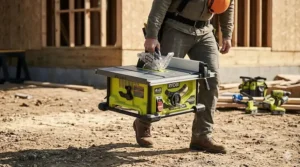
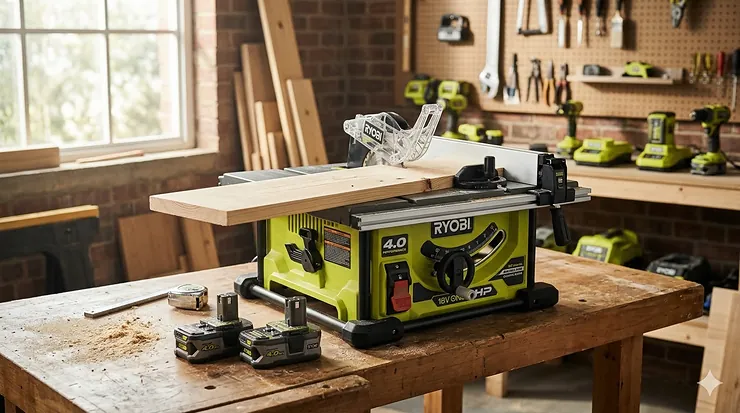
The ryobi cordless table saw has become a game-changer for DIYers and budget-conscious professionals who want battery power freedom without the premium price tag. When I first tested a battery-powered table saw, I was skeptical—could it really match the grunt of a 15-amp corded saw? Modern brushless motors have closed that gap faster than expected.
What makes the ryobi 18v table saw particularly compelling is its market position. You’re getting legitimate cordless cutting capability at roughly half the cost of premium alternatives from Milwaukee or DeWalt. But going cordless isn’t just about one brand. The landscape includes fascinating options from budget battery platforms to professional-grade MultiVolt systems, each with distinct advantages.
In this guide, I’ll walk you through seven real products currently available, breaking down specifications, real-world performance, and who each saw is actually built for. Whether you’re a weekend warrior building your first cordless platform or a pro evaluating entry level cordless options, you’ll find actionable insights here.
Quick Comparison Table: Best Cordless Table Saws at a Glance
| Model | Blade Size | Battery Platform | Rip Capacity | Approx. Price | Best For |
|---|---|---|---|---|---|
| Ryobi ONE+ HP 18V | 8-1/4″ | 18V ONE+ | 12″ | $299-399 (kit) | Budget DIYers, Ryobi users |
| Milwaukee M18 FUEL | 8-1/4″ | M18 | 24.5″ | $599-749 (kit) | Professional contractors |
| DeWalt FLEXVOLT 60V | 8-1/4″ | 60V/20V MAX | 24″ | $539-699 (kit) | DeWalt ecosystem users |
| Metabo HPT MultiVolt | 10″ | 36V MultiVolt | 35″ | $599-699 (bare) | Maximum capacity needs |
| Bosch PROFACTOR 18V | 8-1/4″ | 18V | 24″ | $449-599 (bare) | Bosch ecosystem |
| SKIL 10″ Corded | 10″ | Corded (15A) | 25.5″ | $299-330 | Budget, no batteries |
| Craftsman V20 | 8-1/4″ | 20V MAX | 24″ | $349-449 (kit) | Value seekers |
💬 Just one click – help others make better buying decisions too!😊
Top 7 Ryobi Cordless Table Saw & Affordable Battery Platforms: Expert Analysis
1. Ryobi ONE+ HP 18V Brushless Cordless 8-1/4″ Table Saw
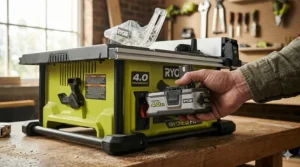
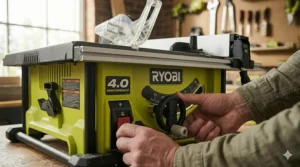
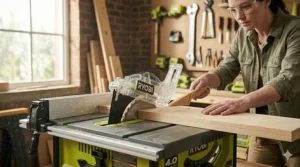
The Ryobi ONE+ HP 18V Brushless Cordless 8-1/4″ Table Saw represents one of the most affordable entry points into cordless table saw ownership, punching well above its weight class.
Key Specifications:
- Brushless motor delivers 4,500 RPM with HP technology
- 12″ rip capacity (right of blade)
- 240 linear feet per charge with dual 4.0Ah batteries
This affordable battery saw runs $299-399 with two 4.0Ah batteries and charger—remarkable value for a complete cutting solution ready to work from the box.
Real users report mixed experiences. One reviewer praised the saw for building a screech owl box while retaining two battery bars. However, another noted overheating during continuous use exceeding 30 minutes. A third user experienced blade alignment issues over ten months.
✅ Pros: Exceptional value, integrated with massive ONE+ system (175+ tools), compact blade reduces battery strain
❌ Cons: Overheating during extended sessions, blade alignment issues reported, smaller 12″ rip capacity
Who It’s For: DIY enthusiasts already invested in Ryobi ONE+, or beginners seeking their first affordable battery saw without breaking the bank.
2. Milwaukee M18 FUEL 8-1/4″ Table Saw with ONE-KEY
The Milwaukee M18 FUEL 8-1/4″ Table Saw (model 2736-21HD) is the premium choice for professionals demanding corded saw performance from batteries.
Key Specifications:
- POWERSTATE brushless motor delivers 6,300 RPM
- 24.5″ rip capacity handles full 4×8 sheets
- Up to 600 linear feet per charge with 12.0Ah battery
Pricing sits at $599-749 depending on configuration. Independent head-to-head testing showed Milwaukee demonstrated superior factory precision compared to competitors. Professional reviews noted Milwaukee’s stand locks to the saw with a draw catch, allowing one-piece movement for added stability when ripping long stock.
The saw generates 15-amp corded power while maintaining portability. One impressive feature: the blade brake stops almost immediately upon shutdown, a genuine safety enhancement.
✅ Pros: Industry-leading power and runtime, exceptional build quality, integrated locking stand, rapid blade brake
❌ Cons: Premium pricing, heavy 12.0Ah batteries required, no dado blade compatibility
Who It’s For: Professional carpenters and contractors who need reliable all-day performance and already own M18 batteries.
3. DeWalt FLEXVOLT 60V MAX 8-1/4″ Cordless Table Saw
The DeWalt FLEXVOLT 60V MAX 8-1/4″ Table Saw (model DCS7485T1) brings DeWalt’s innovative voltage-switching battery technology to the table saw category.
Key Specifications:
- Brushless motor optimized for 60V power
- 24″ rip capacity for sheet goods
- FLEXVOLT batteries work as 60V or 20V
- Rack and pinion telescoping fence
Prices range $539-699 for the kit with one FLEXVOLT 6.0Ah battery. The FLEXVOLT platform’s brilliance lies in battery versatility—your table saw batteries drop to 20V automatically in standard DeWalt 20V MAX tools.
Professional testers noted quirks: blade height adjustment requires 35 turns (vs. Milwaukee’s 14), lacks stand latch, and some users reported unexpected shutdowns during routine cuts.
✅ Pros: FLEXVOLT battery versatility, excellent rip capacity, strong ecosystem support, better outfeed than Milwaukee
❌ Cons: Slow blade height adjustment, no stand lock, battery opposite carry handle, dado incompatible
Who It’s For: DeWalt loyalists who appreciate FLEXVOLT ecosystem flexibility.
4. Metabo HPT 36V MultiVolt 10″ Cordless/Corded Table Saw
The Metabo HPT 36V MultiVolt 10″ Table Saw (model C3610DRJQ4M) breaks the mold by offering the only full 10″ blade among cordless options, plus revolutionary dual-power design.
Key Specifications:
- 36V brushless motor produces 5,000 RPM
- Industry-leading 35″ rip capacity
- 10″ blade provides maximum cutting depth
- Accepts 36V battery OR AC adapter for corded operation
Bare tool pricing hovers around $599-699. The MultiVolt AC adapter transforms this into a hybrid tool that never runs out of juice. The saw hits a sweet spot at 67 pounds—enough weight for accurate cuts without losing portability.
That larger table surface and 10″ blade translate to unmatched cutting capacity—you can rip 35″ to the right and 22″ to the left. When plugged in via AC adapter, you get unlimited runtime without sacrificing cordless flexibility. According to Metabo HPT’s documentation, this represents the best of both worlds for shops with occasional mobile needs.
✅ Pros: Only 10″ cordless option, massive 35″ rip capacity, corded/cordless flexibility, larger working table
❌ Cons: Heaviest at 67 lbs, 36V batteries more expensive, AC adapter sold separately, limited ecosystem
Who It’s For: Professionals or serious hobbyists who need maximum cutting capacity and appreciate corded option when convenient.
5. Bosch PROFACTOR 18V 8-1/4″ Cordless Table Saw
The Bosch PROFACTOR 18V 8-1/4″ Table Saw (model GTS18V-08N) represents Bosch’s entry featuring BiTurbo brushless technology.
Key Specifications:
- BiTurbo brushless motor at 4,000 RPM
- Rack and pinion fence (similar to DeWalt)
- 24″ rip capacity
- Optimized for PROFACTOR Core18V batteries
Current pricing sits around $449-599 bare tool. While specs show slower 4,000 RPM compared to competitors, real-world performance depends heavily on proper battery selection. The rack and pinion fence allows quick, accurate adjustments—a style traditionally associated with DeWalt.
✅ Pros: Compact and lightweight, quality fence system, growing PROFACTOR ecosystem, Bosch build quality
❌ Cons: Lower RPM on paper, requires expensive PROFACTOR batteries, limited long-term user data, smaller voltage
Who It’s For: Existing Bosch 18V ecosystem users who value the brand’s precision.
6. SKIL 10″ Jobsite Table Saw with Folding Stand
While not cordless, the SKIL 10″ Jobsite Table Saw (model TS6307-00) deserves recognition as the budget-friendly alternative.
Key Specifications:
- 15-amp corded motor delivers 4,600 RPM
- 25.5″ rip capacity
- Integrated folding stand with quick setup
Price consistently hovers around $299-330, making this one of the best value propositions in the entire market. Multiple professional reviews crown this the “king of budget table saws.” With quality blade upgrades, users report clean cuts through hardwoods like walnut.
The catch? You’re tethered to an extension cord. But that also means unlimited runtime, consistent power, and no expensive battery purchases.
✅ Pros: Exceptional price-to-performance ratio, unlimited runtime, integrated folding stand, accepts dado blades
❌ Cons: Requires AC power, stock blade needs upgrade, plastic miter gauge, no battery platform benefits
Who It’s For: Budget-conscious DIYers who primarily work in workshops or near power outlets.
7. Craftsman V20 Cordless Table Saw
The Craftsman V20 Cordless Table Saw rounds out our list as another value cordless tools option competing alongside Ryobi.
Key Specifications:
- 20V MAX brushless motor
- 8-1/4″ blade with 24″ rip capacity
- Compatible with Craftsman V20 battery system
Pricing falls between $349-449. While less common than premium brands, Craftsman’s V20 line has been expanding steadily. Limited professional testing exists, but user feedback suggests solid performance for light to moderate DIY use.
✅ Pros: Competitive entry level cordless pricing, growing V20 ecosystem, lighter weight, Craftsman availability
❌ Cons: Smaller battery capacity than premium, less professional validation, narrower ecosystem, limited high-performance batteries
Who It’s For: DIYers loyal to Craftsman brand seeking an alternative to Ryobi in the budget segment.
✨ Don’t Miss These Exclusive Deals!
🔍 Take your cutting projects to the next level with these carefully selected products. Click on any highlighted item to check current pricing and availability. These tools will help you create professional results your customers will love!
Understanding Cordless Table Saw Power: Battery Platforms Explained
Not all battery platforms are created equal. Understanding the differences helps you make smarter decisions.
Voltage vs. Actual Power Output
Here’s something manufacturers don’t advertise loudly: higher voltage doesn’t automatically mean more power. The DeWalt 60V FLEXVOLT, Milwaukee 18V M18, and Metabo HPT 36V all deliver comparable cutting performance despite voltage differences. Why? It comes down to amp-hours, cell configuration, and motor design.
Milwaukee achieves professional results with 18V by using HIGH OUTPUT batteries that deliver massive current. DeWalt’s FLEXVOLT batteries reconfigure their cells to provide 60V to demanding tools. The practical takeaway: don’t choose based on voltage numbers alone. Consider total watt-hours (voltage × amp-hours) and real-world runtime data.
Battery Platform Ecosystems
Buying into a battery platform is like choosing a phone operating system—you’re making a long-term commitment. Ryobi’s ONE+ system boasts 175+ tools. Milwaukee M18 offers similar breadth focused on professional trades. DeWalt’s 20V MAX is ubiquitous across construction sites.
If you already own tools from one brand, staying within that ecosystem eliminates battery redundancy. Consider:
- Ryobi ONE+: Widest tool variety, best budget pricing
- Milwaukee M18: Professional-grade tools, premium performance
- DeWalt 20V/FLEXVOLT: Construction-focused, excellent availability
- Metabo HPT MultiVolt: Corded fallback option, smaller ecosystem
Runtime Reality Check
Manufacturers advertise “600 linear feet per charge” under ideal conditions. Real-world runtime with hardwoods, maximum depth cuts, or hot jobsites can drop 30-50%. For the ryobi 18v table saw with dual 4.0Ah batteries, expect about 150-200 linear feet of actual cutting through dense material.
How to Choose the Right Cordless Table Saw for Your Needs
1. Assess Your Existing Tool Investment
Already own batteries from a particular brand? That’s your strongest decision signal. The $300 savings from buying a bare tool quickly compounds across your entire collection. Ecosystem compatibility usually outweighs minor performance deltas.
2. Define Your Cutting Requirements
Ask yourself honestly:
- How often will you use it? Daily professionals benefit from premium models; weekend DIYers should consider budget options
- What materials are you cutting? Hardwood furniture builders need more power
- Where are you cutting? Jobsite mobility justifies cordless; workshop use might favor corded
- What sheet sizes? Full plywood demands 24″+ capacity
3. Calculate Total Cost of Ownership
Don’t just compare saw prices—factor in additional batteries ($80-200 each), charger upgrades, quality blade replacements, and potential upgrades. A $299 Ryobi kit might end up costing $500 after upgrades, while a $599 Milwaukee bare tool with existing batteries could cost less overall.
4. Consider Future Expandability
The budget battery platform you choose today locks you into that ecosystem tomorrow. Research other tools you might need: circular saw, impact driver, drill, specialty tools. Ryobi wins for sheer variety. Milwaukee dominates professional construction tools.
Essential Safety Considerations for Cordless Table Saws
Power source doesn’t change fundamental table saw risks. According to OSHA Standard 1910.213, every table saw operation requires blade guards, riving knives, and anti-kickback pawls.
All reviewed saws include these components. The problem? Many users remove them for “better visibility.” Don’t. The Consumer Product Safety Commission reports table saws cause over 30,000 injuries annually in the U.S., with kickback and blade contact being primary causes.
Proper Operating Technique
Safe operation requires:
- Stand to the side of the blade, never directly behind (kickback zone)
- Set blade height only 1/4″ above material thickness
- Verify fence alignment parallel to blade before each session
- Use push sticks for anything under 6″ wide
- Maintain sharp blades (dull blades increase kickback risk)
- Wait for complete stop before any adjustments
Fine Woodworking magazine and the Woodwork Career Alliance of North America emphasize that proper push stick usage prevents the vast majority of table saw injuries.
Maximizing Value: Accessories and Upgrades That Matter
Every table saw benefits dramatically from a few key upgrades.
Must-Have Upgrades (Budget $50-150)
Quality Blade Selection ($40-80 each): Stock blades universally need replacement. Invest in 40-tooth general purpose (Diablo, Freud, CMT), 60-80 tooth finishing for plywood, and 24-tooth ripping blade. Blade quality impacts cut quality more than any other factor.
Zero-Clearance Insert ($15-30): Reduces tearout and catches smaller cutoffs from falling through.
Push Sticks/Blocks ($10-25): Never use hands to feed material narrower than 6 inches. Quality push blocks (GRR-Ripper) offer better control and safety.
Performance Enhancers
Outfeed Support ($30-200): Roller stands prevent sheet goods from falling as they exit, reducing binding and kickback risk.
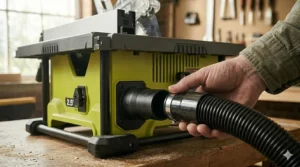
Dust Collection ($100-300): According to OSHA guidelines, wood dust is a respiratory hazard requiring proper collection. Connect shop vac to saw’s dust port for maximum capture.
Frequently Asked Questions (FAQ)
❓ Is the ryobi cordless table saw powerful enough for hardwood cutting?
❓ How long do batteries last on cordless table saws during actual use?
❓ Can you use cordless table saws for dado cuts and joinery?
❓ What's the real difference between 18V and 60V cordless table saws?
❓ Are budget battery platforms like Ryobi ONE+ reliable for professional use?
Conclusion: Finding Your Perfect Cordless Cutting Solution
The ryobi cordless table saw and its competitors represent a genuine revolution in woodworking mobility. What seemed impossible five years ago—matching corded saw performance on batteries—is now standard across multiple manufacturers at various price points.
Your ideal choice depends on honest assessment of three factors: existing battery investment, actual cutting frequency, and budget reality. Don’t buy Milwaukee if you own Ryobi batteries just because reviews rate it higher. Don’t choose cordless if 95% of your cutting happens in a workshop ten feet from outlets.
For budget-conscious DIYers building their first battery platform, the Ryobi ONE+ HP delivers remarkable value at $299-399 complete, especially if you leverage the massive tool ecosystem. For professionals or serious hobbyists who cut regularly, Milwaukee M18 FUEL or DeWalt FLEXVOLT justify their premium pricing through superior runtime and reliability.
And for those questioning whether battery power fits their workflow, the SKIL corded option at $299 proves you don’t need to sacrifice capability for mobility. Unlimited runtime still matters for production-focused workshops.
Whichever path you choose, prioritize safety equipment according to Wikipedia’s table saw safety guidelines, invest in quality blades immediately, and respect the tool’s capabilities. A $300 budget battery saw with proper safety practices outperforms a $1,000 saw used carelessly every single time.
Recommended for You
- 7 Best 60v Cordless Table Saw Reviews & Buying Guide 2026
- 7 Best Milwaukee Cordless Table Saw 2026
- Best DeWalt Cordless Table Saw 2026: 7 Ultimate Picks Reviewed
Disclaimer: This article contains affiliate links. If you purchase products through these links, we may earn a small commission at no additional cost to you.
✨ Found this helpful? Share it with your friends! 💬🤗
