
In This Article
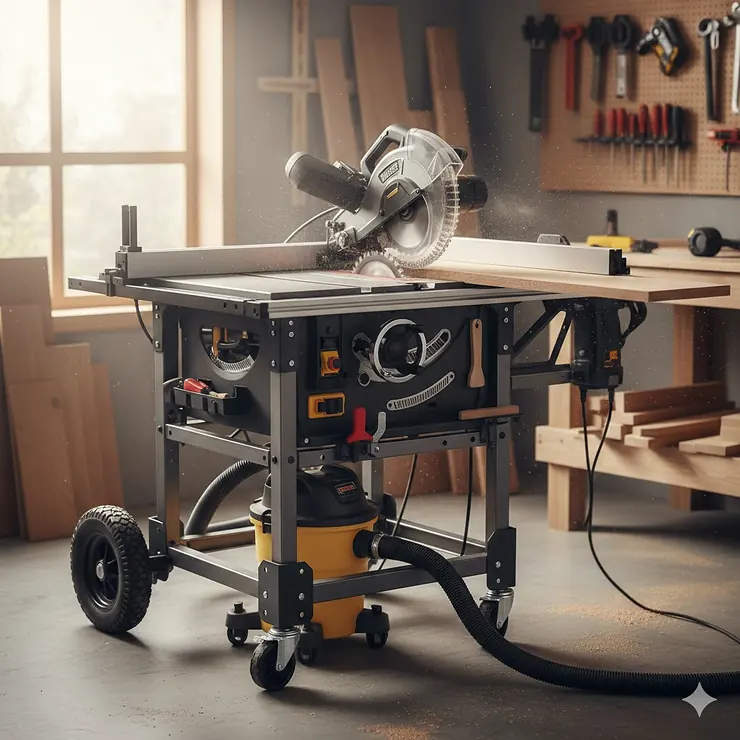
Picture this: you’re hauling a 90-pound table saw up three flights of stairs on a renovation project, and halfway up, you’re questioning your life choices. I’ve been there, and let me tell you – once you experience the convenience of a jobsite table saw with rolling stand, there’s no going back to the old way.
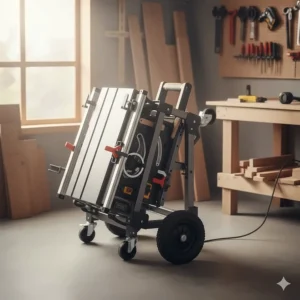
The modern jobsite demands tools that don’t compromise between power and portability. A table saw is the backbone of any professional carpentry operation, but traditional benchtop models leave you wrestling with awkward setups and makeshift supports. Enter the rolling stand revolution. These ingenious systems transform your table saw from a static workshop fixture into a mobile powerhouse that goes wherever the work takes you. Whether you’re a professional contractor juggling multiple job sites or a weekend warrior tackling home improvements, the best table saw stand can dramatically improve your workflow. Today’s rolling workstation saw models combine robust cutting capabilities with transport-friendly designs that actually make sense.
Quick Comparison Table
| Model | Motor Power | Rip Capacity | Stand Type | Weight | Price Range |
|---|---|---|---|---|---|
| DEWALT DWE7491RS | 15 Amp | 32.5″ | Telescoping Rolling | 110 lbs | $600-$700 |
| Bosch GTS15-10 | 15 Amp (4 HP) | 32.125″ | Gravity-Rise | 94 lbs | $800-$900 |
| SKILSAW SPT99-11 | 15 Amp | 30.5″ | Rugged Rolling | 96 lbs | $650-$750 |
| Metabo HPT C10RJS | 15 Amp | 35″ | Fold & Roll | 96 lbs | $450-$550 |
| Makita 2705X1 | 15 Amp | 25″ | Spring-Loaded | 115 lbs | $500-$600 |
| POWERTEC MT4009 | Universal | N/A (Stand Only) | Folding Rolling | 38 lbs | $100-$150 |
| DEWALT DW7440RS | Universal | N/A (Stand Only) | Collapsible | 33 lbs | $180-$250 |
💬 Just one click – help others make better buying decisions too! 😊
Top 7 Jobsite Table Saw With Rolling Stand: Expert Analysis
1. DEWALT DWE7491RS – Best Overall Portable Saw Stand Comparison
The DEWALT DWE7491RS represents what happens when a major manufacturer gets everything right. This powerhouse delivers professional-grade performance without sacrificing an ounce of portability, making it the gold standard for contractors who refuse to compromise.
Key Specifications:
- 15 Amp motor with 4,800 RPM blade speed
- 32.5-inch rip capacity handles full 4×8 sheets
- Integrated telescoping rolling stand with excellent stability
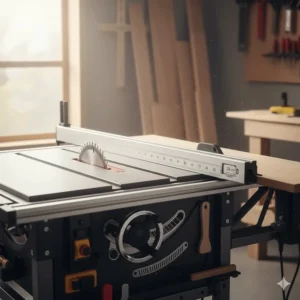
What immediately struck me about this model is its rack and pinion fence system – it’s buttery smooth and dead accurate every time. The rolling stand isn’t just functional; it’s engineered with large wheels that actually handle jobsite debris, stairs, and uneven surfaces without turning into a wrestling match. Setup and breakdown take under 30 seconds once you get the rhythm down.
Customer feedback consistently highlights the saw’s power delivery through hardwoods and pressure-treated lumber. The dust collection port actually works (a rarity in this category), and the on-board storage keeps essential accessories within reach. Professional framers appreciate the 90-degree crosscut capacity that handles 2×12 boards with ease.
Pros:
✅ Industry-leading 32.5″ rip capacity for full sheet cutting
✅ Rock-solid fence system with minimal deflection
✅ Rolling stand design prioritizes stability over everything
Cons:
❌ Weight reaches 110 lbs when fully assembled
❌ Premium pricing compared to budget alternatives
Price: $600-$700
2. Bosch GTS15-10 – Premium Choice With Gravity-Rise Technology
If you’re willing to invest in the best, the Bosch GTS15-10 delivers innovations that genuinely improve your workflow. The Gravity-Rise stand isn’t marketing hype – it’s a patented system that changes how you think about portable saw stand comparison.
Key Specifications:
- 4 HP motor (15 Amp) for demanding applications
- 32.125-inch right-side rip capacity
- Exclusive Gravity-Rise wheeled stand technology
This saw introduces “ClampZone” areas on the table surface, transforming it into a light-duty work surface when you need to sand, cope, or route small pieces. Smart thinking from Bosch’s engineers. The rack and pinion fence represents a significant upgrade over their previous sliding fence design, offering tool-free adjustments that stay parallel regardless of blade angle.
Users rave about the stand’s effortless setup – squeeze the lever, guide it up, and you’re cutting in seconds. The 8-inch treaded wheels handle rough terrain better than any competitor, and the collapsible design means it fits through standard doorways without drama. Professional cabinet installers particularly value the precision and repeatability.
Pros:
✅ Gravity-Rise stand setup is genuinely effortless
✅ ClampZone feature adds secondary work surface capability
✅ Exceptional build quality throughout
Cons:
❌ Higher price point limits accessibility
❌ Stand weighs 52 lbs separately
Price: $800-$900
3. SKILSAW SPT99-11 – Best Worm Drive Power
The SKILSAW SPT99-11 brings legendary worm drive power to the portable category. If you regularly slice through thick hardwoods or multiple layers of plywood, this folding stand jobsite saw delivers torque that circular saws can only dream about.
Key Specifications:
- Worm drive motor with 15 Amp power
- Aggressive 3-5/8 inch depth of cut capacity
- 16-inch wheels for superior jobsite mobility
Worm drive technology places the motor behind the blade rather than beside it, creating a narrower footprint and significantly more cutting torque. The result? This saw rips through 4×4 lumber like it’s cutting butter. SKILSAW’s patented Dual-Field motor runs cooler, extending runtime during marathon cutting sessions.
The rolling stand features oversized 16-inch wheels – the largest in this comparison – making stairs and rough surfaces almost trivial. Easy-load handles position ergonomically for loading into truck beds without straining your back. Framers and deck builders consistently rate this model highest for heavy-duty cutting tasks.
Pros:
✅ Worm drive delivers superior torque for thick stock
✅ 16-inch wheels handle any terrain
✅ Exceptional depth of cut at 3-5/8 inches
Cons:
❌ Worm drive orientation takes adjustment for some users
❌ Slightly noisier than direct-drive alternatives
Price: $650-$750
4. Metabo HPT C10RJS – Best Budget Value
Don’t let the affordable price fool you – the Metabo HPT C10RJS punches well above its weight class. This collapsible saw stand package delivers professional features at a price that won’t make your accountant cry.
Key Specifications:
- 15 Amp motor delivering 4,500 RPM
- Class-leading 35-inch right-side rip capacity
- Durable fold and roll stand design
What sets this model apart is the rip capacity – 35 inches beats more expensive competitors by several inches. The large 28.75″ × 22″ table provides superior material support, and front-mounted blade controls make adjustments convenient. On-board storage compartments keep push sticks, blade guards, and accessories organized.
Budget-conscious contractors appreciate the value proposition here. Yes, the fence requires slightly more attention to maintain parallel alignment than premium models, but the savings buy you other essential tools. The fold and roll stand offers decent stability, though it doesn’t match the refined engineering of Bosch or DEWALT systems. For occasional users or those starting out, this represents intelligent spending.
Pros:
✅ Unbeatable 35-inch rip capacity for the price
✅ Large table surface supports sheet goods effectively
✅ Budget-friendly without sacrificing essential features
Cons:
❌ Fence system requires more frequent adjustment
❌ Stand construction uses lighter-gauge materials
Price: $450-$550
5. Makita 2705X1 – Best For Precision Work
The Makita 2705X1 caters to woodworkers who prioritize accuracy and smooth operation. This best table saw stand combination excels at fine furniture work and precision carpentry where tolerances matter.
Key Specifications:
- 15 Amp motor with electric brake technology
- Tool-less modular blade guard system
- Spring-loaded portable stand with heavy-duty wheels
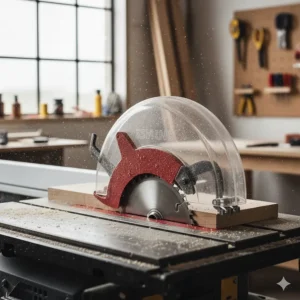
Makita’s electric brake stops the blade in seconds after power cuts off – a significant safety advantage that saves time between cuts. The tool-less modular blade guard system represents genuine innovation, allowing quick adjustments without hunting for Allen wrenches. Precision-machined table surfaces remain flat and true right out of the box.
The spring-loaded stand deploys and folds with minimal effort, and the powder-coated finish resists rust in harsh environments. Cabinet makers and finish carpenters value the adjustable riving knife that positions for through cuts, non-through cuts, and dado operations. The complete accessory storage means you’re not constantly searching for essential components.
Pros:
✅ Electric brake enhances safety and efficiency
✅ Tool-less blade guard system saves significant time
✅ Precision-machined surfaces for accuracy
Cons:
❌ Lower 25-inch rip capacity limits sheet good work
❌ Heavier weight at 115 lbs impacts portability
Price: $500-$600
6. POWERTEC MT4009 – Best Universal Rolling Stand
Not everyone needs a complete saw package – sometimes you already own a great saw that just needs better mobility. The POWERTEC MT4009 universal stand transforms virtually any benchtop table saw into a mobile work surface.
Key Specifications:
- 330 lbs load capacity handles heavy equipment
- 8-inch wheels with solid rubber tires
- Foldable design for garage storage
This mobile work surface accommodates saws from DEWALT, Bosch, Makita, Craftsman, and other major brands through adjustable mounting brackets. The heavy-duty steel construction belies the reasonable price point. Large wheels roll smoothly over workshop floors, and the folding mechanism collapses to a compact profile.
DIY enthusiasts and home woodworkers find this solution particularly appealing. Instead of replacing a perfectly functional table saw, upgrade just the stand component. The steel plates provide stable mounting surfaces, and included hardware covers both direct mounting and table-top configurations. Just verify your saw’s mounting hole pattern before ordering.
Pros:
✅ Universal compatibility with most table saw brands
✅ Exceptional 330 lb weight capacity
✅ Budget-friendly upgrade for existing saws
Cons:
❌ Assembly instructions could be clearer
❌ Not optimized for any specific saw model
Price: $100-$150
7. DEWALT DW7440RS – Best Lightweight Universal Stand
DEWALT’s stand-alone DW7440RS represents the lightweight champion of rolling workstation saw supports. At just 33 pounds, it dramatically improves portability for contractors managing multiple tools.
Key Specifications:
- Heavy-duty aluminum construction with 200 lb capacity
- Wide base with offset legs for stability
- Retractable soft-grip handle design
Aluminum construction keeps weight minimal while maintaining structural integrity. The wide stance and offset rear legs create a stable platform that resists tipping during aggressive cuts. Rubber feet prevent sliding on smooth concrete floors, protecting both your work and the floor surface.
The retractable handle slides out when transport time arrives, letting you pull the saw behind you with weight centered near the ground. Quick-connect brackets make attaching and detaching your saw incredibly fast. Mobile contractors appreciate how easily this stand fits in truck beds alongside other equipment.
Pros:
✅ Lightweight 33 lbs for easy transport
✅ Wide base provides excellent stability
✅ Quick-connect brackets save setup time
Cons:
❌ 200 lb capacity lower than some alternatives
❌ Aluminum construction more expensive than steel
Price: $180-$250
✨ Don’t Miss These Exclusive Deals!
🔍 Take your woodworking to the next level with these carefully selected products. Click on any highlighted item to check current pricing and availability. These tools will help you create professional results your clients will love!
Understanding Jobsite Table Saw With Rolling Stand Features
When you’re investing $500-$900 in a saw and stand combination, understanding the feature differences prevents expensive regrets. Not all rolling stands deliver equal performance, and matching capabilities to your actual workflow matters more than chasing specifications.
Motor Power and Performance
The 15 amp motor has become standard across jobsite models, but amperage alone doesn’t tell the whole story. Look deeper at RPM ratings, which range from 4,500 to 4,800 revolutions per minute. Higher RPM values translate to smoother cuts through dense materials. OSHA guidelines emphasize that proper blade speed prevents dangerous kickback situations that injure thousands of workers annually.
Worm drive configurations like the SKILSAW SPT99-11 sacrifice some RPM for dramatically increased torque. Think of it like comparing a sports car to a tractor – different designs optimized for different tasks. Direct-drive models excel at clean finish cuts, while worm drives power through demolition and framing applications.
Rip Capacity Considerations
Rip capacity determines the maximum width of material you can cut using the fence. The range spans from 25 inches (Makita) to 35 inches (Metabo HPT). Here’s the practical breakdown:
- 25″ capacity: Handles most lumber but struggles with full plywood sheets
- 32″ capacity: The sweet spot for cutting 4×8 sheets lengthwise
- 35″ capacity: Maximum flexibility for sheet goods and wide panels
Consider your typical projects carefully. Cabinet makers working primarily with hardwood boards may never need 35 inches, while contractors cutting subfloor panels benefit significantly from maximum capacity.
Stand Design Philosophy
Three distinct stand philosophies dominate the market, each with specific advantages:
Telescoping Stands (DEWALT DWE7491RS): Rails extend and retract to create a compact transport profile. Setup involves releasing locks and extending the stand to full width. These systems prioritize stability when deployed.
Gravity-Rise Stands (Bosch GTS15-10): Patented technology uses counterbalance systems for essentially effortless setup. Squeeze the release lever, guide the stand upward, and it locks into position. Premium pricing reflects the engineering complexity.
Fold and Roll Stands (Metabo, SKILSAW): Simple hinged legs fold beneath the saw for transport. Quick to deploy but may require leveling on uneven surfaces. Budget-friendly without sacrificing essential functionality.
Choosing Between Complete Packages vs. Universal Stands
The fundamental decision facing many buyers: purchase a dedicated saw and stand package, or add a universal stand to an existing saw? Let’s examine the tradeoffs clearly.
When to Choose Complete Packages
Integrated systems like the DEWALT DWE7491RS or Bosch GTS15-10 optimize every component for seamless operation. The saw mounts permanently to its stand, eliminating repetitive setup. Quick-release mechanisms allow separation when necessary, but day-to-day use assumes they remain together.
Advantages:
- Engineering optimization between saw and stand
- Faster job-to-job transitions
- Warranty coverage includes both components
- No compatibility concerns or mounting headaches
Disadvantages:
- Higher initial investment ($450-$900)
- Can’t upgrade stand independently
- More storage space required
- Committed to specific saw platform
When Universal Stands Make Sense
Universal options like the POWERTEC MT4009 or DEWALT DW7440RS bring flexibility to your tool ecosystem. Already own a quality benchtop saw? Add mobility without replacing perfectly functional equipment.
Advantages:
- Extends life of existing table saw investment
- Swap between multiple saws if needed
- Lower initial cost ($100-$250)
- Upgrade path from benchtop to portable setup
Disadvantages:
- Requires mounting hole alignment research
- Less refined fit and finish
- Setup time increases slightly
- Weight capacity limitations with some models
Professional contractors typically gravitate toward complete packages for dedicated job site duty, while home woodworkers often prefer universal stands that accommodate multiple tools.

Portable Saw Stand Comparison: Key Decision Factors
Wheel Size and Terrain Capability
Wheel diameter directly impacts how your saw handles real-world jobsite conditions. Small 5-6 inch wheels struggle over debris, door thresholds, and uneven ground. Mid-range 8-inch wheels (standard on most models) manage typical obstacles adequately.
The SKILSAW SPT99-11’s 16-inch wheels represent the premium solution, rolling effortlessly over stairs, gravel, and construction waste. If your work involves frequent moves across rough terrain, large wheels pay dividends in saved frustration and strain injuries.
Weight Distribution and Balance
Total weight matters less than how that weight distributes during transport. The DEWALT DW7440RS positions weight near the ground with handle placement that lets you pull rather than lift. Contrast this with top-heavy designs that want to tip backward when you hit stairs.
Test this in person if possible. Good balance means one person can maneuver the saw safely; poor balance creates two-person jobs or injury risks.
Storage and Transport Footprint
Garage space comes at a premium in most homes and job trailers. Folded dimensions determine whether your saw fits between other equipment or requires dedicated space. Measure your storage area before purchasing:
- Compact folder (POWERTEC): approximately 24″ × 36″ × 10″
- Mid-size systems (DEWALT, Metabo): roughly 30″ × 42″ × 15″
- Larger packages (Bosch, SKILSAW): up to 35″ × 50″ × 20″
Truck bed transport raises additional considerations. Some stands feature handles positioned for sliding into pickup beds, while others require awkward lifting.
Safety Features That Actually Matter
The Consumer Product Safety Commission reports approximately 87,000 annual table saw injuries requiring medical attention. Modern safety features significantly reduce these risks when properly utilized.
Blade Guard Systems
Tool-less blade guards (Makita 2705X1) eliminate excuses for operating without protection. If removing guards requires tools and time, workers skip this critical step. Quick-release systems encourage proper safety protocol.
Riving Knife Technology
Riving knives prevent binding that causes violent kickback. Unlike older splitters that remain fixed, modern riving knives move with the blade during height and angle adjustments. This maintains optimal positioning regardless of cut parameters.
Electric Braking
Electric brakes (Makita) stop blade rotation within 2-3 seconds after power cutoff, compared to 10+ seconds for coasting blades. This seemingly small difference prevents numerous injuries during blade changes and adjustments.
Anti-Kickback Pawls
Spring-loaded pawls dig into wood surfaces if the blade catches, preventing material from launching backward toward the operator. Inspect these regularly – damaged pawls don’t protect effectively.
Benefits vs Traditional Alternatives
Rolling Stands vs. Folding Sawhorses
Traditional setups place benchtop saws on sawhorses or temporary platforms. This works, but creates several limitations:
| Feature | Rolling Stand | Sawhorses |
|---|---|---|
| Setup Time | 30 seconds | 5+ minutes |
| Stability | Engineered | Variable |
| Mobility | Excellent | Poor |
| Storage | Compact | Requires space for horses |
| Professional Image | Modern | Amateur |
Integrated Stands vs. Contractor Saws
Older contractor table saws typically weigh 200-400 pounds with open-leg stands. They deliver power and accuracy but sacrifice mobility completely. Modern jobsite systems bridge this gap effectively.
| Aspect | Jobsite Rolling | Contractor Saw |
|---|---|---|
| Weight | 90-115 lbs | 200-400 lbs |
| Portability | High | None |
| Power | 15 Amp (adequate) | 1.5-3 HP (superior) |
| Precision | Good | Excellent |
| Price | $450-$900 | $800-$2,000+ |
For dedicated workshop use, contractor and cabinet saws remain superior. But when work comes to you rather than materials coming to your shop, portable systems prove indispensable.
How to Choose Jobsite Table Saw With Rolling Stand
1. Define Your Primary Use Case
Start with honest assessment of typical projects. Framing carpenters need different capabilities than finish carpenters:
- Framing/Construction: Prioritize rip capacity, power, and durability. DEWALT DWE7491RS or SKILSAW SPT99-11 excel here.
- Cabinet Making: Accuracy and smooth operation matter most. Consider Makita 2705X1 or Bosch GTS15-10.
- General Contracting: Versatility across applications suggests mid-range models like Metabo HPT C10RJS.
- DIY/Home Use: Universal stands paired with quality benchtop saws offer budget-friendly entry.
2. Assess Mobility Requirements
How often does your saw change locations?
- Daily moves: Invest in premium stands with easy setup (Bosch Gravity-Rise)
- Weekly moves: Standard rolling stands handle this well (DEWALT, Metabo)
- Monthly moves: Basic folding stands suffice
- Seasonal moves: Universal stands work fine
3. Evaluate Workspace Constraints
Measure three critical dimensions:
- Available storage space when folded
- Truck bed or transport vehicle capacity
- Typical jobsite working area
Compact designs suit cramped conditions, while spacious shops accommodate larger packages comfortably.
4. Match Budget to Value Proposition
Quality tiers correlate with features and longevity:
- Budget ($100-$300): Universal stands or entry models. Acceptable for occasional use.
- Mid-Range ($450-$650): Sweet spot for serious DIYers and occasional pros. Models like Metabo HPT deliver genuine value.
- Premium ($700-$900): Professional-grade systems that last 10+ years with proper care. DEWALT and Bosch justify costs through durability.
5. Consider Brand Ecosystem
If you already own cordless tools from a specific manufacturer, staying within that ecosystem offers advantages:
- Familiar controls and design language
- Potential accessory compatibility
- Warranty coverage through single point of contact
- Service center convenience
6. Research Weight Capacity
Stand weight ratings range from 200-330 pounds. Match this to your saw plus any accessories:
- Benchtop saw: 40-60 lbs
- Jobsite saw: 60-90 lbs
- Accessories and materials: 20-50 lbs
Build in safety margin – operating near maximum capacity accelerates wear.
7. Verify Wheel Quality
Examine wheel construction closely:
- Solid rubber resists punctures better than pneumatic
- Sealed bearings require no maintenance
- Larger diameter handles obstacles effectively
Cheap wheels with exposed bearings fail quickly in dusty environments.
Maintenance Tips for Maximum Longevity
Daily Care
After each use session:
- Wipe dust and sawdust from all surfaces
- Check fence alignment – stop if drift develops
- Inspect blade for damage or dulling
- Verify wheel rotation remains smooth
Weekly Maintenance
For frequent users:
- Apply paste wax to cast iron surfaces
- Clean miter slots thoroughly
- Check all adjustment locks function properly
- Inspect stand for loose bolts
Monthly Deep Cleaning
Set aside time for:
- Complete dust removal from motor housing
- Lubricate stand pivot points
- Sharpen or replace blade as needed
- Calibrate fence parallel to blade
Storage Best Practices
Between projects:
- Lower blade completely below table surface
- Disconnect power (if corded model)
- Cover with canvas or plastic sheet
- Store in dry environment when possible
Proper maintenance extends saw life to 10-15 years or more, justifying the initial investment many times over.
Common Mistakes to Avoid
Overlooking Fence Quality
The fence system impacts every cut you make. Cheap racks that flex or drift destroy accuracy. Test fence rigidity before purchasing – apply moderate pressure at the far end. Movement beyond 1/16 inch indicates problems.
Ignoring Dust Collection
Effective dust management isn’t optional for serious work. Poor collection fills your lungs with harmful particles and reduces blade visibility. Models with 2.5″ collection ports connect to shop vacuums efficiently.
Skimping on Blade Quality
Factory-included blades function adequately for rough cuts but limit performance. Invest $40-$80 in quality carbide-tipped blades matched to your typical materials. This single upgrade dramatically improves cut quality.
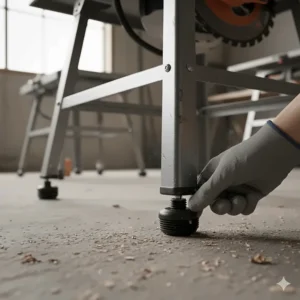
Neglecting Stand Stability
Uneven surfaces cause accuracy problems and safety risks. Always deploy all legs fully and use shims if necessary to level the stand. Rubber feet help but don’t compensate for extreme slopes.
Misunderstanding Rip Capacity
Rip capacity measures from blade to fence maximum extension, not overall table width. Don’t assume a 32″ capacity handles 32″ panels – you need fence support and table surface behind the blade too.
FAQ
❓ Can I use my existing benchtop saw with these rolling stands?
❓ How do jobsite table saw with rolling stand compare to miter saw stands?
❓ What's the difference between folding stand jobsite saw and gravity-rise systems?
❓ Do I need special wheels for rough terrain jobsite work?
❓ How often should I calibrate the fence on my collapsible saw stand?
Conclusion: Investing in Job Site Efficiency
The evolution from static workshop saws to mobile jobsite table saw with rolling stand systems represents genuine progress in construction methodology. These tools don’t just move easier – they enable entirely new working approaches that boost productivity and profitability.
Professional contractors quickly discover that the time saved in setup and breakdown pays for premium models within months. Position your saw exactly where needed, make precise cuts, then fold and roll to the next location in under a minute. This efficiency compounds across hundreds of cuts and dozens of projects annually.
For the best table saw stand investment, prioritize fit over features. A $900 Bosch that sits unused because it’s too heavy serves you worse than a $500 Metabo you actually transport regularly. Match capabilities to real-world usage patterns rather than aspirational scenarios.
The collapsible saw stand revolution continues advancing. Manufacturers keep improving wheel designs, refining folding mechanisms, and integrating smart features. Today’s models represent the most refined versions yet, combining decades of user feedback with modern engineering capabilities.
Remember that your saw and stand work as a system. Even the finest blade mounted in a wobbly, poorly-aligned fence produces inferior results. Invest appropriately in the complete package, maintain it properly, and expect years of reliable service transforming raw materials into finished projects.
Whether you choose the premium Bosch gravity-rise system, the budget-friendly Metabo HPT, or any option between, you’re joining thousands of professionals who’ve discovered that mobility and quality no longer require compromise. Welcome to the portable saw stand comparison winner’s circle.
✨ Don’t Miss These Exclusive Deals!
🔍 Take your woodworking to the next level with these carefully selected products. Click on any highlighted item to check current pricing and availability. These tools will help you create professional results your clients will love!
Recommended for You
- 7 Most Portable Jobsite Table Saws for Contractors (2026 Guide)
- 7 Best Jobsite Table Saws Under $600: 2026 Pro Guide
- 7 Best Jobsite Table Saw Under 400 – 2026
Disclaimer: This article contains affiliate links. If you purchase products through these links, we may earn a small commission at no additional cost to you.
✨ Found this helpful? Share it with your friends! 💬🤗
