In This Article
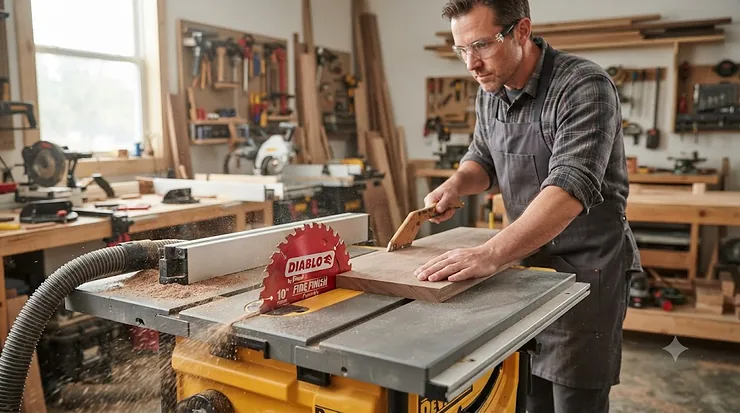
A table saw is only as good as the circle of steel and carbide spinning inside it, and that’s exactly why so many woodworkers end up down a rabbit hole researching a Freud Diablo blade review before they’ll trust a new blade anywhere near their fence. What is a Freud Diablo blade? It’s an affordable carbide-tipped circular saw blade line made by Freud specifically for home centers and jobsite crews, using the same Italian-made TiCo carbide and manufacturing lines as Freud’s pricier industrial blades, just with thinner plates and simpler packaging. That relationship matters, because it means the blade in the red-and-black clamshell at your local hardware store isn’t some off-brand knockoff — it’s a direct sibling of blades that cost twice as much. Choosing the best Diablo blade for table saw work still depends heavily on what you’re cutting, though, since a 24-tooth ripping blade and an 80-tooth finish blade behave like two completely different tools. This Diablo table saw blade review digs into seven real, currently available blades — from the workhorse combination models to a couple of premium Freud siblings worth the upgrade — with honest analysis pulled from spec sheets, forum consensus, and aggregated review sentiment rather than invented hands-on claims. We’ll also stack Diablo directly against Forrest and CMT, because “cheaper” and “worse” aren’t always the same word in this category. By the end, you’ll know which blade profile actually matches your saw’s horsepower, your typical stock thickness, and your patience for changing blades mid-project.
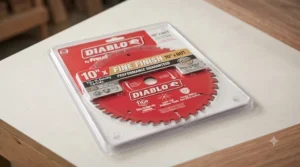
Quick Comparison Table
| Blade | Teeth | Best For | Price Range |
|---|---|---|---|
| Diablo D1050X | 50 | All-around rip & crosscut | around $35-$45 |
| Freud LU83R010 | 50 | Thin-kerf combo for low-HP saws | $45-$70 range |
| Freud Premier Fusion P410 | 40 | Glass-smooth premium finish | $70-$105 range |
| Diablo D1080X | 80 | Melamine & fine crosscuts | $45-$55 range |
| Diablo D1024X | 24 | Fast, budget ripping | under $30 |
| Freud LM72R010 | 24 | Heavy-duty flat-bottom ripping | $70-$85 range |
| Diablo D1040X | 40 | Lightweight general purpose | $30-$40 range |
Looking at the table, the split is pretty clean: the Diablo D1050X and Diablo D1040X cover the “leave it on the saw and forget it” use case, the Diablo D1024X and Freud LM72R010 exist purely to make ripping faster and cleaner, and the Diablo D1080X plus Freud Premier Fusion P410 are there for the cuts you don’t want to sand afterward. If you only buy one blade this year, the price gap between a Diablo and a full Freud industrial blade is the real decision — and it’s smaller than most people assume once you factor in resharpening costs down the line.
Just one click — help others make better buying decisions too!😊
Top 7 Freud Diablo Blades: Expert Analysis
1. Diablo D1050X — best all-around bargain for mixed rip-and-crosscut work
The Diablo D1050X is the blade most people picture when they search for a Freud Diablo blade review in the first place, and there’s a reason it’s a perennial best-seller. Specs-wise, it’s a 10-inch, 50-tooth ATB combination blade with a 0.098-inch kerf, a 0.071-inch plate, a 15-degree hook angle, and a 5/8-inch arbor rated to 6,000-7,000 RPM. That tooth count matters in practice: each group of five teeth is separated by a large gullet, so the blade clears chips fast enough to rip without bogging down, while the tight grouping within each set keeps crosscuts smooth. Based on the spec comparison against dedicated rip and crosscut blades, the Diablo D1050X is a compromise by design — it won’t out-rip a 24-tooth blade or out-finish an 80-tooth blade, but it does both jobs well enough that most hobbyists never feel the need to swap blades mid-project. Reviewers consistently report that it delivers smooth, splinter-free cuts on hardwoods and plywood alike, with the main complaint being that a thin, 0.071-inch plate is more prone to heat-related flutter if you rush a feed rate through dense stock.
Pros:
- ✅ Genuinely doubles as a rip and crosscut blade
- ✅ Large gullets resist clogging in thick material
- ✅ Perma-Shield coating keeps pitch from building up
Cons:
- ❌ Thinner plate can flutter under aggressive feed rates
- ❌ Not a specialist at either ripping or fine crosscuts
At around $35-$45, the Diablo D1050X remains one of the strongest dollar-for-dollar values in this whole roundup — a single blade that handles 90% of table saw work competently.
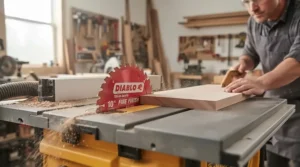
2. Freud LU83R010 — smoothest thin-kerf option for underpowered jobsite saws
Step up to the Freud family tree and you’ll find the Freud LU83R010, a 10-inch, 50-tooth thin-kerf combination blade built around a 0.091-inch kerf and the same 0.071-inch plate thickness, but with a 10-degree positive hook angle tuned specifically for table saws. What most buyers overlook about this model is that the thin kerf isn’t just a marketing bullet point — mechanically, it removes roughly 25% less material per pass than a full-kerf blade, which directly reduces the load on 1.5 to 1.75 HP contractor and jobsite motors. That translates into a saw that’s less likely to bog down or overheat mid-cut, one of the more common complaints with underpowered saws running standard blades. The Freud LU83R010 ships with laser-cut anti-vibration slots that Freud claims eliminate the need for stabilizers, and aggregated review sentiment backs that up — long-time owners describe years of reliable service with minimal re-sharpening needed. The one real caveat, and it’s an important one: the positive hook angle makes this strictly a table saw blade, since pull-through machines like radial arm saws or sliding miter saws generally call for a negative-hook geometry instead.
Pros:
- ✅ Thin kerf reduces load on smaller motors noticeably
- ✅ Anti-vibration slots deliver a genuinely smooth finish
- ✅ Long track record of durability from owner reports
Cons:
- ❌ Not rated for radial arm or sliding miter saw use
- ❌ Thin plate needs a matching, thin riving knife
Street prices for the Freud LU83R010 run in the $45-$70 range depending on retailer, making it a reasonable step up from the base Diablo D1050X if your saw’s motor is the bottleneck.
3. Freud Premier Fusion P410 — glassiest crosscut finish money can buy
If you’ve ever wondered whether the pricier Freud tier is worth it over Diablo, the Freud Premier Fusion P410 is the blade that answers the question. It’s a 10-inch, 40-tooth general-purpose blade built around Freud’s “Fusion Trio” tooth geometry — a 30-degree Hi-ATB grind combined with a double side grind and an axial shear face grind, all designed to polish the cut rather than merely slice it. In practice, that geometry means the Freud Premier Fusion P410 produces crosscuts and rips with a noticeably higher polish than a standard ATB blade of the same tooth count, something owners repeatedly describe as glue-line ready straight off the saw. Here’s what to weigh before buying, though: that same tight side-grind clearance that produces the polish also makes the blade more prone to burning if your feed rate is too slow, your stock isn’t flat, or your saw’s alignment is even slightly off. Reviewers consistently note it rewards a confident, steady feed rate and punishes hesitation, which makes it a better fit for an intermediate or advanced woodworker than an absolute beginner still dialing in technique.
Pros:
- ✅ Exceptionally polished crosscuts and rip edges
- ✅ Resharpenable carbide extends long-term value
- ✅ Handles melamine and veneered plywood cleanly
Cons:
- ❌ Prone to burning with a slow or hesitant feed rate
- ❌ Noticeably pricier than standard Diablo combination blades
At a $70-$105 range, the Freud Premier Fusion P410 costs roughly double a Diablo D1050X, but for anyone doing fine furniture or cabinetry, the finish quality argument is a real one.
4. Diablo D1080X — best for melamine and veneered plywood
Once you’re cutting sheet goods regularly, tooth count becomes the whole story, and the Diablo D1080X leans hard into that with 80 Hi-ATB teeth packed onto a 10-inch body, a 0.098-inch kerf, a 0.071-inch plate, and a 15-degree hook angle. Based on the spec comparison, that tooth density is what lets the Diablo D1080X slice through melamine, veneered plywood, and MDF with minimal chip-out on both faces — something a 40 or 50-tooth combination blade simply can’t match, since fewer, larger teeth are inherently more prone to blowing out brittle veneer as they exit the cut. The tradeoff is exactly what you’d expect: more teeth means more resistance and more heat generation, so the Diablo D1080X is not the blade to reach for on a long rip cut in thick hardwood. Aggregated customer sentiment frames this blade almost entirely around trim and finish work, with users describing flawless crosscuts on hardwood and softwood alike and minimal rework needed before installation or finishing.
Pros:
- ✅ Outstanding chip-free finish on melamine and plywood
- ✅ Perma-Shield coating resists heat buildup and gumming
- ✅ Works well on both table saws and sliding miter saws
Cons:
- ❌ Slower and hotter running for ripping tasks
- ❌ High tooth count means more frequent sharpening cycles
Expect to pay in the $45-$55 range for the Diablo D1080X, which is a fair ask given how narrow a niche most competing 80-tooth blades occupy at similar quality.
5. Diablo D1024X — fastest budget ripping blade for framing lumber
Ripping is a different problem entirely, and the Diablo D1024X is Diablo’s answer: a 10-inch, 24-tooth ATB ripping blade with a 0.098-inch kerf, a 0.071-inch plate, and a 15-degree hook angle rated up to 6,000 RPM. The low tooth count is the entire point here — fewer, larger gullets between teeth clear sawdust far faster than a combination blade can, which is exactly what you need when you’re pushing long boards through thick stock. What most buyers overlook about this model is that it uses an ATB grind rather than a true flat-top grind (FTG), which means it leans slightly toward smoother crosscuts at the margins compared to a dedicated FTG rip blade, but sacrifices a bit of the raw ripping efficiency that a flat-top tooth profile delivers. Reviewers consistently describe it as a noticeable upgrade over a stock contractor-saw blade for framing lumber, OSB, and hardboard siding, with one common theme in owner feedback: it’s inexpensive enough that many users simply replace rather than resharpen it once it dulls.
Pros:
- ✅ Clears sawdust fast during long rip cuts
- ✅ Genuinely inexpensive to replace outright
- ✅ Handles plywood, OSB, and hardboard without complaint
Cons:
- ❌ ATB grind isn’t a true flat-bottom FTG rip profile
- ❌ Crosscut quality is noticeably rougher than combo blades
Priced under $30 in most cases, the Diablo D1024X is close to disposable-tool territory, which is exactly why so many jobsite crews keep two or three on hand.
6. Freud LM72R010 — flattest-bottom rip cuts for serious dimensional lumber
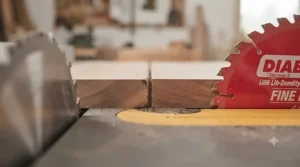
For woodworkers who rip enough material that tooth geometry actually shows up in the final glue-up, the Freud LM72R010 trades Diablo’s ATB grind for a true flat-top grind (FTG), still at 24 teeth and a 10-inch diameter. On paper, this means the Freud LM72R010 leaves a genuinely flat-bottomed groove on non-through cuts and a slightly more efficient rip cut on thick hardwood, since FTG teeth are mechanically better suited to plowing straight through the grain than an ATB profile. Forum consensus among serious hobbyists and small shops consistently favors this style of blade specifically for dimensional lumber over 2 inches thick, where a combination blade starts to bog down and burn. The Freud LM72R010 also carries the heavier carbide and anti-vibration slot pattern typical of Freud’s industrial line rather than the Diablo consumer tier, which owners report translates into a longer interval between resharpening cycles, even if the upfront cost is noticeably higher.
Pros:
- ✅ True flat-top grind for genuinely flat-bottom cuts
- ✅ Heavier industrial-grade carbide extends blade life
- ✅ Excellent for thick, dense hardwood ripping
Cons:
- ❌ Roughly triple the cost of the Diablo D1024X
- ❌ Overkill for occasional or light-duty ripping needs
At $70-$85, the Freud LM72R010 only makes financial sense if ripping thick stock is a regular part of your workflow — for occasional rips, the Diablo D1024X covers the same ground for a fraction of the price.
7. Diablo D1040X — lightweight all-rounder for small-shop table saws
Rounding out the lineup is the Diablo D1040X, a 10-inch, 40-tooth ATB general-purpose blade that sits deliberately between the 24-tooth rippers and the 50-tooth combination blades in this review. Freud built this one as a thin-kerf all-rounder, and based on the spec comparison, the lower tooth count relative to the Diablo D1050X trades a bit of crosscut polish for a rip cut that bogs down less on underpowered saws — a reasonable tradeoff for anyone running a benchtop or older contractor-style saw with limited horsepower. Independent field testing by tool reviewers who ran the blade on a portable jobsite saw describe it zipping through plywood, pine, and even hardwoods with minimal tearout, producing results that made a stock blade look outdated by comparison. Aggregated forum sentiment treats the Diablo D1040X as the practical budget alternative to the Freud Premier Fusion P410 — not quite as polished a cut, but close enough for most shop and trim work at a third of the price.
Pros:
- ✅ Well balanced between ripping speed and crosscut quality
- ✅ Thin kerf suits smaller, lower-powered table saws
- ✅ Noticeably outperforms typical stock blades
Cons:
- ❌ Falls short of Premier Fusion-level polish
- ❌ Fewer teeth than the D1050X for fine crosscut work
Priced around $30-$40, the Diablo D1040X is the blade to grab if your saw is on the smaller, older, or lower-horsepower side of the spectrum.
Practical Usage Guide: Setting Up and Maintaining Your Freud Diablo Blade
Getting the most out of any Freud Diablo blade starts before the first cut. First, always measure your saw’s riving knife against the blade’s kerf — a thin-kerf blade like the Freud LU83R010 paired with a factory riving knife built for full-kerf blades is a recipe for binding, and it’s a step people skip constantly. Second, set blade height so that roughly the full gullet depth clears the top of your stock during ripping; this reduces heat buildup and is one of the simplest ways to avoid the burning that plagues higher-tooth-count blades like the Diablo D1080X and Freud Premier Fusion P410. Third, clean the blade regularly with a dedicated resin remover rather than letting pitch accumulate — a gummed-up blade runs hotter, cuts rougher, and dulls faster regardless of how good the carbide is underneath. In the first 30 days of ownership, the most common mistake is feeding stock too slowly through fine-tooth blades in an attempt to be “careful,” which actually increases the odds of burning; a confident, steady feed rate almost always produces a cleaner cut. Finally, store blades vertically in their original sleeves or a dedicated blade rack — stacking them loose in a drawer is the single fastest way to chip carbide teeth on adjacent blades.
Real-World Scenarios: Which Diablo Blade Fits Your Shop
Picture three different buyers walking into the same conversation. First, there’s the weekend DIYer building shelving and the occasional cabinet in a one-car garage on a benchtop saw — for that buyer, the Diablo D1050X or Diablo D1040X covers essentially everything without ever needing a second blade, since neither ripping nor fine crosscuts happen often enough to justify specialization. Second, there’s the trim carpenter running a jobsite saw all day, framing during the morning and installing baseboard in the afternoon — that person benefits from keeping a Diablo D1024X for the rough framing cuts and a Diablo D1080X for the finish trim, swapping blades between tasks rather than compromising on either. Third, there’s the serious hobbyist building fine furniture on a cabinet saw with real horsepower to spare — for that buyer, the Freud Premier Fusion P410 for crosscuts paired with the Freud LM72R010 for ripping thick hardwood stock is the setup that consistently shows up in forum recommendations from people doing similar work, even though it means owning two blades instead of one.
Problem → Solution: Fixing Common Diablo Blade Issues
Burning is the complaint that comes up most often, and it’s almost always a feed-rate or alignment issue rather than a blade defect — slow down your assessment of “careful” cutting and speed up your actual feed rate, and check that your fence is parallel to the blade. Blades like the Freud Premier Fusion P410 are particularly sensitive to this because of their tight side-grind tolerances. Excessive vibration or a rough cut edge usually points to a dull or slightly warped blade rather than a saw problem; both the Diablo D1050X and Freud LU83R010 rely on laser-cut anti-vibration slots that only work correctly if the blade itself is running true. Pitch buildup that won’t wipe off with a rag typically needs a dedicated citrus-based blade cleaner rather than water or general solvents, since dried resin bonds tightly to the Perma-Shield coating over time. Chip-out on plywood or melamine edges almost always means the tooth count is too low for the material — swapping to something like the Diablo D1080X solves this specific problem far more reliably than adjusting technique. Finally, a blade that won’t seat flush against the arbor flange is frequently a sign of debris on the flange itself, not a defective blade — a quick wipe-down before mounting solves this more often than people expect.
How to Choose the Best Diablo Blade for Table Saw Work
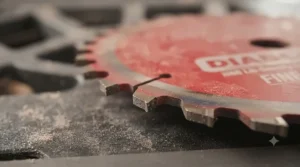
Choosing the right blade comes down to a short, repeatable checklist. First, identify your saw’s motor size, since anything under 2 HP benefits meaningfully from a thin-kerf blade like the Diablo D1050X or Freud LU83R010. Second, decide whether you’re buying one blade for everything or building a small rotation — a single combination blade simplifies life, while a dedicated rip-and-crosscut pair like the Diablo D1024X and Diablo D1080X delivers better results in each individual task. Third, check your riving knife thickness against the blade’s kerf spec before ordering, since mismatches here cause more real-world frustration than any other setup mistake. Fourth, weigh tooth count against your primary material — fewer teeth for ripping solid lumber, more teeth for sheet goods and fine crosscuts. Fifth, factor in resharpening economics: cheaper Diablo blades are often more sensible to simply replace, while pricier Freud industrial blades like the Freud LM72R010 justify the cost of professional sharpening over their longer service life. Sixth, consider hook angle compatibility with your specific saw type, since a positive-hook blade built for table saws, like the Freud LU83R010, isn’t necessarily appropriate for a radial arm or sliding miter saw. An independent comparative test of blade categories reached similar conclusions when evaluating tooth configuration against real cutting tasks, which lines up well with the forum consensus reflected throughout this review.
Diablo vs Forrest Blade: Which One Wins?
The Diablo-versus-Forrest debate is one of the oldest arguments in woodworking forums, and the honest answer is that it depends heavily on what “better” means to you. Forrest’s Woodworker II carries a well-earned reputation, but a direct side-by-side comparison of the 20-tooth Woodworker II against a 60-tooth Diablo shows real mechanical differences rather than just brand prestige — the Woodworker II runs a full 1/8-inch kerf versus Diablo’s thinner 0.098-inch kerf, and its low tooth count with raker teeth is purpose-built for ripping and flat-bottomed joinery cuts rather than general use. Aggregated forum sentiment is notably split here: plenty of long-time Forrest owners describe it as the smoothest, quietest blade they own, while just as many describe getting a Diablo or Freud Fusion result that performs indistinguishably in blind comparison, particularly once a Forrest blade needs resharpening from a non-Forrest shop. What most buyers overlook is that a large part of the Forrest premium is tied to its resharpening service and reputation for hand-tuned tensioning, not necessarily a dramatic gap in raw cutting performance against something like the Freud Premier Fusion P410. For a shop on a budget, a Diablo D1050X paired with good technique closes most of the practical gap; for a shop that values the resale, resharpening ecosystem, and brand heritage, Forrest remains a defensible choice.
| Factor | Diablo/Freud | Forrest Woodworker II |
|---|---|---|
| Typical Price | $30-$105 | $150-$200+ |
| Kerf Style | Thin kerf common | Full kerf standard |
| Resharpening | DIY or local shop | Forrest’s in-house service |
| Best For | Value, variety, lower-HP saws | Joinery cuts, brand loyalists |
The price gap in that table is the real story: a Diablo D1050X and a Diablo D1080X together still cost less than a single Woodworker II, giving you two specialized blades instead of one generalist for roughly the same money.
✨ Don’t Miss These Exclusive Deals!
🔍 Take your table saw setup to the next level with these carefully selected blades. Click on any highlighted product to check current pricing and availability. These blades will help you create the clean, professional cuts your next project deserves!
Diablo vs CMT Blade: A Closer Look
CMT occupies a similar middle-market position to Freud’s industrial line, and the comparison to Diablo tends to be closer and less contentious than the Forrest debate. Both brands manufacture in Italy with comparable carbide sourcing, and forum consensus generally treats a CMT combination blade and a Diablo combination blade of similar tooth count as roughly equivalent performers for everyday rip-and-crosscut work. Where owners report a meaningful difference is in higher tooth-count blades intended for plywood and cross-cutting — some long-time users specifically favor CMT’s high-tooth-count blades over a comparable Diablo for cleaner sheet-good cuts, though the margin described is modest rather than dramatic. The practical takeaway is that neither brand clearly dominates the other at the budget-to-mid tier; the bigger performance jump in this whole category comes from moving up to a premium tooth geometry like the Freud Premier Fusion P410, not from switching between Diablo and CMT at a comparable price point. If you already own CMT blades and they’re performing well, there’s little analytical reason to switch to Diablo purely on cutting quality — the decision comes down more to availability, local sharpening support, and whether you’re standardizing your shop around one brand’s arbor and flange sizing conventions.
Freud Diablo Thin Kerf vs Full Kerf: What Actually Matters
Kerf width sounds like a minor spec until it’s the reason your saw bogs down or your riving knife won’t fit. A thin-kerf blade, like the Freud LU83R010, typically measures around 0.091 inches versus roughly 0.125 inches on a full-kerf blade, which mechanically translates to about 25% less material removed per pass. Based on the spec comparison, that reduction directly lowers the cutting load on a motor, which is precisely why thin-kerf blades dominate the jobsite and contractor-saw segment where 1.5 to 1.75 HP motors are the norm. The tradeoff is rigidity: a thinner plate deflects more easily under heavy lateral load or heat, which is why the Diablo D1050X and similar thin-kerf blades benefit from laser-cut anti-vibration slots to stay stable in the cut. Full-kerf blades and heavier industrial options like the Freud LM72R010 sacrifice that motor-load advantage in exchange for a stiffer plate that resists flutter better in thick, dense hardwood. The practical rule of thumb that shows up consistently across forums: if your saw is under roughly 2 HP, a thin-kerf Diablo blade is almost always the better starting point, and only a 3+ HP cabinet saw really needs to consider full-kerf blades as the default.
| Metric | Thin Kerf (e.g., LU83R010) | Full Kerf (e.g., LM72R010) |
|---|---|---|
| Typical Kerf Width | ~0.091″ | ~0.125″ |
| Best Suited Motor | 1.5-1.75 HP | 3+ HP |
| Material Saved per Cut | ~25% less waste | Baseline |
| Deflection Risk | Higher under heavy load | Lower, more rigid |
This comparison makes the horsepower question the real deciding factor — not personal preference, but a straightforward mechanical match between your saw’s motor and the blade’s plate thickness.
Freud Diablo Ripping Blade vs Crosscut Blade: Picking the Right Tool
The gap between a dedicated ripping blade and a dedicated crosscut blade is bigger than most beginners expect, and it comes down entirely to tooth geometry and count. A ripping blade like the Diablo D1024X uses just 24 teeth with large gullets specifically to clear chips fast while cutting with the grain, prioritizing speed and heat dissipation over a polished edge. A crosscut-oriented blade like the Diablo D1080X, by contrast, packs in 80 Hi-ATB teeth to slice cleanly across the grain, minimizing the tear-out that a low-tooth-count blade would cause on cross-grain fibers. Here’s what to weigh: using a ripping blade for fine crosscuts on plywood will leave visible chip-out on the exit side, while using a high-tooth crosscut blade for long rip cuts in thick hardwood risks overheating and burning because there simply isn’t enough gullet space to clear the sawdust. Reviewers consistently note that shops doing a genuine mix of both cut types are usually better served owning both a rip-specific and a crosscut-specific blade rather than compromising with a single combination blade like the Diablo D1050X, particularly once project volume increases enough to make blade-swapping worth the interruption.
Long-Term Cost & Maintenance of Diablo Table Saw Blades
Sticker price only tells part of the ownership story, since resharpening economics shift the real cost equation over a blade’s lifespan. A budget blade like the Diablo D1024X, priced under $30, is often genuinely cheaper to replace outright than to have professionally resharpened once dulled, especially given that thinner carbide has less material margin for repeated grinding. A step up, blades like the Diablo D1050X and Diablo D1080X typically justify one or two resharpening cycles before replacement makes more sense, based on aggregated owner reports of carbide thickness and edge retention. At the premium end, the Freud Premier Fusion P410 and Freud LM72R010 carry heavier carbide taken from Freud’s industrial manufacturing line, and owners consistently describe getting three or more sharpening cycles out of them, which meaningfully closes the total cost-of-ownership gap against their higher upfront price. Add in blade cleaning supplies, occasional replacement of anti-kickback pawls, and the modest but real cost of sharpening services (commonly running $10-$20 per blade at a local shop), and the long-term math tends to favor buying one quality blade over cycling through several disposable ones every year.
Safety Guide: Using Diablo and Freud Blades Correctly
Blade selection matters for safety just as much as it does for cut quality, and federal guidance backs that up directly. OSHA’s machine-guarding requirements for table saws specifically call for using the proper blade for the cutting action being performed — explicitly warning against using a crosscut blade for ripping — alongside maintaining sharp blades and using spreaders or riving knives to prevent kickback during rip cuts. That guidance lines up precisely with the ripping-versus-crosscut distinction covered earlier in this article: a dull or mismatched blade, like running a fine-tooth blade such as the Diablo D1080X for a long rip cut, increases resistance and heat in ways that raise kickback risk. Beyond blade choice, always confirm your riving knife or splitter thickness matches the blade’s kerf before cutting, remove any cracked or visibly damaged blade from service immediately, and keep the blade guard in place for all standard cuts. None of the blades in this review change these fundamentals — no combination blade, however well reviewed, substitutes for proper guarding, push sticks, and a saw that’s correctly aligned.
FAQ
❓ What is the best Diablo blade for a table saw?
❓ Is Freud and Diablo the same brand?
❓ How many teeth should a table saw blade have for ripping?
❓ Can you resharpen a Diablo saw blade?
❓ What's the difference between Diablo and Freud Premier blades?
Conclusion
Choosing between these seven blades really comes down to matching tooth geometry and kerf thickness to your saw and your typical material, rather than chasing a single “best” answer. For most home shops running a saw under 3 HP, the Diablo D1050X remains the sensible default combination blade, while anyone doing regular sheet-good work should strongly consider adding a Diablo D1080X to the rotation. Serious ripping work justifies either the budget-friendly Diablo D1024X or the more durable Freud LM72R010, and anyone chasing a genuinely furniture-grade finish should look hard at the Freud Premier Fusion P410 despite its higher price tag. The Diablo-versus-Forrest and Diablo-versus-CMT debates ultimately come down to how much you value brand ecosystem and resharpening support over raw spec-for-spec performance, since the practical cutting gap between these tiers is smaller than the price gap suggests. Whatever you choose, remember that blade selection is only half the equation — proper riving knife matching, feed rate, and guarding matter just as much as the blade itself for both cut quality and safety.
Recommended for You
- Forrest Woodworker II Review 2026: 7 Blades That Actually Deliver
- Table Saw Blade for Laminate: 7 Proven Picks for 2026
- Best Table Saw Blade for Melamine in 2026: 7 Chip-Free Picks
Disclaimer: This article contains affiliate links. As an Amazon Associate, I earn from qualifying purchases. If you purchase products through these links, we may earn a small commission at no additional cost to you.
✨ Found this helpful? Share it with your friends! 💬🤗
