
In This Article
Anti kickback pawls for table saw use are spring-loaded, toothed metal fingers that hang from the splitter or riving knife behind the blade. They let a board travel forward but bite into the wood if it tries to shoot backward toward you, working like a one-way gate for lumber. Think of them as a seatbelt, not a steering wheel: they matter only after something has already gone wrong.

And things go wrong fast. Kickback happens when the wood pinches the back of the blade, where the teeth are rising out of the table instead of pushing down into it. The spinning steel then flings the board at you. Fine Woodworking calls kickback the primary cause of table-saw accidents. Its best single defense is a riving knife that keeps the kerf open. Pawls are the backup act.
That backup act is oddly controversial. Some European makers skip pawls entirely, arguing they add little. Meanwhile, CPSC staff documents describe the U.S. UL 987 standard as calling for anti-kickback devices alongside a riving knife. Woodworkers argue about it online with the enthusiasm usually saved for sharpening methods.
So this guide does the sensible thing. It examines seven real products and setups and compares how each handles pawls, splitters and one-way travel. It also explains what the geometry means for your fingers. You’ll find a pawl system safety comparison, an anti kickback teeth design review, notes on pawl engagement angle, a practical splitter mounting walkthrough, a plain-English take on rated kickback pawls, and a section on kickback direction control. Grab a coffee. Keep your hands away from the blade while you read.
Quick Comparison: Anti Kickback Pawls for Table Saw Options at a Glance
Here’s the lay of the land before we go deep. The table sorts seven real options by what they do, whether pawls come in the box, and who should care.
| Product | Type | Pawls Included? | Mounts To | Best For |
|---|---|---|---|---|
| SawStop Micro Blade Guard | Guard with splitter and side pawls | Yes | SawStop cast-iron saw riving knife | Cabinet-saw owners who want one integrated unit |
| Bosch Smart Guard System | Modular guard, knife and snap-on pawls | Yes | Bosch jobsite saw riving knife | Pros who swap setups all day |
| DeWalt DWE7491RS | Jobsite saw with guard, knife and snap-on pawls | Yes | Release-lever riving knife | Contractors and serious hobbyists |
| Shark Guard ARK | Adjustable riving knife/splitter with guard | Optional, sold separately | Older Unisaw-style cabinet saws | Retrofitting vintage saws |
| Biesemeyer Removable Splitter | Removable splitter with pawl fingers | Yes | Saw-specific throat-plate mount | Legacy contractor and cabinet saws |
| Micro Jig MJ Splitter Steel Pro SP-2 | Zero-clearance-insert splitter | No | Wood or plastic insert | Through-cuts without a guard in the way |
| Board Buddies W1104 | Fence-mounted one-way rollers | No (rollers instead) | Rip fence | Long rips and sheet goods |
Read the table sideways and a pattern jumps out: only four of the seven ship pawls in the box, and those pawls are almost always modular. That tells you where the industry has landed on anti kickback pawls for table saw guards. Keep them available, but make them easy to remove. The SawStop Micro Blade Guard, Bosch Smart Guard System and DeWalt DWE7491RS lead for integrated kits, while the Shark Guard ARK and Biesemeyer Removable Splitter are the retrofit path. A fuller pawl system safety comparison comes later.
💬 Just one click — help others make better buying decisions too!😊
Top 7 Anti Kickback Pawls for Table Saw Setups: Expert Analysis
Each entry below blends real specs with the aggregated sentiment I could verify from published reviews and woodworking forums. Where reviews were thin or dated, I say so instead of smoothing it over.
1. SawStop Micro Blade Guard — pawls built right into the splitter
The SawStop Micro Blade Guard (model TSG-MG) mounts its pawls on the side of the splitter. The guard, splitter and pawls behave like one engineered unit instead of three parts fighting for space.
Six independently swinging side guards lift as the board passes, so the cover hugs the stock instead of forcing an awkward feed. It’s designed around the 2.3mm riving knife and pairs with a lock-down insert that carries metal wear plates where pawl teeth land. That’s a quiet design clue: the pawls are expected to touch down, so the insert is armored for it. Compatibility covers the cast-iron saws but not the jobsite model.
My take: this is the natural choice if you already own a compatible saw and want a guard you’ll actually leave installed. The splitter can also run without the cover, which helps on cuts where the guard can’t stay.
Review sentiment is genuinely mixed. A long-time owner writing on the Lost Art Press blog praised the knife but said the pawls get in the way during guard installation. Forum posters report the pawls glide along stock with little bite. One forum thread also relays SawStop’s inventor saying a guard without pawls beats no guard at all.
Pros:
- ✅ Guard, splitter and pawls work as one unit
- ✅ Six side guards adapt to the stock
- ✅ Splitter can run without the cover
Cons:
- ❌ Pawls can interfere with guard installation
- ❌ Fits cast-iron saws, not the jobsite model
I couldn’t verify a current retail price, so check current price; expect the premium-accessory tier, which is fair if you value the integration.
2. Bosch Smart Guard System — tool-free pawls that pop off in seconds
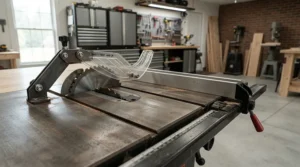
The Bosch Smart Guard System splits the safety kit into three modules: a riving knife that stays put, a blade cover, and snap-on pawls. Squeeze a locking pin and the pawls lift off. Tilt the guard and the blade is clear, with no wrench in sight.
The riving knife locks into raised, middle and lowered positions. Raised carries the full guard. The middle position gives protection on non-through cuts. Fully lowered clears the way for blade changes and dado stacks, where a full-height knife would be too tall. The guard and pawls park in a holder under the saw, so they don’t vibrate loose or wander off. That matters because a guard that’s a pain to reinstall tends to end up in the dumpster.
My analytical take: this is the strongest design for anyone who changes cuts constantly, because the pawls are a separate decision from the guard. Leave them on for long rips, pull them for narrow stock in seconds. Reviewers at jobsite and woodworking outlets praised how fast the parts attach and detach, though one admitted he’s never been fond of pawls generally. The coverage I found dates from the system’s launch years, so confirm today’s lineup and parts.
Pros:
- ✅ Pawls snap on and off without tools
- ✅ Guard and pawls store neatly on the saw
- ✅ Three-position knife handles dado work
Cons:
- ❌ Most review coverage is older; verify the current lineup
- ❌ Knife height changes take a few deliberate steps
The system usually comes bundled with a Bosch jobsite saw, so check current price for the saw or replacement parts.
3. DeWalt DWE7491RS — snap-on pawls and a release-lever guard swap
The DeWalt DWE7491RS pairs a 15-amp jobsite saw with a guard permanently attached to its splitter, separate snap-on pawls, and a standalone riving knife for when the guard must come off.
Raise the blade fully, pull the release lever, and the guard or knife slips out. One reviewer called the cable-driven swap the easiest guard-changing system he’d used, which matters because friction is why guards get abandoned. The saw also stores the pawls, guard and knife on board, and it offers a 32-1/2 inch rip capacity and a rack-and-pinion fence. Long rips are where pawls earn their keep.
Here’s the honest analysis: the DeWalt DWE7491RS suits people who want everything in one box and don’t want to hunt for parts. The riving knife does the heavy lifting. The pawls are the second layer, easy to snap off for narrow stock. DeWalt later released a Guard Detect variant (DWE7499GD) that flashes a warning when the guard is missing.
Aggregated review sentiment is strongly positive on performance and guard convenience. Complaints center on assembly effort and on the guard’s dust port, which one reviewer wanted to work better.
Pros:
- ✅ Release lever swaps guard and knife quickly
- ✅ Pawls snap on and store onboard
- ✅ Generous 32-1/2 inch rip capacity
Cons:
- ❌ Some assembly required
- ❌ Guard dust port draws mixed comments
Past listings put the saw package in roughly the $600-$700 range, so check current price and availability; as an all-in-one safety package it’s strong value.
4. Shark Guard ARK — an adjustable riving knife for vintage cabinet saws
The Shark Guard ARK exists for owners of older saws that never got a modern riving knife. “ARK” stands for adjustable riving knife. Technically it’s a splitter, but you set its height to follow the blade, so it works like a knife.
Reviewers note it fits many older Delta Unisaws, some older Grizzly cabinet saws, and Unisaw clones. A Fine Woodworking review called its included blade guard fantastic. That’s a big deal, because the original guards on older saws are famously annoying. Pawls, though, are sold separately. That tells you the maker sees them as optional.
My take: the Shark Guard ARK is the right answer when your priority is a close-fitting knife and a guard you’ll actually use. In forum threads, owners often run it without pawls, trusting alignment and the knife. One poster noted the maker’s pawls were designed with splitter-only models in mind.
Reviewer sentiment is enthusiastic about safety gains over using nothing. The caveats are saw-model fit and, in older posts, waiting lists. Ask about lead time before ordering.
Pros:
- ✅ Height-adjustable knife mimics a true riving knife
- ✅ Retrofits many older cabinet saws
- ✅ Pawls are optional, not forced
Cons:
- ❌ Pawls cost extra
- ❌ Fit is limited to specific saw models
I couldn’t verify a current price, so check current price; for a vintage saw the value case is excellent.
5. Biesemeyer Removable Splitter — pawl fingers that actually touch the tabletop
The Biesemeyer Removable Splitter is the classic aftermarket answer for contractor and cabinet saws: a splitter that snaps in and out with pawl fingers attached.
One woodworker praised it over the stock splitter because the fingers touch the tabletop and leave no gap. It also fit a custom throat plate. Another says the splitter snaps out in seconds, but you must remove the throat plate first. That’s a practical clue about splitter mounting: speed depends on how the insert is designed.
My analysis: it’s a strong choice when you want pawls and fast removal on a legacy saw, with one big caution. Availability is saw-specific. A Popular Woodworking editor noted the version for a Powermatic 66 is no longer available, and a Unisaw owner found a related Delta pawl part listed as discontinued. Verify fit before you fall in love.
Sentiment is split. Some users call it much better than stock parts. Others report breaking springs and doubt the pawls’ effectiveness. One user of a different removable splitter said its pawls didn’t stop a board being pulled back by hand.
Pros:
- ✅ Snap-in splitter removes quickly
- ✅ Fingers close the gap to the table
- ✅ Suits custom throat plates
Cons:
- ❌ Availability varies by saw model
- ❌ Some users report spring durability problems
Forum posts historically placed it around the $100 range, but verify current price; good value if your saw is supported.
6. Micro Jig MJ Splitter Steel Pro SP-2 — the pawl-free splitter that fixes the mounting problem
I’ll be upfront: the Micro Jig MJ Splitter Steel Pro SP-2 has no pawls. It’s here because a rock-solid splitter is half of any anti kickback pawls for table saw conversation.
The kit includes four splitters, a drill guide and a 3/16-inch bit, so you can install it on your own wood or plastic zero-clearance insert. The splitters are reversible for offsets of 0.000, 0.003, 0.006 and 0.009 inch, which creates a gentle featherboard effect that pushes stock toward the fence. A “kerf keeper” deploys if wood pinches, which is your signal to switch the saw off. It’s for 90-degree through-cuts only.
My take: for anyone who runs zero-clearance inserts, this is a high-value way to keep a knife-like piece in the kerf. Woodworking forums describe it as about as close to an aftermarket riving knife as you can get. Critics note it doesn’t tilt with the blade. One forum user also reported pinching problems, and another warned it won’t coexist with a stock guard.
Pros:
- ✅ Steel-core splitter with kerf keeper
- ✅ Offsets add a gentle featherboard effect
- ✅ Installs on your own insert
Cons:
- ❌ No pawls and no guard
- ❌ 90-degree through-cuts only
International listings suggest roughly the $45-$65 range, so check current price; the value is high for what it does.
7. Board Buddies W1104 — one-way rollers that trade teeth for friction
The Board Buddies W1104 takes a different path: no teeth at all. Two spring-loaded neoprene rollers turn clockwise only, so they pass stock forward but resist backward travel.
They’re die-cast aluminum, mount on fences from 1-1/2 to 3 inches high and at least 1 inch wide, and hold the stock down and tight to the fence. A Fine Homebuilding review described being able to let go of a long board, walk to the outfeed side and pull it through. That’s real kickback direction control in action. A forum veteran sums up the difference: pawls dig in, while this approach relies on friction.
My analysis: the Board Buddies W1104 shines on sheet goods and long rips where pawls fight you. Mounting on some fences needs a wood spacer, and one user said they crowd small boards and push sticks. The yellow version is also direction-specific. Bevel ripping on the “wrong” side of a tilting blade calls for the green set instead.
Aggregated sentiment is warm. Fine Homebuilding called them sturdy but “not a bargain” and not industrial grade. Long-term forum users say they wouldn’t cut without them.
Pros:
- ✅ Hold stock down and against the fence
- ✅ One-way wheels resist backward travel
- ✅ Non-marring wheels avoid pawl scratches
Cons:
- ❌ Can crowd small boards and push sticks
- ❌ Some fences need a mounting spacer
Retailer listings sat around the $100-$120 range at the time of research; check current price. Fair value for heavy ripping.
How to Choose Anti Kickback Pawls for Table Saw Safety
The short answer: pick pawls that fit your saw’s splitter or riving knife, have sharp spring-loaded teeth, and come off without tools. Everything else is detail.
- Confirm a riving knife or splitter first. Pawls ride on one of them. Fine Woodworking’s kickback guide names the riving knife as the key defense and advises leaving guards, pawls and knife in place when the cut allows.
- Match the mounting to your saw. Parts for older models go out of production, so verify fit before you buy.
- Inspect teeth and springs. Spring-loaded beats gravity-fed, and sharp, clean teeth are what actually bite.
- Check insert clearance. Teeth can dig into plastic inserts, so look for wear plates or plan to lift the pawls when raising the blade.
- Demand tool-free removal. Non-through cuts and crosscut sleds need the pawls out of the way.
- Match your stock. Narrow cutoffs slip past sloppy fingers, while full sheets favor roller hold-downs.
- Budget the whole system. A guard you hate is a guard you’ll remove.
Anti Kickback Teeth Design Review: What the Serrations Actually Do
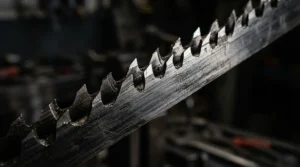
Think of a pawl tooth as a tiny ramp. On the forward trip, the board slides under the rearward-leaning teeth and nudges the finger upward. Reverse the motion and the teeth dig in, and the spring-loaded pivot wedges tighter. That’s the whole trick. Patent descriptions of the standard design note that the teeth point rearward so they don’t grip during normal feeding.
This anti kickback teeth design review boils down to four inspection points:
- Tooth sharpness: dull teeth skate across the surface instead of biting.
- Spring tension: too weak and the finger floats, too strong and it drags and scars the wood.
- Pivot slop: sloppy pawls, as one forum veteran warns, can miss narrow cutoffs.
- Tip contact: the fingers should rest on the stock, not hover. Users praised the Biesemeyer Removable Splitter for fingers that touch the tabletop.
The trade-offs are real. Forum users note that pawls can scratch wood, and a BT3 owner reported teeth digging into a plastic insert whenever the blade height changed. That’s why roller designs like the Board Buddies W1104 swap teeth for friction. A Shopsmith patent goes further, proposing a smooth cam and admitting that conventional pawl teeth sometimes fail to engage during real kickback. In short, teeth design matters, but so does everything around it.
Pawl Engagement Angle: Why Geometry Decides Everything
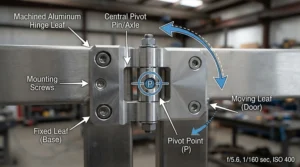
Here’s where geometry earns its paycheck. The pawl pivots at the top while its toothed tip rests on the board. Forward motion swings the tip upward and the finger glides along. Reverse motion swings it downward and rearward, driving the teeth deeper. The pawl engagement angle is the angle between the tooth face and the wood surface at that moment. Too shallow and the tooth skims, too steep and it gouges.
Treat this next bit as reasoning, not a lab result: stock thickness probably changes that angle, because a thicker board lifts the pivot geometry differently than a thin one. That would explain why pawls feel most convincing on the thicknesses their designers had in mind, and why narrow cutoffs can slip past sloppy fingers.
For perspective, a Shopsmith patent for a cam-style alternative describes a locking spiral where a radius from the contact point forms roughly an 8-degree angle. Designers clearly sweat these degrees. Your practical check is simple. With the saw unplugged, slide a scrap forward and back by hand. The pawls should glide forward and resist reverse. One forum poster found he could pull a board back past SawStop-style pawls without effort, which is a useful warning sign. Test yours rather than assume.
Pawl System Safety Comparison: Pawls vs Riving Knife vs Rollers vs Featherboards
A fair pawl system safety comparison starts with humility: no single device covers every kickback scenario. Each layer handles a different failure.
| Option | What It Stops | Weak Spot | Best For |
|---|---|---|---|
| Anti-kickback pawls | Backward travel of a board already launched | Can miss narrow stock; may mark wood | Long rips with a full guard |
| Riving knife | Pinching behind the blade | Doesn’t stop every kickback type | Every cut that goes through |
| One-way rollers (Board Buddies W1104) | Backward travel and lift | Crowd small boards | Sheet goods and long boards |
| Featherboards | Drift away from the fence | Don’t stop a launched board | Steady rips |
| Zero-clearance splitter (Micro Jig MJ Splitter Steel Pro SP-2) | Pinching at the kerf | No pawls; 90-degree cuts only | ZCI users |
Looking at the table, the riving knife is the foundation and pawls are the safety net underneath. A woodworking reference ranks featherboards as the next-best option after a knife or splitter. Rollers like the Board Buddies W1104 cover the same one-way idea without teeth. If you ever have to choose, spend on the knife first, then layer pawls or rollers to match the work.
Rated Kickback Pawls: What “Rated” Does and Doesn’t Mean
Search for rated kickback pawls and you’ll find plenty of marketing and almost no published performance rating. I couldn’t verify any standard that assigns a number to a pawl’s holding force. What does exist is the UL 987 standard for stationary tools. According to the CPSC’s table saw standards page, the standard was revised on January 31, 2005, to add the riving knife requirement, and CPSC staff documents describe anti-kickback devices as required equipment. Reference sources date the riving knife requirement for newly designed saws to 2008.
So when a listing touts rated kickback pawls, translate it. Rated for which saw? Which blade diameter and kerf? Which splitter or knife thickness? Compatibility is the only “rating” you can reliably check.
For context, SawStop’s inventor, citing CPSC data in a Fine Woodworking interview, said kickback is involved in roughly 35.5% of blade-contact table saw accidents. He also said even a riving knife won’t prevent every kickback type. That’s useful framing. Pawls address a real hazard, but they’re one layer, not a guarantee. Rated kickback pawls, in other words, are best judged by fit, sharp teeth and sound installation rather than a printed badge.
Splitter Mounting: A Step-by-Step Setup Guide
Good splitter mounting is where most pawl performance is won or lost. Splitters work best when they’re the right width for the kerf and in perfect alignment with it.
- Unplug the saw. Always. Then check that the blade is parallel to the miter slot and the fence is aligned to the same slot.
- Raise the blade and seat the splitter or knife in its mount so it sits directly behind the blade.
- Check width. A splitter should be thicker than the blade body but thinner than the kerf.
- Align the face. Line it up with the sides of the teeth that face the fence, as aftermarket splitter instructions show.
- Attach the pawls. Their tips should rest just above the table, not drag on the insert.
- Test by hand. Slide scrap forward and back; the pawls should resist reverse.
- Recheck after any blade change. Kerf width changes can move the fit.
For zero-clearance inserts, the Micro Jig MJ Splitter Steel Pro SP-2 needs at least about 50mm of space behind the blade at full height, plus a wood or plastic insert you can drill. A Shark Guard ARK owner will instead follow the maker’s saw-specific mounting directions. Either way, remember the core rule of splitter mounting: perfect alignment beats expensive hardware.

Kickback Direction Control: Steering the Board Away From You
Kickback is a direction problem. At the back of the blade, the teeth travel upward, so a pinched board can be lifted and flung toward you. Good kickback direction control means deciding in advance where that energy can’t go.
Think in layers:
- Layer one: keep the kerf open with a riving knife or splitter.
- Layer two: use pawls or one-way rollers so reverse motion is blocked.
- Layer three: featherboards press stock down and into the fence.
- Layer four: you. Many woodworkers are taught to stand slightly left of the blade, out of the line of fire.
Pawls provide kickback direction control by converting reverse motion into a bite. Roller hold-downs like the Board Buddies W1104 push the idea further, since the wheels turn one way only. The DeWalt DWE7491RS and Bosch Smart Guard System bundle the layers into one saw-mounted kit.
Remember the limits, though. Pawls matter for rips and don’t help much on certain crosscuts. A Popular Woodworking essentials piece called them virtually useless on stock narrower than 6 inches when using a miter gauge. Direction control is a stack of habits and hardware, never a single part.
Real-World Scenarios: Matching Setups to Your Shop
Scenario 1: the weekend builder with a jobsite saw. You rip a few boards a month in a driveway or garage, with a budget in the mid-hundreds. The DeWalt DWE7491RS or the Bosch Smart Guard System gives you pawls you can snap on for long rips and off for narrow cuts. Pair it with a push stick and you’ve covered the basics.
Scenario 2: the owner of a vintage cabinet saw. Your saw is solid but has no modern knife. A Shark Guard ARK gives a close-fitting knife and a usable guard. If you want pawls, check whether your saw can take a Biesemeyer Removable Splitter, then confirm parts availability first.
Scenario 3: the sheet-goods builder. You break down plywood weekly in a small shop. Pawls fight you on wide panels, so the Board Buddies W1104 holds stock to the table and fence while you walk to the outfeed side. Add a good outfeed support.
Scenario 4: the zero-clearance-insert devotee. You cut custom inserts for tear-out control. The Micro Jig MJ Splitter Steel Pro SP-2 drops a splitter into your own insert, though you’ll skip pawls and need another layer for backward travel.
✨ Ready to Upgrade Your Saw’s Safety Setup?
🔍 Take your shop safety to the next level with these carefully selected products. Click on any highlighted item to check current pricing and availability. These tools will help you make cleaner, more confident rip cuts!
Common Mistakes When Buying and Using Anti Kickback Pawls for Table Saw Guards
Most pawl problems trace back to a handful of avoidable errors:
- Treating pawls as a substitute for a riving knife. They’re the backup act. Pinch prevention comes from the knife.
- Leaving pawls on for the wrong cuts. They only suit through-cuts, and with a crosscut sled and splitter they can hang up when you pull the sled back.
- Forgetting the blade-height trap. Raise the blade without lifting the pawls and the teeth can chew a plastic insert.
- Ignoring dull teeth and tired springs. A pawl that can’t bite is decoration.
- Using the rip fence on crosscuts. Cornell’s table saw safety guide lists this as something to avoid.
- Buying without checking fit. A great product that doesn’t mount to your saw is expensive clutter.
The fix is a short habit loop: inspect, align, test by hand, then cut. And if the pawls are what’s stopping you from using a guard at all, remember the forum report that a guard without pawls beats no guard.
Long-Term Cost and Maintenance: Price Range & Value Analysis
| Product | Price Range (at time of research) | Value Verdict | Best For |
|---|---|---|---|
| SawStop Micro Blade Guard | Check current price (premium tier) | Fair if integration matters | Compatible cabinet saws |
| Bosch Smart Guard System | Bundled with saw; check current price | Strong | Frequent swappers |
| DeWalt DWE7491RS | Historically $600-$700 range for the package | Strong all-in-one | Hobbyists and contractors |
| Shark Guard ARK | Check current price (premium tier) | Worth it for vintage saws | Older cabinet saws |
| Biesemeyer Removable Splitter | Around $100 range in older posts; verify | Good if available | Legacy saws |
| Micro Jig MJ Splitter Steel Pro SP-2 | Roughly $45-$65 range | High value | Zero-clearance inserts |
| Board Buddies W1104 | Around $100-$120 range | Solid for heavy ripping | Sheet goods |
The table shows a clear split. The Micro Jig MJ Splitter Steel Pro SP-2 is the cheapest way to add a knife-like piece but offers no pawls. The DeWalt DWE7491RS and Bosch Smart Guard System fold everything into a saw purchase. For vintage saws, the Shark Guard ARK costs more but replaces an unsafe nothing.
Maintenance is cheap compared with replacement. Clean pitch and dust from the teeth, check that springs return the fingers crisply, replace pawls that bite weakly, and inspect insert wear plates or zero-clearance inserts periodically. Prices change constantly, so use these ranges as a starting point only.
FAQ
❓ Where can I find replacement anti kickback pawls for table saw models with discontinued parts?
❓ Are pawls worth adding if I already have a riving knife?
❓ Can I use pawls with a crosscut sled?
❓ Do pawls damage zero-clearance inserts?
❓ Pawls or rollers for ripping plywood?
Conclusion
Anti kickback pawls for table saw safety are a backup, not a miracle. The riving knife prevents the pinch, and pawls grab what slips past. Their real value shows up on long rips, where one-way gates make sense, and they’re only as good as their teeth, springs, alignment and your willingness to leave them installed.
If you want the easiest integrated system, look at the Bosch Smart Guard System or the DeWalt DWE7491RS. Cabinet-saw owners with compatible machines should consider the SawStop Micro Blade Guard. Vintage-saw owners have the Shark Guard ARK and, where parts exist, the Biesemeyer Removable Splitter. If you cut your own zero-clearance inserts, the Micro Jig MJ Splitter Steel Pro SP-2 is a smart, low-cost splitter. And for sheet goods, the Board Buddies W1104 is a friction-based alternative.
Whatever you choose, test it by hand, keep it aligned, and remember the quiet truth from every source I read: no accessory replaces good technique.
Recommended for You
- Aftermarket Anti Kickback Pawls Under $60: 7 Smart Picks (2026)
- Blade Guard For Bandsaw And Table Saw Combo Shop: 7 Best Picks 2026
- Top Rated Blade Guards For Jobsite Table Saws: 7 Proven Picks (2026)
Disclaimer: This article contains affiliate links. As an Amazon Associate, I earn from qualifying purchases. If you purchase products through these links, we may earn a small commission at no additional cost to you.
✨ Found this helpful? Share it with your friends! 💬🤗
