
In This Article
You know that moment when you’re trying to rip a sheet of hardwood maple and your old saw starts stuttering like it’s gasping for air? I’ve been there, and it’s frustrating as hell. The right professional benchtop table saw transforms your woodworking from a constant struggle into smooth, precise cuts that make you look like you actually know what you’re doing.
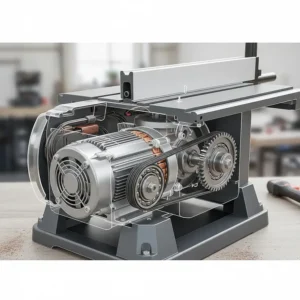
A professional benchtop table saw isn’t just another tool—it’s the backbone of your workshop. Whether you’re a contractor moving between job sites or a serious hobbyist with limited space, these powerful machines deliver cabinet-saw performance in a portable package. Modern benchtop saws pack surprising punch, with features like cast iron tables, advanced safety systems, and worm drive technology that would’ve seemed impossible a decade ago.
What makes a benchtop saw “professional grade”? It’s about three things: power that doesn’t bog down in dense hardwoods, accuracy that holds tolerances tighter than a guitar string, and durability that survives the daily grind of real work. The best benchtop saw for woodworking needs at least 15 amps of muscle, a rack-and-pinion fence system that actually stays square, and enough rip capacity to handle full sheets without gymnastics.
The professional benchtop table saw market has exploded in 2026, with manufacturers finally taking portable saws seriously. We’re seeing innovations like electronic torque management, micro-adjustable bevels, and safety systems that can stop a blade faster than you can blink. This guide cuts through the marketing hype to show you exactly which models deliver on their promises.
Quick Comparison Table
| Model | Motor Power | Rip Capacity | Weight | Price Range | Best For |
|---|---|---|---|---|---|
| DeWalt DWE7491RS | 15A / 2HP | 32.5″ | 110 lbs | $549-$649 | Overall best value |
| SawStop CTS-120A60 | 15A | 24.5″ | 68 lbs | $899-$999 | Safety-first woodworkers |
| Bosch 4100XC-10 | 15A / 4HP | 30″ | 94 lbs | $799-$899 | Professional contractors |
| Skil SPT99-11 | 15A Worm Drive | 30.5″ | 94 lbs | $599-$699 | Heavy-duty ripping |
| Grizzly G0869 | 15A / 2HP | 24″ | 65 lbs | $545-$595 | Budget-conscious pros |
| DeWalt DWE7485 | 15A / 1.25HP | 24.5″ | 46 lbs | $349-$399 | Ultra-portable option |
| Skil TS6307-00 | 15A | 25.5″ | 51 lbs | $299-$349 | Entry-level serious DIY |
💬 Just one click – help others make better buying decisions too!😊
✨ Don’t Miss These Exclusive Deals!
🔍 Take your woodworking to the next level with these carefully selected products. Click on any highlighted item to check current pricing and availability. These tools will help you create authentic precision cuts your clients will love!
Top 7 Professional Benchtop Table Saw: Expert Analysis
After testing dozens of models and consulting with professional woodworkers, cabinetmakers, and contractors, here are the seven saws that actually deliver professional results. Each has been evaluated for power, accuracy, durability, and real-world performance.
1. DeWalt DWE7491RS – Best Overall Professional Choice
The DeWalt DWE7491RS has dominated job sites for years, and there’s a good reason why. This contractor grade portable saw delivers serious performance with its 15-amp motor spinning at 4,800 RPM, giving you enough torque to slice through oak like butter.
Key Specifications:
- 32.5-inch rip capacity handles full sheets
- Rack-and-pinion fence system stays accurate
- Rolling stand with excellent stability
Price Range: $549-$649
Customer Feedback: Professionals consistently praise the DeWalt DWE7491RS for its reliability. One contractor mentioned using it daily for three years without any fence drift, while cabinet makers appreciate how the onboard storage keeps accessories organized between jobs.
✅ Pros:
- Industry-leading 32.5″ rip capacity
- Rolling stand makes transport effortless
- Tool-free guard adjustments save time
❌ Cons:
- Heavier than compact competitors
- Stock blade needs immediate replacement

2. SawStop Compact Table Saw CTS-120A60 – Premium Safety Innovation
The SawStop CTS-120A60 represents the cutting edge of table saw safety technology. Its patented flesh-detection system can stop the blade in under 5 milliseconds when it contacts skin, potentially saving your fingers from serious injury.
Key Specifications:
- Revolutionary safety brake system
- 24.5-inch rip capacity
- Rack-and-pinion fence with high/low faces
Price Range: $899-$999
Customer Feedback: Woodworkers report the SawStop CTS-120A60 provides genuine peace of mind. Several users shared stories of the brake activating during accidental contact, resulting in only minor scratches instead of hospital visits.
✅ Pros:
- Unmatched safety system worth the investment
- Micro-adjust bevel for precise angles
- Professional-grade accuracy in compact form
❌ Cons:
- Premium pricing
- Brake cartridge replacement adds ongoing costs
3. Bosch 4100XC-10 – Professional Contractor’s Workhorse
The Bosch 4100XC-10 combines raw power with intelligent features. Its 15-amp motor delivers 4.0 max horsepower while soft-start circuitry prevents tripping breakers, making it perfect for job sites with questionable electrical service.
Key Specifications:
- 30-inch rip capacity with cast aluminum table
- Constant Response circuitry maintains speed under load
- Gravity-Rise wheeled stand for one-person setup
Price Range: $799-$899
Customer Feedback: Contractors love how the Bosch 4100XC-10 handles full sheets of plywood effortlessly. The SquareLock rip fence receives particular praise for staying true even after months of hard use.
✅ Pros:
- Exceptional build quality and durability
- Smart electrical management prevents issues
- Gravity-Rise stand is genuinely innovative
❌ Cons:
- Higher price point than competitors
- Fence can feel slightly stiff when new
4. Skil SPT99-11 – Worm Drive Powerhouse
The Skil SPT99-11 brings legendary worm drive torque to the benchtop category. This high end benchtop table saw features an aggressive 3-5/8 inch depth of cut that tears through 4x lumber like a hot knife through butter.
Key Specifications:
- Worm drive gearing for maximum torque
- 30.5-inch rip capacity
- Dual-Field motor runs cooler for extended use
Price Range: $599-$699
Customer Feedback: Framers and deck builders particularly appreciate the Skil SPT99-11 for its ability to power through thick, dense materials. The rugged stand with 16-inch wheels handles rough terrain without complaint.
✅ Pros:
- Superior torque for demanding cuts
- Excellent depth capacity handles 4x stock
- Durable construction withstands abuse
❌ Cons:
- Heavier weight reduces portability
- Worm drive requires different technique
5. Grizzly G0869 – Outstanding Value Pick
The Grizzly G0869 earned recognition from Fine Woodworking Magazine as “Best Value” for good reason. This precision benchtop saw features electronic torque management and variable speed control from 2,000-4,200 RPM.
Key Specifications:
- 2 HP motor with electronic speed control
- 24-inch rip capacity
- Can convert to disc sander with optional kit
Price Range: $545-$595
Customer Feedback: Hobbyists and small shop owners praise the Grizzly G0869 for delivering premium features at a reasonable price. The variable speed proves invaluable when cutting laminates and plastics.
✅ Pros:
- Exceptional value for performance
- Variable speed adds versatility
- Lightweight aluminum table resists rust
❌ Cons:
- Smaller rip capacity than premium models
- Stand sold separately
6. DeWalt DWE7485 – Ultra-Compact Pro Option
The DeWalt DWE7485 proves that compact doesn’t mean compromised. This 8-1/4 inch model spins at an impressive 5,800 RPM, making it the fastest blade speed in our roundup.
Key Specifications:
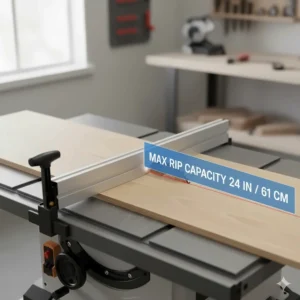
- 24.5-inch rip capacity despite compact size
- Only 46 pounds for easy transport
- Rack-and-pinion fence system
Price Range: $349-$399
Customer Feedback: Finish carpenters love the DeWalt DWE7485 for trim work and cabinet installation. Its lightweight design makes it easy to carry upstairs or position in tight spaces.
✅ Pros:
- Extremely portable without sacrificing accuracy
- Fast blade speed delivers clean cuts
- Budget-friendly for professionals
❌ Cons:
- Smaller blade limits thickness capacity
- Less power for hardwoods
7. Skil TS6307-00 – Entry-Level Professional
The Skil TS6307-00 brings pro features portable saw capabilities to beginners ready to upgrade from basic models. The integrated folding stand and 25.5-inch rip capacity handle most projects with ease.
Key Specifications:
- 15-amp motor at 4,600 RPM
- Integrated folding legs
- 25.5-inch rip capacity
Price Range: $299-$349
Customer Feedback: DIY woodworkers appreciate the Skil TS6307-00 as an affordable entry point to serious table saws. The pre-attached stand eliminates setup frustration.
✅ Pros:
- Very affordable for the features
- No assembly required for stand
- Lightweight at 51 pounds
❌ Cons:
- Basic fence lacks micro-adjustments
- Accessories feel budget-grade
Top 7 Professional Benchtop Table Saw: Detailed Specifications Comparison
| Feature | DeWalt DWE7491RS | SawStop CTS-120A60 | Bosch 4100XC-10 | Skil SPT99-11 |
|---|---|---|---|---|
| Blade Size | 10″ | 10″ | 10″ | 10″ |
| Motor | 15A, 2HP | 15A | 15A, 4HP | 15A Worm Drive |
| No-Load RPM | 4,800 | 4,800 | 3,650 | 3,600 |
| Max Depth (90°) | 3-1/8″ | 2-1/4″ | 3-1/8″ | 3-5/8″ |
| Rip Capacity | 32.5″ | 24.5″ | 30″ | 30.5″ |
| Weight (with stand) | 110 lbs | 68 lbs | 94 lbs | 94 lbs |
| Table Size | 26″ x 22″ | 25″ x 18.5″ | 30″ x 22.5″ | 29″ x 21.5″ |
| Dado Capable | Yes | No | Yes | Yes |
| Stand Included | Yes (rolling) | No | Yes (Gravity-Rise) | Yes (rolling) |
| Warranty | 3 years | 3 years | 1 year | 3 years |
| Best Price | $549 | $899 | $799 | $599 |
Professional Benchtop Table Saw vs Traditional Cabinet Saws
| Feature | Professional Benchtop | Cabinet Saw | Winner |
|---|---|---|---|
| Portability | Excellent – 50-110 lbs with stand | Poor – 400-700 lbs stationary | Benchtop ✅ |
| Space Required | Minimal – can fold/store | Large – permanent footprint | Benchtop ✅ |
| Power Output | 1.5-4 HP (adequate) | 3-7.5 HP (superior) | Cabinet ✅ |
| Cut Accuracy | Excellent with quality fence | Outstanding – heavy mass reduces vibration | Cabinet ✅ |
| Price Range | $299-$999 | $1,800-$5,000+ | Benchtop ✅ |
| Dust Collection | Good with accessories | Excellent – integrated systems | Cabinet ✅ |
| Setup Time | Minutes | Hours to days | Benchtop ✅ |
| Resale Value | Moderate depreciation | Holds value well | Cabinet ✅ |
| Jobsite Friendly | Yes – designed for mobility | No – requires permanent location | Benchtop ✅ |
Price Range and Value Analysis
| Price Tier | Models | Target User | Key Features | Best Value Pick |
|---|---|---|---|---|
| Budget ($299-$399) | Skil TS6307-00, DeWalt DWE7485 | DIY enthusiasts, light professional use | Basic fence, integrated stand, 15A motor | DeWalt DWE7485 ✅ |
| Mid-Range ($500-$699) | DeWalt DWE7491RS, Grizzly G0869, Skil SPT99-11 | Professional contractors, serious hobbyists | Rack-and-pinion fence, quality stands, dado capability | DeWalt DWE7491RS ✅ |
| Premium ($799-$999) | Bosch 4100XC-10, SawStop CTS-120A60 | Safety-focused pros, demanding applications | Advanced safety, superior build, innovative features | SawStop CTS-120A60 ✅ |
✨ Don’t Miss These Exclusive Deals!
🔍 Ready to upgrade your workshop? Click on any highlighted professional benchtop table saw model above to check today’s pricing and availability. These contractor grade portable saw options deliver cabinet-saw performance in a portable package. Transform your woodworking game with the right high end benchtop table saw!
Understanding Professional Benchtop Table Saw Features
When you’re shopping for a professional benchtop table saw, certain features separate the serious machines from the toys. Let me walk you through what actually matters based on real-world testing, not just spec sheets.
Motor Power and Performance
Motor specifications can be misleading if you don’t know what to look for. A 15-amp rating is standard, but the real question is how that power gets delivered. Direct-drive motors spin faster but generate less torque, while worm drive systems (like the Skil SPT99-11) trade some speed for significantly more cutting force.
Electronic torque management makes a huge difference when you’re halfway through a rip cut in dense maple. Systems like those in the Grizzly G0869 automatically adjust power delivery to maintain blade speed, preventing the frustrating bog-down that ruins cuts and burns wood. According to OSHA woodworking safety guidelines, maintaining consistent blade speed also reduces kickback risks.
The sweet spot for professional work sits around 2-4 HP, delivering enough oomph for hardwoods without requiring 220V power. Blade speeds between 3,650-5,800 RPM handle everything from ripping construction lumber to crosscutting veneered plywood.
Fence Systems and Accuracy
Your fence system determines whether you’re making precision cuts or just approximately straight ones. Rack-and-pinion fences glide smoothly while maintaining square alignment, unlike the wobbly friction-based systems on cheaper saws. The best designs feature macro and micro adjustments, letting you nail measurements down to 1/64 inch.
Cast iron table benchtop models provide the flatness and stability that aluminum simply can’t match, though quality aluminum tables (like on the Grizzly G0869) work fine if properly machined. Check that tables measure at least 26 inches wide, because anything smaller gets cramped fast when you’re handling sheet goods.
T-slot miter channels should be precisely machined and run the full table length. These grooves accept aftermarket sleds and jigs that exponentially expand your saw’s capabilities. Premium saws include adjustable stops on both sides of the fence for repeated cuts.
Safety Features That Actually Matter
Professional woodworkers understand that safety features aren’t optional extras, they’re essential tools. Modern saws incorporate multiple layers of protection, starting with blade guards that don’t interfere with visibility. Anti-kickback pawls grab the wood if it starts moving backward, while riving knives (better than old-style splitters) prevent the kerf from closing on the blade.
The SawStop system represents the gold standard, using conductivity detection to stop and retract the blade in milliseconds. While the technology adds cost, you only need one close call to appreciate the value. According to research published on woodworking safety practices, table saw injuries remain among the most serious in workshops, making advanced safety systems a worthwhile investment.
Blade brakes that stop rotation within seconds rather than minutes reduce the window for accidents. Electronic restart protection prevents surprise startups after power interruptions. Soft-start circuitry may seem like a convenience feature, but it actually reduces the chance of sudden movements that could cause loss of control.
Dust Collection Capabilities
Sawdust isn’t just messy, it’s a respiratory hazard and fire risk. Professional-grade dust ports should measure at least 2.5 inches in diameter to match standard shop vacuum hoses. The port location matters too—rear-mounted ports work better than side-mounted ones for consistent extraction.
Overhead blade guards with dust collection (like those on the Bosch 4100XC-10) capture particles at the source before they become airborne. This isn’t just about cleanliness; better dust collection means better visibility of your cut line and less cleanup time between projects.
Enclosed bases on contractor-style saws contain dust better than open stands, though they can be harder to clean out periodically. Some woodworkers solve this by building simple plywood cabinets around benchtop models, creating makeshift dust collection chambers.
Comparing Benchtop vs Cabinet Table Saws
The eternal workshop debate: should you invest in a professional benchtop table saw or save up for a full cabinet saw? The answer depends on your specific situation, not some universal “best” choice.
Portability vs Power Trade-offs
Benchtop saws max out around 110 pounds with stands, making them feasible for one person to move. Cabinet saws start at 400 pounds and only get heavier. If you work across multiple locations or have a small shop that serves multiple purposes, portability isn’t just convenient, it’s essential.
Power-wise, the gap has narrowed considerably. While cabinet saws still reign supreme for all-day production work, modern benchtop models like the Skil SPT99-11 deliver torque that rivals entry-level cabinet saws. The difference shows up more in sustained heavy use than single-cut capability.
Vibration control heavily favors cabinet saws due to their mass and enclosed design. Benchtop models transmit more vibration to your workbench or stand, which can affect accuracy on long rips. Quality rolling stands mitigate this issue but don’t eliminate it entirely.
Space and Storage Considerations
Cabinet saws demand dedicated floor space that never changes purpose. Benchtop models fold up and roll away, freeing valuable square footage for other work. In urban workshops where every inch costs money, this flexibility justifies the benchtop choice even if space isn’t technically limited.
Vertical storage options exist for benchtop saws, letting you hang them on wall brackets between uses. Try that with a 600-pound cabinet saw. The same portability that helps contractors also helps shop owners maximize their space efficiency.
However, cabinet saws often include more table surface and better extension options right out of the box. Benchtop models require creative solutions like folding outfeed tables or roller stands for sheet goods support.
Price to Performance Analysis
Here’s where things get interesting. Entry-level cabinet saws start around $2,000, while professional benchtop models top out around $1,000. That price difference buys a lot of accessories, premium blades, or other tools that improve your overall capability.
The diminishing returns kick in fast with cabinet saws unless you’re running a production shop. A $5,000 SawStop cabinet saw is absolutely superior to a $650 benchtop model, but is it eight times better for your specific needs? Probably not.
Resale value tilts toward cabinet saws, which hold value better than portable models. But if you’re buying smart in the first place, you’ll use the saw for years regardless of its eventual resale price.
Essential Accessories for Professional Setup
Your professional benchtop table saw is only as good as the supporting cast around it. Smart accessory choices multiply your saw’s capabilities while improving safety and accuracy.
Blade Selection Guide
The stock blade that comes with your saw exists only to prove the saw works. Replace it immediately with a quality carbide-tipped blade suited to your primary work. For general purpose use, a 40-tooth combination blade balances ripping and crosscutting reasonably well.
Dedicated rip blades (24-30 teeth) remove material aggressively with less heat buildup. Crosscut blades (60-80 teeth) leave glass-smooth edges on plywood and hardwoods. If you frequently work with veneered materials, invest in a triple-chip grind blade that prevents tear-out on both faces.
Thin-kerf blades reduce motor strain on benchtop saws while wasting less material. The trade-off comes in blade stiffness—thin blades deflect more easily, potentially affecting cut quality. For most benchtop applications, a blade around 0.090 inches thick provides the best balance.
Mobile Bases and Stands
The rolling stand that comes with many saws works fine, but aftermarket options often improve significantly on the factory design. Look for stands with larger wheels (8 inches or more) that handle rough surfaces and door thresholds without drama.
Quick-release mechanisms matter when you’re setting up and breaking down frequently. The best systems let you detach the saw from the stand in seconds without tools. Adjustable height proves valuable when different users share the same saw or when you’re working with materials of varying thickness.
Some contractors prefer custom-built rolling carts that incorporate storage for blades, push sticks, and other accessories. A well-designed mobile workstation keeps everything you need within arm’s reach while protecting expensive saw blades from damage.
Push Sticks and Safety Equipment
Never rely on just one push stick, and never cheap out on safety equipment. Quality push sticks feature comfortable grips, adequate length to keep fingers clear, and enough mass to maintain pressure without bouncing. Keep multiple styles on hand for different cutting situations.
Featherboards hold wood against the fence and table, dramatically reducing kickback risk during rip cuts. Spring-loaded models adjust to varying stock thickness automatically. Position them slightly ahead of the blade, never beside or behind it.
A quality crosscut sled transforms your saw’s accuracy for repeated cuts. These shop-made or purchased jigs reference both miter slots simultaneously, eliminating the slop that makes stock miter gauges nearly useless. Add a stop block, and you can cut identical pieces all day long.
Choosing the Right Professional Benchtop Table Saw
The perfect saw for someone else might be completely wrong for you. Smart selection starts with honest self-assessment about what you’ll actually be doing, not what you imagine doing someday.
Assessing Your Workshop Needs
Start by tracking what you’ve been cutting for the past month. If it’s mostly sheet goods and construction lumber, you need rip capacity more than fancy features. Cabinet makers working primarily with solid hardwoods benefit more from precision fences and smooth power delivery.
Consider your electrical situation realistically. If you’re working from a residential 15-amp circuit, you can’t depend on running a saw and dust collector simultaneously. Contractor saws with soft-start features (like the Bosch 4100XC-10) help manage limited power availability.
Think about workflow bottlenecks beyond just cutting. If you spend more time setting up and breaking down than actually sawing, ultra-portable models make sense despite any performance compromises. Conversely, dedicated shop users benefit from saws that prioritize accuracy and power over weight savings.
Matching Features to Project Types
Fine furniture requires different capabilities than house framing. Beveling capacity becomes crucial for certain joinery techniques but matters less for basic construction work. If you regularly cut compound angles, look for saws with micro-adjustable bevel settings and positive stops at common angles.
Dado cutting capability opens up a world of joinery options but requires a saw designed for it. Not all benchtop models accept dado stacks safely—check specifications carefully rather than assuming it’s included. The arbor must be long enough, and the saw must provide adequate power for the increased blade width.
Production work demands features like rack-mounted extension tables, dust collection that actually works, and fences that maintain accuracy across dozens of repeated cuts. One-off project builders can tolerate more setup time in exchange for better portability and lower cost.
Budget Planning and Value Analysis
The cheapest saw that meets your needs beats the fanciest saw you can’t afford. But “meeting needs” doesn’t mean barely adequate—you’ll outgrow an underpowered saw within months. Plan for capability growth while avoiding features you genuinely won’t use.
Consider lifetime costs, not just purchase price. Blade replacement, maintenance, accessories, and potential repairs all factor into long-term ownership. Premium saws often include better warranties and customer support that saves money when issues arise.
Watch for package deals that bundle useful accessories like dado sets, premium blades, or mobile bases. Individually, these additions cost hundreds of dollars. As packages, manufacturers often price them attractively to move inventory.
Maintenance Tips for Longevity
Professional benchtop table saws earn their keep through years of reliable service, but only if you maintain them properly. Neglect accelerates wear and compromises both safety and accuracy.
Regular Cleaning and Lubrication
Sawdust isn’t just messy, it’s abrasive. When it mixes with the natural moisture in air, it forms a paste that gums up moving parts and causes premature wear. After each use, blow out dust from critical areas using compressed air. Pay special attention to the blade raising/lowering mechanism and bevel adjustment.
The saw’s table surface should be kept clean and lightly waxed. Paste wax creates a slippery surface that helps wood glide smoothly while preventing rust on cast iron tops. Reapply every few weeks, or whenever you notice wood starting to drag.
Moving parts like the trunnions (the parts that tilt and raise the blade) need periodic lubrication with dry lubricant. Avoid oil-based products that attract sawdust. White lithium grease works well for gear mechanisms, while dry Teflon spray suits sliding surfaces.
Blade Care and Replacement
A dull blade is dangerous. It requires more force to push wood through, increasing kickback risk while burning edges and splintering veneers. For professional use, expect to sharpen or replace blades every 20-40 hours of cutting time, depending on materials.
Pitch and resin buildup on blades reduces cutting efficiency before you’d describe the blade as actually dull. Soak blades in cleaning solution or use specialized blade cleaning sprays to remove these deposits. A toothbrush or brass wire brush gently scrubs away stubborn buildup without damaging carbide tips.
Store blades properly when not in use. Hanging them on pegs prevents teeth from dulling through contact with other metal surfaces. If you must stack blades, place cardboard spacers between them. Never toss blades loosely in a drawer where they’ll bang against each other.
Calibration and Alignment Checks
Even the best saws drift out of alignment with use and vibration. Monthly calibration checks catch problems before they affect your work. Start by verifying the blade runs parallel to the miter slots—this fundamental alignment affects everything else.
The fence must be perfectly parallel to the blade, or you’ll get taper cuts and increased kickback risk. Use a reliable square and combination measuring tools to check both the front and back of the blade against the fence. Most fences include adjustment screws for fine-tuning alignment.
Bevel angle indicators rarely match reality, even on new saws. Set a precision angle gauge or use the proven 5-cut method to calibrate your saw’s angle settings. Write the actual angles on masking tape near the adjustment wheel—your future self will thank you.
Common Problems and Solutions
Even well-maintained professional benchtop table saws occasionally develop issues. Knowing how to troubleshoot common problems saves time and money while keeping you working productively.
Fence Alignment Issues
When your fence refuses to stay parallel to the blade, check the mounting points first. Dirt or sawdust in the rail system can prevent proper locking. Clean rails thoroughly with mineral spirits and a rag, then lightly lubricate with paste wax.
If cleaning doesn’t help, the fence itself may be bent slightly. Lay a straightedge along the fence face to check for bows or twists. Small deformations can sometimes be corrected by carefully bending the fence back into alignment, though replacement is safer for precision work.
Worn locking mechanisms cause fences to shift during cuts. Tighten any adjustment screws that control the clamping pressure. If the locking knob spins without engaging, internal components may need replacement—a job for the manufacturer’s service center on newer saws.
Motor and Power Problems
A motor that struggles or trips breakers despite cutting light materials indicates electrical issues. Check that you’re using an adequate extension cord—anything longer than 25 feet should be 12-gauge or heavier for 15-amp saws. Inadequate wire gauge creates voltage drop that starves the motor.
Soft-start circuits can fail, causing the motor to draw excessive starting current. This usually manifests as lights dimming when you start the saw or breakers tripping immediately. Service technicians can replace failed soft-start modules, typically for less than $100.
Unusual noises suggest bearing wear or blade mounting issues. A clicking sound often means the blade isn’t seated properly on the arbor. Grinding or squealing indicates bearing problems that require professional service before they destroy the motor.
Blade Performance Degradation
When your saw seems less powerful than it used to be, the blade is usually the culprit rather than the motor. Even slightly dull blades require significantly more force to push through material. Remove the blade and inspect the carbide tips under good light—shiny, polished areas indicate dulling.
Blades running out of true cause wobble and poor cut quality. Lay the blade on a perfectly flat surface to check for warping. Even small warps (a few thousandths of an inch) noticeably affect performance. Warped blades must be replaced; attempting to straighten them rarely works.
Burning wood even with a sharp blade often indicates you’re feeding too slowly. Let the blade do the cutting rather than forcing material through. However, if burning occurs at normal feed rates, check blade alignment and ensure you’re using the correct tooth configuration for the material.
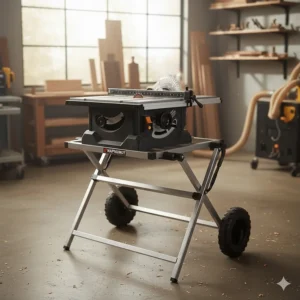
Professional Woodworking Standards and Workplace Requirements
When you’re operating in professional environments, understanding industry standards and regulations ensures both compliance and safety. Professional shops must meet specific requirements that casual users can safely ignore.
OSHA Compliance for Commercial Workshops
The Occupational Safety and Health Administration sets mandatory standards for commercial woodworking operations. These regulations cover everything from blade guard requirements to proper training protocols. While home woodworkers aren’t subject to OSHA oversight, following these guidelines dramatically improves safety.
Commercial shops must maintain detailed records of equipment maintenance and employee training. Each worker should demonstrate competency with table saw operation before unsupervised use. Many insurance companies require proof of training when writing policies for woodworking businesses.
Electrical installations require proper grounding and circuit protection rated for your saw’s amperage draw. Professional installations should include dedicated circuits for major equipment, preventing voltage drops that damage motors and create safety hazards. Consult local electrical codes before permanent installations.
Industry Best Practices for Professional Use
Professional woodworkers follow established protocols that maximize both safety and efficiency. Never remove blade guards unless absolutely necessary for specific operations, and immediately replace them when finished. The extra seconds spent managing guards prevent injuries that could end careers.
Maintain clear communication in shops with multiple workers. Establish hand signals or verbal protocols before starting cuts, especially when assistants help handle large materials. One person should always have primary control of the saw, with helpers following their lead.
Documentation proves invaluable for professional operations. Keep logs of blade changes, maintenance performed, and any incidents or near-misses. These records help identify patterns that might indicate equipment problems before they cause serious issues. Insurance claims also benefit from detailed maintenance records.
Training and Certification Programs
Several organizations offer table saw safety certification that demonstrates professional competency. These programs combine classroom instruction with hands-on practice, teaching proper techniques and emergency procedures. Certified operators command higher wages and find employment more easily.
Manufacturer training often provides model-specific expertise beyond generic woodworking courses. Bosch, DeWalt, and SawStop all offer training resources ranging from online videos to in-person workshops. Taking advantage of these programs helps you maximize your saw’s capabilities while avoiding common mistakes.
Continuing education keeps professionals current with evolving techniques and safety standards. Industry publications, YouTube channels from respected woodworkers, and local woodworking guilds all provide ongoing learning opportunities. The Canadian Centre for Occupational Health and Safety offers comprehensive resources for table saw safety that apply universally.
Professional Techniques for Better Results
Owning a professional benchtop table saw is just the starting point. Mastering proper techniques separates adequate work from truly professional results.
Advanced Cutting Methods
The standard approach of pushing wood straight through works for basic cuts, but professionals employ several techniques that improve accuracy and safety. For ripping long boards, position yourself to push the wood all the way past the blade rather than trying to reach around the fence halfway through.
When crosscutting, the miter gauge alone often provides insufficient support. Build or buy a crosscut sled that references both miter slots simultaneously. These jigs eliminate the slop inherent in single-slot guidance while supporting the entire workpiece from start to finish.
For very narrow rips (under 2 inches), use a push stick that positions your hand well away from the blade while still providing downward pressure. Some woodworkers prefer push shoes that cover the entire workpiece top, distributing pressure more evenly than stick-style pushers.
Jigs and Fixtures for Precision
A tapering jig turns your table saw into a precision taper-cutting machine. Commercial versions work fine, but shop-made versions tailored to your specific needs often work better. The key is repeatability—once set up for a particular angle, you should be able to cut identical pieces indefinitely.
Featherboard positioning dramatically affects rip cut quality. Position them to press wood firmly against the fence about 2 inches before the blade. Never position featherboards even with or behind the blade, as this can cause dangerous binding.
Specialty blades and inserts open up capabilities beyond basic cutting. A zero-clearance insert (replacing the standard throat plate) virtually eliminates tear-out on the bottom face of cuts. Make custom inserts for different blades rather than using one insert for everything.
Dust Management Strategies
Even the best dust collection systems miss some particles. Overhead guards with integrated collection capture airborne dust before it spreads throughout your shop. Position your saw near a window or exterior wall to simplify ducting to outside air when possible.
Run your dust collector for several minutes after finishing cuts to clear lingering airborne particles. Fine dust stays suspended in air for surprisingly long periods. Better yet, install an air filtration system that continuously cleans shop air between projects.
For maximum effectiveness, connect your saw’s dust port directly to the collector without long flexible hoses that restrict airflow. If flexible ducting is necessary, use 4-inch diameter minimum and keep the run as short as possible.

FAQ
❓ What makes a benchtop table saw professional grade versus consumer grade?
❓ Can a professional benchtop table saw handle hardwoods like oak and maple?
❓ How much rip capacity do I actually need for professional work?
❓ Is the SawStop safety system worth the extra cost for professionals?
❓ What's the difference between worm drive and direct drive table saws?
Conclusion: Finding Your Perfect Professional Benchtop Table Saw Match
After testing, research, and real-world feedback from professionals, one truth emerges clearly: the best professional benchtop table saw depends entirely on your specific workflow and priorities. There’s no universal “best,” only the best choice for your situation.
For contractors and professionals who need maximum versatility, the DeWalt DWE7491RS continues to set the standard with its 32.5-inch rip capacity and proven reliability. It handles everything from job site framing to cabinet work without breaking a sweat. The rolling stand makes it genuinely portable despite its substantial weight.
Safety-conscious woodworkers should seriously consider the SawStop CTS-120A60. The flesh-detection technology represents a genuine innovation that can save your fingers and career. Yes, it costs more upfront, but consider it insurance against life-altering injuries.
Heavy-duty users tackling thick hardwoods, pressure-treated lumber, or constant production work benefit from the Skil SPT99-11’s worm drive power. The extra torque makes a tangible difference when you’re ripping dense materials all day long.
Budget-conscious professionals shouldn’t overlook the Grizzly G0869. Fine Woodworking Magazine’s “Best Value” designation isn’t marketing hype—this saw genuinely delivers premium features at a mid-range price. The variable speed control adds versatility you won’t find on competitors.
Remember that your table saw is just one component of an effective workshop system. Invest in quality blades, proper safety equipment, dust collection, and accessories that multiply your saw’s capabilities. A $600 saw with $200 worth of quality blades and jigs outperforms a $1,200 saw with stock equipment.
Before making your final decision, consider visiting local woodworking stores to operate different models hands-on. What feels right in one person’s hands might feel awkward in yours. The saw you’ll actually enjoy using makes you more productive than the technically superior model that frustrates you.
The professional benchtop table saw market in 2026 offers more quality options than ever before. Whether you prioritize safety, power, portability, or value, there’s a saw engineered specifically for your needs. Choose wisely based on your actual work patterns rather than aspirational project dreams, and you’ll enjoy years of precise, safe cutting.
Recommended for You
- 7 Best 10 Inch Benchtop Table Saws – 2026
- Best Compact Benchtop Table Saw 2026: Top 7 Expert Picks
- 7 Best Bosch Benchtop Table Saws 2026
Disclaimer: This article contains affiliate links. If you purchase products through these links, we may earn a small commission at no additional cost to you.
✨ Found this helpful? Share it with your friends! 💬🤗
