
In This Article
I still remember the frustration of trying to rip plywood sheets with my old 7-inch saw—the motor screaming, the blade binding, and my patience wearing thinner than the kerf itself. Everything changed when I upgraded to a 10 inch benchtop table saw. The difference wasn’t just noticeable; it was transformative.
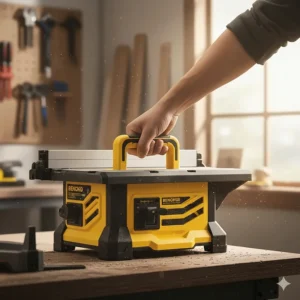
A 10 inch benchtop table saw represents the sweet spot in woodworking power tools. Unlike their smaller 8-inch counterparts, these saws deliver enough cutting capacity to handle 4×4 lumber in a single pass while remaining portable enough to move between your garage and jobsite. According to data from the Occupational Safety and Health Administration, proper equipment selection significantly impacts both safety and productivity in woodworking operations.
Whether you’re a weekend warrior building furniture or a professional contractor tackling trim work, understanding the capabilities of a 10 inch benchtop table saw will elevate your craft. These versatile machines offer 3-1/8 inches of cutting depth at 90 degrees—enough for most residential and light commercial applications—without requiring the dedicated shop space of a cabinet saw.
In this comprehensive guide, I’ll walk you through everything you need to know about selecting the perfect 10 inch benchtop table saw for your needs, from budget-friendly options under $300 to premium models approaching $700. You’ll discover which features actually matter, which are just marketing fluff, and exactly how to maximize your investment.
Quick Comparison Table
| Model | Motor Power | Rip Capacity | Weight | Best For | Price Range |
|---|---|---|---|---|---|
| WEN TT1015 | 15A, 2 HP | 28-3/4″ | 70 lbs | Budget-conscious DIYers | $250-$300 |
| SKIL TS6307-00 | 15A, 5000 RPM | 25-1/2″ | 51 lbs | Portability & value | $280-$350 |
| Craftsman CMXETAX69434502 | 15A, 5000 RPM | 12″ right | 58 lbs | Entry-level users | $199-$250 |
| Evolution R10TS | 15A, 4600 RPM | 26″ | 65 lbs | Multi-material cutting | $420-$480 |
| Shop Fox W1875 | 2 HP, 15A | 27″ | 72 lbs | Precision work | $380-$450 |
| Bosch GTS1031 | 15A, 4 HP | 18″ | 52 lbs | Pro portability | $380-$450 |
| DEWALT DWE7491RS | 15A, 4800 RPM | 32-1/2″ | 90 lbs | Professional jobsites | $650-$750 |
💬 Just one click – help others make better buying decisions too! 😊
Top 7 10 Inch Benchtop Table Saws: Expert Analysis
1. WEN TT1015 15-Amp 10-Inch Industrial Benchtop Table Saw
The WEN TT1015 punches well above its weight class in the budget category. This saw features a genuine 2 HP motor paired with a spacious die-cast aluminum table that extends to provide an impressive 28-3/4 inch rip capacity—perfect for breaking down full sheets of plywood.
Key Specifications:
- 15-Amp motor with 5000 RPM blade speed
- Maximum cutting depth: 3-1/8″ at 90°, 2-1/4″ at 45°
- Extended table dimensions: 41-3/4″ x 32-1/4″
What sets this saw apart is its rack-and-pinion fence adjustment system, typically found on more expensive models. Users consistently praise the smooth operation and surprisingly accurate cuts. One verified buyer noted, “For the price, this saw delivers cabinet-saw performance in a portable package.”
✅ Pros:
- Exceptional rip capacity for sheet goods
- Tool-free blade guard removal
- Integrated rubber feet minimize vibration
❌ Cons:
- Heavier than competitors at 70 lbs
- Basic miter gauge lacks precision stops
Price Range: $250-$300 | Best For: DIYers who prioritize cutting capacity over portability
2. SKIL TS6307-00 15-Amp 10-Inch Portable Jobsite Table Saw
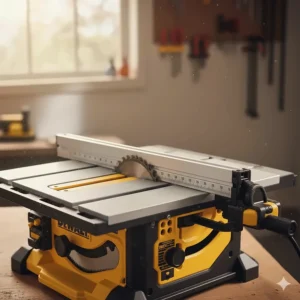
The SKIL TS6307-00 has earned a loyal following among contractors for one brilliant reason: its integrated folding stand. Instead of wrestling with separate stands or struggling to find bench space, you simply unfold the legs and you’re cutting within seconds.
Key Specifications:
- 15-Amp motor generating 4600 RPM
- 25-1/2 inch rip capacity
- Integrated folding stand with stability
The rack and pinion fence rails ensure your fence stays parallel during adjustments, while the quick-release lever makes bevel adjustments effortless. The dust port elbow effectively redirects sawdust to your shop vac, keeping your workspace cleaner than most competitors.
Customer feedback highlights the saw’s 4×4 cutting capacity at 90 degrees—a feature that proves invaluable when working with dimensional lumber. The parallel blade alignment system allows micro-adjustments without tools, ensuring precision cuts even after transport.
✅ Pros:
- Folding stand eliminates need for separate base
- Lightweight at 51 lbs for easy transport
- Coated cast aluminum top resists corrosion
❌ Cons:
- Smaller table surface than cabinet-style models
- 24-tooth stock blade requires upgrade for finish work
Price Range: $280-$350 | Best For: Mobile contractors and weekend warriors
3. Craftsman CMXETAX69434502 10-Inch Table Saw with Folding Stand
The Craftsman CMXETAX69434502 represents the most affordable entry point into serious woodworking. Don’t let the budget pricing fool you—this saw delivers reliable performance for hobbyists and occasional users who need a dependable tool without breaking the bank.
Key Specifications:
- 15-Amp motor with 5000 RPM
- 27-3/8″ x 21-7/8″ cast aluminum table
- Steel roll cage design for durability
With 12 inches of right rip capacity and 10 inches on the left, this Craftsman handles standard cutting tasks with ease. The detachable folding stand makes storage simple, while the quick-release locking rip fence ensures clean, accurate cuts. Users appreciate the included 24T carbide-tipped blade and comprehensive accessory package.
However, experienced woodworkers note that the fence requires careful setup and occasional re-calibration. One reviewer mentioned, “Spent 20 minutes getting everything square, but once dialed in, it cuts beautifully for the price point.”
✅ Pros:
- Unbeatable value under $250
- Cast aluminum table won’t rust
- Comprehensive accessory package included
❌ Cons:
- Fence requires more frequent adjustment
- Smaller rip capacity limits sheet goods work
Price Range: $199-$250 | Best For: Budget-conscious beginners
4. Evolution R10TS 10-Inch Multi-Material Table Saw
The Evolution R10TS stands alone in this comparison with its patented multi-material cutting technology. This isn’t just marketing hype—the saw genuinely cuts through mild steel, aluminum, and even materials with embedded nails without blade changes or special setup.
Key Specifications:
- 15-Amp motor with soft-start technology
- 26-inch rip capacity
- 3-3/8″ cutting depth at 90°
The soft-start technology prevents power trips during startup, while the electronic blade brake stops the blade in seconds for enhanced safety. Dual rack and pinion fence rails provide micro-adjustable positioning that rivals professional cabinet saws.
Contractors working with metal studs or reclaimed lumber rave about the versatility. According to research published by woodworking experts, multi-material capabilities significantly reduce tool switching time on jobsites. The built-in crosscut sled and dust extraction port demonstrate thoughtful design throughout.
✅ Pros:
- Genuine multi-material cutting capability
- Electronic blade brake enhances safety
- Tool-free blade alignment system
❌ Cons:
- Premium price point
- Heavier than standard benchtop models
Price Range: $420-$480 | Best For: Professionals cutting diverse materials
5. Shop Fox W1875 2 HP Benchtop Table Saw with Stand
The Shop Fox W1875 brings industrial-grade features to the benchtop category. This saw’s 2 HP motor doesn’t just match the competition—it exceeds it, delivering consistent power through hardwoods that would bog down lesser machines.
Key Specifications:
- Genuine 2 HP induction motor
- Extension table expands to 42-1/2″ wide
- Micro-adjustment knob for fence precision
The built-in folding stand transforms this benchtop saw into a mobile workstation, while all accessories mount directly to the saw body for organized transport. The extension table’s 42-1/2 inch maximum width accommodates large panel work that typically requires outfeed support.
What truly distinguishes this saw is its dual-function handwheel. Rotate it to adjust blade height from 0 to 3-1/2 inches; push inward and rotate to change blade angle from 0° to 45°. This ingenious design saves valuable real estate on the saw’s control panel.
✅ Pros:
- Industrial 2 HP motor for consistent power
- Exceptional extension table width
- Quick-release blade guard system
❌ Cons:
- Weight (72 lbs) challenges true portability
- Premium pricing for hobbyist market
Price Range: $380-$450 | Best For: Serious hobbyists seeking professional features
6. Bosch GTS1031 10-Inch Portable Jobsite Table Saw
The Bosch GTS1031 redefines portable with its innovative one-handed carry design. At 52 pounds, this saw maintains perfect balance through its center-mounted handle, allowing contractors to navigate stairs and doorways while keeping a hand free.
Key Specifications:
- 15-Amp motor delivering 5000 RPM
- SquareLock rip fence with self-aligning design
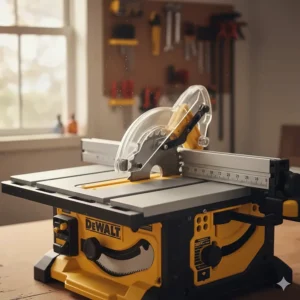
- Smart Guard System with modular components
Bosch’s Smart Guard System stands out as the industry benchmark for safety and convenience. The modular blade guard attaches and detaches in seconds without tools, while anti-kickback pawls and riving knife provide comprehensive protection. The 20″ x 22-1/2″ table delivers 18 inches of rip capacity—adequate for most jobsite applications.
Professional carpenters appreciate the onboard storage solution that securely holds all accessories underneath the table. One contractor shared, “I’ve dropped this saw twice from truck height. Still cuts square. That’s Bosch quality.”
✅ Pros:
- True one-handed portability
- Industry-leading Smart Guard System
- All-steel base withstands jobsite abuse
❌ Cons:
- Limited 18″ rip capacity
- Premium pricing
Price Range: $380-$450 | Best For: Professional contractors prioritizing portability
7. DEWALT DWE7491RS 10-Inch Jobsite Table Saw with Rolling Stand
The DEWALT DWE7491RS represents the pinnacle of portable table saw engineering. This saw’s 32-1/2 inch rip capacity matches dedicated cabinet saws, while the integrated rolling stand provides exceptional stability and effortless transport.
Key Specifications:
- 15-Amp motor spinning 4800 RPM
- Rack and pinion telescoping fence system
- Site-Pro modular guarding with tool-free adjustments
The telescoping fence rails extend to accommodate full 4×8 sheets, then retract for compact storage—a feat of engineering that contractors use daily. The rolling stand’s quick-release mechanism allows one-person setup and breakdown in under 30 seconds.
According to safety standards outlined by OSHA, proper guarding significantly reduces table saw injuries. DEWALT’s Site-Pro system exceeds these requirements with intuitive, tool-free adjustments that encourage proper use.
✅ Pros:
- Unmatched 32-1/2″ rip capacity
- Premium rolling stand included
- Three-year limited warranty
❌ Cons:
- Heaviest option at 90 lbs
- Highest price point
Price Range: $650-$750 | Best For: Professional contractors demanding maximum capability
✨ Don’t Miss These Exclusive Deals!
🔍 Take your woodworking to the next level with these carefully selected products. Click on any highlighted item to check current pricing and availability. These tools will help you create authentic projects your family will love!
Understanding the 10 Inch vs 8 Inch Table Saw Difference
The blade diameter debate isn’t just about size—it fundamentally affects what you can accomplish in your shop. A 10 inch benchtop table saw cuts up to 3-1/8 inches deep at 90 degrees, while 8-inch models max out around 2-3/4 inches. That quarter-inch difference determines whether you can cut through a 4×4 post in one pass or need to flip it.
Cutting Capacity Comparison: The blade size comparison reveals why professionals gravitate toward 10-inch models. When cutting at a 45-degree bevel, that 10-inch blade maintains 2-1/4 inches of depth—sufficient for most angled joinery work. The 8-inch blade drops to roughly 2 inches, limiting your options for compound cuts.
Motor Requirements: Larger blades require more torque to maintain speed under load. Most 10-inch models feature 15-amp motors generating 4600-5000 RPM, while 8-inch saws often use similar motors with higher blade speeds. The physics favor the larger blade for sustained cutting in hardwoods.
Material Capacity: According to historical development documented on Wikipedia’s table saw article, the 10-inch standard emerged from commercial woodworking needs. This size handles dimensional lumber, sheet goods, and specialty materials with equal confidence.
Blade Availability: Walk into any hardware store and count the blade options. Ten-inch blades dominate the market with specialized options for ripping, crosscutting, dado stacks, and composite materials. Eight-inch selections pale in comparison, often limiting your cutting capabilities.
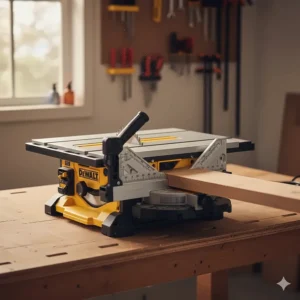
How to Choose the Best 10 Inch Portable Saw for Your Needs
Selecting the right portable table saw requires matching features to your actual workflow, not just comparing specifications on paper. I learned this lesson after purchasing a saw with impressive rip capacity but inadequate dust collection—my shop stayed perpetually coated in sawdust.
Step 1: Assess Your Primary Cutting Tasks
Start by honestly evaluating what you’ll cut most often. Breaking down sheet goods demands maximum rip capacity, while trim carpentry prioritizes portability and quick setup. Cabinet makers need precision fences and smooth table surfaces, whereas framing contractors value durability and power.
Step 2: Evaluate Portability Requirements
The standard size benchtop saw weighs between 50-90 pounds. Consider how frequently you’ll move it. Daily transport to jobsites favors lighter models with integrated stands. Workshop-based users can tolerate heavier saws for enhanced stability and cutting capacity.
Step 3: Determine Fence Quality Needs
The fence system separates professional tools from hobbyist grades. Rack and pinion systems maintain parallel alignment better than basic friction-lock designs. Test the fence by setting it to various measurements—quality systems stay true without micro-adjustments.
Step 4: Match Motor Power to Materials
Fifteen-amp motors handle most woodworking tasks, but how they deliver that power varies. Direct-drive systems respond instantly but may bog down in thick hardwoods. Belt-driven models provide smoother power delivery with less vibration. Match the motor type to your typical workload.
Step 5: Consider Blade Height and Bevel Capacity
Maximum blade exposure determines your cutting depth, while bevel range affects versatility. Most saws offer 0-45 degree bevels, but check if positive stops exist at common angles like 22.5 degrees. Smooth adjustment mechanisms prevent frustration during setup.
Step 6: Check Safety Features
Modern table saws incorporate blade guards, riving knives, and anti-kickback pawls as standard equipment. Evaluate how easily these install and remove—complicated safety systems get bypassed. Tool-free designs encourage proper use.
Step 7: Budget for Accessories
Factor in costs beyond the base saw. Quality blades ($50-150), dado blade sets ($100-300), crosscut sleds ($50-100), and replacement inserts ($20-40) add up quickly. Some manufacturers bundle these accessories; others charge separately.
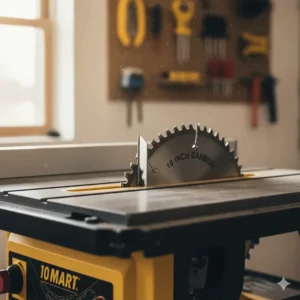
Rip Capacity 10 Inch: Why It Matters More Than You Think
Rip capacity—the maximum width you can cut to the right of the blade—dictates your saw’s versatility more than any other specification. I’ve watched contractors struggle with undersized saws, making dangerous multiple-pass cuts on sheet goods that should require a single pass.
Sheet Goods Standard: Standard plywood and OSB sheets measure 48 inches wide. To rip these sheets in half lengthwise, you need at least 24 inches of rip capacity. Most 10 inch benchtop table saws deliver 18-32 inches, with premium models reaching the full 32-1/2 inches needed for one-pass sheet cutting.
Fence Extension Systems: The cutting capacity benchtop saws achieve depends on fence rail design. Telescoping systems extend for wide cuts then retract for compact storage. Fixed rails limit portability but often provide more rigid support during cutting.
Real-World Applications: Consider common woodworking scenarios: Ripping cabinet sides from plywood requires 24+ inches. Cutting shelving material needs 12-18 inches. Trim work manages with 6-12 inches. Match your saw’s capacity to your most frequent tasks.
Alternative Solutions: Limited rip capacity doesn’t automatically disqualify a saw. Experienced woodworkers flip large panels and cut from both edges, effectively doubling usable capacity. However, this technique demands careful measurement and increases error potential.
Understanding Blade Size Comparison Across Table Saw Types
Blade diameter affects more than cutting depth—it influences cutting speed, power requirements, and blade availability. The 10-inch standard emerged from balancing these factors for optimal performance.
Peripheral Speed: A 10-inch blade spinning at 4800 RPM generates approximately 12,566 feet per minute of peripheral speed. This velocity determines cutting efficiency and finish quality. Smaller blades must spin faster to match this speed, increasing motor strain and heat generation.
Tooth Count Options: Ten-inch blades accommodate 24-80 teeth depending on application. Ripping blades use 24-40 teeth for fast material removal. Crosscut blades feature 60-80 teeth for smooth finishes. Combination blades split the difference with 40-50 teeth.
According to blade design principles documented by woodworking authorities, tooth geometry—including rake angle, gullet size, and carbide quality—matters as much as count. Quality 40-tooth combination blades outperform cheap 60-tooth alternatives.
Dado Blade Compatibility: Ten-inch table saws typically accept 8-inch dado blade sets, allowing 13/16-inch-wide grooves in a single pass. This compatibility proves essential for joinery work like bookcase dadoes and drawer slots. Verify your saw’s maximum dado width before purchasing specialized blades.
Specialized Blade Types: The 10-inch format supports specialized blades for:
- Thin-kerf blades (3/32″ kerf) for underpowered saws
- Stabilized blades for reduced vibration
- Multi-material blades for cutting aluminum and plastics
- Negative-hook blades for radial arm saw crosscutting
Safety First: Essential Table Saw Operating Practices
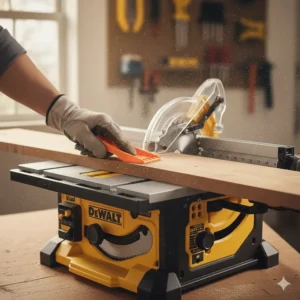
Table saw safety isn’t optional equipment or suggested practice—it’s the foundation that prevents life-altering injuries. According to OSHA’s woodworking machinery requirements, proper guarding and safe operating procedures prevent the majority of table saw accidents.
Blade Guard Usage: Always use the blade guard unless performing operations where it physically cannot fit, such as dado cuts or rabbet work. Modern modular guard systems attach and detach in seconds—there’s no excuse for leaving them off during standard cuts.
Push Stick Discipline: Keep your hands at least 6 inches from the blade at all times. Use push sticks for any cut where your hand would pass within this safety zone. Many woodworkers craft custom push sticks from scrap material, ensuring replacements stay readily available.
Anti-Kickback Device Importance: Kickback—when material suddenly throws back toward the operator—causes serious injuries. Anti-kickback pawls, riving knives, and proper blade height all prevent this dangerous phenomenon. Never disable these safety features.
Proper Stance and Body Position: Stand to the left side of the blade’s path, never directly behind it. This position keeps your body clear if kickback occurs. Maintain firm footing and avoid reaching across the blade for any reason.
Material Inspection: Check every board for knots, metal fasteners, warping, or internal stresses before cutting. These defects cause binding, kickback, and blade damage. When in doubt, cut slowly and stay alert for unusual sounds or resistance.
❓ Frequently Asked Questions
❓ How much power does a 10 inch benchtop table saw actually need?
❓ Can a portable 10 inch table saw replace a full-size cabinet saw?
❓ What's the actual difference between contractor and benchtop table saws?
❓ How often should I replace my 10 inch table saw blade?
❓ Do I really need that much rip capacity on a portable saw?
Conclusion: Finding Your Perfect 10 Inch Benchtop Table Saw
After examining seven outstanding 10 inch benchtop table saws, clear winners emerge for specific use cases. The DEWALT DWE7491RS dominates the professional category with unmatched rip capacity and included rolling stand, justifying its premium price through daily reliability. Budget-conscious woodworkers find exceptional value in the WEN TT1015, which delivers surprising capability for under $300.
Portability champions will appreciate the SKIL TS6307-00‘s integrated folding stand and 51-pound weight, while the Evolution R10TS stands alone for multi-material versatility. The Bosch GTS1031 earns its reputation among contractors through innovative one-handed carrying and bulletproof construction.
Remember that specifications tell only part of the story. The best saw matches your actual workflow, available space, and skill level. A contractor breaking down sheet goods daily needs different features than a hobbyist building occasional furniture. Consider how you’ll truly use the saw, then select accordingly.
Invest in quality blades immediately—the stock blades included with most saws barely scratch the surface of what these machines can accomplish. Budget $100-200 for a combination blade and specialized options for your primary work. Proper blade selection often improves cut quality more than upgrading the saw itself.
Most importantly, prioritize safety over convenience. Use guards, employ push sticks, and maintain proper technique. The few seconds saved by bypassing safety features aren’t worth the lifetime of regret following an injury.
Your perfect 10 inch benchtop table saw awaits in this selection. Choose wisely, cut safely, and enjoy the enhanced capability these remarkable tools bring to your woodworking journey.
Recommended for You
- Best Compact Benchtop Table Saw 2026: Top 7 Expert Picks
- 7 Best Bosch Benchtop Table Saws 2026
- 7 Best DeWalt Benchtop Table Saws 2026 (Buyer’s Guide)
Disclaimer: This article contains affiliate links. If you purchase products through these links, we may earn a small commission at no additional cost to you.
✨ Found this helpful? Share it with your friends! 💬🤗
