
In This Article
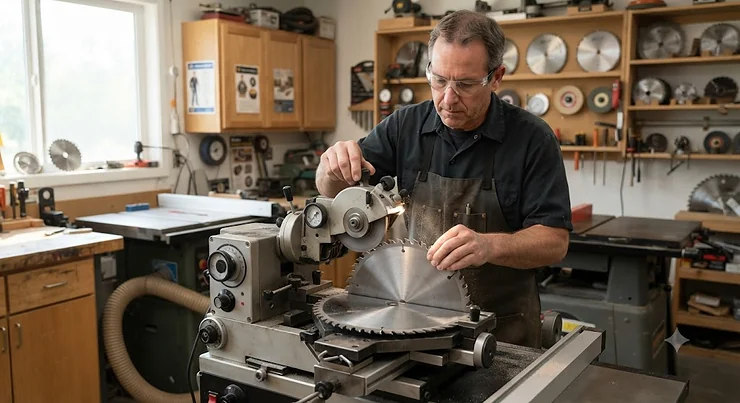
A table saw blade sharpening service is a shop or mail-in operation that restores a dull carbide-tipped blade’s cutting edge — regrinding each tooth back to its original bevel and clearance angles instead of you buying a new blade. If you’ve ever pushed a board through your saw and smelled something faintly like a campfire, you already know why this matters. That burnt-toast smell isn’t your imagination; it’s the sound of money leaving your wallet in the form of wasted lumber and an overworked motor.
Here’s the thing nobody tells you when you buy your first “good” blade: the sharpening decision is really two decisions stacked on top of each other. First, is this specific blade worth saving? And second, is a table saw blade sharpening service even the smarter move compared to just buying fresh? The honest answer depends on carbide quality, how many teeth you’re dealing with, and whether you can find someone within driving distance who won’t charge you more in shipping than the sharpening itself.
This guide walks through real pricing from actual sharpening shops, seven genuine blades worth knowing about (some built to be sharpened for decades, others practically disposable), and the exact signs that tell you it’s time to act — before a dull blade turns a routine rip cut into a trip to urgent care.
Quick Comparison: Your Sharpening Options at a Glance
Before diving into individual blades, here’s how the main paths compare. Every woodworker eventually chooses one of these four lanes, usually more than once.
| Option | Typical Turnaround | Best For |
|---|---|---|
| Local sharpening shop | 3–7 days | Woodworkers near a hardware/saw shop, single blades |
| Mail-in blade sharpening service | 1–3 weeks | Premium blades, batching multiple blades at once |
| DIY sharpening (file/jig) | Same day | Steel blades, hobbyists comfortable with hand tools |
| Buy a new blade | Same day (Prime shipping) | Thin-carbide budget blades, urgent deadlines |
Local shops win on speed and let you skip shipping entirely, but not every town has one anymore — a lot of small saw-and-tool shops have quietly closed over the past decade. A mail-in blade sharpening service casts a wider net and usually does more precise, diamond-wheel grinding, but the return shipping fee can sneak up on you if you only send one blade at a time. DIY sharpening only really makes sense for simple steel blades or if you’ve invested in a proper grinding jig; attempting it on a modern carbide combination blade with a hand file is a great way to turn a $20 sharpening bill into a $150 replacement blade. And sometimes, especially with cheaper thin-carbide blades, the math simply favors buying new outright.
💬 Just one click — help others make better buying decisions too!😊
Top 7 Table Saw Blades: Which Ones Are Worth Sharpening
Not every blade deserves a second life. Some are engineered from the factory floor to survive a decade of resharpening; others are built down to a price point where a fresh blade genuinely costs less than sending the old one out. Here are seven real blades spanning budget to premium, chosen specifically because each one tells a different part of the sharpen-or-replace story.
1. Forrest Woodworker II — the blade built to be sharpened, not replaced
The Forrest Woodworker II opens this list because it’s essentially the reference point every other combination blade gets measured against. Forrest hand-tensions each plate and manufactures its own carbide rather than buying it off the shelf, and the shallow 15-degree ATB bevel is specifically engineered to hold an edge longer before it needs attention. In practice, that means you’re ripping hardwood and crosscutting plywood with the same 40-tooth blade without the compromise you’d expect from a jack-of-all-trades design. Reviewers and longtime forum members consistently describe cuts so clean they skip sanding entirely, and the company’s customer service gets name-checked almost as often as the blade itself. What most buyers overlook is that the price tag, sitting in the $150–$180 range, is really a subscription to Forrest’s in-house resharpening program rather than a one-time purchase — the blade is designed around being sent back, not thrown away. For a serious hobbyist or working furniture maker who runs the same blade for years, this is the one blade on this list that actually rewards loyalty.
Pros:
- ✅ Hand-tensioned plate reduces vibration noticeably versus stamped blades
- ✅ Shallow bevel angle holds an edge far longer between sharpenings
- ✅ Manufacturer-run sharpening program keeps the blade “like new” for years
Cons:
- ❌ Upfront cost is roughly triple a budget combination blade
- ❌ Only makes financial sense if you’ll actually send it back repeatedly
Check current price on Amazon, and remember: at this price point, factor the ongoing sharpening cost into your total cost of ownership, not just the sticker.
2. Freud Industrial LU84R011 — the combination blade worth resharpening 3 to 5 times
The Freud Industrial LU84R011 sits in the sweet spot between disposable and heirloom. Its TiCo hi-density carbide is noticeably thicker than what you’ll find on Freud’s own budget-tier Diablo line, which is exactly why this blade can survive multiple trips to a sharpening service before the carbide runs out. Freud’s laser-cut expansion slots also do real work here — on long rip cuts in dense hardwood, they let the plate expand slightly as it heats up instead of warping, which keeps your cut line true even after 20 minutes of continuous ripping. Based on the spec comparison with entry-level combination blades, the wider carbide stock is the single biggest factor separating a blade that’s worth sharpening from one that isn’t. Reviewers commonly note the blade arrives cutting glass-smooth right out of the box and stays that way through several projects before the first dulling signs appear. At an original price in the $80–$100 range and resharpening costs typically landing between $15–$25, the math works out favorably almost every time you send it in.
Pros:
- ✅ Thick carbide stock supports 3–5 genuine resharpenings
- ✅ Expansion slots keep cuts true during long, heat-generating rips
- ✅ Freud’s certified sharpening network is available in most states
Cons:
- ❌ Costs noticeably more upfront than Diablo-branded combination blades
- ❌ Combination grind is still a compromise versus dedicated rip/crosscut blades
Check current price on Amazon before deciding whether the premium over Diablo pencils out for your shop.
3. Freud LU87R010 24-Tooth Rip Blade — the dedicated ripper that’s cheap to keep sharp
If you break down a lot of rough lumber, the Freud LU87R010 deserves a slot in your rotation, and it’s one of the easiest blades on this list to justify sharpening rather than replacing. Its 24 heavy-duty carbide teeth are shaped specifically for ripping — fewer teeth means bigger gullets, which means faster chip clearance and less heat buildup than you’d get pushing the same board through an 80-tooth crosscut blade. What most buyers overlook about dedicated rip blades is that they’re mechanically simpler to resharpen than combination blades with alternating tooth geometries, since every tooth on this blade uses the same flat-top grind angle. That uniformity is exactly why sharpening shops often quote lower per-tooth rates for pure rip blades compared to combination or crosscut grinds. Priced modestly in the $50–$70 range, this blade earns its keep on any shop that processes a steady stream of rough-sawn hardwood into usable stock.
Pros:
- ✅ Large gullets clear chips fast, reducing heat and burning on rip cuts
- ✅ Flat-top grind is mechanically simple and inexpensive to resharpen
- ✅ Silver ICE coating resists sticky pitch buildup from softwoods
Cons:
- ❌ Poor choice for crosscutting — leaves a rougher finish across the grain
- ❌ Thin kerf can flex slightly in underpowered contractor saws
Check current price on Amazon if your shop’s biggest bottleneck is breaking down rough stock.
4. Diablo D1050X 50-Tooth Combination — the budget blade you’ll probably replace, not sharpen
The Diablo D1050X is one of the best-selling combination blades sold on Amazon, and for good reason — its ATBR tooth arrangement (four alternating-bevel teeth followed by one flat raker, repeated ten times) genuinely splits the difference between ripping and crosscutting well. The laser-cut stabilizer vents visibly reduce vibration compared to cheaper stamped blades, and the Perma-SHIELD coating does a solid job resisting pitch and heat discoloration. Here’s what the spec sheet won’t tell you: Diablo’s carbide is intentionally thinner than what you’ll find on Freud’s own Industrial line, since these blades are engineered to hit an aggressive price point rather than a long service life. That’s not a knock — it’s a design choice, and it means this blade typically tolerates only one or two resharpenings before there simply isn’t enough carbide left to regrind. At $40–$55, replacing it outright once it dulls is frequently the more economical move than paying $15–$20 to sharpen it, especially once you add shipping.
Pros:
- ✅ ATBR grind handles both ripping and crosscutting respectably well
- ✅ Laser-cut stabilizer vents noticeably reduce vibration and noise
- ✅ Widely available and one of Amazon’s most-reviewed combination blades
Cons:
- ❌ Thinner carbide limits practical resharpening to one or two cycles
- ❌ Neither cutting mode matches a dedicated rip or crosscut blade
Check current price on Amazon — this is the blade to buy when you want good performance without babying it.
5. DeWalt DW3106P5 Combo Pack — two blades for less than the price of one sharpening trip
The DeWalt DW3106P5 ships two 10-inch blades — a 60-tooth fine-finish blade and a 32-tooth general-purpose blade — bundled together, and this combo pack is the honest budget move for anyone refreshing a stock blade collection before a big project. The thin-kerf design keeps both blades cutting fast even on smaller contractor-style saws, and the wedge-shoulder tooth design adds extra steel behind each carbide tip for durability against the inevitable nail or two hiding in reclaimed lumber. Reviewers consistently point out that for the combined price of both blades, you’re getting performance that punches noticeably above what you’d expect from a two-pack this affordable. Here’s the honest math, though: at roughly $35–$45 for the pair, sending either blade out for a $15–$20 sharpening barely saves you anything once shipping enters the picture. This is a case where the spec comparison actually argues against sharpening — buying the replacement pack again is close to a wash.
Pros:
- ✅ Two functional blades — fine-finish and general-purpose — for one low price
- ✅ Thin kerf performs well even on lower-horsepower contractor saws
- ✅ Wedge shoulder design adds durability against occasional embedded debris
Cons:
- ❌ Sharpening cost approaches the price of buying the whole pack again
- ❌ Carbide quality trails Freud and Forrest noticeably under magnification
Check current price on Amazon if you’re outfitting a shop on a tight startup budget.
6. Irwin Marples 1807368 — the Italian-made value blade with a mixed sharpening case
The Irwin Marples 1807368 is manufactured in Italy and brings a genuinely clever detail to the budget tier: a symmetrical “Tracking Point” third tooth that Irwin says helps the blade track straighter and last longer between sharpenings. Its Blue Armor low-friction coating is one of the more durable coatings in this price range, holding up over extended use rather than wearing off after a few dozen cuts the way cheaper coatings can. What reviewers report is genuinely split — some woodworkers get years of reliable service and even report it winning blind comparisons against expensive combination blades, while others describe teeth wearing down faster than expected or occasional quality-control issues with blade balance out of the box. That inconsistency is the honest takeaway here: this blade can be a fantastic sharpening candidate if you get a well-balanced unit, but it’s more of a gamble than the Freud or Forrest options above. At $45–$65, it’s a reasonable bet for a secondary blade, just don’t expect the rock-solid consistency of the pricier names on this list.
Pros:
- ✅ Tracking Point tooth design aids straight cuts and edge longevity
- ✅ Blue Armor coating resists wear better than typical budget coatings
- ✅ Competitive tooth count for the price versus similarly priced rivals
Cons:
- ❌ Reported quality control is inconsistent from unit to unit
- ❌ Some users report faster-than-expected wear in heavy daily use
Check current price on Amazon and consider it a strong secondary blade rather than your only one.
7. WEN BL1060 60-Tooth — the rock-bottom blade that makes replacement the obvious call
The WEN BL1060 rounds out this list as proof that budget blades have genuinely improved — multiple review outlets describe its cut quality as rivaling blades costing several times more, which is a remarkable claim for a blade this inexpensive. Its 60-tooth configuration is tuned for fine-finish crosscuts, and for casual DIY projects, trim work, and shop cabinets, it delivers cuts that need little to no sanding. Here’s the reality check, though: at a price typically under $30, this blade sits so far below the cost-effectiveness threshold for professional sharpening that even asking a shop to quote it is arguably a waste of a phone call. The carbide simply isn’t thick enough, and the per-tooth sharpening fee alone would likely exceed the blade’s replacement cost. What most buyers overlook is that this is by design — WEN built a blade meant to be treated as a consumable, and there’s nothing wrong with that as long as you go in with the right expectations.
Pros:
- ✅ Cut quality that genuinely competes with pricier fine-finish blades
- ✅ Extremely low price makes guilt-free replacement realistic
- ✅ Great “beater” blade for shop projects and rough DIY work
Cons:
- ❌ Carbide is too thin to make professional sharpening cost-effective
- ❌ Not built for the repeated heavy-duty use a pro blade rotation needs
Check current price on Amazon if you want a genuinely capable blade you never have to feel precious about.
Top 7 Blades: Full Comparison Table
| Blade | Teeth | Best Use | Price Range | Sharpening Verdict |
|---|---|---|---|---|
| Forrest Woodworker II | 40T | All-purpose fine woodworking | $150–$180 | Sharpen — repeatedly |
| Freud Industrial LU84R011 | 50T | All-purpose, hardwoods | $80–$100 | Sharpen 3–5x |
| Freud LU87R010 | 24T | Dedicated ripping | $50–$70 | Sharpen — cheap per tooth |
| Diablo D1050X | 50T | All-purpose, budget shops | $40–$55 | Replace after 1–2 sharpenings |
| DeWalt DW3106P5 | 60T/32T | General DIY, jobsite | $35–$45 | Replace |
| Irwin Marples 1807368 | 60T | Secondary/backup blade | $45–$65 | Case-by-case |
| WEN BL1060 | 60T | Casual DIY, shop projects | Under $30 | Replace |
Looking at the table above, the pattern is clear: carbide thickness, not brand prestige alone, drives whether a table saw blade sharpening service pays off. The Forrest Woodworker II and Freud Industrial LU84R011 justify their higher upfront cost specifically because they were engineered for multiple resharpening cycles, while the DeWalt DW3106P5 and WEN BL1060 were engineered to hit a price point, full stop. If you only remember one thing from this table, remember that the sharpening decision should be made blade-by-blade, not brand-by-brand.
✨ Don’t Miss These Exclusive Deals!
🔍 Take your table saw blade sharpening service research to the next level with these carefully selected blades. Click on any highlighted item to check current pricing and availability. These blades will help you get sharper, safer cuts your projects deserve!
How to Prepare and Mail In Your Blade for a Sharpening Service
Sending a blade through the mail feels intimidating the first time, but the process is more forgiving than people expect. Here’s the routine that keeps things smooth from your workbench to the shop’s grinding wheel and back.
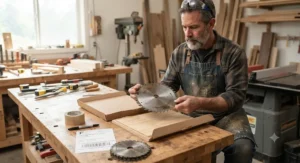
First, clean the blade before you ship it. A quick soak in a diluted resin-remover solution followed by a soft-wire brush pass strips away pitch and burnt sawdust that can hide the true condition of the teeth — sometimes a “dull” blade is actually just a dirty one, and cleaning alone restores real performance. Second, inspect for bent or missing teeth and note them in writing; most sharpening shops will replace a handful of damaged carbide tips for a small per-tip fee if you flag it, rather than silently skipping it. Third, protect the blade in transit — sandwich it between two pieces of cardboard cut slightly larger than the blade diameter and tape the edges, since bare carbide teeth banging against each other in a box is a fast way to chip what the shop was supposed to fix. Fourth, batch your shipments. Sending four or five blades at once dramatically improves your cost-per-blade on shipping, since flat-rate boxes and per-blade return fees both favor volume. Finally, write your name directly on an included note (some shops laser-etch it onto the blade itself) so a shared batch doesn’t get mixed up with someone else’s order.
One optimization trick most first-timers miss: call ahead. A five-minute phone conversation about your blade’s teeth count, tooth style, and whether you want tips replaced or “sharpen only” prevents miscommunication that otherwise turns into a second round of shipping.
Real-World Scenarios: Matching Your Situation to the Right Move
Every woodworker’s situation is different, so here are three composite profiles built from common patterns in the shops and forums referenced throughout this guide.
If you’re a weekend hobbyist with one combination blade and a handful of projects a year, replacement almost always beats sharpening. A single blade sent through a table saw blade sharpening service rarely justifies the shipping cost when a comparable new blade is one click away, unless that blade happens to be a premium model like the Forrest.
If you’re a serious furniture builder running three or more blades through your shop regularly, batching becomes your best friend. Round up every dull blade once or twice a year, box them together, and send them as a group — the per-blade cost drops dramatically, and premium blades like the Freud Industrial line pay for their higher upfront price precisely because they tolerate multiple grinding cycles.
If you’re a small commercial shop or cabinet maker cutting daily, invest in a two-blade rotation for each cutting task — one blade working while its twin sits at the sharpener — and build a relationship with a single trusted service. Consistent quality control from one shop, rather than shopping around, tends to produce more predictable, better-balanced results over years of use.
Where to Sharpen a Table Saw Blade: Local Shops vs Mail-In Services
The honest first question isn’t which service is best — it’s whether one exists near you at all. Search “saw sharpening” plus your city name, and check with local hardware stores or lumberyards, since many quietly send customer blades to the same regional sharpening shop behind the scenes. If a local option exists, it usually wins on cost and turnaround, since you skip shipping in both directions entirely.
If nothing local turns up, a mail-in blade sharpening service becomes the practical answer, and several well-established companies specialize in exactly this. Manufacturer-run programs (like Forrest’s own factory service) tend to deliver the most consistent results for their own blades, since they know the original tolerances best. Independent carbide sharpening shops that handle “all brands” are typically more economical for a mixed collection of blade brands, though quality can vary more between shops than it does within a single manufacturer’s own program. A common mistake buyers make here is picking a service purely on price per tooth without checking return-shipping costs, which — as more than one frustrated forum poster has discovered — can double or triple the effective price for a single blade.
Blade Sharpening Cost: What You’ll Actually Pay in 2026
Sharpening pricing is almost always structured by tooth count, not by a flat per-blade fee, which surprises a lot of first-time customers. Expect a baseline in the neighborhood of $15–$20 for blades under 40 teeth, climbing toward $25–$35 for higher tooth-count blades in the 60–100 range, plus a modest surcharge for larger diameters above 14 inches. Carbide tip replacement, when a tooth is chipped or missing, typically adds a small per-tip charge on top of the base sharpening fee.
Return shipping is where costs quietly balloon. Some services quote a flat return rate for the first blade with a modest per-additional-blade fee, which is exactly why batching multiple blades together produces such dramatic savings — spreading one shipping charge across four or five blades instead of one changes the math entirely. Before ever running the numbers, calculate your true cost as (per-tooth sharpening fee) + (return shipping ÷ number of blades in the box), not the sharpening fee alone.
Blade Sharpening vs Replacement: Is It Worth Sharpening Saw Blades?
Here’s the framework that actually answers this question instead of dodging it: compare the sharpening cost plus your shipping share against a comparable new blade’s price, then weight that number by how many resharpening cycles the carbide can realistically support.
For premium blades like the Forrest Woodworker II or Freud Industrial line, sharpening wins decisively almost every time — you’re paying roughly 15–20% of the blade’s original price to restore something close to factory performance, and thick carbide stock supports doing that several times over. For thin-carbide budget blades like the Diablo D1050X or DeWalt combo packs, the math flips because a fresh blade often costs barely more than the sharpening fee itself, without any of the shipping hassle or turnaround wait.
The most common mistake buyers make is applying one rule to every blade in the shop. Reviewers and shop owners alike consistently note that the smartest approach treats every blade individually — sharpen the ones with real carbide reserves, replace the ones that were never meant to last.
Benefits of Sharpening vs Buying New: A Side-by-Side Look
| Factor | Sharpening | New Blade |
|---|---|---|
| Cost (thick-carbide blade) | $15–$35 + shipping | $80–$180 |
| Cost (thin-carbide blade) | $15–$25 + shipping | $30–$55 |
| Turnaround | 3 days to 3 weeks | Same-day/Prime shipping |
| Environmental impact | Reuses existing steel plate | New material and packaging |
| Best For | Premium, thick-carbide blades | Budget, thin-carbide blades |
This table makes the crossover point visible at a glance: once a blade’s replacement cost drops below roughly two to three times the sharpening fee, buying new almost always wins on both convenience and total cost. Above that threshold, sharpening keeps winning by a wider margin every additional cycle the carbide can support.
How Many Times Can You Sharpen a Saw Blade?
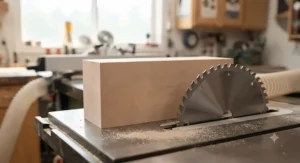
There’s no universal number, and that’s genuinely the honest answer — it comes down entirely to how much carbide stock the manufacturer put on the blade in the first place. Thin-carbide budget blades like the Diablo line typically tolerate just one or two resharpenings before there’s nothing meaningful left to grind. Mid-tier blades with thicker carbide, like the Freud Industrial series, commonly handle three to five cycles. Premium blades built specifically for a sharpening program, like the Forrest Woodworker II, can genuinely be resharpened dozens of times over many years — some woodworkers report blades still cutting cleanly after more than a hundred sharpening cycles across nearly two decades of shop use, though that’s an outlier built on exceptional care and a generous original carbide stack.
The practical way to know your own blade’s limit: ask the sharpening shop directly. A good service will tell you honestly when carbide is running thin rather than grinding away material that should have triggered a replacement conversation instead.
Signs Your Table Saw Blade Is Dull (Before It Costs You More)
Catching dullness early saves both money and fingers, so learn to watch for these signals rather than waiting for an obvious failure.
Burning is the single most reliable early warning — federal machine-guarding rules specifically list blade maintenance and sharpening as a core kickback-prevention measure, and scorched wood is frequently the first visible symptom of a blade that’s lost its edge. Increased feed resistance is next; if you find yourself pushing noticeably harder than you used to for the same rip cut, that’s your arms telling you what your eyes might miss. Excessive tearout or splintering on the exit side of a cut, a louder-than-normal motor note as it labors through the material, and visible reflective shine or chipping on individual teeth under close inspection round out the checklist. Any one of these alone might be something else — a dirty blade, a misaligned fence — but two or more together point squarely at dullness.
Ignore these signs long enough, and the consequences compound: a dull blade generates more friction, more friction generates more heat, and excess heat can actually warp the steel plate itself, turning a straightforward sharpening job into an expensive out-of-flat repair. Worse, a dull, overheating, binding blade is a well-documented contributor to kickback, a hazard that OSHA’s woodworking machinery standard addresses directly by requiring proper blade maintenance alongside guards and riving knives.
Blade Sharpening Frequency: How Often Should You Send It In?
Frequency depends heavily on material and volume rather than a fixed calendar schedule. A hobbyist ripping softwood occasionally might go a full year or more between sharpenings, while a small shop processing hardwood daily could need attention every few weeks. The better rule than a calendar is a performance-based one: sharpen at the first consistent sign of burning or feed resistance, not after damage has already progressed to chipped teeth or a warped plate.
One frequently overlooked optimization: don’t wait until a blade is completely unusable before sending it in. Waiting too long forces the shop to remove more carbide than necessary to restore a clean edge, which shortens the blade’s total usable lifespan across all its future sharpenings combined. A blade sharpened promptly at the first sign of dulling, sent in regularly, will outlast one that’s run into the ground between rare, aggressive regrinds.
Carbide Saw Blade Sharpening: What Makes It Different
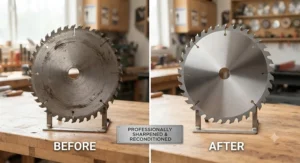
Carbide is dramatically harder than the high-speed steel used in older blade designs — the material transformed circular-saw manufacturing after German engineers developed sintered tungsten carbide in the 1920s, a turning point covered in the background on carbide saw development. That hardness is precisely why carbide sharpening requires specialized diamond-wheel grinding rather than a simple hand file; carbide is too hard for a standard steel file to touch effectively.
This is also why carbide sharpening genuinely restores near-original performance rather than being a rough approximation. A precision grinder can reproduce the exact bevel and clearance angles from the factory, whereas hand-sharpening a carbide blade without the right diamond abrasive risks uneven tooth heights that throw the entire blade out of balance — the same imbalance that shows up as vibration and premature wear later. If your shop set-up doesn’t include a precision carbide grinder, this is one home-improvement project genuinely better left to the professionals, not because it’s impossible, but because the margin for error is unusually costly.
Safety, Regulations, and Why a Sharp Blade Actually Matters
Table saw safety isn’t an abstract concern — dull blades are directly implicated in the kind of accidents that send tens of thousands of people to emergency rooms in the U.S. every year. A dull blade requires more force to push material through, and that added resistance is a well-known contributor to the wood-binding conditions that precede a kickback event, where a workpiece can be thrown backward at speeds exceeding 100 miles per hour.
Regulatory guidance backs this up directly: 29 CFR 1910.213(s)(2), part of OSHA’s woodworking machinery standard, explicitly requires that blades be maintained and sharpened as a workplace safety measure, not just a quality-of-cut issue. Beyond the regulatory language, organizations focused on woodworking safety consistently recommend pairing blade maintenance with basic practices — push sticks for narrow rips, properly aligned riving knives, and eye and hearing protection — as a complete system rather than any single fix. A sharp blade doesn’t replace those safety practices, but it removes one of the most common root causes standing behind them.
Features That Actually Matter (And Those That Don’t)
When comparing blades or sharpening services, a few specs genuinely predict real-world performance, and a few are mostly marketing polish. Carbide thickness matters enormously — it’s the single best predictor of how many times a blade can be sharpened before replacement becomes the smarter call. Tooth count matters for finish quality, but only relative to your task; a high tooth count on a dedicated rip blade actually works against you by clogging gullets faster. Expansion slots and stabilizer vents genuinely reduce vibration and heat-related warping, which is worth paying for on any blade you plan to run hard.
What matters less than the marketing suggests: flashy coatings alone, absent decent carbide underneath, and tooth-count numbers marketed as universally “better” regardless of application. A 40-tooth blade isn’t worse than an 80-tooth blade — it’s built for a different job, and buying based on the biggest number rather than matching the grind to your actual cutting pattern is one of the most common, avoidable mistakes in this whole category.
Frequently Asked Questions
❓ Is it worth sharpening saw blades instead of replacing them?
❓ How much does a table saw blade sharpening service cost?
❓ Where can I find a mail-in blade sharpening service near me?
❓ How many times can you sharpen a carbide saw blade?
❓ What are the clearest signs a table saw blade needs sharpening?
Conclusion
A table saw blade sharpening service isn’t a one-size-fits-all decision, and honestly, that’s good news — it means you get to make the smarter call on a blade-by-blade basis instead of committing to one strategy for your entire shop. Premium blades like the Forrest Woodworker II and Freud Industrial LU84R011 were engineered from the start to be sent back for regrinding, and the math backs that up every time. Budget blades like the Diablo D1050X, DeWalt DW3106P5, and WEN BL1060 were engineered to hit a price point, and for those, buying fresh is frequently the more economical, less time-consuming path.
The real skill isn’t picking one blade forever — it’s learning to read the early signs of dullness, understanding your specific blade’s carbide reserves, and knowing which service or shop fits your volume and location. Do that consistently, and you’ll get cleaner cuts, safer sessions at the saw, and noticeably less money spent chasing performance that a sharp edge would have delivered for a fraction of the cost.
Recommended for You
- Table Saw Blade Cleaner: 7 Top Picks That Actually Work (2026)
- CMT Table Saw Blade Review 2026: 7 Honest Picks Ranked
- Freud Diablo Blade Review 2026: 7 Blades Tested & Ranked
Disclaimer: This article contains affiliate links. As an Amazon Associate, I earn from qualifying purchases. If you purchase products through these links, we may earn a small commission at no additional cost to you.
✨ Found this helpful? Share it with your friends! 💬🤗
