
In This Article
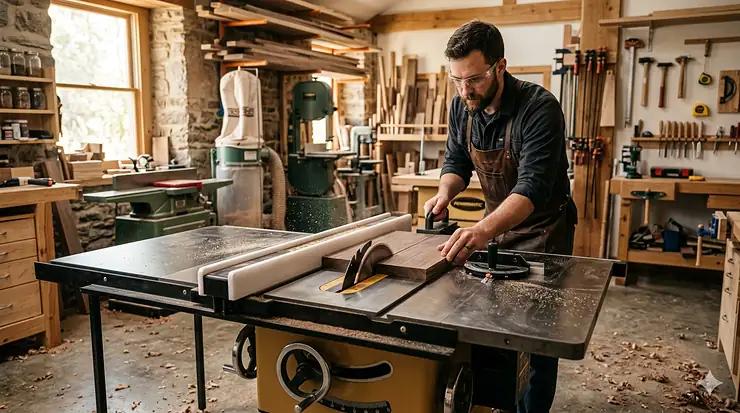
Here’s the thing about buying a table saw under 2000 dollars: you’re not compromising. You’re actually shopping in one of the most interesting price brackets in all of power tools — the zone where genuine professional capability crosses paths with realistic household budgets.

Below $300, you get frustration with a motor. Above $3,000, you’re squarely in cabinet-saw territory, full of features that 95% of woodworkers will never need. But that middle ground? The $400-to-$2,000 range is where DeWalt builds its reputation, where Bosch earns loyal fans, and where SawStop quietly redefined what we should expect from workshop safety. This is where the real tools live.
A table saw under 2000 dollars today is capable of things that a $4,000 saw from 2005 couldn’t touch in terms of portability, fence accuracy, or dust management. That’s not marketing spin — that’s genuine engineering progress baked into tools that a serious weekend woodworker, a small-shop furniture maker, or an on-the-go contractor can actually use every day.
In this guide, I’ve tracked down 7 real products currently available on Amazon — everything from a rugged $450 jobsite workhorse to a near-$1,800 hybrid table saw that competes with machines costing twice as much. I’ve dug into real customer feedback, compared specs against what they mean in a real shop, and given you the kind of honest breakdown that actually helps you choose. No filler, no specs-dumping.
Whether you’re ripping hardwood at 4,800 RPM, cross-cutting sheet goods in a cramped garage, or building your first dedicated workshop, there’s a table saw under 2000 on this list that was made for exactly your situation. Let’s get into it.
Quick Comparison Table: 7 Best Table Saws Under $2000
| Model | Type | Motor | Rip Capacity | Price Range | Best For |
|---|---|---|---|---|---|
| DEWALT DWE7491RS | Jobsite | 15A | 32.5″ | ~$600–$700 | Best overall value |
| Bosch 4100XC-10 | Jobsite | 15A / 4HP | 30″ | ~$550–$650 | Best portability |
| RIDGID R4520 | Jobsite | 13A | 28.5″ | ~$450–$550 | Best budget pick |
| SKIL SPT99-11 | Jobsite (Worm Drive) | 15A | 30.5″ | ~$600–$700 | Best for contractors |
| SawStop CTS-120A60 | Compact | 15A | 25″ | ~$850–$950 | Best safety system |
| JET JPS-10TS (708492K) | Contractor/ProShop | 1.75HP | 30″ | ~$1,100–$1,400 | Best mid-range precision |
| Grizzly G0771Z | Hybrid | 2HP | 30″ | ~$1,400–$1,800 | Best long-term investment |
What the table tells you — and what it doesn’t. Rip capacity alone doesn’t tell the whole story: the RIDGID’s 28.5″ is smaller than the DeWalt’s 32.5″, but it ships with a cast iron table top that the DeWalt can’t match at this price. The SawStop’s 25″ rip capacity looks limiting on paper, but its safety system is in a class by itself. And the Grizzly’s 2HP motor, running on 120V, delivers hybrid-saw muscle that embarrasses jobsite tools costing the same money. Use this table as a starting point, not a verdict.
💬 Just one click — help others make better buying decisions too! 😊
Top 7 Table Saws Under $2000: Expert Analysis
1. DEWALT DWE7491RS — Best Overall Table Saw Under $700
If there’s a table saw that every woodworking forum, YouTube channel, and contractor van seems to agree on, it’s this one. The DEWALT DWE7491RS is the saw that set the standard for what a jobsite table saw should be — and remarkably, it’s still holding that title years after its original release. That’s not momentum; that’s a genuinely well-engineered tool.
The specs that actually matter:
- 15-amp motor generates enough torque to rip through 2-inch hardwood without bogging down — something a lot of 13-amp competitors struggle with on dense oak or maple
- 32.5-inch right rip capacity handles full-width plywood panels without needing a second pass — a legitimately useful feature that cheaper saws in the $300-$400 range can’t match
- The rack-and-pinion telescoping fence system is the real star here: adjustments are smooth, repeatable, and stay square without fussing. Most budget table saws use a direct-lock fence that drifts out of alignment the moment you breathe on it
The rolling stand deserves a mention too. It folds down, it’s stable, and it doesn’t feel like a liability on a jobsite. The onboard storage for the blade guard, riving knife, miter gauge, and wrenches means you’re not hunting for accessories mid-project.
Who is this for? Contractors who move between jobs and can’t leave a saw behind, serious hobbyists who want a tool they won’t quickly outgrow, and anyone building their first real workshop setup who wants a known quantity. The DWE7491RS is a genuinely “right answer” for a lot of buyers at a lot of skill levels.
Customer feedback summary: Owners consistently praise the out-of-box accuracy and fence reliability, with most noting that the saw required zero calibration after assembly. The most common complaint is modest dust collection through the standard port.
✅ Excellent rack-and-pinion fence — accurate and repeatable
✅ 32.5″ rip capacity handles full sheet goods
✅ Rolling stand included with smart onboard storage
❌ Dust collection is adequate, not impressive
❌ Composite top is fine but not as flat or durable as cast iron
Price range: Around $600–$700. At this price, it’s one of the strongest value propositions in the category.

2. Bosch 4100XC-10 — Best Gravity-Rise Stand and Portability
Bosch took a simple question — what’s the most frustrating thing about portable table saws? — and built their answer into every inch of the 4100XC-10. The answer, obviously, is setup and breakdown. The gravity-rise stand on this tool changes the entire experience of using a jobsite saw: one motion deploys it, one motion folds it away. Pull it out of the truck, step on the lever, and you’re ready to cut. That’s not a gimmick — for a contractor making three stops a day, it saves real time and real back strain.
The specs worth understanding:
- 15-amp motor delivers up to 4.0 maximum horsepower, with soft-start circuitry that prevents the blade jolt of a sudden startup — great for precision work and motor longevity
- 30-inch rip capacity is slightly narrower than the DeWalt but more than sufficient for standard sheet goods. The SquareLock rip fence keeps parallel position without readjusting, though it’s not quite as slick as rack-and-pinion
- Constant Response circuitry maintains blade speed under load — meaning when you push a dense board through, the RPMs don’t dip. The blade stays sharp, the cut stays clean
The Smart Guard System includes a riving knife, anti-kickback pawls, and a translucent guard that lets you actually see your cut line. Often overlooked, always appreciated.
Who is this for? Contractors who spend half their day moving between locations, any woodworker who values a fast, frustration-free setup, and buyers who want European-style engineering at an American price point.
Customer feedback summary: The gravity-rise stand receives near-universal praise. A small number of users note the fence adjustment isn’t quite as intuitive as competing systems, but most call the trade-off worthwhile.
✅ Gravity-rise stand is genuinely the best in class
✅ Soft-start and constant-response circuitry for precision
✅ Translucent Smart Guard for clear sightlines
❌ SquareLock fence less precise than rack-and-pinion alternatives
❌ Rip capacity (30″) is adequate but not class-leading
Price range: Around $550–$650. Typically the same ballpark as the DeWalt, making the choice between them less about money and more about whether portability or rip capacity matters more to you.
3. RIDGID R4520 — Best Budget Pick with Cast Iron Table
The RIDGID R4520 is the table saw that makes you question whether spending more is always better. For a price that undercuts most of its direct competitors, it ships with a cast iron table top — something you typically don’t find until you reach the $1,000–$1,500 range. Cast iron is flatter, heavier, and more durable than the aluminum and composite surfaces on similarly priced saws. It dampens vibration. It holds calibration longer. It ages better.
What the specs mean in practice:
- 13-amp motor is slightly less powerful than 15-amp alternatives, but the cast iron table and 3,450 RPM blade speed still produce clean, accurate cuts on most common materials. Dense hardwoods like hickory or purpleheart may tax it — but most woodworkers never touch those
- 28.5-inch rip capacity is narrower than the DeWalt or Bosch. It handles most plywood just fine, but full-width 32-inch rips are off the table (literally)
- RIDGID’s Lifetime Service Agreement (LSA) deserves its own paragraph: free repairs, free parts, forever — as long as you register within 90 days and follow the maintenance requirements. Nothing else in this price range offers anything close
Who is this for? Workshop-based hobbyists who don’t need portability, beginners investing in a long-term tool on a careful budget, and anyone who wants the tactile quality of cast iron without paying cast-iron prices.
Customer feedback summary: The warranty and cast iron surface get consistent five-star mentions. A few users note the fence adjustment takes some practice to master, but call it solid once dialed in.
✅ Cast iron table top — unusual at this price point
✅ Ridgid Lifetime Service Agreement included
✅ Dado stack compatible
❌ 13-amp motor — not ideal for dense exotic hardwoods
❌ 28.5″ rip capacity is the narrowest in this roundup
Price range: Around $450–$550. The best dollar-per-pound value in this entire guide.
4. SKIL SPT99-11 — Best Worm Drive Table Saw for Contractors
Most people know worm drive technology from circular saws — the powerful, torque-rich format that West Coast framing crews swear by. SKIL brought that same DNA into the SPT99-11, and the result is one of the most unique table saws in this price category. Worm drive motors orient the motor perpendicular to the blade, creating a gear reduction that multiplies torque without raising amperage. Translation: it cuts through thick, wet lumber and composite materials that make direct-drive motors shudder.
The specs in real-world terms:
- 15-amp worm drive motor that punches well above its nominal amp rating when it comes to torque — think of it as the difference between an engine with horsepower and one with actual pulling power
- 30.5-inch rip capacity is competitive with the class leaders, handling full-width sheet goods with ease
- At just under 100 lbs, it’s not light — but it ships with a wheeled stand that makes transport manageable. The rubber pads on the bottom also let you use it on a workbench if you prefer a stationary setup
Who is this for? Contractors who regularly cut dimensional lumber, treated wood, engineered panels, or composite decking. Essentially: anyone who puts the saw through punishing cuts that would shorten the life of a direct-drive motor.
Customer feedback summary: Strong marks for raw cutting power and durability on tough materials. Some users note the assembly instructions could be clearer, though the saw itself delivers.
✅ Worm drive motor for exceptional torque
✅ 30.5″ rip capacity — widest in this roundup
✅ Wheeled stand plus bench-use rubber pads
❌ Heavier than direct-drive alternatives (~100 lbs)
❌ Assembly experience reportedly inconsistent
Price range: Around $600–$700. Given the worm drive hardware, this is strong value for contractors doing heavy-duty work.
5. SawStop CTS-120A60 — Best Safety System in the Category
Let’s be direct: the SawStop Compact Table Saw costs more than the DeWalt or Bosch. And if you’re comparing raw specs at face value, it doesn’t obviously win. But you’re not just buying a table saw — you’re buying a technology that has, without exaggeration, saved thousands of fingers from amputation. According to data from the U.S. Consumer Product Safety Commission, approximately 30,000 table saw injuries requiring emergency room treatment occur in the United States annually. SawStop’s flesh-detection system stops the blade in under 5 milliseconds on skin contact. That’s faster than a reflex.
The safety system explained:
- The blade carries a small electrical signal. Human skin conducts electricity differently than wood. The moment skin contact is detected, a spring-loaded brake cartridge fires and stops the blade — and drops it below the table surface — in about 5 milliseconds
- A typical table saw blade at full speed can amputate fingers in 1/100th of a second. The SawStop system stops in 5/1000ths of a second. You do that math
- The brake cartridge ($69–$89 replacement cost) and potentially the blade absorb the damage instead of your fingers
Beyond safety: the 15-amp motor, 10-inch blade, and compact form factor make it a genuinely capable saw. The 25-inch rip capacity is modest — this is where the “compact” label earns its keep — but it handles standard cabinetry and furniture work without complaint.
Who is this for? Anyone with kids in the house, professionals who run a teaching shop, woodworkers who’ve had a close call before, and every single beginner who hasn’t built safe habits yet.
Customer feedback summary: Users who switch to SawStop often describe it as transformative for their peace of mind. The narrower rip capacity is the most common trade-off acknowledged.
✅ Flesh-detection brake system — industry-leading safety
✅ 15-amp motor with compact, portable form factor
✅ Worth every extra dollar for hobbyists and families
❌ 25″ rip capacity — tightest in this roundup
❌ Brake cartridge replacement adds ongoing cost after activation
Price range: Around $850–$950. Yes, it costs more. No, the safety technology is not a gimmick.
6. JET JPS-10TS (Model 708492K) — Best Mid-Range ProShop Precision Saw
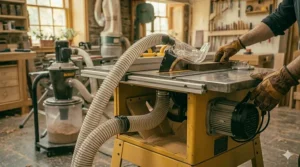
The JET JPS-10TS occupies an interesting position in the market — it’s not a jobsite saw masquerading as a workshop tool, and it’s not quite a full hybrid cabinet saw. It’s a contractor-style saw built to workshop standards, and the difference in feel and performance when you sit it next to the jobsite saws above is immediately obvious. JET has been making professional woodworking equipment for decades, and this saw feels like it was built by people who actually use table saws, not just people who sell them.
Where the engineering shows:
- 1.75-horsepower motor running on 115/230V (dual voltage) — the 230V option is a meaningful upgrade for serious workshop use, delivering cleaner cuts at higher sustained loads
- 30-inch fence system with micro-adjust capability: the kind of fence that lets you dial in a 29.75-inch rip with confidence, not hope. Fence accuracy is where contractor saws and workshop saws diverge most dramatically
- Cast iron table and wings provide a flat, stable work surface that maintains calibration far longer than lighter alternatives. Steel extension wings on this model expand your outfeed support
Who is this for? Dedicated hobbyists setting up a permanent shop, small-scale furniture makers, and anyone stepping up from a jobsite saw who wants something that feels like a real workshop tool without crossing into full cabinet-saw territory.
Customer feedback summary: Owners consistently cite the fence quality and table flatness as transformative upgrades from budget saws. Praised for out-of-box calibration and smooth, quiet operation.
✅ Dual voltage (115/230V) — serious workshop flexibility
✅ Micro-adjust fence for precision ripping
✅ Cast iron table and extension wings included
❌ Not designed for easy portability — this is a shop saw
❌ Higher entry cost than jobsite alternatives
Price range: Around $1,100–$1,400. A significant step up, but you’re buying a fundamentally different class of tool.
7. Grizzly G0771Z — Best Hybrid Table Saw Under $2000
And then there’s the Grizzly G0771Z. If you’ve been on any serious woodworking forum in the past decade, you’ve seen the Grizzly debates. Fans are evangelical. Critics exist. The truth, as usual, is nuanced — but for a table saw under 2000, the G0771Z delivers hybrid-saw performance that makes it the clear top choice for anyone building a long-term dedicated shop.
A hybrid table saw is a category worth defining: it combines the enclosed base and heavy mass of a cabinet saw (which reduces vibration and improves cut quality) with a motor system designed to run on standard 110V household current. You get cabinet-saw feel without cabinet-saw electrical requirements. That’s a genuine engineering win.
The build quality in practice:
- 2-horsepower motor in a fully enclosed cabinet base — dramatically reduced vibration compared to open-base contractor saws. Less vibration means cleaner edges, less chatter on delicate work, and less wear on bearings and arbor components over time
- Riving knife system with easy blade changes, European-style safety guard, and dust collection port that works with standard shop vac or dust collector connections
- Cast iron table with precision-ground surface — out-of-the-box flatness that would require years of settling and shimming on a budget saw. The G0771Z ships flat and stays flat
Who is this for? Serious hobbyists making a permanent shop investment, small-production woodworkers, furniture makers, and anyone who has been using a jobsite saw and wonders what they’ve been missing. This is a “buy it once, use it for 20 years” purchase.
Customer feedback summary: Highly praised for build quality and out-of-box precision. Some buyers note assembly takes time and effort — but consistent feedback is that the setup investment pays off immediately in cut quality.
✅ Hybrid cabinet design — dramatically reduced vibration
✅ 2HP motor on standard 110V — no electrical upgrade needed
✅ Long-term investment quality at non-cabinet-saw pricing
❌ Heavy — moving this saw is a two-person job
❌ Assembly is involved — budget 3–4 hours
Price range: Around $1,400–$1,800. The biggest investment in this guide, but arguably the best long-term value for a permanent shop.
How to Choose a Table Saw Under $2000: A Practical Framework
Buying a table saw is not like buying a drill. The saw you choose will shape how you work — literally — for years. Here’s how to think through the decision without drowning in spec sheets.
Step 1: Decide where the saw will live
If the answer is “in a truck, on a jobsite, in a garage I share with a car” — you want a portable jobsite saw. The DeWalt DWE7491RS or Bosch 4100XC-10 were designed for exactly this reality. If the saw has a permanent spot in a dedicated workshop, you can start thinking about the JET JPS-10TS or Grizzly G0771Z, and the upgrade in performance you’ll feel every single time you cut is worth every extra dollar.
Step 2: Be honest about your rip capacity needs
A 25-inch rip capacity handles most furniture work. A 30-inch rip handles standard plywood (typically 48 inches wide). A 32.5-inch rip gets you to the edge of most sheet goods without roller stands. Know what you’re cutting most, and don’t pay for capacity you’ll never use — but don’t shortchange yourself either.
Step 3: Rate safety as a feature, not an afterthought
OSHA’s woodworking safety guidelines identify table saws as one of the leading sources of serious injury in both commercial and home workshops. If you have children in the house, if you’re a beginner, or if you’ve ever had a moment of distraction near a spinning blade, the SawStop’s flesh-detection technology isn’t a luxury — it’s a calculation.
Step 4: Match the motor to the material
Standard 15-amp direct drive motors handle dimensional lumber, softwoods, and most hardwoods without complaint. If your regular diet includes dense exotic hardwoods, thick engineered lumber, or wet treated wood, consider the worm drive SKIL SPT99-11 or the 2HP Grizzly. The difference in motor torque under load is real and, once experienced, is hard to go back from.
Step 5: Factor in the fence
The fence is the single most-used component on a table saw — more than the motor, more than the blade. A fence that drifts, that’s hard to lock, or that requires constant adjustment will make every rip cut a small battle. The rack-and-pinion system on the DeWalt, the micro-adjust fence on the JET, and the cast-iron precision of the Grizzly all earn their money here. The fence on a $250 saw is usually why the $250 saw ends up on Facebook Marketplace within 18 months.
Step 6: Check your voltage
Most people assume all saws plug into standard 120V outlets. They do — but the JET JPS-10TS also runs on 230V if you have it, and that upgrade in shop performance is worth knowing about. The Grizzly G0771Z runs on standard 110V despite its hybrid size, which is one of its defining selling points.
Step 7: Calculate total cost of ownership
A table saw at $450 that needs a replacement fence ($120), blade upgrades ($60), and stand improvements ($80) costs $710 before you cut a single board. The DeWalt at $650 includes all of those elements out of the box. Go beyond the sticker.

Real-World Scenarios: Which Saw Fits Your Life?
Theory is useful. But specific situations are better. Here are three buyer profiles and the honest recommendation for each.
The Weekend Garage Woodworker
Profile: Works in a two-car garage with one car still in it. Builds furniture, does home repairs, makes gifts. Budget-conscious but wants quality. Cuts maybe 3–4 hours per weekend.
Best fit: DEWALT DWE7491RS or RIDGID R4520. The DeWalt’s fence precision and portability make it easy to stow against the wall. The RIDGID is the pick if you never move the saw and want that cast iron surface under your workpieces. Either one handles weekend furniture work without complaint for years.
The Small-Shop Furniture Maker
Profile: Dedicated workshop space, builds and sells pieces, cuts hardwood daily. Quality of cuts matters for the product. Makes money from the saw, so reliability is non-negotiable.
Best fit: JET JPS-10TS or Grizzly G0771Z. Both offer the fence precision and table stability that accurate furniture work demands. The JET is the better fit for slightly tighter budgets; the Grizzly is the long-term investment if you’re building a shop to last. Either way, a jobsite saw will eventually feel like a limitation at this level of output.
The Safety-Conscious Beginner
Profile: New to woodworking. Eager. Has watched enough YouTube to know what they want to make, but also enough YouTube to know what can go wrong. Has a family.
Best fit: SawStop CTS-120A60. Full stop. The additional cost is the price of knowing that a moment of distraction won’t cost a finger. Building good habits and building with SawStop’s safety net is the right combination for someone new to the tool. The 25-inch rip capacity covers most beginner and intermediate projects without issue.
Common Mistakes When Buying a Table Saw Under $2000
A lot of buyers get this wrong. Here’s where the money goes — and how to keep yours.
Buying for the lowest price instead of the lowest cost. A $280 saw that you replace in two years costs $140/year. A $700 saw you use for 10 years costs $70/year. Do the math before you default to “budget pick.”
Ignoring the fence. I’ll say it again because it bears repeating: the fence is the table saw. A bad fence on a capable motor is a frustrating, imprecise tool. A great fence on a modest motor is a joy to use. Never buy a saw with a fence you haven’t researched. According to Fine Woodworking magazine, fence quality is the single most-cited factor in whether woodworkers are satisfied with a table saw purchase long-term.
Confusing portability needs. Jobsite saws are designed to move. Hybrid and ProShop saws are designed to stay put. Buying a 250-lb hybrid saw for a garage you share is a recipe for a saw you can’t actually use effectively. Buying a jobsite saw for a permanent shop is settling for less than you deserve.
Underestimating dust. Table saws produce impressive quantities of fine dust. The Environmental Protection Agency’s guidance on indoor air quality flags fine wood dust as a real respiratory hazard over long-term exposure. Budget for a decent dust collector or shop vac connection from day one — don’t add it as an afterthought. The saws on this list with better dust ports (Grizzly G0771Z, JET JPS-10TS) are worth the acknowledgment.
Skipping safety accessories. A blade guard, riving knife, push sticks, and featherboards are not optional. If the saw you’re buying doesn’t include these, price them in before comparing to saws that do.
Table Saw vs. Track Saw vs. Circular Saw: What Actually Makes Sense
The “do I need a table saw” question comes up constantly. Let’s answer it with some honesty.
| Feature | Table Saw | Track Saw | Circular Saw |
|---|---|---|---|
| Ripping long boards | ✅ Best | ✅ Good | ⚠️ Difficult |
| Crosscutting sheet goods | ✅ With sled | ✅ Excellent | ⚠️ Manageable |
| Portability | ⚠️ Varies | ✅ Very portable | ✅ Most portable |
| Precision dado cuts | ✅ Yes | ❌ No | ❌ No |
| Price for quality | ~$450–$2,000 | ~$400–$1,200 | ~$80–$300 |
| Best for | Shop work, repetitive cuts | Site work, large panels | Rough cutting |
What the comparison reveals: A table saw under 2000 is the right tool when you need repeatability — when you’re ripping 20 identical pieces to the same width, or when you need a dado stack for cabinet joinery. A track saw earns its keep on large panel work or when portability is paramount. A circular saw is a rough-cut workhorse, not a precision instrument. They’re not really competitors; they’re a team. But if you’re building furniture or doing serious carpentry and you can only own one precision cutting tool, the table saw wins.
Long-Term Cost & Maintenance: What Your Table Saw Actually Costs Over Time
The sticker price is the beginning of the conversation, not the end.
Blades: A quality 10-inch carbide-tipped blade runs $40–$120. Budget saws often ship with thin-kerf utility blades that are technically functional and practically limiting. Plan to upgrade. A good combination blade ($60–$80) and a dedicated ripping blade ($50–$70) will serve most woodworkers indefinitely with regular sharpening.
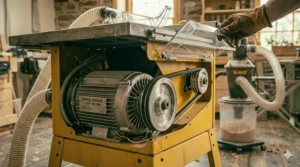
Maintenance schedule: Every 6 months, clean the trunnion and arbor assembly, check and re-tension the drive belt, and re-calibrate blade-to-fence parallelism. Cast iron tables should be treated with paste wax to prevent rust — monthly in humid climates, quarterly otherwise. This is a 30-minute job that extends the saw’s life by years.
Wearable parts: Arbor bearings typically last 5–10 years under regular use. Replacement sets run $20–$60 and are a straightforward DIY replacement. Drive belts wear over time and cost $15–$35 to replace. These aren’t reasons not to buy; they’re reasons to account for in your long-term budget.
The RIDGID advantage worth revisiting: The Lifetime Service Agreement on the RIDGID R4520 effectively eliminates parts costs for the life of the tool. For a budget-tier saw, that warranty is a significant long-term value that doesn’t show up in a side-by-side spec comparison.
ROI framing: If you’re a hobbyist who might otherwise pay a local shop $75/hour to cut pieces, a $700 table saw pays for itself in fewer than 10 shop visits. If you’re a furniture maker selling pieces, the math gets even simpler. According to WOODWEB’s industry data, small-shop furniture makers typically recoup a tool investment like this within 60–90 days of regular use.
FAQ: Table Saws Under $2000
❓ What's the best table saw under $2000 for a beginner?
❓ Is a hybrid table saw worth the price under $2000?
❓ Can I rip full 4×8 plywood with a table saw under 2000?
❓ How important is blade speed (RPM) when comparing table saws?
❓ Do I need 240V for a good table saw, or is 120V enough?
Conclusion: The Right Table Saw Under $2000 Is Out There
There’s no single “best” table saw under 2000 dollars — and any article that tells you there is probably isn’t asking the right questions about your situation. What there is, though, is a genuinely excellent match for every kind of woodworker in this price bracket.
The DEWALT DWE7491RS and Bosch 4100XC-10 are the right saws for most people most of the time — accurate, reliable, and portable enough for the reality of how most of us actually use these tools. The RIDGID R4520 is the smart budget pick that punches well above its price tag. The SKIL SPT99-11 is for the contractor whose work demands more torque than a standard motor can provide. The SawStop CTS-120A60 is for anyone who has ever thought twice about that spinning blade.
Step up in budget, and the JET JPS-10TS and Grizzly G0771Z represent a different class of tool entirely — one that rewards a permanent workshop with cut quality and fence precision that jobsite saws simply can’t touch.
Every saw on this list is available right now on Amazon. Every one of them is a real tool with a real track record. The only question is which one was built for the way you work.
✨ Don’t Miss These Exclusive Deals!
🔍 Take your woodworking to the next level with these carefully selected table saws. Click on any highlighted product above to check current pricing and availability. These tools will help you build work you’re genuinely proud of!
Recommended for You
- Best Table Saw Under 1000: 7 Expert Picks for 2026
- 7 Best Table Saw Under $500 That Actually Deliver Results (2026)
- DeWalt vs Bosch Table Saw: 7 Best Models Tested & Ranked (2026)
Disclaimer: This article contains affiliate links. As an Amazon Associate, I earn from qualifying purchases. If you purchase products through these links, we may earn a small commission at no additional cost to you.
✨ Found this helpful? Share it with your friends! 💬🤗
