
In This Article
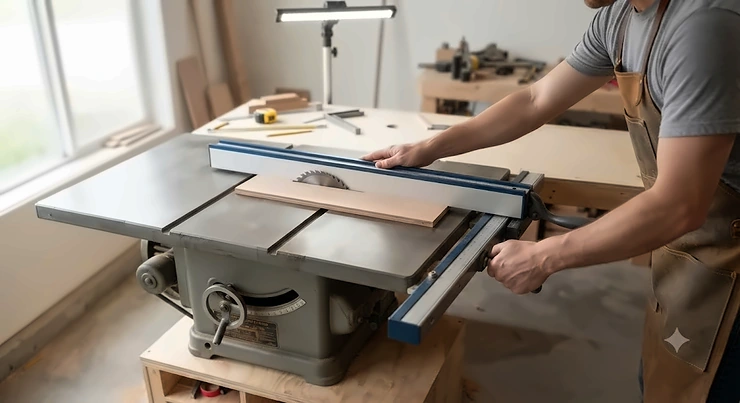
Here’s the thing nobody tells you when you buy a contractor saw: the fence is almost always the weak link. The motor’s fine. The cast-iron top is fine. But that stamped-steel rip fence wiggles half a degree every time you touch it, and suddenly your “precise” cut isn’t. If you’ve ever fought a fence that drifts mid-rip or locks crooked no matter how carefully you square it, you already know why so many woodworkers eventually go shopping for an aftermarket fence for contractor table saws.
So what is an aftermarket fence for contractor table saws? It’s a replacement rip-fence-and-rail system, sold separately from the saw, that bolts onto (or replaces) the factory fence to deliver more accurate, more repeatable, more rigid rip cuts — usually with better locking, micro-adjustment, and accessory options than the stock unit ever offered.
This matters more than it sounds like it should. A fence that’s off by even 1/32″ compounds across a sheet of plywood into a tapered, unusable panel. According to the table saw entry on Wikipedia, the rip fence is one of the two primary guiding references on the machine — right alongside the miter slot — which is exactly why a sloppy one undermines everything downstream of it, from cabinet doors to picture frames.
Below, I’ve researched seven real, currently available aftermarket fences that fit contractor-style and open-stand saws, broken out by budget, mid-range, and premium tiers, plus practical guidance on rail length, locking mechanisms, jobsite portability, and when a full contractor saw fence replacement actually makes sense.
Quick Comparison Table
| Fence | Best For | Rip Capacity | Price Range |
|---|---|---|---|
| Vega U26 Utility Fence System | Best overall value | 26″ right / 8″ left | $300-$380 range |
| Shop Fox W1716 Aluma-Classic | Lightest full-size fence | Up to 52″ right | $250-$320 range |
| Delta 36-T30T3 T3 Fence System | Easiest first-time install | 30″ right | $200-$280 range |
| Biesemeyer Commercial/Home Shop Fence | Long-term accuracy benchmark | 30″-52″ right | $350-$480 range |
| Vega PRO 50 Fence System | Full sheet-good ripping | 50″ right / 8″ left | $450-$600 range |
| Wixey Table Saw Fence w/ Digital Readout | Tech-forward precision | 36″ right / 12″ left | $500-$650 range |
| Incra TS-LS Precision Fence | Joinery-grade repeatability | Up to 52″ right | $550-$750 range |
A quick read of that table tells you most of what you need to know before you even open a product page: rip capacity and price climb together, and the jump from a utility-tier fence to a precision-tier one isn’t really about accuracy at zero — it’s about how repeatable that accuracy is, cut after cut, over years of shop use. Budget-conscious hobbyists doing occasional furniture builds rarely need the Incra TS-LS‘s 0.002″ repeatability, but a small cabinet shop cutting hundreds of identical parts absolutely feels the difference. Note that every price above is a range, not a fixed number — always check current pricing before buying, since Amazon and manufacturer pricing shifts constantly.
💬 Found a fence that fits your saw? Tap through and compare current pricing before it changes.
Top 7 Aftermarket Fences for Contractor Table Saws: Expert Analysis
1. Vega U26 Utility Fence System — best value micro-adjust upgrade
The Vega U26 earns the top spot mostly because of one small part: the micro-adjust thumbwheel. Once you’ve dialed in a rip width and locked the fence, a threaded rod lets you nudge the setting by thousandths of an inch without unlocking and re-squaring the whole assembly — a feature most fences in this price bracket simply skip. The chrome-plated front rail and 6005-T6 aluminum fence head are drilled to match the existing bolt holes on Delta Unisaws, contractor saws, Powermatic 66 tables, and most Sears 10″ saws, so installation is a bolt-on job rather than a drill-and-tap project. Reviewers consistently note that it installs in well under an hour and holds calibration for years without babying, which is exactly what you want from a fence that’s replacing a factory unit you’ve already lost trust in. This is the fence for the hobbyist or weekend builder who wants Biesemeyer-adjacent accuracy without Biesemeyer money, and who values a system that accepts shop-built jigs and sacrificial fence faces over the front T-slot head.
Pros:
- ✅ True micro-adjust thumbwheel for thousandths-precision tweaks
- ✅ No-drill bolt-on install using factory mounting holes
- ✅ Accepts shop-built jigs and sacrificial fence faces
Cons:
- ❌ 26″ rip capacity falls short for full 4×8 sheet goods
- ❌ Round chrome rail can show wear after a decade of heavy use
At around $300-$380, the Vega U26 delivers most of what a premium fence offers for meaningfully less money — genuinely one of the best value plays in this whole lineup.
2. Shop Fox W1716 Aluma-Classic Fence — lightest full-size fence in its class
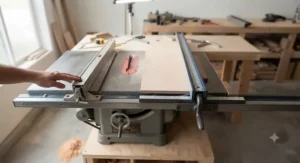
If the Vega U26 wins on value, the Shop Fox W1716 Aluma-Classic wins on weight. It’s built as a Biesemeyer-style T-square clone, but with aluminum cladding over the fence faces instead of the heavier laminate-and-steel construction found on the Biesemeyer itself. Practically, that means less mass to muscle back and forth across a 50-something-inch rail every time you reset a rip width — a real consideration if you’re working solo and moving the fence dozens of times a day. The quick front-lock lever squares itself against the rail automatically on close, so you’re not fighting alignment on every lock-down. Based on the spec comparison against steel-body clones, the trade-off is fewer built-in T-slot accessory mounts and a face laminate that shows wear faster under constant jobsite abuse — this is a shop fence first, a jobsite fence second. For a garage woodworker who values speed and low fence-mass over accessory ports, it’s a smart pick.
Pros:
- ✅ Noticeably lighter than steel-body T-square clones
- ✅ Self-squaring quick-lock lever speeds up repeat adjustments
- ✅ Wide face registration keeps stock flat against the fence
Cons:
- ❌ Fewer built-in accessory ports than steel Biesemeyer-style fences
- ❌ Aluminum face laminate wears faster under heavy daily use
Expect to pay in the $250-$320 range — solid mid-tier value if lighter fence mass matters more to you than accessory flexibility.
3. Delta 36-T30T3 T3 Fence System — easiest first upgrade for beginners
The Delta T3 Fence System is the fence I’d point a first-time upgrader toward, because it’s genuinely more beginner-friendly than most of the competition. The epoxy-coated aluminum construction is straightforward to assemble, and the included instructions walk through squaring and calibration in plain language rather than assuming you’ve done this before. It shares matching hole patterns with Delta Unisaws, contractor saws, Powermatic 66s, and Sears 10″ saws, so mounting is rarely a fight. What most buyers overlook about the T3 is that its lower price point comes from thinner-gauge materials and more separate parts to assemble — it’s not a knock against accuracy so much as a durability trade-off, and reviewers note the mounting points can feel a little more delicate when drilling or tapping additional holes. For a hobbyist who wants a meaningful upgrade over a stamped-steel factory fence without spending Biesemeyer money, it’s a reasonable, honest entry point.
Pros:
- ✅ Beginner-friendly assembly with clear step-by-step instructions
- ✅ Lower price point than most 30″-rail competitors
- ✅ Matches existing bolt patterns on common contractor saws
Cons:
- ❌ Thinner materials feel less premium under sustained heavy use
- ❌ More detached parts require extra assembly steps versus one-piece designs
Priced around $200-$280, this is the most accessible true fence upgrade on this list.
4. Biesemeyer Commercial/Home Shop Fence — the accuracy benchmark
Ask ten experienced woodworkers which aftermarket fence they trust most, and a striking number will say Biesemeyer without hesitating. The T-square design — a laminate-faced fence body that rides a steel front rail and squares itself against a rear rail — has been the reference point every other fence on this list gets compared to, including the Vega and Shop Fox clones above. Reviewers across woodworking forums consistently describe it as rock-solid and dead accurate for years of use with minimal recalibration, and the laminate face resists pitch and resin buildup better than raw aluminum. Here’s what the spec sheet won’t tell you outright: both the Biesemeyer and true Unifence-style systems need a table board and support leg to carry the weight of the fence and workpiece properly, especially on longer rail lengths past roughly 30″-40″ — skipping that support isn’t just a rigidity issue, it’s a tipping risk on a lighter contractor-saw stand. Factor that extra hardware into your budget and your shop footprint before buying.
Pros:
- ✅ Widely regarded reference standard for long-term rip accuracy
- ✅ Laminate face resists pitch and resin buildup over time
- ✅ Holds calibration for years without frequent readjustment
Cons:
- ❌ Needs a table board and support leg on longer rail lengths
- ❌ No true micro-adjust knob included on standard models
Expect $350-$480 depending on rail length — a premium price, but one that a lot of long-time owners will tell you is worth it.
5. Vega PRO 50 Fence System — best for full sheet-good ripping
When 26″ of rip capacity isn’t enough — say you’re breaking down full sheets of plywood or MDF regularly — the Vega PRO 50 is the natural step up within the Vega lineup. It shares the same beloved micro-adjust mechanism as the U26, but stretches rip capacity to a full 50″ to the right of the blade using a tubular front rail and square rear rail. What most buyers overlook here is that, unlike the Biesemeyer and Unifence systems above, the Vega PRO 50’s rails are engineered to be self-supporting — no separate table board required, even at this length — which simplifies installation and saves real money on support hardware. Based on the spec comparison with utility-tier options, this is squarely a fence for shops that treat rip capacity as a daily requirement, not an occasional nice-to-have: cabinet builders, small commercial shops, and serious hobbyists cutting a lot of full sheet stock will get the most value from the extra reach.
Pros:
- ✅ Self-supporting rails avoid the cost of a separate table board
- ✅ Full 50″ rip capacity handles full sheet goods with room to spare
- ✅ Same precise micro-adjust mechanism found on the budget U26
Cons:
- ❌ Longer rail demands significantly more shop floor clearance
- ❌ Costs meaningfully more than the shorter-capacity U26
Pricing typically runs $450-$600, positioning it as a mid-premium fence for anyone who rips sheet goods regularly.
6. Wixey Table Saw Fence with Digital Readout — best tech-forward pick
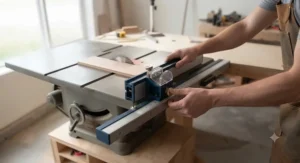
The Wixey Table Saw Fence takes a different approach to accuracy: instead of relying purely on a printed scale and a cursor line, it bolts on a backlit digital readout that attaches magnetically for quick removal and displays the rip setting in inches, fractions, or millimeters. Reviewers consistently point out that the readout maintains its calibration even when powered off or when the fence itself is removed and reinstalled, which solves one of the more annoying quirks of digital add-ons on other tools. The 72″ rail (36″ right, 12″ left) rides on rollers, with aluminum T-slot faces on both sides for mounting featherboards and jigs, and a pair of large micro-adjust wheels on the front carriage let you dial in a setting before locking the fence lever. What the spec sheet doesn’t emphasize enough: the auto-shutoff feature genuinely extends battery life, which matters if you’re the type who forgets to power tools off. For anyone who’s tired of squinting at a cursor line trying to split a hairline between two scale marks, this fence removes that guesswork entirely.
Pros:
- ✅ Backlit digital readout removes tape-measure guesswork
- ✅ Retains calibration even when powered off or removed
- ✅ Dual aluminum T-slot faces support featherboards and jigs
Cons:
- ❌ Premium price relative to non-digital fences with similar rail length
- ❌ Digital display adds a component that can eventually need service
Budget $500-$650 for this one — a genuinely useful upgrade if reading a scale accurately is your main frustration with the stock fence.
7. Incra TS-LS Precision Fence System — best for joinery-grade repeatability
The Incra TS-LS exists for one specific kind of buyer: someone who needs to return to the exact same rip width, over and over, without measuring twice. Instead of a printed scale and a lock lever, it uses a lead-screw automatic positioning system driven by a knurled knob that sets a rip width to within roughly 0.002″ — a tolerance that matters enormously for box joints, drawer parts, and repeat production runs where “close enough” ruins the fit. As one industry trade publication put it while covering table saw upgrades, this fence is built for shops that need exquisite accuracy rather than high volume, which is exactly the honest framing to have going in — it’s not designed to be the fastest fence for rough ripping construction lumber. Reviewers who do a lot of cabinetry and joinery work describe the repeatability as genuinely transformative for that kind of work, even if it represents overkill for someone mostly breaking down sheet goods for a garage project.
Pros:
- ✅ Lead-screw positioning delivers roughly 0.002″ repeatable accuracy
- ✅ Incremental stop system speeds up repeat production cuts
- ✅ Purpose-built for joinery and cabinetry-grade precision work
Cons:
- ❌ Meaningful learning curve versus a simple lock-and-cut fence
- ❌ Overkill and pricier than necessary for general rough ripping
Expect to pay $550-$750, making this the most specialized — and most expensive — fence on this list.
Setting Up and Squaring Your New Fence: A Practical Guide
Buying the fence is the easy part; getting it dialed in correctly is where most of the value actually gets unlocked. Start by removing the factory fence and rails completely, then dry-fit the new rails using the existing bolt holes wherever the manufacturer’s hole pattern matches — most of the fences above are designed to reuse Delta, Powermatic 66, or Sears-pattern holes so you’re not drilling into cast iron unless you have to. Before final-tightening anything, square the fence to the miter slot using a combination square or a dial indicator riding along the slot, not just a factory scale, since scales drift and slots don’t. 🔧
Once mounted, run a test rip on scrap and measure both ends of the cut — if the width differs front to back, the fence isn’t parallel to the blade and needs another pass at squaring before you trust it. Set your calibration point (usually where the fence meets the blade) and confirm it against a steel rule rather than eyeballing the printed scale. For the first 30 days, recheck squareness weekly; new mounting hardware and rail brackets tend to settle slightly under use, and a five-minute check now prevents a frustrating tapered cut later. Common first-month mistakes include over-tightening mounting bolts (which can bow aluminum rails slightly) and skipping wax or dry lubricant on the rail glide surfaces, which keeps fence movement smooth and prevents binding.
Real-World Scenarios: Which Fence Fits Your Shop
Picture three different people standing in front of this same lineup. The first is a weekend furniture hobbyist with a two-car garage shop, building the occasional bookcase or dresser on nights and weekends — for that buyer, the Vega U26 or Delta T3 Fence System covers nearly everything they’ll ever rip, and the extra money for a 50″ premium fence would mostly sit unused.
The second is a semi-pro who takes on the occasional built-in or kitchen cabinet job and needs to break down full sheets of plywood without a table board eating into an already tight garage footprint — the Vega PRO 50‘s self-supporting rails solve that specific space-and-cost problem better than anything else on this list.
The third is a small custom shop cutting repeat parts for drawer boxes and jewelry cases where a sixteenth of an inch of drift ruins a joint — that’s precisely the buyer the Incra TS-LS was engineered for, and paying extra for repeatable, lead-screw precision genuinely pays for itself in reduced scrap and rework.
Contractor Saw Fence Replacement: When and How to Upgrade
Not every wobbly fence needs full replacement — sometimes a stock fence just needs new glides, a fresh lock cam, or a re-squaring session. But a few signs point clearly toward a genuine contractor saw fence replacement rather than a repair. If the fence won’t hold parallel to the blade even after squaring, if the locking mechanism has developed play that no amount of tightening fixes, or if the rail itself is bent or pitted from age, you’re past the point where adjustment helps.
The replacement process itself is more approachable than it sounds. Most of the fences above are engineered to reuse a contractor saw’s existing mounting holes — a genuine no-drill contractor saw fence replacement in many cases — which keeps the job to under an hour with basic hand tools. Where hole patterns don’t match, expect to drill and tap two to four new mounting points into the front and rear rail brackets, a task well within reach for anyone comfortable with a drill press. Budget an afternoon for the swap plus calibration, and resist the urge to rush the squaring step — a rushed contractor saw fence replacement that skips proper calibration performs no better than the worn-out fence it replaced.
💬 Ready to stop fighting your factory fence? Compare current pricing on the pick that matches your saw.
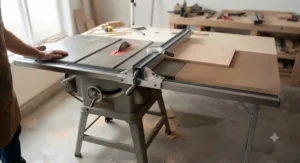
How to Choose an Aftermarket Fence for Contractor Table Saws
- Confirm your saw’s mounting pattern first. Measure the bolt spacing on your existing front and rear rails before shopping — most fences on this list are designed around Delta, Powermatic 66, or Sears-pattern holes, and matching that pattern turns a drilling project into a bolt-on job.
- Decide your real rip capacity needs. If you rarely rip full sheet goods, a 26″-30″ fence like the Vega U26 or Delta T3 saves money you’d otherwise spend on unused rail length.
- Weigh table board requirements into your budget. T-square designs like the Biesemeyer often need a table board and support leg on longer rails — factor that hardware cost in up front, not as a surprise later.
- Prioritize the locking mechanism you’ll actually enjoy using. You’ll lock and unlock this fence dozens of times per project, so a mechanism that feels clunky on day one will only get more annoying over years of use.
- Consider micro-adjustment if you do repeat cuts. Fences with a true micro-adjust thumbwheel save real time whenever you need to nudge a rip width by a hair without fully re-squaring.
- Match the fence to your shop’s mobility needs. A jobsite-oriented shop benefits from lighter aluminum-bodied fences; a stationary shop can prioritize mass and rigidity instead.
- Read aggregated review sentiment, not marketing copy. Look for patterns across multiple owner reviews — recurring complaints about a specific lock lever or rail material tell you more than any single five-star review.
Common Mistakes When Buying an Aftermarket Fence
The single most common mistake is buying rail length based on saw table width rather than actual cutting needs — a 50″ fence looks impressive on a spec sheet, but if you never rip anything wider than 24″, you’ve paid for capacity you’ll never use and given up valuable garage floor space in the process. A close second is ignoring table board and support-leg requirements on T-square-style fences; several buyers on woodworking forums describe being caught off guard by the need for additional support hardware on longer Biesemeyer-style rails, turning a $400 fence into a $500+ project.
Another frequent error is assuming every “universal” fence will drop onto a contractor saw without modification — bolt patterns vary enough between Delta, Craftsman/Sears, and generic import saws that a quick measurement before ordering saves a returned box and a restocking headache. Finally, buyers sometimes chase the flashiest micro-adjust or digital-readout features while overlooking basic rail rigidity, which matters more for actual cut accuracy than any convenience feature layered on top of a flexy rail.
Fence for Open Stand Table Saws: What’s Different
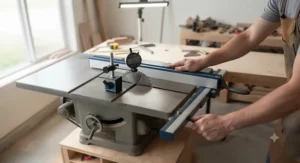
An open stand table saw — the kind mounted on folding legs or a tubular metal frame rather than an enclosed cabinet — presents a different challenge than a cabinet saw when you’re shopping for a fence for an open stand table saw. There’s no solid cabinet mass anchoring the rail system, so rigidity has to come entirely from the rail and mounting brackets themselves, which makes rail quality even more important than it is on a heavier cabinet saw. Open stands also tend to have thinner front aprons, meaning some fence systems designed around thicker cabinet-saw castings may need mounting-bracket shims or minor fabrication to sit correctly.
The upside is that lighter fences genuinely make more sense here. A fence for an open stand table saw doesn’t need to fight a heavy cabinet’s mass to feel proportional, and the lighter aluminum-bodied options — the Shop Fox Aluma-Classic in particular — pair naturally with an open stand’s lighter overall build. If your open stand also folds or breaks down for storage or transport, confirm the fence rail length fits within your storage footprint before buying a long-capacity option like the Vega PRO 50.
Lightweight Fence Systems for Jobsite Portability
If you’re hauling a contractor saw to and from job sites regularly, jobsite portability changes the calculus on which fence makes sense entirely. A lightweight fence system for jobsite use needs to prioritize a few things a stationary shop fence doesn’t: quick tool-free removal for transport, resistance to knocks and drops during loading, and a rail assembly light enough that breaking the saw down doesn’t become its own workout. Aluminum-bodied fences like the Shop Fox W1716 have a real edge here over steel T-square clones, simply because there’s less mass to lift, carry, and reinstall at each new site.
Beyond raw weight, look for a fence head that lifts cleanly off the front rail without tools — several of the fences above, including the Vega line, use exactly this kind of quick-release design, which matters enormously when you’re packing up at the end of a job and don’t want to hunt for an Allen key in a truck bed. A rock-solid lock lever also earns its keep on jobsites specifically, since a fence that shifts slightly during transport and re-mounting needs to snap back to square quickly rather than requiring a full recalibration on every job.
✨ Don’t Miss These Exclusive Deals!
🔍 Take your table saw setup to the next level with a fence built for your shop, not someone else’s. Click through on any pick above to check current pricing and availability before you head to the job site.
Contractor Saw Rail Length: How Much Rip Capacity Do You Need
Rail length is where a lot of buyers overspend, mostly because a longer rail simply looks like more value on paper. In practice, contractor saw rail length should be dictated by what you actually cut, not by the biggest number on a spec sheet.
| Typical Project | Recommended Rip Capacity | Example Fence |
|---|---|---|
| Furniture parts, trim, small projects | 24″-30″ right of blade | Delta 36-T30T3 T3 Fence System |
| Occasional plywood/MDF breakdown | 30″-36″ right of blade | Vega U26 Utility Fence System |
| Regular full sheet-good ripping | 50″+ right of blade | Vega PRO 50 Fence System |
That table makes the decision fairly simple once you’re honest about your typical stock: most furniture and trim work never approaches the width a 50″ rail offers, while anyone regularly breaking down full 4×8 sheets will find a sub-30″ rail frustrating within the first few projects. It’s also worth remembering that longer rails generally mean more required clearance on both sides of the saw and, on T-square designs, a higher chance you’ll need a table board — so contractor saw rail length isn’t just a cutting-capacity decision, it’s a shop-footprint decision too.
Fence Locking Mechanisms: Cam Lock vs Lever vs T-Handle
The fence locking mechanism you choose affects daily comfort more than almost any other spec on this list, simply because you’ll use it constantly. Lever-style locks, found on T-square designs like the Biesemeyer and Shop Fox, typically use a single front-mounted handle that cams the fence square against both rails in one motion — fast and satisfying once dialed in, though a worn cam over many years can develop slight play. Cam-lock systems on some router-table-derived fence designs offer similarly quick engagement with a rotating lever rather than a straight-pull handle.
Micro-adjust fences like the Vega line add a secondary fence locking mechanism on top of the primary lock — a threaded thumbwheel that lets you nudge the setting after the main lever is engaged, which is genuinely useful when you need to split a hair between two measurements. Digital-readout fences like the Wixey pair a standard mechanical lock with electronic confirmation rather than replacing the lock itself. Whichever style you land on, test it before buying if you can — a lock that requires two hands or excessive force to engage will wear on you far faster than any spec-sheet number suggests it should.
Safety, Regulations & Compliance Guide
A more rigid, accurate fence isn’t just a convenience upgrade — it’s a genuine safety improvement, since a fence that drifts mid-cut is a leading contributor to pinching and kickback. Under OSHA’s woodworking machinery standard, 29 CFR 1910.213, workplace table saws are required to maintain proper alignment and guarding, and a fence that won’t hold parallel to the blade undermines that alignment regardless of how well the blade guard and riving knife are functioning. As Popular Woodworking’s safety coverage explains, kickback most often happens when a workpiece makes contact with the back of the blade — a scenario a properly squared, rigid fence helps prevent by keeping stock tracking true through the entire cut.
None of the fences above replace the safety role of a blade guard, riving knife, or push stick, and installing a premium fence is not a substitute for following basic shop safety practice. Always reinstall your saw’s guarding hardware after a fence swap, recheck blade-to-fence parallelism periodically, and keep hands well clear of the blade path using push sticks or push blocks on narrower rips, regardless of how accurate your new fence is.
FAQ
❓ What is the best aftermarket fence for a contractor table saw?
❓ Do aftermarket fences fit any contractor saw?
❓ Is a longer fence rail always better?
❓ How long does it take to install an aftermarket table saw fence?
❓ Can I use an aftermarket fence on an open stand table saw?
Conclusion
A stock contractor saw fence gets the job done, right up until it doesn’t — and for a lot of woodworkers, that moment arrives the first time a rip comes out tapered on an otherwise perfect cut. The good news is that fixing it doesn’t require replacing the whole saw. Whether you land on the budget-friendly Vega U26, the accuracy-benchmark Biesemeyer, or the joinery-grade Incra TS-LS, an aftermarket fence for contractor table saws is one of the highest-value upgrades available for a machine you probably already own and like otherwise.
Match your pick to what you actually cut: rip capacity for sheet-good habits, lock mechanism for daily comfort, weight for jobsite portability, and support-hardware requirements for your real shop footprint. Get those four things right, and the difference shows up in every project afterward — cleaner glue lines, square cabinet parts, and a lot less swearing at a fence that won’t hold still.
✨ Ready to Upgrade Your Fence?
🔍 Take your contractor table saw to the next level with a fence built for accuracy, not just a factory afterthought. Check current pricing on any pick above before you head back to the shop.
Recommended for You
- Biesemeyer Style Fence vs Factory Fence: 7 Upgrades Worth It in 2026
- Table Saw Fence Upgrade Kit for Cabinet Saws: 7 Picks for 2026
- 7 Best Table Saw Fence System Under $250 Picks – 2026
Disclaimer: This article contains affiliate links. As an Amazon Associate, I earn from qualifying purchases. If you purchase products through these links, we may earn a small commission at no additional cost to you.
✨ Found this helpful? Share it with your friends! 💬🤗
