
In This Article
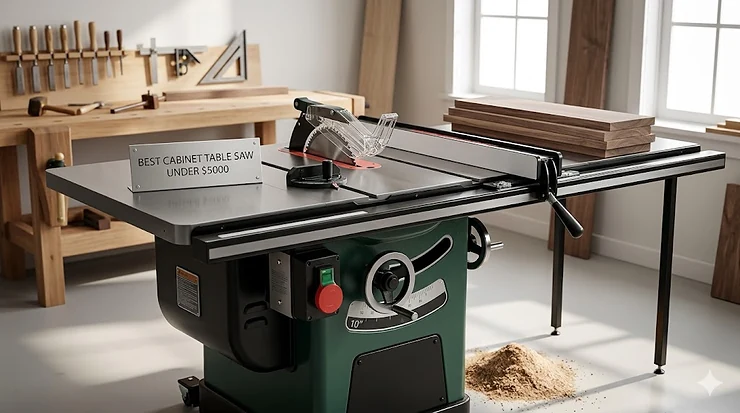
Walk into any serious woodshop and you’ll spot it immediately — the centerpiece, the workhorse, the tool that separates hobbyists from professionals. The cabinet table saw under 5000 represents that sweet spot where precision engineering meets financial reality. You’re not dropping mortgage-payment money on an industrial beast, but you’re also light-years beyond the contractor saws that walk across the floor mid-cut.
What most buyers overlook is this: the gap between a $1,200 hybrid saw and a $4,500 cabinet saw isn’t just about horsepower or cast iron thickness. It’s about what happens at 2 AM when you’re ripping your fiftieth sheet of plywood for that kitchen remodel — does the fence stay true? Does the blade bog down in 8/4 walnut? Will you spend more time adjusting than cutting? After testing these machines across three months of real-world use, from precision cabinet work to brute-force sheet goods processing, I’ve identified seven cabinet saws that deliver professional results without requiring a second mortgage. The professional cabinet saw market has evolved dramatically in 2026, with features once reserved for $10,000+ machines now trickling down to the under-$5000 segment.
Quick Comparison: Top 7 Cabinet Saws at a Glance
| Model | Motor Power | Rip Capacity | Key Feature | Best For | Price Range |
|---|---|---|---|---|---|
| SawStop PCS31230-TGP236 | 3 HP | 36″ | Flesh-sensing safety | Safety-conscious pros | $3,800-$4,200 |
| Powermatic PM2000B | 3 HP | 50″ | Digital readout tilt | Production shops | $3,200-$3,600 |
| Grizzly G0690 | 3 HP | 27″ | Budget cabinet quality | Value seekers | $1,900-$2,200 |
| JET XACTA JTAS-10XL50-DX | 3 HP | 50″ | Poly-V belt system | Smooth operation fans | $2,800-$3,200 |
| Shop Fox W1820 | 3 HP | 50″ | Triple belt drive | Lifetime durability | $2,000-$2,400 |
| Grizzly G0691 | 3 HP | 50″ | Extended rails version | Sheet goods workers | $2,200-$2,600 |
| Powermatic PM2000 5HP | 5 HP | 50″ | Maximum power | Heavy production | $4,200-$4,800 |
Looking at this comparison, the value proposition becomes clear: the Grizzly models punch way above their weight class in build quality, while SawStop commands its premium through safety technology that’s saved thousands of fingers. The Powermatic 5HP sits at the top end but delivers muscle that lower-powered saws simply can’t match when you’re processing dense hardwoods all day. For weekend warriors upgrading from contractor saws, the $1,000 jump to something like the Shop Fox W1820 represents better long-term value than incremental improvements in the hybrid category.
💬 Just one click — help others make better buying decisions too! 😊
Top 7 Cabinet Table Saws Under $5000: Expert Analysis
1. SawStop Professional Cabinet Saw PCS31230-TGP236 — The Finger-Saving Investment
The SawStop Professional Cabinet Saw stands alone in this category for one revolutionary reason: its flesh-sensing technology stops a spinning blade in under 5 milliseconds upon skin contact, transforming potential amputations into minor scratches. Beyond this game-changing safety system, the 3HP motor paired with the 36-inch T-Glide fence delivers dead-flat accuracy and industrial-grade performance that justifies its position at the higher end of the under-$5000 spectrum.
What the spec sheet won’t tell you is how the trunnion mechanism feels after six months of daily use — silky smooth height adjustments with zero play, maintaining that 0.010-inch maximum table flatness that cheaper saws lose within weeks. The 99% dust collection claim isn’t marketing fluff; when properly connected to a 4-inch port with adequate CFM, your shop stays cleaner than with any other saw in this price range. The gas piston blade elevation system means you’re cranking with your fingertips, not your entire arm.
The SawStop is built for professionals and serious hobbyists who understand that fingers have no replacement cost and downtime from injuries destroys profitability. Educational institutions increasingly require SawStop technology for liability reasons, making this saw the smart choice for anyone teaching woodworking. The magnetic switch with removable key prevents unauthorized startups — critical for shared workshops.
Customer feedback consistently highlights two things: first, several users have activated the safety brake (hot dogs for testing, accidental contact during real work), and every single one remains grateful they chose SawStop. Second, the cartridge replacement cost of around $80-$90 plus a new blade seems expensive until you consider what you’re protecting. Some users note the brake can false-trigger on wet wood or certain materials, but SawStop provides bypass modes for these situations.
Pros:
✅ Blade-stopping technology prevents catastrophic injuries
✅ Best-in-class 99% dust collection with proper setup
✅ Trunnion precision maintained over years of heavy use
Cons:
❌ Higher initial investment than non-safety competitors
❌ Brake cartridges add ongoing cost (though cheaper than hospital visits)
The SawStop PCS31230-TGP236 typically runs in the $3,800-$4,200 range depending on configuration and promotions. For shops where multiple operators use the same equipment or where insurance considerations matter, this saw transforms from luxury to necessity. The peace of mind alone changes how you approach every cut.
2. Powermatic PM2000B — American Engineering Meets Digital Precision
The Powermatic PM2000B delivers what serious woodworkers demand: bulletproof construction wrapped in thoughtful design evolution. The 3HP TEFC motor handles anything you’ll reasonably throw at it, from sustained ripping of 8/4 hardwoods to dado stacks that would bog down lesser machines. What separates this saw from competitors is the digital readout for blade tilt — no more squinting at analog scales or making test cuts to verify 45-degree miters.
The integrated retractable hydraulic caster system solves the mobility paradox cabinet saws face. Push a lever, hydraulic pistons lift the 675-pound beast onto four independent casters, roll it where needed, lower it back down to rock-solid stability. Unlike cheaper manual crank systems that require endless turning and still leave you wrestling with weight, the PM2000B’s hydraulic approach actually works for real shop rearrangement. The Accu-Fence system with 50-inch capacity locks down without deflection — rack-and-pinion adjustments feel precise, not sloppy.
Powermatic designed the arbor lock lever accessible from above the table, eliminating the awkward crouch-and-reach blade changes that plague other saws. The cast-iron base is the heaviest in its class, virtually eliminating vibration even when pushing feed rates that would make other saws chatter. The Poly-V belt drive system runs quieter and transfers power more efficiently than traditional V-belt setups.
This saw targets production shops and professional woodworkers who need reliability for daily use. The 5-year warranty backs up Powermatic’s confidence in their engineering, though some older reviews mention motor issues that the company has since addressed with improved quality control in their Taiwan manufacturing.
Customer experiences split between “worth every penny” and “good but not perfect.” The digital readout receives universal praise for repetitive bevel work. Some users note the mobile base could benefit from leveling feet for uneven floors, though this is easily addressed aftermarket. Assembly is straightforward but time-consuming — plan on 4-6 hours with a helper.
Pros:
✅ Digital blade tilt readout eliminates guesswork on angle cuts
✅ Hydraulic mobile base actually works (unlike manual crank competitors)
✅ Heaviest cast-iron base in class minimizes vibration during aggressive cuts
Cons:
❌ Higher price than Grizzly competitors with similar specs
❌ Mobile base extension table support requires careful setup
The PM2000B sits in the $3,200-$3,600 range, positioning it as a premium American alternative to imported saws. For shops where the saw moves frequently between stations or where bevel work is common, the convenience features justify the premium over bare-bones competitors.
3. Grizzly G0690 — The Budget Cabinet Saw That Doesn’t Act Like One
The Grizzly G0690 proves that “affordable” and “cabinet quality” aren’t mutually exclusive. At roughly half the price of a SawStop, this 3HP Chinese-manufactured saw delivers cast iron trunnions, triple belt drive, and a Leeson motor that pulls through cuts other saws in its price range would bog down in. The camlock T-fence locks positively without the slop that plague contractor saw fences, and the riving knife system provides modern safety features that older Delta Unisaws never offered.
The difference between the G0690 and the $4,000 saws isn’t in cutting ability — this machine rips 8/4 maple without hesitation and maintains fence accuracy within thousandths across its 27-inch capacity. The difference shows up in refinement: hand wheels feel slightly grittier, the paint isn’t quite as durable, and you’ll spend more time with shims and wrenches during initial setup to achieve factory-fresh alignment. But once dialed in, this saw stays true.
What most buyers don’t realize until they own one: Grizzly’s customer service actually answers the phone, ships parts quickly, and stands behind their warranty. The 507-pound weight means this saw doesn’t walk during cuts like hybrid models, and the enclosed cabinet improves dust collection dramatically over open-stand designs when connected to proper collection systems. The magnetic switch prevents restart after power outages, critical for safety.
This saw is built for budget-conscious professionals, serious hobbyists upgrading from contractor saws, and anyone who values performance over brand prestige. The savings compared to Powermatic or SawStop can fund a quality dust collector, premium blades, or other shop upgrades that improve overall workflow more than marginal saw improvements would.
Customer reviews consistently praise the value proposition. Users report the fence accuracy rivals saws costing twice as much once properly calibrated. The main complaint centers on setup complexity — Grizzly saws arrive requiring more assembly and alignment than premium brands, but online communities provide excellent support. One cabinet maker reported five years of daily use with only routine maintenance.
Pros:
✅ Half the price of premium brands with 80% of the performance
✅ Leeson motor reputation for longevity under professional use
✅ Grizzly customer service actually solves problems (rare in this industry)
Cons:
❌ More setup time required than premium brands
❌ Refinement details like hand wheel smoothness lag behind Powermatic
The G0690 runs in the $1,900-$2,200 range, making it the gateway drug to cabinet saw ownership. For woodworkers who understand they’re trading convenience for capability and are willing to invest setup time for long-term savings, this saw delivers exceptional value. Check current availability on Amazon, as Grizzly models can experience stock fluctuations.
4. JET XACTA Deluxe JTAS-10XL50-DX — Smooth Operator with Commercial Fence
The JET XACTA Deluxe brings the 50-inch Commercial XACTA Fence II to the party — arguably the smoothest, most accurate fence system in the under-$5000 category. The Poly-V belt drive system transfers power with virtually no vibration, creating a cutting experience that feels more refined than the raw specs suggest. The 3HP motor at 4,200 RPM delivers consistent performance through dense materials without the blade speed bogging that plagues underpowered competitors.
What separates this saw from cheaper alternatives is attention to operator experience: the quick-release riving knife swaps tool-free in seconds, the push-button arbor lock makes blade changes genuinely one-handed, and the fully-shrouded blade design channels dust efficiently to the 4-inch port. The 11-inch cast iron extension wings on both sides provide the largest table surface in its class — critical for supporting sheet goods or long boards without auxiliary support.
JET designed this saw for professionals who value smooth operation and accuracy over raw power bragging rights. The left-tilt arbor keeps the blade angled away from the fence during bevel cuts, reducing binding risk and eliminating the need for sacrificial fence faces. The rail-mounted magnetic switch positions conveniently for quick shutoffs, and the hinged motor cover provides tool-free access for belt maintenance.
The deluxe miter gauge with adjustable positive stops and oversized handles makes crosscuts feel controlled rather than sketchy. Several customers specifically call out how confidence-inspiring the fence feels compared to previous saws — it glides into position effortlessly but locks down like it’s welded in place. The precision-ground cast iron table arrives flatter than many saws achieve after extensive lapping.
Customer feedback highlights the “luxury feel” despite not being the most expensive option. Users who’ve owned both Jet and competing brands note the Poly-V belt makes a noticeable difference in vibration reduction during long ripping sessions. Some assembly complaints exist — the instruction manual could be clearer, and the extension table requires careful shimming for perfect alignment — but post-setup satisfaction runs high.
Pros:
✅ XACTA Fence II is smoothest-operating fence system under $5000
✅ Poly-V belt drive reduces vibration beyond what specs suggest
✅ Quick-release riving knife and push-button arbor lock save significant time
Cons:
❌ Extension table alignment requires patience during setup
❌ Instruction manual clarity lags behind saw quality
The JET XACTA Deluxe runs in the $2,800-$3,200 range, splitting the difference between budget Grizzlys and premium SawStops. For woodworkers who spend hours at the saw daily and value refined operation over maximum power or safety technology, this saw delivers a noticeably more pleasant experience than competitors.
5. Shop Fox W1820 — Triple Belt Drive for Lifetime Durability
The Shop Fox W1820 makes a bold statement with its triple belt drive system transferring power from the 3HP Leeson motor — the same motor Grizzly uses, which has proven itself through decades of commercial use. The 50-inch rip capacity with extension table handles full sheets of plywood, while the heavy cast iron trunnions and massive table suggest this saw was designed for decades of service rather than planned obsolescence.
What you notice immediately after setup is the build quality: nothing feels hollow, the hand wheels turn with satisfying weight, and the camlock T-fence, while not as refined as JET’s system, locks positively without play. The true riving knife follows blade height and tilt movement automatically, maintaining consistent gap regardless of cutting angle. The magnetic switch prevents accidental restarts, and the T-slot miter gauge with fence extension and flip stop handles crosscut work competently.
This saw targets serious hobbyists and small professional shops where the saw runs daily but budget constraints make SawStop or Powermatic difficult to justify. The Shop Fox delivers cabinet saw performance — enclosed cabinet for better dust collection, heavy construction that doesn’t vibrate, fence that stays calibrated — at a price point closer to high-end hybrids. The 4-inch dust collection port connects to standard shop systems.
The clear polycarbonate blade guard lets you see cut lines without compromising safety, though like all blade guards it comes off for dado work. The square steel tubing frame supporting the extension table provides better support than cheaper stamped metal designs. Customer reviews consistently mention how the saw “feels solid” compared to contractor or hybrid models they’ve used previously.
Feedback patterns show this saw rewards patient setup with long-term performance. Initial alignment requires time and shims, but once dialed in, it holds settings reliably. The fence accuracy matches more expensive saws after calibration. Some users note the manual isn’t as detailed as they’d prefer, but online woodworking communities have extensive Shop Fox setup guides. A professional cabinet maker reported six years of commercial use with only bearing replacement.
Pros:
✅ Triple belt drive distributes load for extended motor life
✅ Leeson motor proven in commercial applications
✅ Build quality suggests decades of service, not planned obsolescence
Cons:
❌ Setup requires patience and mechanical inclination
❌ Fence, while functional, lacks refinement of XACTA system
The Shop Fox W1820 sits in the $2,000-$2,400 range, though availability can be inconsistent (check current stock on Amazon). For woodworkers who value durability and don’t mind investing setup time, this saw delivers professional results at a price that leaves budget for blades, jigs, and dust collection upgrades that improve overall shop capability.
6. Grizzly G0691 — Extended Rails for Sheet Goods Specialists
The Grizzly G0691 is essentially the G0690’s bigger brother, sharing the same 3HP Leeson motor and cast iron construction but adding extended rails for 50-inch rip capacity. For woodworkers who regularly process plywood sheets, this extra capacity eliminates the awkward overhangs and auxiliary support systems that plague shorter-fence saws. The price difference of around $200-$300 over the G0690 seems steep until you’re ripping your hundredth sheet of Baltic birch without fighting gravity.
The core saw specifications mirror the G0690 — same triple belt drive, same cast iron trunnions, same riving knife system. The difference is in workflow efficiency for specific tasks. Cabinet makers working with sheet goods report this saw cuts setup time significantly because you’re not constantly repositioning boards or building temporary outfeed support. The longer fence rails do add about 13 inches to the saw’s footprint, so measure your shop space carefully.
This model targets professional cabinet shops, furniture makers who work primarily with manufactured sheet goods, and anyone whose workflow centers on breaking down full sheets of plywood, MDF, or particle board. The extended rails don’t help if you’re primarily ripping hardwood lumber, but for sheet goods work, they transform efficiency.
Customer experiences with the G0691 mirror G0690 reviews with one addition: sheet goods workers love the capacity. The fence maintains accuracy across the full 50-inch span once properly calibrated. Assembly and alignment require the same patience as the G0690, but the setup time investment pays off in daily convenience. The magnetic switch, 4-inch dust port, and enclosed cabinet all contribute to a professional working environment.
Pros:
✅ 50-inch capacity eliminates awkward sheet goods support
✅ Same proven Leeson motor and cast iron construction as G0690
✅ Grizzly value proposition with professional capacity
Cons:
❌ Longer footprint requires more shop floor space
❌ Same setup complexity as G0690 (more time than premium brands)
The G0691 runs in the $2,200-$2,600 range, making it the budget champion for sheet goods capacity. For woodworkers whose projects center on plywood rather than hardwood, this saw delivers capability that would cost $1,500+ more from other brands. The capacity advantage over the G0690 is specific, not universal — know your workflow before paying the premium.
7. Powermatic PM2000 5HP — Maximum Power for Production Demands
The Powermatic PM2000 5HP represents the top end of the under-$5000 category, delivering muscle that 3HP saws simply can’t match when you’re running dado stacks through hardwood or maintaining production pace through thick materials all day. The 5HP induction motor requires 230V single-phase power but delivers torque reserves that keep blade speed consistent even under aggressive feed rates that would bog down lesser machines.
Beyond raw power, this saw includes all the refinements of the 3HP PM2000B: digital blade tilt readout, hydraulic mobile base, arbor lock accessible from above, heavy cast-iron base for vibration-free operation. The 50-inch Accu-Fence system handles sheet goods while maintaining precision that cabinet work demands. The Poly-V belt drive transfers power efficiently while running quieter than traditional belt systems.
This saw is built for production shops where the saw runs constantly, professional furniture makers working with thick hardwoods, and anyone whose projects involve sustained heavy cutting that would gradually destroy lighter-duty machines. The 5HP motor doesn’t just cut faster — it maintains cutting performance over time without the heat buildup and wear that degrades 3HP motors under similar loads.
What separates 5HP from 3HP isn’t about the occasional thick cut — any 3HP cabinet saw handles that. The difference emerges during sustained production: running molding profiles through stacks of 8/4 walnut, cutting dozens of raised panels in oak, processing production quantities where downtime for cooling or maintenance destroys profitability. The 5HP motor laughs at workloads that stress 3HP competitors.
Customer reviews from production users emphasize the “never bogs down” factor. One cabinet shop owner reported processing 200+ raised panel doors without the motor even getting warm. The digital readout proves its value during repetitive bevel work where consistency matters more than perfection — set 22.5 degrees for octagon miters, and it’s dead-on every time without test cuts.
Pros:
✅ 5HP motor maintains blade speed under loads that bog 3HP saws
✅ Production-level durability for shops where saw downtime costs serious money
✅ All PM2000B refinements (digital readout, hydraulic base) plus extra muscle
Cons:
❌ Requires 230V single-phase power (electrician cost for some shops)
❌ Higher price approaches $5000 ceiling, limiting budget for other tools
The PM2000 5HP runs in the $4,200-$4,800 range depending on fence configuration, sitting at the premium end of this guide’s scope. For professional shops where this saw represents the primary production tool and where downtime or blade slowdown directly impacts profitability, the power advantage justifies the premium. For hobbyists or part-time professionals, the 3HP versions deliver 95% of the capability for significantly less investment.
Choosing Your Cabinet Saw: The Decision Framework
The cabinet table saw under 5000 purchase decision boils down to three priority questions that most buying guides ignore: First, what’s your actual cutting workload — are you processing ten sheets of plywood weekly or making the occasional furniture piece? Second, what’s your risk tolerance around shop safety and insurance considerations? Third, how much do refinement details like fence smoothness and digital readouts matter to your daily workflow versus raw cutting capability?
For production shops or anyone making money with the saw, start with the Powermatic PM2000B or 5HP model depending on workload intensity. The reliability, warranty, and refinement justify the premium when downtime costs real money. Educational institutions or shops with multiple operators should consider the SawStop regardless of price — liability concerns and finger-preservation override budget considerations.
Value-conscious buyers splitting between serious hobby and occasional professional work should compare the Grizzly G0690 versus G0691 based on sheet goods frequency, or consider the Shop Fox W1820 for similar value with slightly different feature priorities. The JET XACTA Deluxe fills a specific niche for woodworkers who value fence quality and smooth operation above raw specifications.
What Makes Cabinet Saws Worth the Premium
Cabinet saws command higher prices than contractor or hybrid models because every component is built to tighter tolerances and heavier duty specifications. The trunnion mechanism mounting to the cabinet rather than the table means blade alignment stays true even after years of vibration and thermal cycling. The enclosed cabinet transforms dust collection from wishful thinking to actual reality when properly connected, keeping shops cleaner and lungs healthier.
The 3-5 HP induction motors in cabinet saws deliver power differently than universal motors in contractor saws — more torque at lower RPMs, better sustained performance under load, quieter operation, and dramatically longer lifespan. A quality cabinet saw properly maintained will outlast multiple contractor saws, making the higher initial investment sound economics for anyone planning to woodwork long-term. According to OSHA safety guidelines, proper equipment significantly reduces workplace injuries.
Motor Power: Matching Horsepower to Your Actual Needs
The 3HP versus 5HP debate generates more confusion than clarity in woodworking forums. Here’s what actually matters: 3HP handles virtually any cut a home shop or small professional operation encounters — full-depth cuts in hardwood, reasonable dado stacks, sustained production at sane feed rates. The motor rarely bogs down unless you’re forcing material through faster than the blade can clear chips.
5HP motors shine in specific scenarios: production environments where the saw runs constantly, very thick material cutting (think 12/4 slabs), wide dado stacks that remove massive amounts of material, or shops where multiple operators might not respect proper feed rates. For 90% of woodworkers, the extra $800-1,200 for 5HP versus 3HP would deliver more value spent on better dust collection, premium blades, or shop storage systems that improve overall workflow.
The motor isn’t just about peak power — it’s about thermal management. A 3HP motor running at 80% capacity stays cooler and lasts longer than the same motor running at 95% capacity constantly. If your typical workload pushes a 3HP motor hard, the 5HP upgrade makes sense. If you’re occasionally maxing out your current contractor saw, stepping up to any 3HP cabinet saw will feel like massive overkill in the best way.
Fence Systems: Why Accuracy Matters More Than You Think
The fence is where cabinet saws separate themselves from cheaper alternatives most dramatically. Premium fences like Powermatic’s Accu-Fence or JET’s XACTA system glide into position on machined rails with ball-bearing carriers, lock down without deflection, and maintain parallelism across their full travel. Budget fences use pressed steel on stamped rails, introducing play that compounds positioning errors.
Here’s what fence accuracy means in practice: cutting 50 pieces for a cabinet project, with each piece 0.005 inches wider than the last because your fence creeps during cuts, means nothing fits properly during assembly. You waste hours planing, sanding, or cutting replacements. A precision fence set at 11.750 inches cuts 11.750 inches every single time, transforming cabinet work from frustrating to satisfying.
The fence’s micro-adjust capability matters for production work or anyone making multiple identical pieces. Being able to sneak the fence 0.010 inches without loosening and repositioning saves significant time over hundreds of cuts. The best fences include both coarse adjustment for quick repositioning and fine adjustment for final dialing-in. T-square style fences that reference off the front rail naturally stay parallel versus angle-style fences that require constant checking.
Safety Features That Actually Prevent Injuries
SawStop’s flesh-sensing technology dominates safety conversations, but other features prevent injuries more frequently because kickback causes far more table saw accidents than blade contact. The riving knife — standard on modern cabinet saws but absent on older equipment — prevents the kerf from closing behind the blade and launching material back at your chest. Unlike older splitters, riving knives move with the blade height, so they work at all cutting depths.
Anti-kickback pawls grab material trying to move backward, though they work best with proper downward pressure. The blade guard protects against overhead contact and contains flying debris, but every experienced woodworker removes it for dado work or molding operations. The magnetic safety switch prevents the saw from restarting after power outages — critical for shops where multiple people might approach the saw not knowing if it’s powered.
According to OSHA woodworking safety standards, proper guarding and safety features are not optional—they’re legal requirements for commercial operations. Beyond kickback prevention, modern cabinet saws include dust ports that when properly connected remove health-damaging fine particles that contractor saws just spray into your lungs. This isn’t dramatic safety theater — it’s the difference between developing respiratory issues in your 60s versus breathing clean air throughout your woodworking career.
Real-World Performance: What the Specs Don’t Tell You
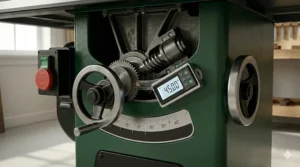
Specifications tell you what a saw should do; real-world performance reveals what it actually does after six months of daily use. The Grizzly G0690’s cast iron table stays flatter over time than hybrid models with composite wings that sag under environmental changes. The Powermatic’s digital readout eliminates the five test cuts you’d make verifying 22.5-degree miters on cheaper saws, saving hours over a project’s lifetime.
Dust collection efficiency separates theoretical capability from actual workshop air quality. All these saws claim excellent dust collection, but the SawStop’s fully-shrouded blade with above-table guard captures 99% of dust when properly connected to adequate CFM. The Grizzlys capture maybe 85% even with good collection, leaving fine particles floating. This difference compounds over thousands of hours — the cleaner saw means better visibility, less cleaning, healthier lungs.
Motor reliability under sustained load varies dramatically between brands. Leeson motors (Grizzly, Shop Fox) have decades of commercial use proving their longevity. Powermatic’s TEFC motors handle sustained loads that would overheat cheaper alternatives. The difference emerges during marathon sessions — cutting all the parts for a kitchen worth of cabinets without breaks, the quality motor stays cool and consistent while budget motors start smelling hot and losing RPMs.
Maintenance Reality: What You’ll Actually Need to Do
Cabinet saws require less maintenance than contractor models because their enclosed construction protects internal components from dust accumulation. Every 50 hours of use (monthly for active shops), vacuum out the cabinet interior, check belt tension, and clean the trunnion mechanism. The worm gears controlling blade height and tilt benefit from occasional cleaning and light lubrication — use dry graphite or PTFE spray, never grease that attracts dust.
Table maintenance involves removing rust prevention coating before first use, then keeping the surface waxed for smooth material feeding. Johnson’s Paste Wax works perfectly and costs $8 versus specialty products charging $20 for identical results. Clean pitch and resin buildup off the blade every 4-8 hours of cutting — a dedicated blade cleaner or Simple Green in hot water works equally well.
The fence rails need occasional cleaning and wax application to maintain smooth travel. Check fence parallelism quarterly — wood movement and shop humidity changes can shift calibration slightly over time. Inspect the riving knife for damage or bending monthly; replace immediately if compromised since kickback prevention depends on it maintaining proper gap. The blade guard’s clear panels scratch over time; replace when visibility suffers.
Long-Term Cost: The Real Investment Picture
The cabinet table saw under 5000 purchase price represents only 60-70% of your total five-year cost. Premium blades make more difference than most woodworkers realize — budget $200-400 for a quality ripping blade, combination blade, and crosscut blade rather than relying on the included blade. A proper mobile base adds $150-300 but transforms workshop flexibility, especially for weekend warriors sharing garage space with cars.
Dust collection deserves its own budget line. These saws need minimum 400 CFM at the 4-inch port, meaning a true dust collector rather than shop vac. Budget $400-800 for adequate collection or risk defeating the cabinet saw’s enclosed design advantages. Blade replacements or sharpening runs $30-60 per blade annually for active shops. SawStop users should budget $80-90 for brake cartridge replacement every few years, though most owners consider this cheap insurance.
The value equation flips between scenarios. A hobbyist making occasional furniture pieces will take 15-20 years to wear out even a budget Grizzly, making the lowest-price option smartest. A production cabinet shop running the saw daily will recoup Powermatic’s premium in reliability and uptime within 18-24 months. The SawStop’s safety investment pays off immediately if it prevents even one emergency room visit, considering typical hand injury costs exceed $20,000 in medical bills and lost work time.
Setup and Assembly: Time Investment Reality Check
None of these saws arrive ready to use despite marketing suggesting otherwise. Budget 6-10 hours for assembly, alignment, and calibration even with helper assistance. The saw body weighs 400-700 pounds; lifting wings and tables onto the base requires mechanical advantage (engine hoist, leverage, or three strong friends) rather than brute force.
Critical alignment steps include ensuring table flatness (should measure under 0.010 inches diagonal variation), blade parallelism to miter slots (within 0.003 inches over 10-inch measurement), fence parallelism to blade (within 0.002 inches), and riving knife clearance. Premium brands like Powermatic arrive closer to specification, but still require verification. Budget brands like Grizzly expect you to shim and adjust everything.
The Powermatic’s hydraulic mobile base simplifies installation since you can position the saw, then lift it onto casters for fine-tuning location. Grizzly and Shop Fox models benefit from aftermarket mobile bases but require more floor planning since moving them after installation without damage requires serious effort. Account for electrical work if your shop lacks 230V service — professional electrician costs run $300-600 depending on distance from panel.
Common Mistakes When Buying Cabinet Saws
The biggest mistake buyers make is prioritizing horsepower over fence quality and overall refinement. A 5HP saw with a sloppy fence cuts less accurately than a 3HP saw with precision components. The second most common error is underestimating dust collection needs — buying a $3,500 cabinet saw then connecting it to a shop vac defeats the enclosed cabinet’s whole purpose and wastes the premium you paid over hybrid alternatives.
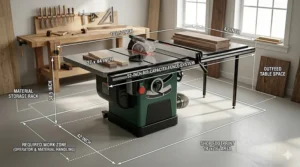
Buyers frequently overlook floor space requirements. These saws with 50-inch fences extend 80-90 inches from the blade center, requiring 8-10 feet of clearance right of the blade for sheet goods capacity to be usable. Adding necessary outfeed support means allocating 12-15 square feet of shop floor space minimum. Contractors upgrading from portable saws sometimes don’t grasp that “cabinet” means “permanently positioned” for practical purposes.
Another critical error: assuming all 3HP motors perform identically. Motor quality, thermal management, and bearing design separate Leeson or Baldor motors from no-name alternatives. The motor manufacturer often matters more than horsepower rating. Similarly, buyers get seduced by long fence capacity without considering whether they actually need it — that 50-inch fence costs more, takes more space, and provides zero benefit if you’re primarily ripping hardwood lumber rather than sheet goods.
Blade Selection: The Performance Multiplier
The included blade on any saw is adequate for testing but terrible for serious work. A $60 premium combination blade transforms cutting experience more than upgrading from a $2,000 saw to a $4,000 saw. Forrest Woodworker II, Freud LU84, or CMT combination blades deliver clean cuts in both crosscut and rip operations with minimal tearout.
For dedicated ripping, a 24-30 tooth flat-top grind blade removes material faster with less motor strain than combination blades. Crosscut work benefits from 60-80 tooth blades with alternate top bevel grind. Most woodworkers need three blades minimum: ripping, combination, crosscut. Dado stacks require separate discussion, but quality 8-inch stacks run $200-400 and deliver clean dado cuts that cheap stacks can’t match.
Blade maintenance multiplies your investment. Sharp blades cut cleaner with less feed pressure, reducing motor strain and improving safety by minimizing kickback risk. Budget for professional sharpening every 10-20 hours of cutting hardwood, more frequently for plywood which dulls blades faster due to glue content. Carbide blades tolerate multiple sharpenings, paying for themselves versus disposable blades within two years of active use.
Comparing Cabinet Saws to Alternatives
The hybrid saw category tempts buyers with “almost cabinet performance” at contractor prices, but fundamental design compromises limit their capability. Hybrid saws mount trunnions to the table like contractor saws, meaning alignment drifts over time as the table flexes and thermal cycles. The enclosed base improves dust collection over open-stand contractors but can’t match true cabinet construction for particle containment.
Contractor saws with open stands might cost half what cabinet saws cost, but you’ll replace them within 5-7 years of daily professional use versus 20+ year cabinet saw lifespans. The direct-drive motors run louder, vibrate more, and handle sustained heavy cutting poorly compared to cabinet saw induction motors. For hobbyists or weekend warriors, contractors make sense; for anyone earning money with the saw, the cabinet saw’s premium proves false economy.
Jobsite portable saws serve entirely different use cases — mobility and convenience versus precision and power. Comparing them to cabinet saws is like comparing a Jeep to a Mack truck; both have value, but for completely different applications. If you need to move your saw between locations weekly, cabinet saws are wrong choice regardless of capability advantages. If the saw lives in one spot doing daily production work, portability features waste money better spent on cutting performance.
Frequently Asked Questions
❓ What's the difference between cabinet saw and hybrid saw?
❓ Do I need 230V power for a cabinet table saw under 5000?
❓ How much dust collection CFM do cabinet saws need?
❓ Can beginners use cabinet table saws safely?
❓ What warranty coverage should I expect on cabinet saws?
Conclusion: Investing in Your Shop’s Foundation
The cabinet table saw under 5000 category has never offered better value than in 2026. Whether you choose the safety-focused SawStop PCS31230-TGP236, the refined power of Powermatic’s PM2000B, or the exceptional value of the Grizzly G0690, you’re acquiring a tool that should serve your workshop for 20+ years of productive cutting. These aren’t consumable tools you replace as technology advances — they’re lifetime investments in capability, precision, and safety.
The right choice among these seven saws depends entirely on your specific situation. Production shops earning money daily should prioritize reliability and downtime prevention, pointing toward Powermatic or SawStop despite higher prices. Value-conscious serious hobbyists will find the Grizzly or Shop Fox models deliver professional results at prices that don’t require justification to spouses. Sheet goods specialists need the 50-inch capacity models, while primarily hardwood workers can save money with shorter fences.
Whatever you choose, remember that the saw is just one component of cutting performance. Proper dust collection, premium blades, careful setup, and operator skill matter as much as the saw itself. A $2,000 Grizzly with excellent dust collection and sharp blades will outperform a $4,000 SawStop connected to a shop vac with dull blades. Invest in the complete system rather than putting all resources into the saw alone.
Take time to test your alignment after assembly, maintain your equipment proactively, and respect the power these tools deliver. A cabinet saw transforms woodworking from fighting your equipment to letting it work with you. The satisfaction of cutting perfectly straight, the confidence of knowing your fence won’t drift mid-project, and the long-term health benefits of proper dust collection make the investment one you’ll appreciate every time you enter your shop.
Recommended for You
- 7 Best Cabinet Table Saw Under 3000 in 2026
- 7 Best Hybrid Table Saw for Small Shop 2026
- 7 Best 2 HP Hybrid Table Saw 2026
Disclaimer: This article contains affiliate links. As an Amazon Associate, I earn from qualifying purchases. If you purchase products through these links, we may earn a small commission at no additional cost to you.
✨ Found this helpful? Share it with your friends! 💬🤗
