
In This Article
Somewhere in every woodworker’s shop sits a drawer of “safety stuff I keep meaning to install.” A push stick. A dusty splitter. Maybe a featherboard still in its blister pack. If yours has both a magnetic model and a miter-slot clamp-on gathering dust, you already know the real question isn’t whether to use one — it’s which style actually earns a permanent spot on your table saw. A magnetic featherboard uses switchable rare-earth magnets to grip a steel or cast-iron table or fence with no hardware at all, while a clamp on featherboard bolts into a miter slot or T-track and holds position mechanically. Both exist to do the same job: press stock firmly against the fence so it can’t drift, chatter, or kick back toward you mid-cut. The magnetic featherboard vs clamp on featherboard debate keeps resurfacing on woodworking forums for good reason — the two designs solve the same safety problem in almost opposite ways, and picking wrong means either wasting money on holding power you don’t need or fighting a tool that can’t reach where you actually need it.
This guide leans on real product specs and aggregated review sentiment — not fabricated testing — to walk through seven featherboards worth your money in 2026, budget through premium, magnetic and clamp on both. According to the Occupational Safety and Health Administration, featherboards and similar jigs are required safety equipment any time a standard blade guard has to come off for cuts like dadoes, rabbets, or resawing. That’s not a suggestion from a woodworking blog — it’s federal guidance, and it’s exactly why this decision deserves more thought than “whichever one’s cheaper on Amazon.” By the end you’ll know which mounting style fits your saw, your fence, and your actual cutting habits, and you’ll have seven real products mapped against your budget.
Magnetic Featherboard vs Clamp On Featherboard: Quick Comparison
Before diving into individual products, here’s the fast version for anyone who just wants the shape of the decision.
| Factor | Magnetic Featherboard | Clamp On Featherboard |
|---|---|---|
| Mounting requirement | Steel or cast-iron surface | Miter slot or T-track |
| Setup speed | Seconds — flip a switch | 1-3 minutes — align, thread, tighten |
| Placement flexibility | Anywhere on ferrous surface | Limited to slot/track location |
| Typical price range | $40-$95+ | $15-$130+ |
| Best For | Aluminum-topped or oddly-shaped tables, tool-free repositioning | Budget shops, hobbyists who rarely reposition |
Reading that table, the split becomes obvious fast: a magnetic featherboard wins on pure convenience and placement freedom, while a clamp on featherboard wins on upfront cost and simplicity. Neither one is “better” in a vacuum — a hobbyist ripping the same 3/4-inch plywood every weekend has very different needs than someone constantly swapping between resawing, dado cuts, and thin-strip ripping. Worth noting too: magnetic models only work on ferrous (iron-containing) surfaces, so anyone with an aluminum-topped benchtop saw is functionally locked out of that entire category regardless of budget.
💬 Found this comparison useful? A quick share helps other woodworkers avoid buying the wrong featherboard twice.
Top 7 Magnetic and Clamp On Featherboards: Expert Analysis
Here are seven real, currently available featherboards spanning both mounting styles and every price tier. Each one gets an honest read on who it actually fits — not just a features dump.
1. Magswitch Universal Featherboard PRO — no miter slot needed, ever
The headline feature here isn’t the feathers at all — it’s that this thing never touches your miter slot. The Universal Featherboard PRO uses extra-wide magnetic pads engineered to sit directly over a miter slot without losing grip, which sounds like a small detail until you’ve fought a clamp-on model that refuses to seat because the slot’s in the wrong spot.
Flip the lever and the internal switchable magnets — Magswitch rates the Pro line’s breakaway tension at roughly 150 pounds — lock the dual-sided body to any steel or cast-iron table. Because it’s dual-sided, it works to the left or right of the blade without buying a second unit.
Based on the spec comparison against clamp-on rivals, the real advantage isn’t raw holding force — it’s that repositioning takes one motion instead of loosening bolts, sliding a bar, and re-tightening. Reviewers on woodworking forums consistently describe it as their go-to, “first and usually only featherboard I reach for,” with the main complaint being that on very thin, precisely-sized stock the pads can occasionally sit close enough to the miter slot to lose partial grip. It’s the right call for anyone who reconfigures their table saw setup often — dado one day, resaw jig the next — and who’s tired of miter-slot geometry dictating where safety equipment can go.
Pros:
- ✅ Repositions anywhere on the table in seconds
- ✅ Works over the miter slot without losing grip
- ✅ Dual-sided design covers both sides of the blade
Cons:
- ❌ Requires a steel or cast-iron table surface
- ❌ Costs roughly triple a basic clamp-on model
Expect to pay in the $70-$95 range at the time of research, and always check current price since Magswitch runs periodic bundle deals. For anyone with a ferrous-top saw who values speed over spending the least possible dollar, this is worth the premium.
2. Magswitch Vertical Featherboard PRO — mounts straight to a steel fence
Where the Universal model handles horizontal pressure against the fence, the Vertical Featherboard PRO’s whole design brief is downward pressure onto the table — the piece you need when a workpiece isn’t perfectly flat and you’re worried about it lifting during a non-through cut like a dado. It’s engineered to mount directly to a steel fence — no miter track, no drilled holes, no screws — and it’s sized to fit standard Biesemeyer-style fences out of the box, with an adjustment range from roughly +1.45 inches to -2.87 inches to accommodate different stock thicknesses. It’s fully reversible, so the same unit works whether you’re feeding stock right or left of the blade.
What most buyers overlook about vertical featherboards in general is that they solve a different failure mode than fence-side models: they’re not preventing lateral kickback so much as preventing a workpiece from riding up off the table mid-cut, which matters enormously for non-through cuts.
Aggregated reviewer sentiment is strongly positive, with owners noting the magnets “seriously” hold and that multiple units can interlock for added downward force on wider stock — though a recurring theme in owner discussions is that this only works reliably on genuinely steel fences, and some aftermarket or aluminum-faced fences won’t give the magnets anything to grab.
Pros:
- ✅ Zero drilling or hardware needed on the fence
- ✅ Reversible for left- or right-side blade work
- ✅ Multiple units interlock for extra downforce
Cons:
- ❌ Only works on genuinely steel-faced fences
- ❌ Narrower use case than a horizontal featherboard
Price sits in the mid-$80s to low-$90s range at the time of research — check current price before buying, since Magswitch bundles this with the Universal model in a 3-piece package that often works out to better overall value.
3. Magswitch SavR Featherboard — the budget entry into magnetic holding
Not everyone wants to spend $90 to try magnetic featherboards, and that’s exactly the gap the SavR line fills. It’s a smaller, lighter-duty magnetic unit built for miter-slot-adjacent use on a table saw or bandsaw, with a locking switch mechanism borrowed from the same core Magswitch technology as the pricier Pro models.
The trade-off for the lower price is smaller magnetic pads and, by extension, less breakaway force than the Universal or Vertical Pro units — fine for typical ripping in 3/4-inch hardwood, less confidence-inspiring on thin or lightweight stock where you want maximum grip. Here’s what to weigh: the SavR isn’t trying to be the flagship, it’s trying to be the “try magnetic before committing $90+” option, and on that metric it succeeds.
Reviewer sentiment on this line skews toward first-time magnetic-featherboard buyers who describe it as an easy, low-effort way to get consistent tension without fussing with miter bars — the main knock is that a subset of buyers eventually upgrade to the Pro line once they decide they like the magnetic format and want more holding margin.
Pros:
- ✅ Lowest-cost entry into magnetic featherboards
- ✅ Simple lock-and-go switch operation
- ✅ Adjustable to different stock thicknesses
Cons:
- ❌ Less breakaway force than the Pro-series models
- ❌ Smaller pads mean less margin on thin stock
At around $40-$45 at the time of research, this is the one to recommend to a skeptical friend who isn’t sure magnetic featherboards are worth the money yet.
4. POWERTEC Universal Featherboard (71468) — the cheapest real safety upgrade in the shop
If your entire objection to featherboards has been “I don’t want to spend real money to try this,” the POWERTEC Universal Featherboard removes that excuse. It’s a straightforward clamp-on design that mounts via T-track bolts into a standard miter slot or T-track, compatible with table saws, router tables, router fences, and band saws alike.
The specs are unglamorous — stamped feathers, a simple locking mechanism, standard 3/4-inch by 3/8-inch miter slot fit — but that’s precisely the point: at this price, you’re paying for the safety function, not for refinement. Based on the spec comparison against pricier clamp-on rivals, what you’re giving up is mostly ergonomics and long-term durability under heavy daily use, not core function; the feathers still flex and lock exactly the way they need to for hobby-level use.
Reviewers consistently frame it as good value for occasional or hobbyist shop use, with the most common critique being that the plastic components feel less substantial than metal-bodied competitors and that the locking hardware can loosen slightly under sustained vibration, requiring an occasional re-check.
Pros:
- ✅ Lowest price point of any featherboard here
- ✅ Fits table saws, router tables, and band saws
- ✅ Simple enough for a first-time buyer
Cons:
- ❌ Plastic build feels less durable long-term
- ❌ Locking hardware can loosen under vibration
At roughly $15-$20 at the time of research, this is the one to buy today if the alternative is running your table saw with zero featherboard at all.
5. Rockler Adjustable Table Featherboard — redesigned miter bars, tenacious grip
Rockler’s single Adjustable Table Featherboard sits squarely in the mid-range, and the pitch is specific: a redesigned miter slot bar that the company says grips harder while requiring less effort to lock into place than earlier generations. It fits the standard 3/8-inch by 3/4-inch miter slot found on the overwhelming majority of American table saws, router tables, and bandsaws, and offers a full 5.5 inches of adjustment range along its slotted body.
A nice practical touch: the first feather is intentionally shorter than the rest, so you can set the featherboard until that lead feather just grazes the workpiece, and the longer feathers behind it engage with proper pressure once the stock is fed further in.
What the spec sheet won’t tell you, but the redesign itself implies, is that Rockler heard the most common complaint about clamp-on featherboards — that the miter bar loosens or requires wrestling to lock down — and specifically engineered against it. Reviewer sentiment on the redesigned bar is notably more positive than on the earlier generation, with buyers specifically calling out that it “adjusts easily and clamps down very securely,” a meaningful upgrade over the sloppier miter bars that gave clamp-on featherboards a bad reputation in the first place.
Pros:
- ✅ Redesigned miter bar locks with less effort
- ✅ Full 5.5 inches of adjustment range
- ✅ Shorter lead feather simplifies initial setup
Cons:
- ❌ Limited to wherever your miter slot sits
- ❌ Single-sided — buy two for both sides of the blade
Expect a price in the $20-$30 range at the time of research, making it one of the better value-per-dollar clamp-on options if your table saw’s miter slot happens to be positioned where you need the featherboard anyway.
6. Bench Dog Single Feather-Loc Multi-Purpose Featherboard — doubles as an end stop
Bench Dog’s Feather-Loc earns its “multi-purpose” name honestly: beyond standard feathering duty, the tail end of the unit can double as a stop block, which is a small but genuinely useful bit of design efficiency for anyone tight on bench space. It ships with a miter slot adapter sized for the standard 3/8-inch by 3/4-inch slot, and mounting relies on ergonomic T-knobs rather than a wrench, meaning setup and breakdown stay comfortable even after repeated adjustments through a project.
Here’s what most spec sheets skip: the miter slot adapter on this model is plastic on some production runs, and long-time users in woodworking forums note it can occasionally bind in the slot after repeated loosening and tightening — a minor annoyance solved by swapping in an aftermarket metal adapter, which several forum threads mention doing.
Aggregated review sentiment sits solidly positive, averaging in the 4.3-star range across major retailers, with buyers specifically praising the T-knob comfort and the stop-block versatility; the main recurring gripe, echoing the forum chatter, is that plastic-adapter friction issue on units that see frequent repositioning.
Pros:
- ✅ Tail doubles as a stop block for repeat cuts
- ✅ Comfortable T-knobs need no separate wrench
- ✅ Strong review average across major retailers
Cons:
- ❌ Plastic miter adapter can bind with heavy use
- ❌ Single unit, so pairs need buying twice
Pricing runs roughly $18-$25 at the time of research, occasionally bundled as a pair for a modest premium — worth checking current price and bundle options before buying just one.
7. Woodpeckers Variable Pressure Featherboard 2-Pack — dial-in tension, American-made
At the premium end of the clamp on featherboard field sits Woodpeckers’ Variable Pressure Featherboard, sold as a two-pack and built around a single differentiator: a dial that lets you fine-tune spring pressure rather than relying purely on feather flex and mounting position. It’s T-track compatible, made in the USA, and aimed squarely at woodworkers who’ve been frustrated by cheaper featherboards that apply either too much drag or too little.
On paper, this means far more control over how the featherboard behaves across different wood species and thicknesses — pine and hard maple don’t want identical pressure, and a fixed-flex feather can’t account for that the way a variable-tension mechanism can. Because it’s sold in a matched pair, it’s built for the common real-world setup of one unit on the fence side and one holding stock down against the table, working together rather than each doing half the job in isolation.
Buyers in the premium tool segment — the kind who already own Woodpeckers squares and router plates — consistently frame this as an investment in long-term precision rather than a one-off purchase, which tracks with the brand’s broader reputation for machined-tolerance American manufacturing.
Pros:
- ✅ Dial-adjustable tension for different wood types
- ✅ Sold as a matched pair for fence and table
- ✅ American-made with tight manufacturing tolerances
Cons:
- ❌ Sits at the premium end of the price spectrum
- ❌ Overkill for occasional, casual hobby use
This one sits meaningfully above the rest of the field price-wise — check current price directly, since premium American-made shop tools like this see less frequent discounting than mass-market alternatives.
Top 7 Featherboards at a Glance
| Product | Mount Type | Price Range | Best For |
|---|---|---|---|
| Magswitch Universal Featherboard PRO | Magnetic | $70-$95 | Frequent repositioning, ferrous tables |
| Magswitch Vertical Featherboard PRO | Magnetic | $85-$95 | Downward pressure on non-through cuts |
| Magswitch SavR Featherboard | Magnetic | $40-$45 | Trying magnetic holding on a budget |
| POWERTEC Universal Featherboard | Clamp On | $15-$20 | First-time buyers, tightest budgets |
| Rockler Adjustable Table Featherboard | Clamp On | $20-$30 | Reliable mid-range miter slot use |
| Bench Dog Single Feather-Loc | Clamp On | $18-$25 | Multi-purpose shops wanting a stop block |
| Woodpeckers Variable Pressure 2-Pack | Clamp On | Premium tier | Precision-focused, matched-pair setups |
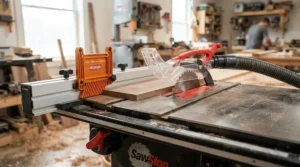
Scanning this table, a pattern jumps out fast: the magnetic featherboard lineup clusters at the higher end of the price spectrum across the board, while the clamp on featherboard options span nearly the entire range from budget to premium. That’s not an accident of these specific products — it reflects the underlying manufacturing cost of switchable rare-earth magnets versus a stamped-steel or plastic clamp mechanism. If your table has a steel or cast-iron top and you value speed above all, the Magswitch Universal Featherboard PRO is the strongest all-around magnetic pick; if you’re clamp-on shopping strictly by budget, the POWERTEC Universal Featherboard gets you functional safety equipment for less than the cost of a decent lunch.
Benefits vs. Traditional Alternatives
It’s worth stepping back to compare featherboards generally — magnetic or clamp on — against the alternatives some woodworkers still rely on instead.
| Approach | Kickback Protection | Hands-Free? | Setup Effort |
|---|---|---|---|
| Magnetic Featherboard | Strong, consistent | Yes | Very low |
| Clamp On Featherboard | Strong, consistent | Yes | Low-moderate |
| Push stick alone | Minimal (reactive only) | No | None |
| Anti-kickback pawls only | Moderate | Yes | Factory-installed |
The comparison above makes the case for featherboards of either style pretty clearly: a push stick only helps once your hand is already near danger, reacting to a cut in progress rather than preventing binding before it starts. Anti-kickback pawls, the ones bolted to many stock blade guards, only engage after the workpiece has already started moving backward — useful as a last line of defense, but not a substitute for consistent lateral pressure throughout the cut. Either style of featherboard, by contrast, applies continuous, adjustable pressure the entire time stock is moving through the blade, which is precisely why OSHA lists them by name as an acceptable substitute safety measure whenever a standard guard has to come off.
Practical Usage Guide: Your First 30 Days With a New Featherboard
Buying the right featherboard is half the job — setting it up correctly is the other half, and it’s where most first-time buyers stumble.
Start by identifying your mounting surface honestly before you even open the box: run a magnet from your junk drawer over your table saw’s cast iron surface and your fence separately, because plenty of “steel” fences are actually aluminum extrusions with a steel face plate only in specific spots, and a magnetic featherboard needs real ferrous metal to grab. For clamp-on models, measure your miter slot with calipers if you can — the vast majority of American table saws use the standard 3/4-inch by 3/8-inch dimension, but imported benchtop saws sometimes deviate slightly, and a loose-fitting miter bar defeats the whole point of the tool.
During setup, position the featherboard so its feathers contact the workpiece just ahead of the blade, never beside or behind it — placing it too close to or past the blade line risks the feathers themselves contacting a spinning blade, which is a genuinely dangerous mistake several safety guides specifically warn against. Set tension using the “grazing” method most manufacturers recommend: adjust until the leading feather barely touches a test piece of your actual stock, then tighten the mount fully and feed the piece through by hand (saw off) to confirm smooth, even resistance without excessive drag.
The most common first-30-days mistake isn’t a setup error at all — it’s forgetting the featherboard exists once a project’s cutting needs change. Switching from ripping to crosscutting, or moving to a much thinner material, means the tension and position that worked perfectly last week may now be wrong, so build a habit of a five-second pressure check before every new cutting session rather than assuming yesterday’s setup still applies.
Real-World Scenarios: Which Featherboard Fits Your Shop
Specs only tell half the story — here’s how these products map onto three genuinely different woodworkers.
If you’re a weekend hobbyist building the occasional bookshelf in a one-car-garage shop, budget and simplicity matter more than speed of repositioning, and the POWERTEC Universal Featherboard or Bench Dog Single Feather-Loc covers essentially everything you’ll do at a price that won’t make you flinch. If you’re running a small custom-cabinetry side business and reconfiguring your table saw multiple times a day between rips, dadoes, and resaws, the time cost of loosening and re-threading a clamp-on bar adds up fast — that’s the exact use case the Magswitch Universal Featherboard PRO was built to solve, and the time saved over months of daily reconfiguration will likely outweigh the higher upfront price. And if you’re a precision-focused furniture maker already invested in premium shop tools who cuts a wide range of species from soft pine to dense exotic hardwoods in the same week, the dial-adjustable Woodpeckers Variable Pressure Featherboard 2-Pack solves a problem the cheaper options genuinely can’t — consistent, tunable pressure across wildly different wood densities.
Problem → Solution: Common Featherboard Headaches
A handful of issues show up again and again across owner reviews and woodworking forums — here’s how to actually fix them.
Problem: The magnetic featherboard won’t hold near the miter slot. This happens because the slot interrupts the ferrous surface the magnets need to grip. Solution: reposition slightly off the slot centerline, or choose a model like the Magswitch Universal Featherboard PRO specifically engineered with wide pads to bridge the gap.
Problem: The clamp-on miter bar loosens mid-project. Vibration from the saw’s motor can slowly back off a poorly-torqued knob over time. Solution: check tension every time you change cutting operations, and consider an upgraded metal adapter if your model, like some Bench Dog Single Feather-Loc units, ships with a plastic one.
Problem: The feathers are burning or marking the workpiece. Excessive tension or a dull feather edge causes friction burn on softer woods. Solution: back off tension incrementally using the grazing method, or step up to a variable-tension model like the Woodpeckers Variable Pressure Featherboard 2-Pack that lets you dial in less pressure for softer species.
Problem: You need pressure on both sides of the blade but only own one featherboard. Solution: buy a second single unit, choose a dual-sided model like the Magswitch Universal Featherboard PRO, or step up to a two-pack like the Woodpeckers set from the start.
How to Choose Between a Magnetic Featherboard and a Clamp On Featherboard
Six questions, answered in order, will settle this decision for almost anyone.
- Check your table and fence material first. If either is aluminum rather than steel or cast iron, a magnetic featherboard vs clamp on featherboard debate isn’t really a debate — clamp on is your only functional option.
- Measure your miter slot dimensions. Standard 3/4-inch by 3/8-inch slots fit most clamp-on models off the shelf; nonstandard slots may need an adapter or push you toward magnetic instead.
- Estimate how often you reposition featherboards per project. Frequent repositioning tips the value equation toward magnetic despite the higher price.
- Set a realistic budget ceiling. Clamp-on options start under $20; magnetic realistically starts around $40 and climbs from there.
- Consider how many cutting operations you run regularly. Dadoes, resawing, and thin-strip ripping each demand slightly different featherboard positioning, favoring quick-adjust magnetic setups.
- Decide if you need downward pressure, lateral pressure, or both. Non-through cuts benefit from vertical models like the Magswitch Vertical Featherboard PRO in addition to a standard fence-side unit.
- Factor in long-term durability needs. A daily-use small shop justifies spending more upfront on either style than an occasional hobbyist would.
Magnetic vs Miter Slot Featherboard: A Detailed Comparison
The magnetic vs miter slot featherboard question really comes down to what “flexibility” means to you. A miter slot featherboard is mechanically locked to wherever your saw’s slot happens to be machined — which, on most cabinet saws, is a fixed distance from the blade that doesn’t move no matter what cut you’re running. A magnetic model ignores that constraint entirely, since it grips the broader steel surface rather than a single track. In practice, this matters most during operations like resawing tall stock on edge or ripping very narrow strips, where the ideal featherboard position genuinely varies cut to cut. Reviewers who’ve owned both styles frequently describe eventually keeping a miter slot unit as a permanent “default” setup for standard ripping, while reaching for a magnetic model specifically when a cut demands an unusual position the slot can’t reach — suggesting the two styles aren’t strictly competitors so much as complementary tools for different moments in the same project.
Clamp On Featherboard for Miter Slot: What You Need to Know
Buying a clamp on featherboard for miter slot use means paying close attention to one spec most listings bury: the exact miter bar dimensions and material. The vast majority of American table saws, router tables, and bandsaws use a 3/4-inch by 3/8-inch standard slot, which is what models like the Rockler Adjustable Table Featherboard and POWERTEC Universal Featherboard are built around. Aluminum miter bars, common on budget models, slide more smoothly but wear faster and can develop play over years of use; steel bars, found on some premium options, resist wear better but add cost and occasionally friction if machined imprecisely. Reviewers consistently flag miter bar quality as the single biggest differentiator between an excellent and a mediocre clamp-on featherboard — the feathers themselves are rarely the weak link.
Featherboard Mounting Style Comparison: Table Saw, Router Table, and Bandsaw
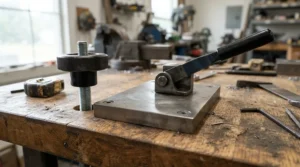
A featherboard mounting style comparison across tools reveals that not every product performs identically everywhere. Table saws almost universally offer the standard miter slot, making clamp-on models close to universal fits there, while a steel or cast-iron top also opens the door to magnetic options. Router tables frequently use the same standard slot, so most clamp-on featherboards transfer directly, though phenolic or MDF router table tops obviously rule out magnetic mounting entirely. Bandsaws are the trickiest case: table sizes and slot placement vary more by manufacturer, and many bandsaw tables are cast iron but small enough that a wide magnetic pad, like those on the Magswitch Universal Featherboard PRO, may not have enough clear surface area to seat properly near the blade — worth checking your specific bandsaw’s table dimensions before assuming any featherboard will transfer seamlessly between machines.
Mounting Versatility: Where Each Style Wins
Mounting versatility is really two separate questions: versatility across positions on one machine, and versatility across different machines in your shop. On a single machine, magnetic featherboards clearly win — any point on a steel table is fair game. Across multiple machines, the picture flips somewhat: a clamp-on model with a standard 3/4-inch miter bar genuinely moves between a table saw, router table, and bandsaw with the same hardware, provided all three share that standard slot dimension, while a magnetic model needs a ferrous surface on every machine it’s used with, which isn’t guaranteed on router table inserts or smaller bandsaws. The honest takeaway: if your shop runs three or four different ferrous-topped machines, a magnetic unit’s mounting versatility genuinely pays off across the whole shop, not just one saw.
Miter Slot Mounting Explained
Miter slot mounting works through a simple mechanical principle: a bar sized slightly under the slot’s internal width slides in, and turning a knob or bolt expands or wedges that bar against the slot’s inner walls, creating friction-based resistance that keeps the featherboard from sliding under lateral cutting force. The quality of this mechanism is exactly what separates a $15 featherboard from a $30 one — cheaper bars use a simple compression wedge that can loosen gradually under vibration, while redesigned bars, like the one Rockler specifically re-engineered into its current Adjustable Table Featherboard line, use a more aggressive expansion mechanism that locks with noticeably less effort and holds significantly more securely over repeated use.
Clamp Tension and Holding Power: What the Spec Sheet Won’t Tell You
Clamp tension is the single most misunderstood spec in this entire category, mostly because manufacturers rarely publish a hard number for it. What actually determines effective holding power isn’t one figure but three factors working together: the miter bar’s grip on the slot walls, the feather material’s flex resistance, and how precisely you’ve dialed in position relative to your stock thickness. A featherboard with excellent miter bar tension but feathers set too loosely will still let stock drift, while a featherboard with mediocre bar tension but perfectly dialed feather pressure can still perform adequately on lighter cuts. This is exactly why the Woodpeckers Variable Pressure model’s dial-adjustable tension matters more in practice than its price tag suggests — it isolates feather pressure as its own controllable variable instead of leaving it as a fixed byproduct of how the feathers happened to be stamped.
| Price Tier | Typical Clamp Tension Behavior | Value Verdict |
|---|---|---|
| Budget ($15-$20) | Fixed feather flex, basic bar grip | Solid for occasional use |
| Mid-range ($20-$45) | Improved bar design, still fixed feathers | Best value for regular use |
| Premium ($85+) | Dial-adjustable tension or magnetic switch-lock | Justified for daily, varied cutting |
Reading across these tiers, the analysis holds up cleanly: budget models handle occasional cuts in familiar materials just fine, but the moment your shop routinely switches between wildly different wood species or cut types, the ability to actually adjust tension — whether through a Woodpeckers-style dial or a magnetic model’s near-instant repositioning — starts paying for itself in fewer burnt edges and less drift.
Common Mistakes When Buying a Featherboard
The most frequent mistake is buying based purely on price without first confirming table and fence material — a $95 magnetic featherboard is simply non-functional on an aluminum-topped benchtop saw, no matter how good the reviews are. A close second is buying only one unit when a project genuinely needs pressure on both sides of the blade, leading to an awkward mid-project second purchase instead of buying a dual-sided or two-pack model from the start. A third common error is assuming all clamp-on models fit all miter slots identically; nonstandard slot widths on some imported saws mean a bar that fits perfectly on a friend’s saw can bind or rattle loosely on yours. Finally, many first-time buyers skip reading the adjustment range spec entirely, then discover their featherboard can’t reach far enough to clear an unusually thick or thin workpiece.
Long-Term Cost & Maintenance
Featherboards are refreshingly low-maintenance compared to most shop equipment, but a few habits extend their working life meaningfully. Clamp-on miter bars benefit from an occasional drop of light machine oil where the bar contacts the slot walls, which keeps the expansion mechanism from binding over years of tightening and loosening cycles. Magnetic units need essentially no maintenance beyond keeping the pad surface free of metal shavings, which can occasionally reduce contact area and weaken grip slightly if allowed to accumulate. On total cost of ownership, a $20 clamp-on featherboard that lasts five years of weekend use works out to roughly $4 per year, while a $90 magnetic unit used daily in a small business setting, saving perhaps a minute of repositioning time on every single cutting operation, can pay for the price difference in labor time within the first year alone — the math genuinely favors different products depending on how often the tool actually gets touched.
Safety, Regulations & Compliance Guide
Federal guidance is unambiguous about featherboards’ role in table saw safety. OSHA’s woodworking standard explicitly states that combs or featherboards must be provided at the workstation whenever a standard guard can’t be used, covering exactly the operations — dadoing, grooving, rabbeting — where the blade guard typically has to come off. This isn’t a niche recommendation buried in a manual; it’s a codified workplace requirement for any shop covered by OSHA jurisdiction, and it applies with the same logic in a home shop even without regulatory enforcement. The stakes behind that guidance are significant: a 2017 federal safety study estimated tens of thousands of emergency-department-treated table saw injuries occur annually, the large majority involving direct blade contact rather than kickback specifically — a sobering reminder that featherboards address one serious risk among several, and shouldn’t be treated as a replacement for blade guards, riving knives, and push sticks used together as a complete safety system.
Frequently Asked Questions
❓ What is a magnetic featherboard used for?
❓ Is a magnetic featherboard better than a clamp on featherboard?
❓ Can I use a magnetic featherboard on an aluminum table saw?
❓ How much does a good featherboard cost?
❓ Do featherboards work on router tables and bandsaws?
Conclusion
The magnetic featherboard vs clamp on featherboard decision ultimately isn’t about which technology is objectively superior — it’s about matching mounting style to your actual table, fence, and cutting habits. A steel or cast-iron shop that reconfigures often genuinely benefits from a magnetic model like the Magswitch Universal Featherboard PRO, where tool-free repositioning saves real time across dozens of cuts. A budget-conscious hobbyist running standard rip cuts on a saw with a normal miter slot loses nothing meaningful by choosing a clamp-on option like the POWERTEC Universal Featherboard or Rockler Adjustable Table Featherboard, and gains a lower price for equally solid safety performance. Precision-focused shops juggling varied wood species have a legitimate case for the dial-adjustable Woodpeckers Variable Pressure Featherboard 2-Pack, where tunable tension solves a real problem cheaper feathers can’t. Whichever style fits your bench, the underlying point OSHA and CPSC data both reinforce is the same: a featherboard sitting unused in a drawer protects nobody, and the cheapest one installed and adjusted correctly beats the best one still in its box.
Recommended for You
- Magnetic Featherboard for Table Saw: 7 Proven Picks for 2026
- Featherboard Set Under $40: 7 Budget Picks for 2026
- Push Blocks for Jointer and Table Saw Combo: 7 Best Picks (2026)
Affiliate Disclosure: This article contains affiliate links. As an Amazon Associate, I earn from qualifying purchases. If you purchase products through these links, we may earn a small commission at no additional cost to you.
✨ Found this guide helpful? Share it with a woodworking friend who still runs their table saw without a featherboard! 💬🤗
