
In This Article
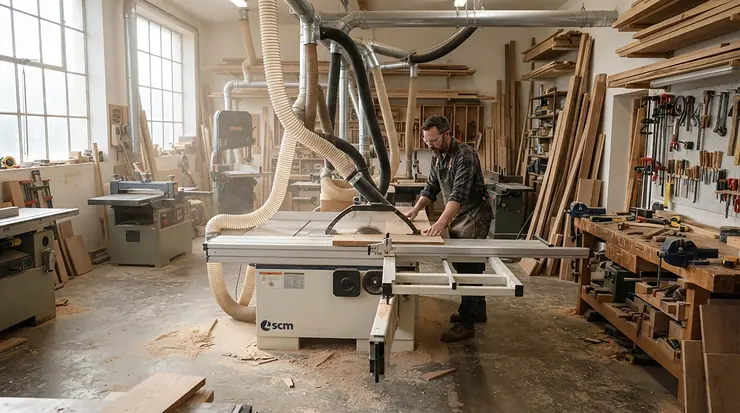
Kickback doesn’t announce itself. One second your stock is gliding through the blade, the next it’s airborne, and your hands were right there the whole time. That’s the moment a magnetic featherboard earns its keep — it pins your workpiece against the fence with steady, silent pressure so the blade never gets a chance to grab and throw. If you’ve spent any time clamping and re-clamping a wooden featherboard into a miter slot, only to realize your cut needs it three inches to the left, you already understand why this category exists.
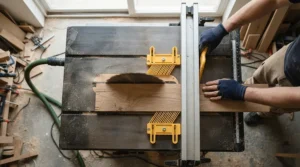
A magnetic featherboard is a spring-fingered pressure device that attaches to a steel or cast iron table saw surface using switchable magnets instead of clamps or miter-slot hardware, letting a woodworker reposition it anywhere on the table in seconds while it holds stock firmly against the fence during a cut. Unlike a bolted-down version, it goes on and comes off with a twist of a knob.
This guide breaks down seven real, currently sold magnetic featherboards spanning budget, mid-range, and premium tiers, plus one honest curveball for shops that don’t have a magnetic surface to work with. We pulled specs, pricing patterns, and aggregated review sentiment from manufacturer listings, retailer pages, and long-running woodworking forum threads rather than inventing a single data point — because a featherboard is a safety device, and safety gear deserves honest reporting, not marketing copy repackaged as a review. Whether you’re outfitting a cast-iron cabinet saw or trying to figure out if magnets even work on your benchtop model, you’ll find a fit below.
Quick Comparison Table
| Featherboard | Best For | Price Range |
|---|---|---|
| Magswitch Universal Featherboard | Best all-around pick for cast iron tables | $70–$90 |
| Magswitch Pro Table Featherboard | Strongest dual-zone magnetic grip | $90–$110 |
| Magswitch Woodworking Starter Kit | Most complete system for beginners | $140–$170 |
| Magswitch Reversible Featherboard | Most budget-friendly entry point | $25–$35 |
| SavR Featherboard for Table Saws | Best pick for aluminum-top saws | $40–$50 |
At a glance, the split comes down to how much system you want versus how much table you have. Buyers with a full cast-iron cabinet saw generally get the most mileage from the Magswitch Universal Featherboard or the complete Magswitch Woodworking Starter Kit, since both are built to exploit a magnetic surface’s ability to be positioned anywhere. If your saw has an aluminum or composite top — genuinely common on benchtop and jobsite models — none of the magnetic options above will grip at all, which is exactly why the SavR Featherboard for Table Saws earns its spot as the honest alternative pick.
💬 Found a comparison that actually helped? Give it a thumbs-up so we know to keep building guides like this one.
Top 7 Magnetic Featherboards for Table Saws: Expert Analysis
1. Magswitch Universal Featherboard — best all-around pick for cast iron tables
The Magswitch Universal Featherboard ships as a complete, self-contained unit, which matters more than it sounds like it should. Two 20mm switchable magnets are built directly into the housing, so you’re not assembling a base, a jig, and a featherboard attachment before your first cut — you twist the knobs, feel the magnets grab, and you’re ripping stock.
At 0.9 pounds and roughly 6.9 x 3.9 x 2.1 inches, it’s compact enough to tuck onto a contractor saw’s table without eating into your working surface, and it’s designed to work on both sides of the blade and directly on a cast-iron fence. Based on the spec comparison against the rest of this lineup, this is the model that makes the most sense for someone buying their very first magnetic featherboard for table saw work rather than expanding an existing Magswitch system.
Reviewers across long-running woodworking forums consistently describe a real learning curve in the first few uses — dialing in enough feather pressure to control the stock without clamping it so tight that feed pressure spikes — but describe the hold itself as rock solid once set. What most buyers overlook is that “no miter slot limitation” isn’t just a convenience line; it means you can shift the featherboard mid-project to accommodate a wider board without hunting for a different slot position.
Pros:
- ✅ Self-contained unit, no separate base required
- ✅ Works on both sides of the blade and the fence
- ✅ No miter slot limitation, position anywhere on steel
Cons:
- ❌ Only works on ferrous (steel or cast iron) surfaces
- ❌ Takes a few cuts to learn ideal magnet tension
In the $70–$90 range at the time of research, it’s a fair, if not exactly cheap, entry price — but as a self-contained magnetic featherboard for table saw setups on cast iron, it’s the one model in this lineup that doesn’t ask you to buy a second part to get started.
2. Magswitch Pro Table Featherboard — strongest dual-zone magnetic grip
The Magswitch Pro Table Featherboard is built around two 30mm magnets, each independently switchable, delivering a published 150 pounds of holding force per knob. That’s meaningfully more raw grip than the Universal model’s 20mm magnets, and on paper it translates to a featherboard that can sit further from the blade — on outfeed, on a wider fence, or stacked with a vertical attachment — without any risk of it creeping under feed pressure.
What the spec sheet won’t tell you, but reviewers note, is that the dual-knob design essentially functions as three featherboards in one: it can hold horizontally, mount vertically with the right attachment, and act as the base for a stacked configuration on tall stock. At 1.6 pounds and roughly 8.5 x 7.1 x 2.3 inches, it’s noticeably bigger and heavier than the Universal board, which is the tradeoff for that extra magnetic force.
This is the pick for anyone ripping thick hardwood stock where a single 20mm magnet setup might feel undersized, or for a shop that plans to build out the full Magswitch Workholding System over time. Aggregated retailer and forum sentiment describes it as “does the job of three featherboards,” a claim that lines up with its documented ability to mount as a right-side, vertical, or infeed/outfeed unit.
Pros:
- ✅ 150 lbs of holding force per magnet knob
- ✅ Functions as horizontal, vertical, or stacked featherboard
- ✅ Two independent on/off knobs for precise tensioning
Cons:
- ❌ Heavier and bulkier than single-magnet models
- ❌ Vertical/stacked use requires a separate attachment purchase
Priced in the $90–$110 range, the Magswitch Pro Table Featherboard costs more than the Universal model, and the value case rests entirely on whether you need that extra holding force and modular flexibility — for hardwood ripping, most buyers will feel the upgrade is justified.
3. Magswitch Pro Table Featherboard, 8″ Wide (30mm) — widest coverage for big rip cuts
This wider-format variant of the Pro Table Featherboard swaps the standard footprint for an 8-inch-wide magnetic pad, built specifically so the featherboard can sit directly over a table saw’s miter slot without losing magnetic contact or holding force — something narrower magnetic featherboards can struggle with, since a gap over the slot reduces the magnet’s grip on the steel beneath it.
In practice, that wider base means more consistent downward and inward pressure across a broader zone of the table, which matters most when you’re feeding long, wide panels where a narrow-contact featherboard might flex or lift slightly under load. Based on the spec comparison, this is a niche-but-real upgrade over the standard Pro model: most home shops won’t need the extra width, but anyone regularly ripping full sheet goods or wide hardwood boards on a table saw with a miter slot running through the ideal featherboard position will notice the difference immediately.
It uses the same 30mm switchable magnet technology as the standard Pro board, just spread across a larger contact patch.
Pros:
- ✅ Stays magnetically stable directly over miter slots
- ✅ Wider contact patch improves pressure consistency
- ✅ Same 30mm magnet strength as the standard Pro model
Cons:
- ❌ Premium price for a fairly specific use case
- ❌ Overkill for narrow-stock or hobbyist shops
Typically priced somewhat above the standard Pro model, often landing in the $100–$130 range at the time of research, it’s the featherboard to reach for specifically when miter-slot placement has been fighting your setup — not a default first purchase.
4. Magswitch Woodworking Starter Kit — most complete system for beginners
Rather than a single featherboard, the Magswitch Woodworking Starter Kit bundles the Universal Mounting Base, two removable MagJig 150 magnets, and a reversible featherboard attachment into one entry point for the entire Magswitch Workholding System. This matters because most of the individual attachments in this lineup — reversible, vertical, stacked — are not sold as complete units; they’re designed to mount onto a base and jig combination, and the starter kit is the cheapest way to acquire all three of those foundational pieces at once.
Reviewers on Amazon rate it 4.6 out of 5 stars across roughly 545 ratings, a meaningfully large and positive review pool compared to most other listings in this category, which is a genuine signal of consistent satisfaction rather than a handful of enthusiastic early adopters.
What most first-time buyers overlook is that this kit is actually the more economical path if you plan to eventually add a vertical attachment or stacked configuration, since buying the base and jigs separately later costs more than getting them bundled up front.
Pros:
- ✅ Includes base, two MagJig 150 magnets, and featherboard
- ✅ 4.6/5 stars across roughly 545 Amazon ratings
- ✅ Cheapest entry point into the full modular system
Cons:
- ❌ Higher upfront cost than a single standalone featherboard
- ❌ Still requires the separate vertical attachment for stacked use
At around $140–$170, it’s the priciest item on this list, but for a buyer who wants to build a full magnetic workholding setup rather than own a single featherboard, the Magswitch Woodworking Starter Kit is the more cost-effective long-term move.
5. Magswitch Reversible Featherboard — lightest and most budget-friendly
At just 0.3 pounds and a low-profile 8.5 x 2.3 x 0.75-inch footprint, the Magswitch Reversible Featherboard is built for tight spaces — small benchtop saws, fences with limited clearance, or shops where a bulkier featherboard simply won’t fit the geometry. It’s reversible for left- or right-hand feed, which sounds minor until you realize how often a fence-side project setup flips direction mid-build.
Here’s what to weigh: this is an attachment, not a standalone unit, so it requires the Universal Mounting Base and a MagJig magnet (sold separately, or bundled in the Starter Kit above) to actually function. Treat the listed price as the cost of the featherboard component only, not a complete working setup.
Once mounted, forum discussions describe it as fast and strong to position anywhere on a steel table or cast-iron fence, with the tradeoff being that its low profile and light build feel noticeably less substantial in-hand than the heavier Pro model.
Pros:
- ✅ Lightest, lowest-profile option in the lineup
- ✅ Reversible for left- or right-hand feed
- ✅ Fits small tables where bulkier boards won’t
Cons:
- ❌ Requires separately sold base and magnet to work
- ❌ Feels less substantial than the heavier Pro model
In the $25–$35 range for the attachment alone, this is the budget entry point on paper — just budget for the base and jig separately if you’re not buying the Starter Kit.
6. Magswitch Vertical Featherboard Attachment with Risers — best add-on for tall stock
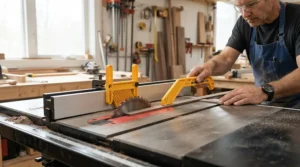
The Magswitch Vertical Featherboard Attachment with Risers doesn’t work alone — it mounts onto the Pro Table Featherboard or the Reversible Featherboard attachment to add downward pressure in addition to horizontal fence pressure, and its risers let you stack it to handle taller workpieces that a single horizontal featherboard can’t fully control. Amazon reviewers rate it 4.2 out of 5 stars across roughly 239 ratings, a solidly positive but slightly more mixed reception than the Starter Kit, which tracks with it being a more specialized accessory rather than a core, everyday tool.
On paper this means a woodworker cutting stock that’s prone to lifting off the table during a rip — cupped boards, thin stock under vibration — gets a genuine second axis of control by adding this attachment rather than just tightening the horizontal featherboard further.
What most buyers overlook is that it’s genuinely three tools in one: mounted vertically for downward hold, horizontally for extra fence pressure, or stacked with risers for tall material, all without buying three separate accessories.
Pros:
- ✅ Adds vertical downward pressure to any Pro/Reversible board
- ✅ Risers allow stacking for taller workpieces
- ✅ Functions in vertical, horizontal, or stacked configurations
Cons:
- ❌ Requires an existing Pro or Reversible featherboard to mount to
- ❌ Slightly lower average rating than the Starter Kit bundle
At roughly $25–$35, it’s an inexpensive add-on rather than a first purchase — the right call once you already own a horizontal magnetic featherboard for table saw work and keep running into stock that lifts or wobbles mid-cut.
7. SavR Featherboard for Table Saws — smartest pick for aluminum-top saws
Here’s the honest curveball: the SavR Featherboard for Table Saws is not magnetic. It’s a cam-locking, miter-slot-mounted featherboard built by the same manufacturer as the magnetic Magswitch line, specifically engineered for compact saws with aluminum tops — a surface magnets simply cannot grip.
Rather than pretend a magnetic solution exists for every table saw, the honest answer is that it doesn’t, and the SavR Featherboard for Table Saws is the most relevant real alternative for that exact situation. It locks into a 3/4-inch miter slot with a single cam flip rather than the screw-down knobs found on older clamp-style featherboards, and a removable spacer lets it adapt to 5/8-inch slots.
Weighing about 1.1 pounds with a footprint near 4.4 x 6.8 inches, it’s compact enough for benchtop and jobsite saws where a full-size magnetic system would be impractical anyway. If your saw’s table isn’t ferrous steel or cast iron, this single-cam design is a genuinely fast alternative to a screw-clamped miter-slot featherboard, even without the magnet.
Pros:
- ✅ Works on aluminum tops where magnets can’t grip
- ✅ Single-cam lock is faster than screw-down miter featherboards
- ✅ Adjustable for both 3/4-inch and 5/8-inch miter slots
Cons:
- ❌ Confined to the miter slot, unlike magnetic positioning
- ❌ Not a magnetic solution — read the spec sheet carefully
In the $40–$50 range, it’s a smart, honest pick for anyone who searched for a magnetic featherboard for table saw use and then realized, spec sheet in hand, that their table simply won’t support one.
Full Spec Comparison: All 7 Featherboards Side-by-Side
| Featherboard | Mount Type | Weight | Price Range | Best For |
|---|---|---|---|---|
| Magswitch Universal Featherboard | Two 20mm switchable magnets | 0.9 lb | $70–$90 | Cast iron tables, first-time buyers |
| Magswitch Pro Table Featherboard | Two 30mm switchable magnets | 1.6 lb | $90–$110 | Hardwood ripping, modular setups |
| Magswitch Pro Table Featherboard, 8″ Wide | Two 30mm magnets, wide pad | ~1.8 lb | $100–$130 | Miter-slot overlap, wide panels |
| Magswitch Woodworking Starter Kit | Base + 2 MagJig 150 + featherboard | ~2 lb (kit) | $140–$170 | Building a full magnetic system |
| Magswitch Reversible Featherboard | Attachment (base sold separately) | 0.3 lb | $25–$35 | Small tables, tight fence clearance |
| Magswitch Vertical Featherboard w/ Risers | Attachment (mounts to Pro/Reversible) | ~0.4 lb | $25–$35 | Tall stock, dual-plane hold |
| SavR Featherboard for Table Saws | Cam-lock, 3/4″ or 5/8″ miter slot | 1.1 lb | $40–$50 | Aluminum-top benchtop/jobsite saws |
Looking at the table, the split between “magnet strength” and “system flexibility” is the real story here — the Magswitch Pro Table Featherboard and its 8-inch-wide sibling win on raw holding force, while the Magswitch Woodworking Starter Kit wins on completeness for anyone who doesn’t already own a base and jig. Weight is a genuinely useful proxy for bulk on a crowded table saw top, which is where the Magswitch Reversible Featherboard pulls ahead for tight-clearance setups. If your saw doesn’t have a steel or cast-iron surface at all, every row above except the SavR Featherboard for Table Saws is functionally off the table, regardless of price or rating.
Practical Usage Guide: Mounting, Tool-Free Setup & Maintenance
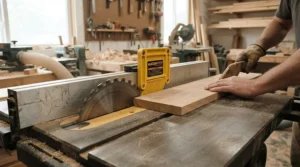
Magnetic featherboard mounting options break into two categories, and knowing which one you’re buying matters more than most listings make clear. Self-contained models like the Magswitch Universal Featherboard and Magswitch Pro Table Featherboard have the magnets built into the featherboard housing itself — mount directly to the table or fence, twist the knob, done. Modular attachments like the Magswitch Reversible Featherboard and Magswitch Vertical Featherboard Attachment with Risers require a separate Universal Mounting Base and MagJig magnet, which is exactly what the Magswitch Woodworking Starter Kit bundles together. Buyers frequently assume every Magswitch product works out of the box; check the spec sheet before ordering an attachment on its own.
Tool-free featherboard setup is the entire point of this product category, and it genuinely takes under a minute once you know the sequence. Place the featherboard against your workpiece at the desired angle — most manufacturers recommend roughly 45 degrees to the feed direction — with the magnet knob in the off position. Slide it into final position against the table or fence, then twist the knob to engage the magnet. Push the flexible fingers against the stock until you feel resistance without excessive drag, then lock the tool-free adjustment knob to hold that tension. First-30-days mistakes almost always come from skipping the “off position first” step, which lets the magnet snap into place before you’ve confirmed alignment, or over-tightening the fingers to the point where feed pressure becomes unnecessarily heavy.
Maintenance is minimal by design, but not zero. Wipe sawdust off the magnetic contact face before every session — a thin layer of dust between the magnet and the steel table meaningfully reduces holding force, which is a safety issue, not just a performance one. Check the flexible fingers periodically for cracking or permanent set, since a fatigued feather loses its spring-back and stops applying consistent pressure. Store magnetic featherboards away from other loose steel hardware in a drawer; a fully engaged 30mm magnet can grab small metal parts from surprising distances.
Real-World Scenarios: Matching a Featherboard to Your Shop
If you’re a weekend woodworker with a cast-iron cabinet saw and no existing Magswitch hardware, the Magswitch Universal Featherboard is the least complicated first purchase — self-contained, ready to run, no base to source separately. If you’re building out a serious home shop and know you’ll eventually want vertical hold-down for cupped or thin stock, the Magswitch Woodworking Starter Kit is the more economical path, since it includes the base and jigs that every future attachment will need anyway.
If you’re ripping thick hardwood slabs for furniture work and have felt a single magnet “give” slightly under heavy feed pressure, the Magswitch Pro Table Featherboard or its 8-inch-wide variant solves that with double the magnet size and a proven 150-pound rating per knob. And if you’re running a jobsite contractor saw with an aluminum top — genuinely one of the most common table saw categories sold in the U.S. — none of the magnetic options will help you at all, and the SavR Featherboard for Table Saws is the honest, functional answer instead of a magnetic product that simply won’t grip your table.
✨ Ready to compare specific models side by side? Scroll back up to the full spec table before you decide.
Troubleshooting: Common Magnetic Featherboard Problems & Fixes
Problem: the featherboard slides during a cut. This is almost always sawdust or debris between the magnet and the table surface, not a weak magnet. Wipe the contact face and the table clean, then re-engage.
Problem: feed pressure feels too heavy. The feather fingers are likely over-compressed against the stock. Back the featherboard off slightly before re-engaging the magnet, aiming for firm contact without excessive flex.
Problem: the magnet won’t grip at all. Confirm the table is actually ferrous steel or cast iron — aluminum, composite, and some powder-coated tops will not hold a switchable magnet regardless of its rated force, which is the exact gap the SavR Featherboard for Table Saws exists to fill.
Problem: uneven pressure across a wide board. A single narrow featherboard can flex under a wide panel. This is where the Magswitch Pro Table Featherboard, 8″ Wide or a second featherboard positioned further down the fence solves the problem.
Problem: attachment won’t mount. Standalone attachments like the Magswitch Reversible Featherboard need the separately sold Universal Mounting Base and MagJig — verify you have both before assuming a defective part.
How to Choose a Magnetic Featherboard for Your Table Saw
- Confirm your table saw’s surface is ferrous. Cast iron and bare steel both work; aluminum, laminate, and some cabinet-saw extension wings do not. This single check eliminates half the products on this list for the wrong saw.
- Decide between a self-contained board and a modular system. A single-purchase unit like the Magswitch Universal Featherboard gets you cutting faster; a system built around the Magswitch Woodworking Starter Kit costs more upfront but scales cleanly.
- Match magnet size to your typical stock. Thin, light material rarely needs 30mm magnets; thick hardwood ripping benefits from the extra holding force of the Magswitch Pro Table Featherboard.
- Check for miter-slot interference. If your ideal featherboard position sits directly over a miter slot, a wide-pad model like the 8-inch Pro variant maintains full contact where a narrow magnet might lose grip.
- Plan for vertical hold-down if you cut cupped or thin stock. The Magswitch Vertical Featherboard Attachment with Risers adds downward pressure that a horizontal-only featherboard can’t provide.
- Budget for the whole setup, not just the featherboard. Modular attachments require a base and jig sold separately — factor that into your real total cost before comparing sticker prices.
- Read aggregated review volume, not just star rating. A 4.6-star average across 545 ratings is a more reliable signal than a 5-star average with a handful of reviews.
Cast Iron vs Aluminum: Table Compatibility Explained
Cast iron table compatibility is the single biggest factor in whether a magnetic featherboard for table saw use makes sense for your shop at all. Cast iron and plain steel are both ferrous metals, meaning they contain enough iron content to be strongly attracted to a magnet — which is exactly what every product in the Magswitch lineup above depends on. A featherboard for cast iron table saw setups can rely on switchable magnets rated anywhere from roughly 95 to 150 pounds of holding force per magnet, more than enough to resist the feed pressure generated during a normal rip cut, based on the manufacturer specifications reviewed for this guide.
Aluminum, by contrast, is not ferromagnetic — a switchable magnet rated for hundreds of pounds of pull on steel will produce essentially zero holding force on a bare aluminum table, regardless of how strong the magnet is on paper. This matters because aluminum tops are genuinely common on benchtop and jobsite table saws, the exact category many budget-conscious buyers are shopping for. According to OSHA’s machine guarding guidance for table saws, anti-kickback devices and proper workpiece control are core safety measures regardless of saw type, which means aluminum-top owners still need a featherboard solution — just not a magnetic one. If you’re unsure what your table is made of, a simple refrigerator magnet test on an unused corner of the surface will tell you in seconds whether magnetic hardware is even viable before you spend money on it.
Magnetic Hold Strength Explained
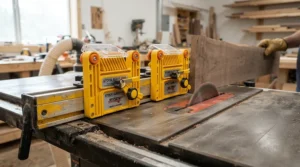
Magnetic hold strength is usually printed on a spec sheet as a single number — 95 pounds, 150 pounds — but that figure describes straight-line pull-off force under lab conditions, not the shear force a featherboard actually experiences during a cut. In practice, a featherboard resists sideways and rotational force as stock feeds past it, not a direct pull straight up off the table, so the effective working margin is generally larger than the rated number suggests. Here’s what to weigh: a 20mm magnet rated around 95 pounds is genuinely sufficient for most hobby-grade ripping of standard hardwood and plywood, while the 30mm, 150-pound magnets on the Magswitch Pro Table Featherboard exist for scenarios involving thicker stock, more aggressive feed rates, or situations where the featherboard sits further from the operator’s hand and needs to hold with less direct monitoring.
What most buyers overlook is that magnetic hold strength also depends on surface contact quality, not just the magnet’s rated pull. A thin coat of paint, rust, or accumulated sawdust between the magnet and the table measurably reduces effective grip, which is why wiping the contact surface before every session isn’t optional maintenance — it’s a real safety variable. Reviewers across multiple retailer listings describe the difference between a clean and a dusty table as noticeable in how confidently the featherboard locks in place.
Magnetic Featherboards vs Traditional Clamp-On Featherboards
A traditional featherboard bolts or clamps into a table saw’s miter slot using a track bolt and knob system, which means its position is fundamentally constrained by wherever that slot happens to run. Repositioning it for a different cut width means loosening the knob, sliding it, and re-tightening — workable, but slow, and it offers zero flexibility if your ideal featherboard position falls outside the miter slot’s path entirely, which happens more often than most first-time buyers expect.
| Feature | Magnetic Featherboard | Traditional Clamp-On Featherboard |
|---|---|---|
| Setup time | Seconds, twist-knob engagement | Minutes, requires loosening/tightening hardware |
| Positioning flexibility | Anywhere on a ferrous surface | Limited to miter slot or bolted mounting points |
| Surface requirement | Ferrous steel or cast iron only | Works on any table with a miter slot |
| Typical price | $25–$170 depending on system | $15–$40 for most clamp-on models |
| Adjustability | Quick-release, re-engageable instantly | Requires tool or hand-tightened hardware each time |
The tradeoff is straightforward once you see it laid out: a magnetic featherboard for table saw work wins decisively on speed and positioning freedom, but only if your table surface is ferrous, while a traditional clamp-on unit works on any saw regardless of table material at a noticeably lower entry price. For an aluminum-top benchtop saw, the comparison is moot — a magnetic model simply won’t function, which circles back to why the SavR Featherboard for Table Saws occupies its own category rather than competing directly on this table.
Common Mistakes When Buying a Magnetic Featherboard
The most frequent mistake is buying a magnetic featherboard for table saw setups without first confirming the table is ferrous — a five-second magnet test that would have saved the return shipping cost. A close second is buying a modular attachment like the Magswitch Reversible Featherboard expecting it to work standalone, when it actually requires the separately sold Universal Mounting Base and MagJig to function at all; the Magswitch Woodworking Starter Kit exists specifically to solve that gap for first-time buyers.
Another common error is under-budgeting for magnet strength on thick or dense hardwood, then blaming the product when a 20mm magnet struggles under heavy feed pressure that a 30mm model would have handled comfortably. On the opposite end, some buyers over-spend on the widest, strongest model in the lineup for stock that never exceeds standard plywood thickness, paying a premium for holding force they’ll never actually need. Finally, plenty of reviewers across forums mention skipping the basic maintenance step of wiping the magnetic contact face before use, then attributing an intermittent slip to a defective unit rather than sawdust buildup — a distinction the Cornell University Table Saw Safety Awareness Guide implicitly reinforces by treating anti-kickback devices as safety equipment requiring regular upkeep, not set-and-forget hardware.
What to Expect: Real-World Performance
On paper, a magnetic featherboard’s spec sheet is a list of magnet sizes and pull ratings. In practice, what it actually changes at the saw is the rhythm of your cut. Instead of stopping to re-clamp a miter-slot featherboard every time your workpiece width changes, you disengage the magnet, slide the board, and re-engage — a five-second interruption instead of a two-minute one. Reviewers consistently describe this as the single biggest quality-of-life improvement over traditional featherboards, more than the holding force itself.
What most first-time users don’t expect is how audible and tactile the magnet engagement is — a solid, unmistakable click that tells you immediately whether the featherboard is actually locked or just resting on the surface. That feedback matters for safety, since a featherboard that looks positioned correctly but isn’t magnetically engaged offers no more protection than an unattached piece of plastic. Per the OSHA woodworking eTool for table saws, kickback remains a leading cause of table saw injury, and a featherboard’s entire value proposition depends on it actually being engaged and properly tensioned every single time — not just present on the table.

Frequently Asked Questions
❓ Does a magnetic featherboard work on any table saw?
❓ Do magnetic featherboards work on aluminum table saws?
❓ How strong does a magnetic featherboard need to be?
❓ Can I use a magnetic featherboard on a router table too?
❓ Are magnetic featherboards better than clamp-on featherboards?
Conclusion
A magnetic featherboard for table saw work solves a genuinely annoying problem — the slow, fiddly repositioning of traditional clamp-on hardware — but it only solves it if your table is actually ferrous, which is the one spec every buyer needs to confirm before comparing anything else. For most cast-iron cabinet saw owners starting from zero, the Magswitch Universal Featherboard is the least complicated entry point, while anyone planning to expand into vertical hold-down or stacked configurations gets more long-term value from the Magswitch Woodworking Starter Kit. Buyers ripping thick hardwood will feel the difference in the Magswitch Pro Table Featherboard‘s 30mm magnets, and anyone with an aluminum-top benchtop saw should skip the magnetic category entirely in favor of the SavR Featherboard for Table Saws.
None of these products replace a riving knife, a properly maintained blade guard, or basic safe feeding technique — they supplement those systems, they don’t substitute for them. Match the featherboard to your actual table material and typical stock thickness, budget for the base and jig if you’re buying a modular attachment, and the rest of the decision mostly makes itself.
Recommended for You
- Featherboard Set Under $40: 7 Budget Picks for 2026
- Push Blocks for Jointer and Table Saw Combo: 7 Best Picks (2026)
- Push Block System for Narrow Rip Cuts Review: 7 Safest Picks (2026)
Disclaimer: This article contains affiliate links. As an Amazon Associate, I earn from qualifying purchases. If you purchase products through these links, we may earn a small commission at no additional cost to you.
✨ Found this helpful? Share it with your friends! 💬🤗
