
In This Article
Your table saw may be older than your car, and that’s a compliment. Cast iron ages gracefully. The little toothed fingers riding behind the blade? Not so much. After years of dragging across lumber, pawls go dull, lazy, bent, or missing entirely. That’s when anti kickback pawl replacement for older saws stops being a nice-to-have and becomes the cheapest insurance in your shop.
Here’s the catch. Older saws come from an era when manufacturers rolled out parts, discontinued them, and moved on. Finding the right pawl can feel like a scavenger hunt with no map. This guide is the map: seven real parts and retrofit options, fit-checking logic, wear diagnosis, and sourcing strategy, all grounded in manufacturer listings, parts diagrams, safety documents, and woodworker discussions. (Affiliate disclosure: this post contains affiliate links, explained at the bottom.)
What Is Anti Kickback Pawl Replacement for Older Saws?
It means swapping worn, broken, or missing toothed pawls on a legacy table saw for a correct-fit OEM part, a compatible aftermarket assembly, or a retrofit splitter system. Pawls dig into stock that tries to travel backward toward you. Replacement restores that bite, and sometimes it’s smarter to upgrade the whole splitter setup.
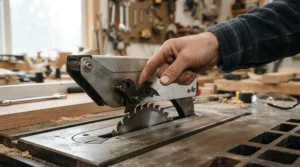
For context, a riving knife rides in the kerf and keeps the cut open. Pawls are the backup act, the last line of defense if stock does start to travel backward.
A quick honesty note before we dive in: review data for these niche parts is thin. Where real reviews exist, they’re summarized as what they are, and where they don’t, we say so. Prices appear as ranges because they move, so always check current price and confirm fit against your saw’s model number.
Quick Comparison: 7 Replacement Options at a Glance
| Product | Best For | Fit (verify first) | Type | Price Range |
|---|---|---|---|---|
| DeWalt A26148 Anti-Kickback Guard | DeWalt jobsite owners | DW745 / DW744 family | OEM pawl guard | Mid-$30s to low-$40s |
| Ridgid 089290001710 Anti-Kickback Pawls | Ridgid R4513 / R45171 owners | Ridgid models listed | OEM pawl set | Around $30 |
| Powermatic PM1000-AKPA | PM1000 cabinet saw owners | Powermatic PM1000 | OEM pawl assembly | In the $60s |
| Powermatic 64B-406 | Vintage 64B restorers | Powermatic 64B | OEM single pawl | Check current price |
| Micro Jig MJ Splitter SteelPRO | Saws with no usable splitter | Most saws with a replaceable insert | Aftermarket splitter | Low-$40s to ~$50 |
| Shark Guard | Full legacy upgrade | Many saws (retrofit) | Splitter plus optional pawls | Premium, varies by saw |
| Biesemeyer T-Square 78-961 | Right-tilt Delta Unisaw owners | Delta Unisaw (right tilt) | Snap-in spreader with pawls | Premium, often $100+ |
Reading the table, the three OEM pawl parts are the budget-friendly path if your saw is an exact match, and they cost less than a nice lunch. The Micro Jig MJ Splitter SteelPRO is the rescue option when no pawl exists for your model, though it doesn’t include pawls. The Shark Guard and Biesemeyer T-Square 78-961 cost the most but solve the bigger problem of a worn-out guard system.
💬 Just one click — help others make better buying decisions too!😊
Top 7 Replacement Pawls and Retrofit Options: Expert Analysis
1. DeWalt A26148 Anti-Kickback Guard — the factory fix for DW745-family saws
The headline here is simple: it’s the actual factory part, so pivot, shape, and spring behavior are what DeWalt designed. Listings tie the A26148 to the DW745 and DW744 jobsite saws, and at least one marketplace listing adds the DWE7480.
On paper, the key detail is the small spring-loaded release button. That button is what lets you lift the pawls out of the way for non-through cuts, so when its spring fails, the guard becomes either a nuisance or an abandoned accessory. Replacing the whole piece restores that tool-free convenience instead of leaving you to improvise.
Based on the spec comparison, this is the lowest-drama route for DeWalt owners and an unnecessary risk for everyone else. One forum poster did suggest an eBay DeWalt guard looked identical to a discontinued Delta Unisaw part, but that was a visual hunch, so treat it as a lead to verify rather than a green light.
Review data is thin. The one retail review we found called it an exact replacement for a DW745 after the original’s small metal button spring broke. One data point isn’t a trend, so call it encouraging, not conclusive.
Pros:
- ✅ Genuine factory part, no fit guesswork
- ✅ Restores the tool-free pawl lift-out button
- ✅ Available through several parts resellers
Cons:
- ❌ Limited to the DeWalt saw family
- ❌ Very small review pool
Expect the mid-$30s to low-$40s at the time of research. For an OEM part that restores a safety feature, that’s fair value. Check current price before ordering.
2. Ridgid 089290001710 Anti-Kickback Pawls — cheapest OEM pawl set for R4513 saws
Value is the standout trait. Marketplace listings pair this part number with Ridgid’s R4513 and R45171 table saws, and it sits around the price of a pizza.
What does that mean in practice? Pawls are small, but they’re the piece that actually touches the workpiece, so a fresh set of sharp teeth gives you more reliable engagement than a pair rounded off by years of lumber. If your R4513’s pawls are dull, bent, or sluggish, this is the straightforward swap.
This one is for owners of the listed Ridgid models, period. One marketplace buyer reported adapting the part to a Kobalt saw with some improvised fitting and was happy with the result. That’s a fun story and a poor strategy. Pawl geometry and spring tension are tuned to the saw they ship with, and a part that “kind of fits” can swing wrong or hang up. Buy for the model number, not for the bravado.
The listing showed dozens of units sold, which suggests steady demand, though sales volume isn’t the same as verified performance.
Pros:
- ✅ Very low cost for an OEM part number
- ✅ Matched to specific Ridgid model numbers
- ✅ Strong sales activity on marketplace listings
Cons:
- ❌ Fit limited to the listed Ridgid models
- ❌ Adapting it to other brands is guesswork
Plan on around $30 for the part, which is excellent value if your model matches.
3. Powermatic PM1000-AKPA — dedicated pawl assembly for the PM1000 cabinet saw
Heavy-duty saws deserve heavy-duty parts, and this is the dedicated pawl assembly for the Powermatic PM1000 10-inch cabinet saw. Reseller diagrams show it as an identifiable part in the guard group and note that it replaces the older PM1000-AKPA numbering.
Why that matters: cabinet saws carry big motors and big momentum, and the stock piece you’re replacing was engineered around a specific splitter and mounting arrangement. An exact-number part means you’re not debating pivot heights or spring strength at the bench.
Here’s what the spec sheet won’t tell you. The reseller listing showed this part as special order, so lead time is part of the cost. For a saw sitting idle in your shop, that’s an inconvenience. For one running daily, order before the pawls fail, not after. For perspective on how pricing swings by model, Powermatic’s own site lists a pawl assembly for the PM3000B at well over $200, so confirm your saw’s exact designation.
No customer reviews were posted for related Powermatic pawl parts on the manufacturer site, so there’s no review sentiment to report.
Pros:
- ✅ Exact-fit part for the PM1000
- ✅ Clear parts-diagram reference for verification
- ✅ Manufacturer-spec OEM construction
Cons:
- ❌ Special-order status can mean waiting
- ❌ No public reviews to lean on
Budget in the $60s at the time of research, a reasonable price for a heavy-duty assembly.
4. Powermatic 64B-406 — OEM pawl for the vintage 64B
Here’s a rarity: a legacy-model pawl still listed by the manufacturer. Powermatic’s site shows the 64B-406 as a single anti-kickback pawl built to OEM specifications for the 64B table saw.
The practical meaning is bigger than the listing suggests. Vintage owners often assume parts vanished decades ago. This listing is proof that for some older Powermatic models, the factory is still a first stop, so ask before you assume.
Note the singular. It’s listed as one pawl, and pawls typically work as a left-and-right pair, so check how many your saw needs and order accordingly. Also compare the old pawl’s pivot hole, tooth profile, and spring seat against the diagram before the part arrives, because 64B-era saws may have been modified over the decades.
The listing has no reviews yet, so there’s no aggregated sentiment to share, and I won’t invent any. What’s verifiable is the fit statement and the OEM-spec claim from the manufacturer.
Pros:
- ✅ Manufacturer-listed for a vintage model
- ✅ OEM-spec fit, no aftermarket guessing
- ✅ Small, simple part that’s easy to install
Cons:
- ❌ Listed singly, so confirm pair quantity
- ❌ Zero public reviews
Price wasn’t displayed in the research, so check current price directly. As a small steel part, it’s a low-stakes spend for high-stakes protection.
5. Micro Jig MJ Splitter SteelPRO — best rescue when no pawl exists for your saw
This one isn’t a pawl at all, and that’s exactly why it earns a spot. When your saw’s guard system is gone and the OEM part is discontinued, the Micro Jig MJ Splitter SteelPRO adds splitter-style protection to a zero-clearance insert.
The design uses two offset splitters. According to Popular Woodworking’s write-up, the forward splitter nudges the workpiece toward the fence, while the rear one pushes the offcut away, and if the board binds hard, the rear piece releases and wedges in the kerf to hold it open. Rotating a splitter shifts the offset in tiny increments, so you can tune it.
Reviewer themes are consistent. Buyers describe easy installation, good results with zero-clearance inserts, and peace of mind on older saws with no splitter. The complaints are also consistent: kerf mismatch, limited blade-height clearance on some setups, and at least one owner whose Ridgid saw wouldn’t accept it. One reviewer noted support offered a free replacement after a fit problem.
It won’t coexist with some stock guards, and it doesn’t include a throat plate or pawls. Think of it as a kickback-reduction bridge, not a pawl substitute.
Pros:
- ✅ Adds a splitter to saws that lack one
- ✅ Doubles as a light after-blade feather board
- ✅ Includes drill guide and installation hardware
Cons:
- ❌ Must match your blade’s kerf width
- ❌ Doesn’t replace pawls or work with every guard
Expect the low-$40s to around $50. For saws with no better option, the value is strong.

6. Shark Guard — the premium legacy overhaul with optional pawls
The standout is scope. The Shark Guard doesn’t swap one pawl; it replaces the whole splitter-and-guard arrangement with a retrofit riving knife or splitter, a clear cover, and top-side dust collection.
Forum discussions are enthusiastic and consistent. Owners of Delta, Jet, and Powermatic saws describe it as well made and more convenient than an overarm guard, with pawls available as an option. One Unisaw owner reported the stock splitter’s threads wearing out and called the Shark Guard a significant upgrade. The recurring caveat is lead time, and several posters note it can run long.
Here’s the analysis. If your old guard is a hassle you never use, replacing a single pawl just restores a feature you’ll leave in a drawer. A system you’ll actually keep on the saw is safer in practice. Posters also stress matching the splitter thickness to your blade type, which loops back to the compatibility section below.
This is anecdotal, not lab-tested, so cross-check fit with the maker for your saw. Forum figures for pieces and full systems range from around $120 up to several hundred dollars, so treat price as a “get a quote” situation.
Pros:
- ✅ Full guard-and-splitter replacement
- ✅ Top-side dust collection included
- ✅ Optional pawls for a legacy saw kickback pawl upgrade
Cons:
- ❌ Highest cost of the seven
- ❌ Long lead times reported
Verdict: worth it if you use the saw often and the original guard is a lost cause.
7. Biesemeyer T-Square 78-961 — snap-in spreader with pawls for right-tilt Unisaws
The hook is convenience. This snap-in anti-kickback spreader is described in woodworking discussions as made for the right-tilt Delta Unisaw, and the key phrase is “snap-in.” You’re not rebuilding your saw, just seating a splitter with pawls.
Woodworkers on a long-running forum thread praised the fingers for sitting flush on the table surface rather than leaving a gap, a detail that affects whether pawls grab the workpiece early. One owner said it fit their custom throat plate even though the plate had been cut for a different guard. Another, on a Powermatic 66, called the alignment a bit of a pain but said it worked afterward.
Honest limits: the “well over $100” price quoted in older forum posts may not match today’s figures, and some woodworkers in the same threads skip pawls entirely because they rely on the splitter. Neither detail is a defect, just context.
Based on those reports, this suits Unisaw owners who want a sturdy aftermarket route when the Delta original is gone. Delta’s own catalog listed a disappearing splitter for the right-tilt Unisaw, and forum posters say that part is no longer made.
Pros:
- ✅ Pawl fingers sit flush on the table
- ✅ Snap-in design avoids a major rebuild
- ✅ Fits custom throat plates per owner reports
Cons:
- ❌ Specific to certain saw families
- ❌ Alignment can take patience
Plan on a premium price, often $100 or more, and check current price and fit before ordering.
Worn Pawl Replacement Kit: What to Gather and How to Install It
Think of a worn pawl replacement kit as a small bundle, not a boxed product. Here’s what belongs in it:
- A matching pawl set (or the full assembly)
- A fresh spring if the original is tired
- The pivot pin or rivet, and any bracket
- A small round file
- Work gloves
- A phone camera for “before” photos
Parts listings for older Craftsman-style saws repeat two basics: unplug the saw before touching the pawls, and wear work gloves.
Step one, photograph the old assembly from three angles. Step two, remove the guard or splitter assembly as your manual describes. Step three, lay the old and new parts side by side and compare pivot holes, tooth spacing, and spring seats. If anything differs, stop and recheck the part number rather than forcing it.
Install the new pawls so they swing freely, return promptly, and rest on the table when nothing’s in the cut. Then test on a scrap board with the saw unplugged by pushing the stock through by hand to confirm the teeth ride on top and bite when pulled backward. Finish with the real cut test under power, standing out of the line of fire and using a push stick.
✨ Don’t Miss These Exclusive Deals!
🔍 Take your older saw to the next level with these carefully selected parts. Click on any highlighted product above to check current pricing and availability. A fresh pawl set is a small spend that protects your hands for years!
Real-World Scenarios: Three Shops, Three Fixes
Scenario one: a weekend woodworker with an older Craftsman 10-inch. Parts listings for several Craftsman part numbers, such as 3FAT, 2T6D, and 31250.00, showed as currently unavailable at one major parts reseller. The smart move is checking other resellers, scanning used listings for the exact part number, and, if nothing turns up, adding the Micro Jig MJ Splitter SteelPRO for kickback reduction while the hunt continues.
Scenario two: a school or restoration shop with a Powermatic 64B. The Powermatic 64B-406 is listed for the model by the manufacturer, so the job is a quick call or order. Confirm how many pawls the saw uses, because the listing shows a single piece.
Scenario three: a busy cabinet shop with a right-tilt Unisaw whose guard was lost years ago. The Biesemeyer T-Square 78-961 or a Shark Guard retrofit makes sense, since the guard system, not a single pawl, is the real problem. Heavy daily use also justifies the premium.
Budget, environment, and frequency of use decide everything. Hobbyists should favor cheap, exact-fit parts. High-use shops should weigh the cost of a retrofit system against the time lost to a flaky guard.
Problem and Solution: Pawl Troubles on Old Saws
Problem: the pawl teeth hang up at the rear table opening. One woodworker described teeth catching in the opening behind the blade, stalling the board. A commonly shared fix is lifting the pawls so they ride on top of the wood as it passes. If that persists, check the throat plate opening and its edge condition.
Problem: dull teeth. A manual for a Bosch table saw says to remove the blade guard, rotate the pawl so the teeth sit above the spreader, hold it over a bench corner, and file with a small round smooth-cut file. Compare that with replacement below.
Problem: sluggish return. The Power Tool Institute’s guidance says that if a guard component is slow to return or hangs up, adjust, repair, or replace it immediately. That means don’t tolerate sticky pawls.
Problem: the replacement doesn’t match. One reviewer of a Delta bracket part reported the replacement was slightly narrower than the original. Compare dimensions before tightening anything, and return mismatches.
Problem: the part is discontinued. Jump to the sourcing section, then consider a retrofit.
How to Choose a Replacement Pawl for a Legacy Saw
- Start with the exact model number. It’s stamped or tagged on the saw, and it unlocks parts diagrams. Guessing by brand alone is how mismatches happen.
- Match the part number to the diagram. Reseller diagrams label each piece, so you can confirm whether you need the pawl, the pivot, or the full assembly.
- Decide repair versus retrofit. If the guard system is intact and only the teeth are tired, replace the pawls. If the splitter and brackets are damaged, think retrofit.
- Check pawl quantity. Some listings sell a single pawl, others a pair, so read the listing carefully.
- Verify splitter and throat-plate compatibility. A perfect pawl on the wrong mounting is still the wrong part.
- Prefer OEM when it exists. Several manuals tell users to use identical replacement parts.
- Check return policy. Fit surprises happen with legacy saws, so buy where returns are easy.
Replacement Pawls for Vintage Table Saw Owners: What Still Fits
For replacement pawls for vintage table saw owners, the reality is a mixed bag. Some manufacturers still list parts for their older machines, and the Powermatic 64B-406 proves it. Others, like several Craftsman numbers, show as unavailable at certain resellers, which doesn’t mean they’re gone everywhere.
A 2020 forum thread described the Delta A28414 anti-kickback as discontinued across every site the original poster visited, even though the part served a saw model then still in production. That’s a reminder that “discontinued” can mean “not at the stores you checked.” Check used markets, parts specialists, and wanted ads.
Cross-brand swaps are the temptation to resist. A marketplace buyer’s Kobalt adaptation story shows what’s possible, but “possible” isn’t “engineered.” Vintage saws also have decades of owner modifications, so the part that fit a factory-fresh unit may not fit yours.
If an exact pawl proves elusive, an aftermarket splitter like the Micro Jig MJ Splitter SteelPRO or a retrofit like the Shark Guard covers the kickback-prevention job from a different angle.
Pawl Wear Over Time: What Actually Happens to Old Teeth
Pawl wear over time is slow, sneaky, and easy to miss. Teeth lose their point from repeated contact with lumber. Springs tire. Pivots get dirty or sticky. Brackets fatigue, and that last one is real: a Delta bracket listing includes a customer complaint about a guard bracket breaking toward the blade.
The Consumer Product Safety Commission’s table saw staff report describes anti-kickback pawls as hinged, toothed devices and lists them with splitters and riving knives as kickback prevention devices. That framing helps: pawls are part of a system, so a worn one weakens the whole system.
Manuals offer concrete guidance. An older Craftsman manual says to replace or sharpen pawls when the points become dull. The Power Tool Institute says to keep the teeth sharp and to repair or replace anything slow to return.
Here’s a practical rule of thumb based on those sources. Sharpen when the teeth are merely dull and the pawl is otherwise sound. Replace when teeth are rounded, cracked, or bent, or the pivot feels loose. When in doubt, a pawl costs far less than a trip to urgent care.
Legacy Splitter Compatibility: Will It Bolt On?
Legacy splitter compatibility is where good intentions meet awkward metal. Four checks matter most.
Thickness versus kerf. Wikipedia’s riving knife entry notes a splitter should be thicker than the blade body but thinner than the kerf. Blades with a narrow kerf relative to their body are more susceptible to grabbing, so match your splitter to your blade.
Mounting style. Trunnion mounts, insert-mounted splitters, and snap-in spreaders aren’t interchangeable. The Micro Jig MJ Splitter SteelPRO installs into zero-clearance inserts, while the Biesemeyer T-Square 78-961 is described as a snap-in design for Delta Unisaws.
Guard interference. Popular Woodworking notes the MJ system won’t work with some blade guards and may require an overarm-style guard. Forum users likewise say it doesn’t coexist with certain stock guards.
Saw-family limits. Delta’s catalog listed a disappearing splitter only for the right-tilt Unisaw. Always confirm tilt direction and generation.
If the numbers line up, great. If not, a Shark Guard retrofit is built to adapt to many saws.
Replacement Part Sourcing: Where to Look When the Part Is Discontinued
Replacement part sourcing for older saws is part detective work, part patience. Work down this list:
- Manufacturer parts pages. Powermatic lists pawl parts directly, including vintage-model entries.
- Parts-diagram resellers. Sites that show exploded diagrams and cross-references let you match numbers. Some list parts as special order, which affects timing.
- Used and marketplace listings. OEM-labeled pawls and guards show up on marketplaces, sometimes cheaper than retail.
- Woodworking forums. Owners trade leads on discontinued parts, and one thread suggested keeping an eye on classifieds and posting a wanted ad.
- Retrofit specialists. When parts vanish, a retrofit maker can solve the underlying problem.
Keep a short sourcing file: model number, part numbers, photos, and measurements. And keep skepticism handy. A listing that says “fits” isn’t proof, so confirm against the diagram and check the return policy before you pay.
Legacy Saw Kickback Pawl Upgrade: When Replacing Isn’t Enough
A legacy saw kickback pawl upgrade makes sense when the whole guard system is the weak link. Fine Woodworking’s kickback explainer argues a riving knife is the best defense, and that guards, pawls, and the knife should stay in place with a push stick used when there’s no power feeder.
Woodworkers disagree about pawls, and that disagreement is worth knowing. Some forum posters call them an extra layer of protection, others say a well-set splitter matters more, and a few remove them. A table-saw-safety site notes that kickback pawls help against the type of kickback where stock lifts as it crosses the rising teeth.
The upgrade ladder looks like this. Rung one: fresh OEM pawls. Rung two: an aftermarket splitter such as the Micro Jig MJ Splitter SteelPRO. Rung three: a retrofit with optional pawls like the Shark Guard. Wikipedia notes new table saw designs have been required to include a riving knife since 2008, which tells you where the industry thinks protection belongs.
Pawls vs Splitters vs Riving Knives: What Each One Does
| Device | Main Job | Retrofit Difficulty on Old Saws | Best For |
|---|---|---|---|
| Anti-kickback pawls | Dig into stock that moves backward | Easy if part exists, hard if discontinued | Saws with an intact guard system |
| Splitter | Holds the kerf open behind the blade | Moderate; mounting varies | Saws with no guard at all |
| Riving knife | Rides with the blade to keep the kerf open | Moderate to hard; saw-specific | Frequent users wanting modern protection |
Looking at the comparison, pawls and splitters do different jobs, which is why combining them is common. The splitter prevents the pinch that starts many kickbacks, while pawls are the backup if stock still tries to travel backward. A riving knife improves on the splitter by moving with the blade, but retrofitting one onto a decades-old saw often means a specialty part, like the Shark Guard system.
For budget-minded owners, the Ridgid 089290001710 Anti-Kickback Pawls or DeWalt A26148 Anti-Kickback Guard fix a specific saw cheaply. For owners with no workable guard, the Micro Jig MJ Splitter SteelPRO adds protection at modest cost.
Long-Term Cost and Maintenance: Total Cost of Ownership
| Option | Upfront Range | Ongoing Upkeep | Value Verdict |
|---|---|---|---|
| Ridgid 089290001710 Anti-Kickback Pawls | Around $30 | Occasional sharpening | Best budget fit for listed models |
| DeWalt A26148 Anti-Kickback Guard | Mid-$30s to low-$40s | Check spring and button | Strong for DeWalt owners |
| Powermatic PM1000-AKPA | In the $60s | Inspect pivot and teeth | Solid for cabinet saws |
| Micro Jig MJ Splitter SteelPRO | Low-$40s to ~$50 | Replace splitter tabs as needed | Great rescue option |
| Shark Guard | Premium | Minimal, per owner reports | Best for heavy use |
The cheapest part isn’t always the cheapest outcome. A sub-$50 pawl set that fits your saw beats a premium retrofit you don’t need, but a $30 part that doesn’t fit is a $30 mistake. The Shark Guard costs the most upfront, yet owners describe it as something that stays on the saw, which is a different kind of value.
Maintenance is cheap: wipe the pivots, check spring return, and sharpen lightly per your manual. Schedule an inspection every few months of regular use. Pawls rarely fail all at once. They fade, so catching the fade early is the whole game.
Safety, Standards, and What the Experts Say
Safety guidance converges on a simple theme: use the whole system. A Cornell machine shop safety guide lists a riving knife or splitter, anti-kickback pawls, and a self-adjusting blade guard as the expected protection at the point of operation. The Power Tool Institute likewise says a table saw should have a rip fence or miter gauge, blade guard, riving knife or spreader, and an anti-kickback device.
One caveat from that same guidance: anti-kickback devices may not work when cutting smooth, hard surfaces. Pawls aren’t magic, so keep the fence parallel to the blade, use push sticks, and never stand in the line of fire.
For legacy-saw owners, the takeaway is practical. If a part is missing, replace it. If it can’t be replaced, upgrade to something that covers the same job. And if a guard component drags, binds, or hangs up, fix it before the next cut, not after.
Frequently Asked Questions
❓ Can I use pawls from a different saw brand on my older saw?
❓ How often should I replace anti kickback pawls?
❓ Do I still need pawls if my saw has a splitter?
❓ Where can I buy replacement pawls for a discontinued table saw?
❓ Can I sharpen worn pawls instead of replacing them?
Conclusion
Anti kickback pawl replacement for older saws isn’t glamorous work, but it may be the most valuable twenty minutes you spend in the shop this year. The path is short: identify your model number, match it to a diagram, and decide whether you need a part or a bigger upgrade.
If your saw is a DeWalt, Ridgid, or Powermatic with a listed part, the DeWalt A26148 Anti-Kickback Guard, Ridgid 089290001710 Anti-Kickback Pawls, Powermatic PM1000-AKPA, and Powermatic 64B-406 are your cleanest fixes. If the part is long gone, the Micro Jig MJ Splitter SteelPRO adds splitter protection, while the Shark Guard and Biesemeyer T-Square 78-961 handle the full retrofit for owners who want the guard system rebuilt rather than patched.
Whatever you choose, verify fit, keep the teeth sharp, and treat pawls as one layer in a system, not a substitute for a splitter, push stick, and good technique. Your hands will thank you.
✨ Ready to give your older saw the safety refresh it deserves?
🛠️ Click any highlighted product above to check current pricing and availability, and pick the fix that matches your saw today!
Recommended for You
- Roller System For Kickback Prevention On Table Saws: 7 Best Buys 2026
- Anti Kickback Roller Kit For Contractor Saws: 7 Proven Picks 2026
- Anti Kickback Device For Ripping Hardwood: 7 Safest Picks (2026)
Disclaimer: This article contains affiliate links. As an Amazon Associate, I earn from qualifying purchases. If you purchase products through these links, we may earn a small commission at no additional cost to you.
✨ Found this helpful? Share it with your friends! 💬🤗
