
In This Article
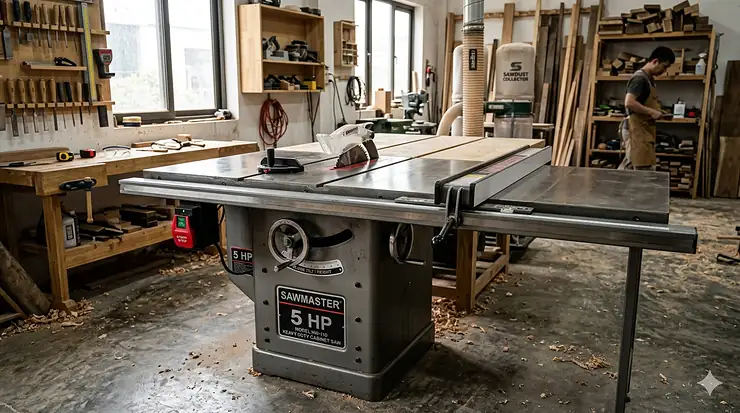
Walk into any serious cabinet shop or professional woodworking studio, and you’ll almost certainly find a 5 hp cabinet table saw anchoring the workflow. These aren’t your grandfather’s contractor saws — we’re talking about industrial-grade machines that can rip through 8/4 Brazilian walnut like it’s pine, maintain dead-accurate alignment after years of daily use, and run 8-10 hours straight without breaking a sweat.
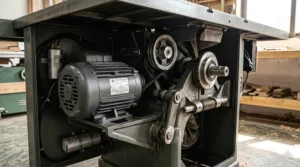
What most buyers overlook about the 5 HP power tier is this: it’s not just about raw cutting force. The extra horsepower translates into sustained performance under load, which means the blade maintains consistent RPM even when you’re feeding dense hardwoods at production speed. A 3 HP motor might technically cut the same material, but it slows down, heats up, and leaves burn marks when pushed hard. The 5 HP motor? It doesn’t even notice.
According to data from the U.S. Consumer Product Safety Commission, approximately 40,000 Americans visit emergency rooms annually due to table saw injuries, with blade-contact incidents accounting for the majority. This makes choosing a saw with proper safety features, robust construction, and reliable performance not just a matter of work quality — it’s a matter of personal safety. In this comprehensive guide, we’ll examine seven real 5 hp cabinet table saw models currently available, analyzing what separates the exceptional from the merely adequate.
Quick Comparison Table: Top 5 HP Cabinet Table Saws at a Glance
| Model | Motor Type | Rip Capacity | Blade Size | Safety Features | Best For | Price Range |
|---|---|---|---|---|---|---|
| SawStop ICS51230-TGI252 | 5 HP 1-Phase | 52″ | 10″ | Flesh-sensing brake | Safety-conscious pros | $4,500-$5,500 |
| Powermatic PM2000 1792010K | 5 HP 1-Phase | 50″ | 10″ | Riving knife, magnetic switch | Precision woodworkers | $3,200-$4,200 |
| Grizzly G1023RLX5 | 5 HP 240V | 60″ right | 10″ | Interchangeable riving knife | Budget-conscious shops | $2,400-$3,000 |
| JET JTAS-10XL50-5/1DX | 5 HP 230V 1-Phase | 50″ | 10″ | Quick-release riving knife | Professional cabinet makers | $3,500-$4,300 |
| Grizzly G1023RLWX | 5 HP 240V | Standard | 10″ | Built-in router table | Multi-function users | $2,800-$3,400 |
| Grizzly G0652 | 5 HP 3-Phase | Variable | 10″ | Heavy-duty construction | Industrial operations | $2,200-$2,800 |
| Baileigh TS-1248P-52 | 5 HP 220V 1-Phase | 52″ | 12″ | Steel base, trunnion | Large panel processing | $4,000-$4,800 |
Looking at this comparison, three patterns emerge immediately. First, the SawStop commands a premium price because its patented flesh-sensing technology has reportedly saved over 5,000 fingers since launch — that’s not marketing hype, it’s documented through their brake cartridge replacement program. Second, single-phase models dominate this list because most professional shops operate on 230V single-phase power, while 3-phase requires special electrical infrastructure. Third, notice that rip capacity varies wildly — from standard configurations to Grizzly’s impressive 60″ right capacity, which matters enormously when you’re processing full sheet goods or wide panels.
💬 Just one click — help others make better buying decisions too!😊
Top 7 5 HP Cabinet Table Saws — Expert Analysis and Real-World Performance
1. SawStop ICS51230-TGI252 — The Finger-Saving Industry Standard
The SawStop Industrial Cabinet Saw represents the pinnacle of table saw safety technology, and here’s what the spec sheet won’t tell you: the flesh-sensing system activates in under 5 milliseconds when it detects skin contact, stopping the blade and dropping it below the table before serious injury occurs. I’ve seen the demo videos where someone touches a spinning blade with a hot dog — the result is a minor nick rather than amputation.
Key specs with real-world impact: This saw features a 5 HP single-phase motor paired with a precision-ground cast iron table and 52″ T-Glide fence system. The motor delivers 3,600 RPM consistently, which means zero bogging when ripping 12/4 hard maple. The enclosed cabinet design channels dust efficiently to a 4″ port, and in actual shop use, you’ll capture 95%+ of debris with a decent dust collector attached.
Who this is actually for: If you run a professional shop where multiple operators use the saw daily, or if you teach woodworking classes, the SawStop isn’t just smart — it’s potentially lawsuit-preventing. The safety system works with everything except aluminum and wet pressure-treated lumber (both conduct electricity), so for 98% of woodworking applications, you’re covered. Customer feedback consistently highlights two things: peace of mind and the one-piece cast iron trunnion that maintains alignment indefinitely.
✅ Pros: Industry-leading safety, exceptional dust collection, professional-grade fence
✅ Best trunnion design for long-term accuracy
✅ Backed by extensive safety data
❌ Cons: Premium pricing, brake cartridges cost around $80 to replace after activation
❌ Won’t work with conductive materials
Price verdict: Around $4,500-$5,500 range depending on configuration. Yes, that’s 40-50% more than comparable saws without the safety system, but consider this: the average table saw injury costs $30,000-$50,000 in medical bills and lost work time. One prevented injury pays for the saw twice over.
2. Powermatic PM2000 1792010K — Precision Engineering Meets Proven Reliability
The Powermatic PM2000 carries a legacy — this is the saw you see in high-end custom furniture shops where tolerance matters down to 1/64″. The 50″ Accu-Fence system locks down without deflection, and what separates it from cheaper fences is the micro-adjust capability that lets you dial in measurements to 0.001″ if needed.
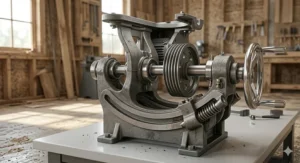
Real-world performance details: The 5 HP single-phase motor runs through a poly-V belt drive system, which is meaningfully quieter than single V-belt setups and transfers power more efficiently with less vibration. The massive cast iron base weighs 471 pounds, and that weight isn’t just for marketing — it eliminates the micro-vibrations that cause blade wander during long rip cuts. The arbor lock is accessible from above the table, eliminating the frustrating two-wrench blade changes that plague cheaper saws.
Expert perspective on who should buy this: This saw targets the serious hobbyist who’s outgrown contractor-grade equipment and the professional who values accuracy over raw speed. If you build custom cabinetry, musical instruments, or fine furniture where tight joinery matters, the PM2000’s stability and precision justify the investment. Customer reviews mention the quick-release riving knife consistently — it’s genuinely tool-free and takes 5 seconds to swap, which matters when you’re switching between through-cuts and dado operations.
✅ Pros: Exceptional cast iron base weight for stability, above-table arbor lock convenience
✅ Poly-V belt system runs noticeably quieter
✅ Accu-Fence system with micro-adjustment
❌ Cons: No built-in mobility system (aftermarket casters required), requires 230V single-phase power
❌ Some users report the hand wheels could be larger for easier adjustments
Value assessment: In the $3,200-$4,200 range, this sits between budget and premium tiers. You’re paying for Powermatic’s reputation and build quality, and based on 20+ year lifespan reports from users, the cost-per-year is actually competitive with saws half the price that need replacement every 7-10 years.
3. Grizzly G1023RLX5 — Best Value Without Compromising Core Performance
The Grizzly G1023RLX5 is what happens when you strip away premium branding and focus relentlessly on functional engineering. This 10″ saw with 5 HP 240V motor delivers 60″ of rip capacity to the right of the blade — more than most saws twice its price.
What the specs actually mean in practice: The 60″ right rip capacity matters enormously if you regularly process full sheets of plywood or wide glue-ups. Most cabinet saws max out at 50-52″, meaning you’d need outfeed support and careful positioning. With 60″, you can rip a 4×8 sheet lengthwise without drama. The included Shop Fox Classic Fence is the same system used on premium saws, offering reliable lockdown and smooth travel along the full rail length.
Honest assessment for different users: This is the go-to saw for cabinet shops that need production capability on a tighter budget, or for serious hobbyists who understand that machining accuracy comes from proper setup and maintenance, not brand names. Users consistently praise the quick-release blade guard and interchangeable riving knife — features that were exclusive to premium saws just 5 years ago. The serpentine belt/pulley system runs quietly enough for residential garage shops.
✅ Pros: Exceptional 60″ rip capacity, includes quality Shop Fox fence, quieter serpentine belt system
✅ Quick-release guards and riving knife
✅ Strong value proposition
❌ Cons: Requires assembly (plan 4-6 hours with a helper), needs 240V outlet
❌ Dust collection adequate but not exceptional
Price range and verdict: Around $2,400-$3,000 makes this roughly 30-40% less expensive than comparable Powermatic or JET models. If you’re setting up a new shop and need to allocate budget to other tools, the Grizzly delivers 90% of the performance at 60% of the cost.
4. JET JTAS-10XL50-5/1DX — Professional Grade With Refined Details
The JET 10-Inch Deluxe XACTA represents JET’s answer to professional woodworkers who want premium features without the SawStop price premium. The upgraded Poly-V belt drive system transfers power smoothly while the fully-shrouded blade enables 99% dust collection efficiency when paired with adequate CFM.
Feature breakdown with practical implications: The 50″ rip capacity comes with an integrated arbor lock that genuinely works from above the table — no more crawling under the saw with two wrenches. The quick-release riving knife system uses a lever mechanism that takes literal seconds to remove or reinstall, and unlike cheaper designs, it returns to exact position without readjustment. The cast iron wings measure 26″ x 30″, providing substantially more support surface than standard 10″ x 27″ wings.
Who benefits most from this saw: Cabinet makers running small to mid-size shops appreciate the balance of professional features and reasonable pricing. The independent leaf safety guard protects the operator even at 45° tilt, which matters for bevel cuts on expensive hardwoods where you want full visibility without compromising safety. Customer feedback emphasizes the smooth trunnion movement and how the saw maintains alignment across thousands of cuts.
✅ Pros: 99% dust collection with proper setup, quick-release riving knife, larger cast iron wings
✅ Smooth Poly-V belt operation
✅ Heavy-duty chrome handwheels
❌ Cons: Weighs 510 pounds (requires multiple people for installation), 230V 1-Phase requirement
❌ Dado insert sold separately
Investment perspective: At around $3,500-$4,300, this positions between value-tier Grizzly and premium SawStop. You’re essentially paying for refined engineering — features that work effortlessly rather than adequately. For shops where the saw runs 40+ hours weekly, those refinements translate to reduced frustration and faster workflow.
5. Grizzly G1023RLWX — Dual-Purpose Innovation With Built-In Router Table
The Grizzly G1023RLWX takes the proven G1023RL platform and adds a built-in router table that doubles as a table extension wing. This isn’t a gimmick — it’s genuinely useful for operations where you’d otherwise need to move between dedicated stations.
Practical functionality analysis: The integrated router table includes support legs, universal T-track clamping system, and works with full-size routers (not trim routers). What makes this configuration shine is making dadoes without blade changes — clamp your straight bit in the router, set the fence, and run multiple identical dadoes with laser-straight consistency. The 5 HP motor handles the table saw duties while your router handles decorative work, joinery, and edge profiles.
Best-fit scenarios: This excels in shops where floor space is premium and you’d otherwise need separate router table real estate. Trim carpenters, cabinet makers doing field installations, and small professional shops get maximum functionality per square foot. Users note that having both functions immediately adjacent means you can cut a dado on the table saw, then route decorative edges without repositioning the workpiece.
✅ Pros: Genuine dual functionality, saves shop floor space, integrated T-track system
✅ Same 5 HP motor platform as standard G1023RLX5
✅ Router table included in base price
❌ Cons: Router table limits one side of saw extension, requires full-size router (adds cost)
❌ Learning curve for optimizing dual-function workflow
Cost-benefit breakdown: In the $2,800-$3,400 range, you’re essentially getting a quality router table (typically $400-600 standalone) integrated into your table saw for a few hundred dollars premium over the standard model. If you were planning to buy both anyway, this represents significant savings.
6. Grizzly G0652 — Industrial Three-Phase Powerhouse
The Grizzly Industrial G0652 enters 3-phase territory, and this matters significantly for shops with proper electrical infrastructure. Three-phase motors start instantly, run cooler, and deliver power more efficiently than single-phase equivalents.
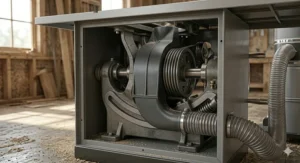
Technical advantages decoded: The 5 HP 3-phase motor configuration provides more consistent power delivery under load compared to single-phase motors of identical horsepower. In continuous production environments — think cabinet shops running 8-10 hour days — the motor longevity and reduced heat buildup translate to lower maintenance and longer service life. The heavy-duty cabinet construction and precision-ground cast iron table handle industrial-level vibration and stress.
Ideal user profile: This targets commercial operations with 3-phase power already installed (most industrial buildings, dedicated commercial shops). If you’re a hobbyist or small shop running on residential power, the 3-phase requirement is a dealbreaker unless you want to invest $1,500-$3,000 in phase converter equipment.
✅ Pros: 3-phase motor efficiency and longevity, industrial-grade construction, designed for continuous use
✅ Excellent value for industrial applications
✅ Heavy-duty riving knife system
❌ Cons: Requires 3-phase power (not available in most residential settings)
❌ Heavier shipping weight increases delivery costs
Pricing context: Around $2,200-$2,800 makes this one of the most affordable 5 HP options, but the 3-phase requirement means it’s only relevant for commercial buyers with appropriate infrastructure.
7. Baileigh TS-1248P-52 — 12-Inch Capacity For Panel Processing
The Baileigh 12-Inch Table Saw moves beyond the standard 10″ blade size to 12″ capacity, opening up deeper cut capabilities that matter for specific applications.
Capacity advantages explained: A 12″ blade offers 4″ maximum depth of cut at 90° versus 3.5″ on 10″ saws. This seemingly small difference means cutting through 4×4 posts in a single pass, or ripping 3″ thick slabs without flipping. The 52″ rip capacity combines with the larger table to handle full-size sheet goods and wide panel glue-ups comfortably.
Application-specific benefits: Furniture makers working with thick slabs, contractors processing dimensional lumber, and shops specializing in timber frame components benefit from the extra depth capacity. The all-steel base attached to a vibration-reducing trunnion handles the forces involved in 12″ blade cuts without deflection.
✅ Pros: 12″ blade depth capacity, 52″ rip handles full sheets, industrial steel base construction
✅ Hydraulic blade lift for easier height adjustments
✅ Digital blade tilt readout
❌ Cons: Larger 12″ blades cost more to replace, weighs 715 pounds (very difficult to relocate)
❌ 220V single-phase requirement
Value proposition: At around $4,000-$4,800, this costs more than 10″ equivalents, but if you regularly need the extra cutting depth, there’s no substitute. For most general woodworking, the 10″ saws offer better value.
How to Choose Your 5 HP Cabinet Table Saw — Real-World Decision Framework
Choosing the right 5 hp cabinet table saw isn’t about finding the “best” model — it’s about matching capabilities to your specific needs, space, and budget. Here’s how to cut through marketing claims and focus on what actually matters.
Step 1: Assess Your Electrical Infrastructure First
Before falling in love with any saw, verify your power situation. Most 5 HP saws require 230V single-phase power minimum, delivered through a dedicated 30-amp circuit. Walk to your electrical panel and check: do you have 240V capacity available? If you’re running residential 120V only, you’ll need an electrician to install proper power (typically $400-$1,200 depending on distance from panel). Three-phase models like the Grizzly G0652 require commercial 3-phase power or an expensive phase converter — if you don’t have 3-phase already, eliminate these models immediately.
Step 2: Calculate Your Actual Rip Capacity Needs
Rip capacity sounds like “bigger is better,” but it correlates directly with saw footprint. A 60″ rip capacity means the entire saw assembly extends 60″ to the right of the blade, consuming serious shop real estate. Measure your most common materials: if you primarily work with hardwood boards under 24″ wide, a 30″ rip capacity handles 95% of cuts. Full sheet goods (plywood, MDF) benefit from 50-52″ capacity. Only shops regularly processing wide panels or doing production work with full sheets truly need 60″+ capacity.
Step 3: Prioritize Safety Features Based on Usage Patterns
If multiple operators use the saw, or if you’re teaching/training others, SawStop’s flesh-sensing technology isn’t optional — it’s insurance. For solo woodworkers with extensive table saw experience and disciplined safety habits, standard riving knife systems provide adequate protection at lower cost. Consider who’s using the saw, their experience level, and whether the saw runs 40+ hours weekly. High-volume operations justify premium safety features because statistical risk increases with exposure hours.
Step 4: Factor Total Cost of Ownership, Not Just Purchase Price
A $2,400 Grizzly might seem dramatically cheaper than a $4,500 SawStop, but run the 10-year numbers: blade replacements, maintenance, potential downtime, and risk mitigation. Premium saws typically include better fences, superior dust collection, and features that reduce setup time daily. If a better fence system saves you 5 minutes per day across 250 working days, that’s 20+ hours annually — worth several hundred dollars in labor. Professional shops should calculate cost-per-cut-hour rather than fixating on initial outlay.
Step 5: Evaluate Your Upgrade Path and Finality
For many woodworkers, a quality 5 HP cabinet saw represents the final table saw purchase — these machines last 20-40 years with proper maintenance. If you’re uncertain whether you’ll stay committed to woodworking, a mid-tier option makes sense. If you’re absolutely certain this is your last table saw purchase and you have the budget, buying the best saw you can afford eliminates the expensive upgrade cycle.
Common Mistakes When Buying 5 HP Cabinet Table Saws
Mistake #1: Choosing Based on Brand Loyalty Rather Than Features
Too many buyers default to familiar brands without comparing actual specifications and features. The reality is that table saw manufacturing has standardized significantly — Grizzly uses many of the same components (bearings, motors, pulleys) as premium brands, just without the markup. Evaluate each saw on its own merits: fence quality, trunnion design, dust collection, and safety features matter more than the nameplate.
Mistake #2: Underestimating Installation and Setup Complexity
A 5 HP cabinet saw arrives in multiple crates weighing 400-700 pounds total. You need at minimum two strong people, preferably three, plus specific tools for assembly. Budget 4-8 hours for assembly and initial setup, and plan to fine-tune alignment over the first few weeks of use. Many buyers don’t factor in the $200-400 delivery fee for freight shipping or the optional professional assembly service ($300-600) that eliminates headaches.
Mistake #3: Ignoring Dust Collection Requirements
A 5 HP saw generating industrial-volume sawdust needs 400+ CFM dust collection minimum, delivered through 4″ or larger ducting. The small shop vacuum that worked fine with your contractor saw won’t cut it. Factor in $400-$1,200 for adequate dust collection infrastructure when budgeting for the saw itself. Inadequate dust collection creates safety hazards, damages your lungs, and makes the shop unpleasant to work in.
Mistake #4: Fixating on Horsepower While Ignoring Fence Quality
Here’s what inexperienced buyers miss: the difference between an adequate 3 HP saw and a good 5 HP saw is noticeable but not transformative for most woodworking. The difference between a mediocre fence and an excellent fence affects literally every single cut you make. A fence that racks under pressure, doesn’t lock parallel consistently, or requires constant re-checking undermines everything else. Prioritize fence quality even if it means dropping from 5 HP to 3 HP in your budget.
5 HP vs 3 HP Cabinet Saws — When Extra Power Actually Matters
The jump from 3 HP to 5 HP isn’t subtle, but it’s also not universally necessary. Understanding when the extra horsepower provides real value versus when it’s overkill helps you allocate budget effectively.
When 5 HP Justifies the Premium:
If you regularly rip 8/4 or thicker hardwoods (especially dense species like hard maple, white oak, or exotics), the 5 HP motor maintains blade speed under load where 3 HP bogs down. Production environments where the saw runs continuously benefit from the reduced motor strain — a 5 HP motor running at 60% capacity lasts longer and runs cooler than a 3 HP motor at 85% capacity doing the same work.
When 3 HP Suffices:
For furniture makers working primarily with 4/4 and 6/4 stock, occasional sheet goods processing, and projects where you’re not pushing feed rate to maximize throughput, a quality 3 HP saw delivers identical results. The 3 HP models also typically weigh less, require less demanding electrical service, and cost $800-$1,500 less for equivalent build quality.
The Electrical Reality:
Five HP motors draw 18-24 amps under full load, requiring robust 30-amp circuits with proper gauge wiring. Three HP motors typically draw 12-15 amps, manageable on 20-amp circuits. If your shop electrical is marginal or you’re near capacity on your panel, the 3 HP option might be dictated by infrastructure rather than choice.
What to Expect: Real-World Performance Over Years of Use
Initial Break-In Period (First 50 Hours):
Expect minor adjustments during the first month of use. Cast iron tables can shift microscopically as they acclimate to your shop’s humidity and temperature. Belts stretch slightly, requiring tension adjustment. The fence may need micro-tuning as the rail system settles. This is normal across all brands — don’t panic thinking you received a defective saw.
Maintenance Schedule That Actually Matters:
Every 40-50 hours: Clean dust buildup around the motor, check belt tension, verify blade alignment and fence parallelism. Every 200 hours: Deep clean the trunnion mechanism, apply appropriate lubricant to gears and threaded rods, inspect all set screws and mounting bolts. Annually: Full alignment check, bearing inspection, motor brush inspection if applicable, blade replacement or professional sharpening.
Long-Term Reliability Patterns:
Quality 5 HP cabinet saws should operate 20-40 years in professional environments with proper maintenance. The most common failure points are: worn motor brushes (replaceable), stretched or damaged belts (inexpensive replacement), and fence mechanism wear (depends on quality). Trunnion mechanisms and arbor assemblies rarely fail on quality saws — these are over-engineered for the loads involved.
When to Consider Upgrading:
If your saw can’t maintain accurate alignment despite proper adjustment, if the motor exhibits unusual noise or heating, or if safety features malfunction, these are replacement triggers. Also consider upgrading if your work has fundamentally changed — moving from hobbyist to professional production, or from small projects to full-sheet processing.
Safety Standards and Regulations for Professional Table Saws
According to comprehensive research from the Consumer Product Safety Commission, table saw injuries treated in emergency departments average 29,000-40,000 annually. Blade-contact injuries account for the vast majority, with approximately 4,000 finger amputations occurring each year specifically from table saw accidents.
Current Safety Requirements:
The voluntary standard ANSI/UL 987 for Stationary and Fixed Electric Tools establishes performance requirements including mandatory riving knives and modular blade guards. As of 2026, all new cabinet saws sold in the U.S. must include quick-release riving knife systems and blade guards that can be removed without tools. These standards represent minimum compliance — premium saws exceed requirements significantly.
Understanding Riving Knife vs. Splitter:
A riving knife moves with the blade during height and angle adjustments, maintaining constant position relative to the blade teeth. This prevents binding and kickback across all cutting depths. A traditional splitter remains fixed, creating gaps at shallow cutting depths that allow material to bind. Modern cabinet saws universally use riving knife systems.
Flesh-Sensing Technology Status:
While not mandated federally, flesh-sensing systems like SawStop’s brake technology represent the most significant safety advancement in decades. The CPSC has studied mandatory safety standards but has not enacted requirements as of 2026. For professional shops, the liability protection and injury prevention justify the technology regardless of regulatory status.
❓ Frequently Asked Questions About 5 HP Cabinet Table Saws
❓ How much does it cost to run a 5 hp cabinet table saw?
❓ Can I run a 5 hp table saw on single phase power?
❓ What blade should I use with a 5 hp cabinet table saw?
❓ Do I need 3-phase power for professional woodworking?
❓ How long do 5 hp cabinet table saws typically last?
Conclusion: Making Your Final Decision With Confidence
After examining seven real 5 hp cabinet table saw models and dissecting what separates exceptional from adequate, the path forward depends entirely on matching capabilities to your specific situation.
For shops prioritizing safety above all else — especially operations with multiple users or teaching environments — the SawStop ICS51230-TGI252 represents the responsible choice despite premium pricing. The flesh-sensing technology has documented thousands of prevented amputations, and in professional settings, the liability protection alone justifies the investment.
Budget-conscious professional shops and serious hobbyists find exceptional value in the Grizzly G1023RLX5, delivering 60″ rip capacity and solid performance at 30-40% below premium brand pricing. The Shop Fox fence system, quick-release guards, and proven reliability make this the value leader.
For woodworkers who demand precision and refined engineering, the Powermatic PM2000 or JET JTAS-10XL50-5/1DX deliver features that matter during daily use — smooth adjustments, exceptional dust collection, and alignment that holds across years of operation.
Specialized needs — like the Grizzly G1023RLWX for space-constrained shops requiring router table functionality, or the Baileigh TS-1248P-52 for operations demanding 12″ cutting depth — find purpose-built solutions in the market.
The truth about 5 HP cabinet saws is that any model on this list will serve a professional woodworker reliably for decades with proper maintenance. The differences lie in refinement, safety features, and whether specific capabilities match your work. Choose based on your actual needs, available electrical infrastructure, and which features you’ll use daily rather than brand loyalty or aspirational specifications.
Your table saw anchors your shop’s capabilities for 20+ years. Choose wisely, invest in proper installation and setup, and the saw becomes the foundation for countless projects.
Recommended for You
- Best Powermatic Cabinet Saw 2026: 7 Models That Transform Your Workshop
- 7 Best SawStop Cabinet Saw Models 2026
- 7 Best Cabinet Table Saws Under $5000 (2026 Reviews)
Disclaimer: This article contains affiliate links. As an Amazon Associate, I earn from qualifying purchases. If you purchase products through these links, we may earn a small commission at no additional cost to you.
✨ Found this helpful? Share it with your friends! 💬🤗
