
In This Article
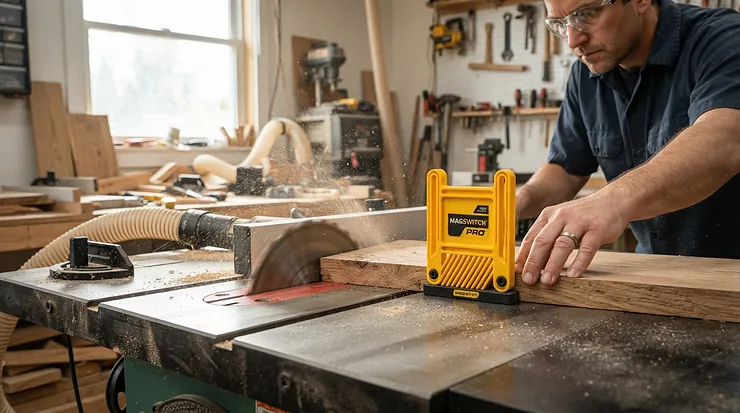
Here’s a confession every new woodworker eventually makes, usually right after a board kicks sideways off the table: your hands are not a clamp. They shake, they get tired, and they definitely aren’t rated for the 4,000-rpm argument happening six inches away from them. That’s the whole reason a featherboard for beginners table saw setup exists — it’s a strip of flexible fingers that presses your workpiece flat against the fence with more consistency than any human grip, freeing you up to actually steer the cut instead of white-knuckling it.
If you’re building your first shop safety kit, a featherboard is one of the cheapest, least glamorous, most genuinely useful things you can buy — right up there with a push stick and safety glasses. It won’t replace your riving knife or blade guard, and it isn’t a substitute for standing to the side of the blade the way OSHA recommends. But it does something none of those built-in guards do: it holds the wood at constant, even pressure the entire length of the cut, which means straighter rips, fewer wandering lines, and a lot less chance of the board drifting into a kickback situation.
This guide walks through seven real featherboards you can buy right now, how to pick between miter-slot and magnetic mounting, and exactly how a total beginner should set one up on day one.
Quick Comparison Table
| Product | Mount Type | Best For | Price Range |
|---|---|---|---|
| POWERTEC Tandem Featherboards (2-Pack) | Miter slot / T-track | First shop purchases on a budget | Under $40 |
| Milescraft 1406 FeatherBoard | Miter slot | Easy to install featherboard for new woodworkers | Under $30 |
| Hedgehog Featherboard | Miter slot | One-handed quick adjustments | $50-$70 range |
| BOW FeatherPRO FP1 | Miter slot / T-track | Basic safety setup with vibration control | $60-$80 range |
| JessEm Universal Featherboard | Miter slot / T-track | Long-term durability, pro upgrade | $80-$100 range |
| Magswitch Universal Featherboard | Magnetic | Cast-iron saws, zero-drilling setup | $70-$90 range |
| Magswitch Pro Table Featherboard | Magnetic | Ripping thick hardwood | $90-$120 range |
Looking at this table, notice the split isn’t really about price — it’s about mounting philosophy. The miter-slot crowd (POWERTEC, Milescraft, Hedgehog, BOW FeatherPRO FP1, JessEm) relies on a bar that slides into your saw’s miter or T-track slot, while the Magswitch duo skips the slot entirely and clamps on with rare-earth magnets. For a first purchase, the miter-slot route is usually cheaper and more universal, but if your saw has a cast-iron top and you hate drilling holes in your fence, magnetic is worth the premium.
💬 Save this comparison — your future self, mid-cut, will thank you.
Top 7 Featherboards for Beginners: Expert Analysis
1. POWERTEC Tandem Featherboards (2-Pack) — best first shop purchases on a tight budget
If you’re outfitting a first workshop from scratch, buying two featherboards at once instead of one solves a problem beginners don’t see coming: most rip cuts benefit from pressure both against the fence and down onto the table, and one board can’t do both jobs simultaneously. The molded plastic body is reversible, meaning the same board mounts in either a miter slot or a T-track without buying separate hardware, and the adjustable miter-lock knob lets you dial in pressure without tools.
Woodworkers picking this up as their first accessory tend to like that there’s no ambiguity — loosen, slide, tighten, cut. Aggregated buyer sentiment across major retail listings consistently flags the value of getting a pair for the price most competitors charge for one, though a handful of reviewers note the plastic feathers wear down faster than metal-reinforced alternatives after heavy hardwood use.
For a beginner still deciding whether featherboards are worth the shelf space, this is the lowest-risk way to find out. Priced under $40 for the pair, it’s an easy yes as a first purchase — the value math is hard to beat when you’re also budgeting for a push stick, safety glasses, and a decent blade.
Pros:
- ✅ Two boards for the price most singles charge
- ✅ Reversible design fits miter slots and T-tracks alike
- ✅ Tool-free adjustment knob speeds up setup
Cons:
- ❌ Plastic feathers wear faster under heavy hardwood use
- ❌ Less rigid than aluminum-bodied competitors
2. Milescraft 1406 FeatherBoard — easiest install for absolute first-timers
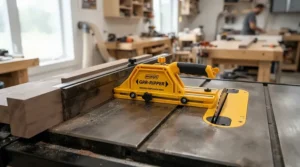
Milescraft built its reputation on jigs that don’t require an engineering degree to figure out, and this featherboard keeps that promise. The dual-track miter bar slides into either standard 3/4-inch miter slots, and the whole unit locks down with a single hand-turned knob — no wrenches, no fiddly hex bolts hiding under the table. That matters enormously for someone setting up a table saw for the very first time, since the last thing a new woodworker needs is another multi-step assembly process standing between them and their first cut.
The spring-loaded feathers flex to accommodate stock from thin plywood up to roughly 1-inch hardwood, adjusting pressure automatically as thickness changes mid-board. Reviewers on major retail platforms repeatedly describe it as the featherboard they recommend to friends buying their first table saw, specifically because setup takes under two minutes out of the box.
The main complaint in aggregated feedback is that the feathers themselves are a slightly softer plastic than premium competitors, so they can flatten out with age. At under $30, it’s arguably the single cheapest way to check the “basic safety setup” box on any beginner woodworking checklist.
Pros:
- ✅ Single-knob lockdown, no tools required
- ✅ Fits standard 3/4-inch miter slots on most saws
- ✅ Genuinely fast setup for total beginners
Cons:
- ❌ Softer plastic feathers flatten with age
- ❌ Less adjustment range than pricier spiral designs
3. Hedgehog Featherboard — best for quick one-handed adjustments mid-project
What sells the Hedgehog isn’t raw holding power — it’s the tempo of actually using it. The spiral feather pattern combined with a single adjustment knob means you can loosen, reposition, and relock the board with one hand while your other hand keeps a workpiece steady, which sounds minor until you’re twenty cuts deep into a project and every wasted motion adds up. The nylon body is paired with a CNC-milled aluminum clamp, a combination that splits the difference between the flex of pure plastic and the rigidity of an all-metal unit.
It supports miter angles up to 45 degrees and works with blades up to 8 inches, so it covers the vast majority of benchtop and contractor saws a beginner is likely to own. Aggregated review sentiment consistently praises the one-hand operation as the standout feature, with several buyers specifically calling out how it changed their workflow on repetitive cuts.
The tradeoffs show up in the fine print: it needs a compatible T-track for some mounting configurations, which can mean an extra bracket purchase on saws without one, and the one-year warranty runs shorter than some rivals. Sitting in the $50-$70 range, it’s a reasonable step up once you’ve confirmed featherboards are staying in your permanent kit.
Pros:
- ✅ True one-handed adjustment mid-cut
- ✅ Aluminum clamp adds rigidity plastic-only boards lack
- ✅ Handles miter angles up to 45 degrees
Cons:
- ❌ May need an added T-track bracket on some saws
- ❌ Shorter warranty window than premium competitors
4. BOW FeatherPRO FP1 — best vibration control for chatter-prone cuts
The standout here is material choice: instead of the spiral plastic or rigid wood feathers most competitors use, the FP1 uses EVA foam-composite feathers that absorb vibration rather than just flexing under it. In practice that means less chatter on knotty or figured wood, where stiffer feathers tend to bounce instead of gripping smoothly. The feathers are also reversible and replaceable, so when one edge wears down you flip it rather than buying a whole new unit — a small design choice that adds up over years of use.
Mounting relies on what the manufacturer calls AnchorPRO miter hardware, a 3/4-inch bar built to minimize the side-to-side play that cheaper miter bars are prone to develop after repeated tightening cycles. Aggregated customer feedback frequently cites the reduced chatter and smoother feed as the reason buyers upgrade to this model from a basic plastic featherboard.
The most common critique is that it still needs a compatible T-track for some secondary mounting positions, echoing a limitation shared across most miter-slot designs at this price point. In the $60-$80 range, it’s a sensible mid-tier pick for anyone who’s outgrown a starter board but isn’t ready for a full metal-body upgrade.
Pros:
- ✅ EVA feathers absorb vibration on figured wood
- ✅ Reversible, replaceable feather design extends lifespan
- ✅ Snug-fitting miter bar reduces play over time
Cons:
- ❌ Some mounting configurations need a T-track
- ❌ EVA feathers cost more to replace than plastic
5. JessEm Universal Featherboard — best long-term durability for a growing shop
JessEm has built its name on precision jigs for serious hobbyists, and this featherboard reflects that positioning — it’s the option people buy when they’ve decided woodworking is a long-term hobby, not a one-project experiment. The aluminum body and precision-machined components hold their tolerances far better over years of clamping and unclamping than the molded-plastic bodies found on entry-level boards, and the dual-mount design accommodates both miter slots and T-tracks without adapters.
Aggregated buyer sentiment across woodworking forums and retail reviews repeatedly frames this as a “buy once” purchase, with owners reporting years of use without the wobble or slop that develops in cheaper miter bars. The honest tradeoff is price: at $80-$100, it costs two to three times what a basic starter board runs, which is hard to justify if you’re still deciding whether a table saw fits your life.
For someone who’s already committed — building furniture regularly, upgrading tools methodically — the extra durability buys back the annoyance of re-tightening a loose bar every few months. It’s not the pick for a first-ever purchase, but it’s a smart one for a second featherboard once your first wears out.
Pros:
- ✅ Aluminum body resists wear far longer than plastic
- ✅ Dual mounting works in miter slots and T-tracks alike
- ✅ Consistently described as a long-term, buy-once tool
Cons:
- ❌ Meaningfully pricier than beginner-tier options
- ❌ Overkill for someone still testing the hobby
6. Magswitch Universal Featherboard — best no-drill entry point for cast-iron saws
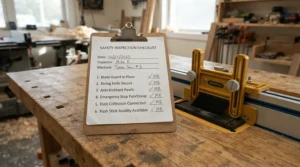
Magnetic featherboards solve a genuinely different problem than miter-slot boards: they eliminate the need to align anything with a slot at all. The Magswitch Universal uses switchable rare-earth magnets that lock onto any cast-iron saw top with a lever flip, and release just as fast when you need to reposition. For a beginner who’s intimidated by miter-bar alignment or who has a saw with an awkwardly placed slot, this is genuinely the least complicated entry point into featherboard ownership.
There’s no drilling, no adapter shopping, and no risk of buying a bar that doesn’t quite fit your slot’s width. The catch, and it’s an important one, is that magnetic hold only works on ferrous cast-iron or steel surfaces — it does nothing on the aluminum tops common in benchtop saws, so this is strictly a cabinet-and-contractor-saw solution.
Aggregated review sentiment praises the setup speed above almost everything else, with repeat mentions of being able to reposition mid-project in seconds. In the $70-$90 range, it costs more than a basic plastic board but saves the fumbling that trips up a lot of first-timers.
Pros:
- ✅ No miter slot or drilling required to mount
- ✅ Repositions in seconds with a magnet-release lever
- ✅ Removes slot-width guesswork entirely
Cons:
- ❌ Useless on aluminum-top benchtop saws
- ❌ Costs more than comparable miter-slot starter boards
7. Magswitch Pro Table Featherboard — best for ripping thick hardwood
Step up from the Universal and you get 30mm magnets instead of the standard size, which translates directly into holding force — a meaningful difference when you’re ripping thick, dense hardwood that fights back against thinner feathers. The larger magnetic footprint resists the tendency of a board to creep during a long, heavy cut, which is exactly the scenario where a weaker featherboard becomes a false sense of security instead of real protection.
It shares the Universal’s tool-free, lever-release mounting system, so switching between the two Magswitch models on the same saw doesn’t require relearning anything. Aggregated buyer sentiment consistently singles out the holding force on thick stock as the reason to pay the premium over the standard Magswitch, particularly among woodworkers who regularly work with 8/4 hardwood or dense sheet goods.
As with its sibling, the fundamental limitation remains: no ferrous surface, no magnetic grip, so aluminum-top owners need to look elsewhere entirely. At $90-$120, this sits at the premium end of the whole lineup, and it’s genuinely hard to justify unless thick hardwood ripping is a regular part of your projects rather than an occasional one.
Pros:
- ✅ 30mm magnets grip noticeably harder on thick stock
- ✅ Shares tool-free mounting with the Universal model
- ✅ Resists creep during long, heavy rip cuts
Cons:
- ❌ Still cast-iron/steel only, no aluminum saws
- ❌ Premium price for a use case most beginners don’t have yet
Top 7 Products at a Glance
| Product | Feather Material | Mount | Adjustment Speed | Best For |
|---|---|---|---|---|
| POWERTEC Tandem (2-Pack) | Plastic | Miter/T-track | Fast | First shop purchases |
| Milescraft 1406 | Plastic | Miter slot | Fastest | Absolute beginners |
| Hedgehog | Nylon/spiral | Miter/T-track | Fast, one-hand | Frequent repositioning |
| BOW FeatherPRO FP1 | EVA foam | Miter/T-track | Moderate | Vibration-heavy cuts |
| JessEm Universal | Aluminum-reinforced | Miter/T-track | Moderate | Long-term durability |
| Magswitch Universal | EVA | Magnetic | Fastest | No-drill cast-iron setups |
| Magswitch Pro Table | EVA | Magnetic | Fastest | Thick hardwood ripping |
Reading across this table, the fastest adjustment times cluster around the magnetic options and the Milescraft, which makes sense — anything that skips bolt-tightening in favor of a lever or a single knob wins on speed. If durability matters more to you than setup speed, the JessEm Universal and Hedgehog trade a few seconds of adjustment time for hardware that resists wear over years of use. Beginners specifically weighing “first shop purchases” against a limited budget should note that the plastic-feather options aren’t a downgrade in safety — they’re a downgrade in longevity, which is a very different tradeoff.
✨ Ready to build out your first safety kit? Check current pricing on any pick above before it changes.
Benefits vs. Traditional Alternatives
| Approach | Consistency | Hands-Free? | Learning Curve |
|---|---|---|---|
| Manual hand pressure | Low — fatigues over a cut | No | None |
| Push stick alone | Moderate — controls feed, not lateral pressure | No | Low |
| Featherboard | High — constant spring pressure | Yes | Low |
| Power feeder (shop-grade) | Highest | Yes | Moderate-High |
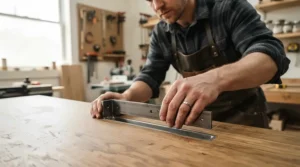
The comparison here isn’t really featherboard-versus-nothing — it’s featherboard-versus-your-own-arm. A push stick keeps your hand away from the blade and helps you feed stock forward, but it does nothing to hold a board flat against the fence the way spring-loaded feathers do, which is why most safety guides recommend using both together rather than treating either as a complete solution. A shop-grade power feeder does everything a featherboard does and more, but it costs hundreds of dollars and bolts semi-permanently to your saw — total overkill for someone still building a first shop safety kit. For nearly every beginner scenario, a featherboard sits in the sweet spot: cheap, fast to install, and dramatically more consistent than hand pressure alone.
Practical Usage Guide: Setting Up Your First Featherboard
Getting a featherboard mounted correctly the first time saves you from the classic beginner mistake of positioning it wrong and wondering why the cut still wanders. Start by unplugging the saw — always, every time, no exceptions — before you touch the miter slot or fence. Slide the miter bar into the slot ahead of the blade, never beside or behind it, so the feathers press the stock into the fence before it reaches the teeth rather than after. Angle the board so the feathers point slightly toward the infeed side; this “one-way” flex lets stock slide forward freely while resisting any backward kickback motion, which is the entire safety principle behind the design. Tighten just enough that the feathers flex noticeably against a test piece of scrap the same thickness as your actual stock — over-tightening creates unnecessary drag and can actually pull the board off line. In the first 30 days, the most common mistake beginners make is mounting the featherboard too close to the blade, which leaves no room for the feathers to catch stock before it reaches the danger zone; aim for several inches of clearance ahead of the blade’s leading edge. Check the mounting hardware for looseness every few sessions, since vibration from normal saw use will gradually work miter-bar bolts loose if you don’t.
Real-World Scenario: Which Featherboard Fits Your Situation?
Picture three different beginners walking into the same big-box store. The first is a college student setting up a first apartment workshop on a folding benchtop saw with an aluminum top and a strict budget — for them, the Milescraft 1406 or POWERTEC Tandem makes the most sense, since magnetic options won’t grip aluminum anyway and the low price matches a student budget. The second is a retiree converting a garage into a serious hobby shop around a cast-iron cabinet saw, planning to build furniture for years — the JessEm Universal or a Magswitch pair fits that longer time horizon, where durability and no-drill convenience matter more than shaving a few dollars off the initial spend. The third is a weekend woodworker who already owns a decent contractor saw and mostly rips hardwood for cutting boards and small furniture — the BOW FeatherPRO FP1 or Magswitch Pro Table addresses their specific pain point of chatter and creep on dense stock. None of these buyers need all seven products; matching the featherboard to your saw type and project frequency matters more than chasing the “best” one in the abstract.
How to Choose a Featherboard for Your Table Saw
- Identify your saw’s table material first. Cast iron and steel tops work with magnetic featherboards; aluminum benchtop saws do not, which immediately narrows your options before you even look at price.
- Measure your miter slot width. Most stationary saws use a standard 3/4-inch slot, but benchtop models vary, so confirm compatibility before ordering a miter-bar-style board.
- Match feather material to your typical stock. Plastic handles softwood and plywood fine; EVA or spiral nylon designs hold up better against dense hardwood that would flatten softer feathers faster.
- Prioritize one-hand adjustment if you reposition often. Beginners running varied project sizes benefit more from quick-adjust knobs than from raw holding force.
- Buy two if your budget allows. A single featherboard against the fence handles lateral pressure; a second mounted overhead or angled down adds vertical hold-down, which most serious ripping benefits from.
- Don’t over-invest before you know your habits. A $25-$30 starter board answers the question of whether featherboards fit your workflow before you commit $80-plus to a premium model.
- Check return policy and warranty length. Since fit varies by saw model, a flexible return window protects you if the miter bar doesn’t slide smoothly into your particular slot.
Common Mistakes When Buying a Featherboard
Beginners tend to make the same handful of errors when adding a featherboard to their setup. The most frequent is buying a magnetic model for an aluminum-top benchtop saw, not realizing the magnets need a ferrous surface to grip at all — always confirm your table material before choosing mount type. A close second is assuming a wider miter bar automatically fits every saw; slot widths vary enough between benchtop and cabinet saws that a board built for one can wobble loosely in another. Some first-time buyers also skip checking feather material against their typical stock, ending up with soft plastic feathers that flatten prematurely under regular hardwood use. Finally, plenty of beginners mount the featherboard too close to or even past the blade, which defeats the entire safety purpose since the feathers need to catch and hold stock before it reaches the cutting edge, not alongside it.
Featherboards for Beginners vs. Push Sticks: What Each One Actually Does
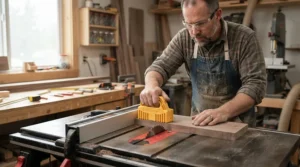
It’s tempting to think of these as competing purchases, but they solve different problems entirely. A push stick is about feed control — it keeps your hands a safe distance from the blade while you guide stock forward, and it’s genuinely irreplaceable for narrow rip cuts where your fingers would otherwise pass close to the blade. A featherboard, by contrast, is about lateral pressure — it holds the workpiece flat against the fence with spring tension so the cut line stays true without you fighting the board’s natural drift. Neither replaces the other, and most experienced woodworkers run both simultaneously: a featherboard doing the constant-pressure work while a push stick handles the final few inches of feed. If you’re building a beginner woodworking checklist and can only afford one accessory this month, a push stick arguably comes first purely because it’s the item standing directly between your fingers and the blade — but a featherboard should follow within your first few purchases, not as an afterthought.
What to Expect: Real-World Performance
On paper, a featherboard is just a piece of plastic or aluminum with slotted fingers. In practice, the difference shows up the first time you rip a warped or slightly bowed board — instead of fighting to keep it flush against the fence with one hand while feeding with the other, the feathers do that job continuously, letting you focus entirely on steady forward feed. Cuts come out straighter because the pressure never varies the way human grip strength does over a long board. What most first-time buyers don’t expect is how much it reduces mental fatigue during a project — you stop unconsciously bracing for the board to drift, which turns out to be a real source of tension during extended sessions at the saw. The tradeoff reviewers across models consistently mention is a short recalibration period: it takes a few cuts to learn the right tension setting for your typical stock thickness, since too loose does nothing and too tight creates drag that can pull work off line.
Long-Term Cost and Maintenance
A basic featherboard rarely needs more than the occasional bolt tightening, but the feathers themselves are a wear item — expect plastic feathers on entry-level boards to show flattening or reduced spring-back somewhere in the one-to-three-year range depending on how often you’re ripping hardwood, while EVA and aluminum-reinforced designs tend to hold their flex noticeably longer. Total cost of ownership favors starting cheap: a $25-$30 board that needs replacing in two years still costs less over five years than jumping straight to a premium model you may not end up using as often as expected. If you do settle into featherboards as a permanent part of your workflow, buying a durable model like the JessEm Universal the second time around amortizes better, since you’re not paying the “am I going to use this” tax you paid on your first purchase.
Safety Considerations and Regulatory Context
Featherboards are not a stand-alone safety device — they’re one layer in a system that includes riving knives, blade guards, push sticks, and safe operator positioning. OSHA’s woodworking machinery guidance specifically calls for guiding stock parallel to the rip fence and standing to the side of the blade to reduce kickback risk, both of which a properly mounted featherboard directly supports by keeping stock tracking true. The scale of the underlying problem is worth understanding: CPSC-analyzed data on blade-contact injuries has repeatedly found that the large majority of table saw injuries involve the fingers, with kickback and stock ejection cited as recurring mechanisms across the agency’s surveyed cases. None of the seven products in this guide are certified safety devices in the regulatory sense — they’re accessories that reduce risk when used correctly alongside your saw’s built-in guarding, not a replacement for it. Regulatory bodies including the Canadian Centre for Occupational Health and Safety consistently frame kickback prevention as a combination of proper technique, correctly functioning guards, and supplementary devices like featherboards working together, not any single tool carrying the whole burden.
Frequently Asked Questions
❓ Do I need a featherboard for a beginner table saw setup?
❓ Can a featherboard work on any table saw?
❓ What's the easiest featherboard to install for a first-timer?
❓ How many featherboards should a beginner buy?
❓ Do featherboards replace a push stick?
Conclusion
A featherboard won’t turn a beginner into an expert overnight, and it’s not the single accessory that makes a table saw safe — that’s a combination of guards, riving knives, technique, and attention. But among the first shop purchases any new woodworker makes, it’s one of the highest-value dollar-for-dollar additions available, trading a small upfront cost for measurably straighter cuts and one less variable to manage while you’re still learning feed rate and body positioning. Whether you start with a budget-friendly Milescraft 1406 or jump straight to the no-drill convenience of a Magswitch Universal, matching the mount type to your actual saw table is the one decision that matters more than brand or price. Get that right, mount it a few inches ahead of the blade angled toward infeed, and you’ve checked off one of the more important boxes on any basic safety setup checklist.
Recommended for You
- Dual Featherboard Kit For Narrow Stock: 7 Best Picks (2026)
- Featherboard For Resawing Thin Stock: 7 Picks 2026
- Adjustable Featherboard For Cabinet Saw Fence: 7 Safest Picks (2026)
Disclaimer: This article contains affiliate links. As an Amazon Associate, I earn from qualifying purchases. If you purchase products through these links, we may earn a small commission at no additional cost to you.
✨ Found this helpful? Share it with your friends! 💬🤗
