
In This Article
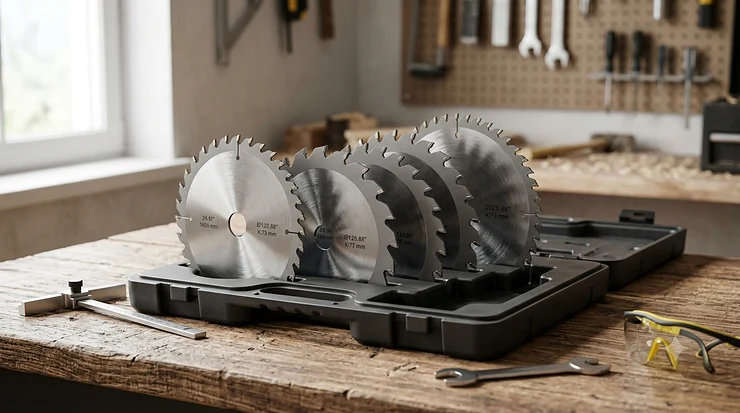
A dado blade set for table saw work is the single upgrade that turns sloppy shelf grooves into furniture-grade joinery. In plain terms, it’s a stack of two outer carbide blades and several “chippers” that bolt onto your saw’s arbor to cut flat-bottomed slots in one pass instead of dozens of fiddly router passes. If you’ve ever tried to fit a shelf into a hand-routed dado and watched it rock because the bottom wasn’t flat, you already know why this tool matters.

I’ve spent more hours than I’d like to admit comparing dado stacks — chasing down “bat ears,” fighting with shims that don’t want to sit flush, and returning at least one set because the chippers were sized wrong for my saw’s arbor. What follows isn’t a rehash of spec sheets. It’s a breakdown of seven real, currently available sets, what they’re actually good at, and who should skip the expensive ones entirely.
Before we get into the lineup, here’s the short version: budget-conscious hobbyists do fine with a 12-tooth set under $100, while cabinet shops cutting dadoes daily will feel the difference a high-tooth-count or hand-tuned set makes within the first afternoon.
Quick Comparison Table
| Dado Set | Diameter / Teeth | Width Range | Best For | Price Range |
|---|---|---|---|---|
| Freud SD508 | 8″ / 24T | 1/4″ – 13/16″ | All-around cabinetmaking | $90–$130 |
| DEWALT DW7670 | 8″ / 24T | 1/4″ – 7/8″ | Jobsite & contractor work | $130–$160 |
| Oshlun SDS-0842 | 8″ / 42T + 6T chippers | 1/4″ – 29/32″ | Best value, high tooth count | $80–$110 |
| Amana Tool 658060C | 8″ / 24T | 1/4″ – 29/32″ | Professional shops | $300–$400 |
| Forrest DK08244 Dado King | 8″ / 24T | 1/4″ – 29/32″ | Ultimate cut quality | $200–$300 |
| Diablo DD208H | 8″ / 12T | 1/4″ – 13/16″ | Budget & underpowered saws | $40–$70 |
| IRWIN Marples 1811865 | 8″ / 12T | 1/4″ – 7/8″ | Budget-to-mid, Italian-made | $70–$100 |
A pattern jumps out immediately: tooth count and price track each other closely, but not perfectly. The Oshlun packs 42 teeth per outer blade into a sub-$110 set, which is more cutting edges than the much pricier DEWALT offers — a big reason it shows up so often in “best value” conversations. Meanwhile, the Amana and Forrest sets justify their premium pricing less through tooth count and more through how the carbide is ground and brazed, which affects edge retention more than raw numbers suggest. If your saw’s motor is under 2 HP, lean toward the lower-tooth-count Diablo or IRWIN sets — fewer simultaneous cutting edges means less drag on the motor.
💬 Just one click — help others make better buying decisions too!😊
Top 7 Dado Blade Sets: Expert Analysis
1. Freud SD508 Super Dado Set
Freud’s SD508 is the set most cabinetmakers default to, and for good reason. It’s an 8-inch, 24-tooth stacked dado blade set with a 5/8-inch arbor, six chippers (four 1/8″, one 3/32″, one 1/16″), and a shim set that adjusts width in 1/32-inch increments. That 3/32-inch chipper is the detail most buyers overlook — it lets you fine-tune for today’s undersized plywood without resorting to a stack of paper shims, which matters if you’re cutting dado set for cabinet making projects where plywood thickness varies by manufacturer.
What most reviewers miss is that the SD508‘s anti-kickback tooth design adds a small margin of safety but is also the reason SawStop discourages pairing it with their brake cartridge — something to flag before you buy if you own a SawStop saw.
Owners consistently report that the cuts themselves are excellent, with a flat, splinter-free bottom even in hardwood plywood; the most common complaint across reviews is the cardboard-style storage case rather than the blade performance itself. A few buyers also noted needing to ease the bore slightly to get smooth arbor fit.
Pros: Clean, repeatable flat-bottom cuts; fine 1/32″ width adjustment; works on radial-arm saws too.
Cons: Storage case feels cheap for the price; not SawStop-brake compatible due to anti-kickback geometry.
At around $90–$130, the SD508 sits in the sweet spot for serious hobbyists who want professional results without professional pricing.
2. DEWALT DW7670 8-Inch Dado Set
The DW7670 is built for the contractor who tosses tools in a truck bed, not the furniture maker babying blades in a climate-controlled shop. It’s an 8-inch, 24-tooth stacked set with 3 chippers, 3 spacers, and 7 shims, cutting widths from 1/4″ to 7/8″. The large C4 micrograin carbide teeth are ground with fine-grit diamond wheels, which in practice means the edges stay sharp through more board-feet before you notice tear-out creeping in.
What the spec sheet won’t tell you is that this set’s narrower 7/8″ max width (versus the 29/32″ some competitors offer) rarely matters in real builds — most shelf and cabinet dadoes land well under 3/4″ anyway.
Buyers frequently mention this set holding up well on jobsite saws with less rigid arbors, and several note it noticeably outperforms a basic wobble dado blade in cut cleanliness, which lines up with independent comparison testing showing it among the better mid-tier performers.
Pros: Heavy-gauge, precision-balanced plate; resharpenable carbide; widely available for replacement parts.
Cons: Fewer shim combinations than premium sets; carrying case is functional but basic.
In the $130–$160 range, it’s a strong pick if your saw travels between jobs.
3. Oshlun SDS-0842 8-Inch 42-Tooth Stack Dado Set
The SDS-0842 earns its reputation as the value champion of this category. You get 42 teeth on each outer blade plus 6-tooth full-body chippers — nearly double the cutting edges of a typical 24-tooth set — for a price that undercuts most premium competitors by half. Full-body chippers (rather than the thinner wing-style chippers used elsewhere) mean less vibration during the cut, which directly translates to smoother dado walls on contractor-grade saws that aren’t perfectly rigid.
In my experience, the practical payoff of the higher tooth count shows up most in cross-grain cuts in hardwood, where fewer teeth tend to leave faint “bat ear” scoring on the dado’s outer edges.
Reviewers overwhelmingly praise the cut quality relative to price, with the most repeated criticism being the cardboard storage box rather than anything about performance — a near-universal complaint across this entire product category, oddly enough.
Pros: Exceptional tooth count for the price; full-body chippers reduce vibration; detailed setup instructions included.
Cons: Storage case is cardboard, not molded plastic; shims can be fiddly on some arbor diameters.
At $80–$110, this is the set I’d point a first-time dado buyer toward.
4. Amana Tool 658060C Prestige Dado Set
This is where dado set for table saw shopping moves into genuinely industrial territory. The 658060C features 24-tooth outer blades with Hi-ATB grind geometry — every sixth tooth ground flat for efficient chip ejection — plus an Electro-Blu non-stick coating that resists pitch buildup during long production runs. Six 4-wing chippers cover 1/4″ to 29/32″ widths, adjustable in 1/32″ increments with shims down to .002″.
What separates this from mid-tier sets isn’t the tooth count, it’s the D-10 carbide grade and the tool-steel plate thickness, which hold tolerance better across thousands of cuts — the kind of detail that only matters once you’re running a production schedule rather than a weekend project.
Be aware that the anti-kickback tooth profile here, like Freud’s, isn’t recommended for SawStop brake cartridges according to user reports and forum threads citing direct conversations with SawStop support.
Pros: Industrial-grade carbide and plate steel; Electro-Blu coating resists gumming; excellent for high-volume cabinet shops.
Cons: Premium price; not SawStop-brake compatible; overkill for occasional hobbyist use.
Expect to pay in the $300–$400 range — this one’s for shops where blade downtime costs more than the blade itself.
5. Forrest DK08244 Dado King
If there’s a “best overall” cut quality in this lineup, independent comparison testing and decades of woodworking-forum consensus point to the Dado King. It’s an 8-inch, 24-tooth set with six 4-tooth chippers (four 1/8″, one 1/16″, one 1/32″ effectively via shims), each blade hand-straightened to within .001″–.002″ runout. Forrest also offers a re-sharpening service that restores the set to factory tolerances, which functionally extends its usable life well beyond a typical disposable carbide set.
The negative-hook tooth geometry on both the outer blades and chippers is the detail that matters most in practice — it’s what gives this set its reputation for the cleanest cross-grain cuts in hardwood plywood of any set in this roundup, with minimal of the telltale scoring lines other sets leave.
Long-time owners report using the same Dado King for ten-plus years with periodic sharpening rather than replacement, which changes the long-term math considerably.
Pros: Best-in-class cut cleanliness; hand-tensioned plates; meets SawStop compatibility requirements.
Cons: Highest price-to-tooth-count ratio in this list; six-pound-plus weight may be heavy for some lower-powered saws.
At $200–$300, it’s an investment, but one several forum veterans describe as the last dado set they ever needed to buy.
6. Diablo DD208H Carbide Stacked Dado Set
The DD208H is built around a simple idea: cut the tooth count to reduce the power draw. With 12 teeth per outer blade and 2-wing chippers, it requires noticeably less feed force than the 24-tooth sets above, which matters if you’re running a benchtop or contractor saw under 2 HP. Perma-Shield non-stick coating helps resist heat buildup and pitch, and the set adjusts down to .004″ with included shims, covering 1/4″ to 13/16″.
The real-world tradeoff most buyers don’t anticipate: fewer teeth means slightly more tear-out risk on cross-grain hardwood cuts compared to the 24-tooth sets, so a sacrificial backer board becomes more important here than with the Freud or Forrest.
Owners and independent reviewers consistently describe this as nearly identical in cut quality to CMT and IRWIN’s similarly priced offerings, since all three are manufactured to comparable specs in the same general price tier.
Pros: Low feed resistance, ideal for underpowered saws; budget-friendly; resharpenable carbide.
Cons: More prone to minor tear-out without a backer board; narrower max width than premium sets.
At $40–$70, this is the entry point for anyone testing whether they’ll use a dado set enough to justify upgrading later.
7. IRWIN Marples 1811865 8-Inch Stack Dado Blade Set
Manufactured in Udine, Italy on the same laser-cut, thin-kerf production line associated with several premium European blade brands, the 1811865 punches above its price class. It’s a 12-tooth, 8-inch set with 3 chippers, 3 spacers, and 7 shims, cutting 1/4″ to 7/8″ widths, finished with a heat-resistant non-stick coating.
What’s easy to miss on the spec sheet is that this set’s oversized carbide teeth are genuinely resharpenable multiple times, which is unusual at this price point and worth factoring into long-term cost — a $30 sharpening every few years beats a $90 replacement.
Reviewers who directly compared this to Freud’s similarly priced SD208 line generally describe the cuts as comparable, and several long-time forum members specifically call out the Marples line as the one IRWIN product line that held up to their quality standards after the brand shifted manufacturing.
Pros: Strong value for Italian-made precision; resharpenable carbide; comprehensive shim set.
Cons: 12-tooth count means slightly more setup care on hardwood; narrower 7/8″ max width.
In the $70–$100 range, this is the dark horse pick worth cross-shopping against the Diablo and Oshlun sets above.
✨ Don’t Miss These Exclusive Deals!
🔍 Take your table saw joinery to the next level with these carefully selected dado sets. Click on any highlighted item above to check current pricing and availability. These blades will help you build cabinets, shelving, and drawers your family will actually trust to hold weight! 🪵
How to Choose a Dado Blade Set for Your Table Saw
Picking the right set comes down to seven checks, in this order:
- Confirm your saw accepts dado blades at all. Not every table saw — especially many SawStop and benchtop models — has an arbor long enough for a full stack. Check your owner’s manual first.
- Measure your arbor diameter. Most stationary saws use a 5/8″ arbor; some imports use 20mm or 30mm bores, which rules out US-spec sets like several above.
- Check your saw’s maximum dado width. Lower-powered saws often cap out around 13/16″, which eliminates wider-capacity premium sets as a practical option.
- Match tooth count to your typical material. Higher tooth counts (Oshlun’s 42T) shine in hardwood and hardwood plywood; lower counts (Diablo, IRWIN) draw less power for softwood and MDF.
- Decide if SawStop compatibility matters. Several premium anti-kickback designs aren’t recommended for brake cartridges — verify before buying if you own one.
- Weigh resharpening value. Sets with thicker carbide (Forrest, IRWIN, DEWALT) extend usable life through professional resharpening services.
- Set a realistic budget tier. Budget ($40–$100), mid-range ($100–$200), and premium ($200–$400) sets all produce usable dadoes — the difference is consistency over thousands of cuts, not the first ten.
Practical Usage Guide: Setup, Maintenance & Clean Cuts
Getting clean results from any stacked dado blade set starts before the first cut. Always stagger the teeth of the two outer blades so they don’t strike each other on the arbor — this is the single most common setup mistake new owners make, and it’s the cause of most “my dado set sounds awful” complaints.
Run a test cut in scrap plywood matching your project material before committing to your workpiece. Measure the resulting groove with calipers rather than trusting the stated shim math, since actual plywood thickness varies by a surprising margin between manufacturers and even between sheets.
For maintenance, clean pitch buildup off the carbide every few uses with a dedicated blade cleaner rather than letting it accumulate — built-up resin increases friction, heat, and the odds of burning softwoods like pine. Store the set in its case with the chippers separated by their original spacers; loose carbide-on-carbide contact in a drawer is the fastest way to chip teeth between projects. Within the first 30 days, the most common mistake is skipping a zero-clearance throat plate — without one, thin offcuts and chips can drop into the saw’s mechanism.
Real-World Scenarios: Matching a Dado Set to Your Project
The weekend bookshelf builder cutting a handful of dado set for shelf dado joints a few times a year doesn’t need 42 teeth or hand-tensioned plates. The Diablo DD208H or IRWIN Marples set covers this use case at a fraction of the cost of premium options, and the lower tooth count is a non-issue at this cutting volume.
The cabinet shop owner running daily dado set for cabinet making production benefits most from the Forrest Dado King or Amana 658060C — the extra cost amortizes quickly once you account for resharpening services and the reduced downtime from carbide that holds an edge longer.
The drawer-box specialist cutting frequent dado set for drawer construction and dado set for box joints work wants the Oshlun’s high tooth count for clean, splinter-free shoulders on thin drawer-box stock, where tear-out is far more visible than on a hidden cabinet shelf.
Problem → Solution: Fixing Common Dado Cutting Issues
Problem: “Bat ears” or raised score lines on the dado’s outer edge. This comes from outer-blade teeth intentionally cut slightly deeper to prevent tear-out. Solution: if a perfectly flat bottom matters (rare, but it happens with inset hardware), finish with a router pass, or choose a higher tooth-count set like the Oshlun, where the effect is less pronounced.
Problem: Dado width doesn’t match shim math. Plywood is frequently undersized from its nominal thickness. Solution: always test-cut in actual project material and adjust shims by measurement, not by the chart alone — this is exactly why sets like the Freud SD508 include a fine 3/32″ chipper for undersized sheet goods.
Problem: Excessive tear-out on cross-grain hardwood cuts. Lower tooth-count budget sets are more prone to this. Solution: clamp a sacrificial backer board behind the workpiece, or step up to a 24-tooth-plus set for hardwood-heavy projects.

Common Mistakes When Buying a Dado Blade Set
The biggest mistake is buying based on price alone without checking arbor compatibility — a $300 set is worthless if it doesn’t fit your saw. The second most common error is assuming a wider published width range matters; most real-world dadoes fall between 1/4″ and 3/4″, so a 13/16″ max set covers nearly everything most builders need. Buyers also frequently skip checking SawStop brake compatibility, only discovering the conflict after the set arrives. Finally, many first-time buyers underestimate how much a sturdy storage case matters for long-term blade life — it’s a recurring complaint across nearly every brand in this roundup, premium or budget.
Stacked Dado Blade Set vs. Wobble Dado Blade
A stacked dado blade set uses fixed-width outer blades and chippers combined in different configurations — what you’re buying in every product above. A wobble dado blade, by contrast, is a single blade mounted on an adjustable, tilted arbor that “wobbles” to cut a wider kerf as you increase the angle.
The practical difference is significant: wobble blades cut a curved, slightly rounded-bottom groove rather than a true flat-bottom dado, and they’re widely considered inferior for visible joinery. Stacked sets cost more up front but deliver flat, square-shouldered grooves suitable for furniture-grade work. If your budget is genuinely limited to under $40 and cut quality is a secondary concern for hidden, utility-grade shelving, a wobble blade remains an option — but every set reviewed above outperforms a wobble blade in flatness and edge cleanliness.
What to Expect: Real-World Performance Across Materials
In softwood, virtually any set in this lineup — even the budget Diablo — produces clean results with minimal fuss. In cabinet-grade plywood, tooth count starts to matter: the Oshlun’s 42 teeth and the Forrest’s hand-ground geometry both noticeably reduce face-veneer chipping compared to 12-tooth budget sets. In hardwood, the gap widens further; premium carbide grades like Amana’s D-10 and Forrest’s custom formula hold an edge through significantly more cuts before you notice dulling, while budget sets may need attention sooner under heavy hardwood use.
Long-Term Cost & Maintenance
A $50 budget dado set and a $300 premium set can land at a surprisingly similar total cost of ownership over a decade — if you factor in resharpening. Premium carbide from Forrest or Amana can be professionally resharpened multiple times, often for a fraction of a replacement set’s cost, extending usable life well beyond what the sticker price suggests. Budget sets are typically treated as semi-disposable: usable for years of light work but more often replaced than resharpened once they dull. For occasional hobbyist use, buying budget and replacing later usually wins on cost. For shops running dadoes weekly, the resharpening math tips firmly toward the premium tier.
Features That Actually Matter (And Those That Don’t)
Matters: Arbor size compatibility, tooth count relative to your typical material, and shim/chipper combination flexibility for hitting odd plywood thicknesses.
Doesn’t matter as much as marketing suggests: Maximum width capacity beyond 7/8″ (most real dadoes never approach it), and exotic coatings on budget blades, which provide marginal benefit compared to base carbide quality.
Genuinely underrated: A full-body chipper design (like Oshlun’s) reduces vibration more than most buyers expect, and a quality storage case — surprisingly the most-criticized feature across nearly every brand — protects your investment far more than its low marketing priority suggests.
Safety, SawStop Compatibility & Regulations
Dado work removes the standard blade guard and riving knife from the equation, which is exactly why OSHA requires combs, featherboards, or suitable jigs at the workstation whenever a standard guard can’t be used, as is the case with dadoing, grooving, and rabbeting. In practical terms, that means using a push block, keeping hands well clear of the cut path, and never freehanding a dado pass.
If you own a SawStop, verify compatibility before buying — several anti-kickback tooth designs in this roundup, including Freud’s and Amana’s, aren’t recommended with SawStop’s brake cartridge due to tooth geometry, while the Forrest Dado King is specifically built to meet SawStop’s requirements. For a fuller picture of dado-specific machine guarding, OSHA’s table saw eTool is worth a read before your first cut.
Dado Blade Sets by Saw Type & Project
For 6-inch saws or motors under 1.5 HP, a smaller-diameter or lower-tooth-count set draws meaningfully less power — most manufacturers in this roundup also sell 6-inch versions of their 8-inch sets for exactly this reason. For standard 10-inch contractor and cabinet saws, any 8-inch dado blade set in this list fits comfortably, since 8 inches is the de facto industry standard for stacked dado sets regardless of the saw’s own blade diameter. For shelving and case work, prioritize sets with fine shim adjustment for undersized plywood; for box joints and drawer construction, prioritize higher tooth counts for splinter-free shoulders on thin stock, where any tear-out is immediately visible on the finished joint.
For a deeper technical breakdown of how a true dado joint is structured, Wikipedia’s overview of dado joinery is a solid reference, and Popular Woodworking’s independent dado blade comparison testing goes deep on measured tear-out and accuracy across competing brands if you want to validate the picks above against lab-style testing.
FAQ
❓ What size dado blade set do I need for my table saw?
❓ Can I use a dado blade set on a SawStop table saw?
❓ How much does a good 8 inch dado blade set cost?
❓ Is a stacked dado blade set better than a wobble dado blade?
❓ Can a dado blade set cut box joints and drawer joints?
Conclusion
Choosing a dado blade set for table saw projects ultimately comes down to matching tooth count and carbide quality to how often you’ll actually use it. For occasional shelving and cabinet work, the Oshlun SDS-0842 delivers the best balance of cutting edges and price. For jobsite durability, DEWALT’s DW7670 holds up to rougher handling. And if you’re running a production shop where blade downtime is the real cost, the Forrest Dado King or Amana 658060C earn their premium price tags through resharpenable carbide and consistently flat, clean cuts over thousands of passes.
Whichever set you choose, the safety basics don’t change: use a backer board, keep a push block on hand, and verify your saw’s arbor and width limits before your first cut.
✨ Don’t Miss These Exclusive Deals!
🔍 Ready to upgrade your joinery game? Click through to compare current pricing on any of the seven dado sets above and find the one that matches your saw, your budget, and your next build. 🛠️
Recommended for You
- Full Kerf Table Saw Blade: 7 Best Picks for Stability in 2026
- 7 Best Thin Kerf Table Saw Blades (2026)
- 7 Best Combination Blades for Table Saw (2026): Stop Swapping Blades
Disclaimer: This article contains affiliate links. As an Amazon Associate, I earn from qualifying purchases. If you purchase products through these links, we may earn a small commission at no additional cost to you.
✨ Found this helpful? Share it with your friends! 💬🤗
