
In This Article
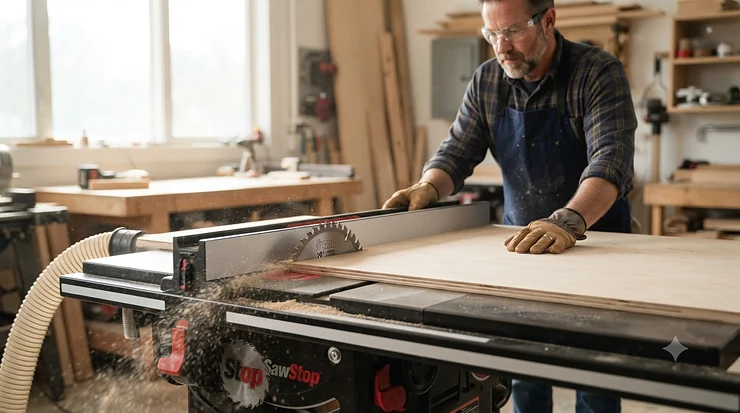
Here’s a sentence that should be tattooed on the inside of every table saw’s dust shield: the blade that came with your saw was never meant to touch plywood. It was designed to survive a warehouse shelf, not to slice cleanly through cross-laminated veneer without turning the top ply into confetti. A table saw blade for plywood is a specialized crosscut blade — usually 60 to 80 teeth with a shallow, alternating bevel grind — engineered to shear thin face veneers instead of tearing them, producing edges clean enough to skip sanding entirely. If you’ve ever pulled a sheet of birch plywood off the saw and watched the good face fuzz up like a bad hair day, you already know why this matters.
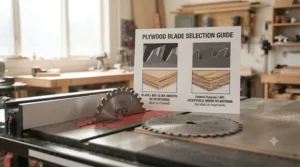
This guide isn’t a rehash of Amazon bullet points. We dug into real specs, real tooth geometries, and the aggregated gripes and praise found in actual owner reviews to build a shortlist of seven blades that genuinely earn their keep — from a $40 combo pack that’ll surprise you to a $200 Forrest that some woodworkers treat like a family heirloom. Whether you’re breaking down Baltic birch for a jig, building furniture-grade cabinets, or just tired of sanding tear-out out of sheet goods, there’s a blade below built for your saw and your budget. Let’s get into it.
Quick Comparison: Table Saw Blade for Plywood at a Glance
| Blade | Teeth | Kerf | Price Range | Best For |
|---|---|---|---|---|
| Freud LU80R010 | 80 | Full (.126″) | Around $90-$105 | Best overall plywood/melamine blade |
| Forrest Duraline DH10807125 | 80 | Full (.125″) | $180-$230 range | Splurge pick, dedicated veneer blade |
| Freud Diablo D1060X | 60 | Thin (.098″) | Under $45 | Best 60-tooth value |
| IRWIN Marples 84-Tooth | 84 | Thin | $60-$100 range | Furniture-grade cabinetry |
| CMT ITK Xtreme 60T | 60 | Thin (.098″) | $45-$65 range | Baltic birch and dense plywood |
| DEWALT DW3106P5 (2-pack) | 60 + 32 | Thin | Under $55 | Budget combo pack |
| Amana A.G.E. MD10-601R | 60 (TCG) | Full | $45-$60 range | Budget industrial laminate work |
Looking at the spread above, the pattern that jumps out is this: tooth count climbs as the price climbs, but not in a straight line — the Freud Diablo proves you can get 60 genuinely sharp teeth for under $45, while the Forrest Duraline asks you to pay a four-figure-shop premium for hand tensioning most hobbyists will never fully exploit. If your saw sees plywood once a month, the Diablo or the DEWALT combo will outperform your patience for sanding. If you’re running a cabinet shop and every sheet costs $80 in Baltic birch, the Freud LU80R010 or the Forrest earns its price back the first time it saves you a ruined panel.
💬 Just one click — help others make better buying decisions too!😊
Top 7 Table Saw Blades for Plywood: Expert Analysis
1. Freud LU80R010 — 80-tooth Hi-ATB built for flawless veneer edges
The Freud LU80R010 is the blade most cabinet shops reach for first, and once you understand the tooth geometry, it’s obvious why. Its 80 teeth use a High Alternate Top Bevel (Hi-ATB) grind, meaning each tooth is angled steeply enough to slice through the face veneer’s grain like a straight razor instead of chopping through it like a hatchet. Paired with a .126-inch full kerf and a 2-degree hook angle, the blade stays planted in the cut rather than climbing or wandering — which matters enormously when you’re cutting a $70 sheet of cabinet-grade plywood and there’s no room for a do-over. Freud backs the teeth with a TiCo Hi-Density carbide blend and a Perma-Shield non-stick coating that resists pitch buildup, so the blade keeps cutting clean well past the point where a bargain blade would start dragging and burning.
Who should buy this one? Based on the spec comparison, this is the blade for anyone doing regular cabinetry, built-ins, or furniture work who wants one blade that handles both crosscuts and moderate rips in veneered sheet goods without swapping blades mid-project. Reviewers consistently report that the anti-vibration slots make a noticeable difference on 1.5-2 HP contractor saws, quieting the cut and reducing the faint “buzzing” edge you sometimes get from cheaper full-kerf blades. A common thread in owner feedback is that this blade eliminates the need for a separate scoring blade on melamine — a claim that lines up with the tooth geometry, since the Hi-ATB grind is specifically designed to shear both faces of a two-sided laminate.
✅ Hi-ATB geometry shears both plywood faces cleanly
✅ Perma-Shield coating resists pitch buildup and corrosion
✅ Laser-cut anti-vibration slots calm the cut on mid-power saws
❌ Full-kerf design draws more power from underpowered saws
❌ Premium price for a blade that’s plywood-focused, not a do-everything blade
At around $90-$105, this sits solidly in the mid-premium range, and for shops that cut plywood weekly, the math works out in your favor fast — the value verdict here is straightforward: buy once, sand never.
2. Forrest Duraline DH10807125 — hand-tensioned splurge pick for zero-compromise veneer
If the Freud is the blade most shops buy, the Forrest Duraline is the blade the pickiest woodworkers upgrade to once they’ve been burned by a ruined sheet of cherry-veneer plywood one too many times. This is an 80-tooth blade with a 40-degree Hi-A/T grind — noticeably steeper than a standard ATB — and Forrest hand-tensions every blade individually, hand-brazes the C-4 submicron carbide teeth, and straightens the plate multiple times during manufacturing. That’s not marketing fluff; it’s a genuinely different (and slower) production process than the stamped-and-ground approach most manufacturers use, and it shows up as tighter runout tolerances on the finished blade.
What most buyers overlook about this blade is that it’s engineered specifically to eliminate the need for a scoring pass on melamine and two-sided laminates — the 40-degree points are steep enough to slice through the brittle overlay before the main body of the tooth ever engages the substrate underneath. Reviewers consistently describe cuts on birch and oak veneer plywood that come off the saw needle-sharp and ready for edge banding, with several long-term owners noting the blade still performs after years and multiple factory resharpenings — Forrest offers a dedicated sharpening service that returns blades to like-new tolerances, which meaningfully changes the cost-per-cut math over a blade’s lifetime.
✅ Hand-tensioned to near-zero runout for glue-line-quality edges
✅ 40-degree Hi-A/T grind eliminates scoring passes on melamine
✅ Forrest’s factory resharpening service extends usable life for years
❌ Among the priciest blades on this list by a wide margin
❌ A handful of owners still report minor cross-grain tearout on tough birch without a zero-clearance insert
Priced in the $180-$230 range, this is not an impulse buy — it’s a deliberate investment for shops where plywood tear-out is a genuine business cost, not a hobby annoyance.
3. Freud Diablo D1060X — best 60-tooth value for trim and plywood work
Not every project needs an 80-tooth blade, and the Freud Diablo D1060X is proof that 60 well-designed teeth can outperform expectations. This is Freud’s consumer-facing Diablo line rather than its industrial Freud-branded series, and the price reflects that — but the tooth geometry doesn’t cut corners. It’s a 60-tooth ATB grind with a thin .098-inch kerf, a 15-degree hook angle, and the same TiCo carbide blend and Perma-Shield coating found on Freud’s pricier blades. The thin kerf is the real story here: it removes less material per cut, which means less resistance and less strain on a 1.5 HP job-site saw that would bog down under a full-kerf 80-tooth blade.
Here’s what to weigh before buying: this blade was designed with trim carpenters in mind first and cabinetmakers second, so while it handles ¾-inch plywood, melamine, and moulding beautifully, it’s genuinely a combination-leaning finish blade rather than a laser-focused plywood specialist. Reviewers consistently note that cuts in maple plywood come off “nearly jointer-smooth” with essentially zero tear-out, and several independent testers ranked it among the smoothest blades in its price class when compared side-by-side against pricier competitors. Tri-metal shock-resistant brazing bonds the carbide tips to the plate, which matters on job sites where the blade occasionally meets a stray staple or nail head.
✅ Thin kerf reduces strain on underpowered contractor saws
✅ Tri-metal brazing resists impact damage from hidden fasteners
✅ Leaves trim-ready edges that need little to no sanding
❌ Slower feed rate than lower-tooth-count combination blades
❌ Thinner plate can flex slightly on long, fast rip cuts
At under $45, this is the blade to grab if you want genuinely clean plywood cuts without committing to industrial pricing — the value here is hard to beat for weekend and semi-pro use.
4. IRWIN Marples 84-Tooth — furniture-grade finish from an Italian manufacturing line
The IRWIN Marples Woodworking Series doesn’t get talked about as much as Freud or Forrest, which is a shame, because the backstory is genuinely interesting: IRWIN partnered with FLAI, a saw blade manufacturer in Udine, Italy — a region with a long-standing reputation in circular saw blade production — and built these blades in a dedicated high-tech facility rather than outsourcing to a generic overseas contractor. The 84-tooth version pushes tooth count higher than most plywood blades on this list, which translates directly into a finer, more polished cut on visible cabinet and furniture edges.
Based on the spec comparison, the extra teeth mean smaller gullets and slower feed rates, so this is not the blade for ripping through a stack of sheets quickly — it’s the blade for the final panels that will actually be visible in a finished piece of furniture. Owner reports describe the tri-metal brazing as noticeably more durable under repeated resharpening than typical big-box blades, and the heat-resistant non-stick coating keeps pitch from building up during long cabinetry sessions. One detail worth flagging honestly: this blade line isn’t stocked in every hardware store, so if you need a replacement fast, expect to order online rather than grab one off a shelf.
✅ Extra tooth count polishes cabinet-grade edges to a near-finish quality
✅ Oversized carbide allows more resharpenings over the blade’s life
✅ Precision tensioning keeps long cuts tracking true
❌ Higher tooth count slows feed rate on thick stock
❌ Limited retail availability means online ordering for replacements
Priced from roughly $60 to $100 depending on retailer, this is the blade for furniture makers and finish carpenters who care more about the final surface than about ripping speed.
5. CMT ITK Xtreme 60T — the pick for Baltic birch and dense plywood cores
Baltic birch plywood punishes cheap blades in a way that veneer-core cabinet plywood doesn’t — its all-hardwood-ply construction with tightly packed layers and minimal voids means every single ply gets a fresh crack at chipping your edge. The CMT ITK Xtreme, manufactured in Italy (a meaningfully different tier from CMT’s budget China-made ITK-Plus line, according to owners who’ve run both), is built with micrograin carbide teeth bonded through a trimetallic copper-silver-copper brazing process designed to survive exactly that kind of abuse. The plate is hardened to 46-48 Rockwell, and laser-cut expansion slots help control the noise and vibration that dense, void-free plywood tends to amplify.
What most buyers overlook about Baltic birch blade selection is that tooth geometry matters more than raw tooth count here — the 60-tooth ATB grind on the ITK Xtreme is tuned for exactly the kind of tight, uniform grain structure Baltic birch presents, rather than the wider grain variation you see in typical veneer-core hardwood plywood. Reviewers consistently praise the price-to-performance ratio, and the thin kerf keeps the blade friendly to smaller cabinet saws that might struggle with a full-kerf 80-tooth alternative. That said, forum sentiment isn’t unanimous — a small number of owners have reported occasional quality-control inconsistencies, which is worth knowing before you buy, though the majority of feedback leans strongly positive.
✅ Italian manufacturing meaningfully outperforms CMT’s budget China-made line
✅ Trimetallic brazing holds up under Baltic birch’s dense, layered structure
✅ Expansion slots quiet the cut and reduce vibration on tight-grain plywood
❌ Costs more than CMT’s entry-level ITK-Plus series
❌ A minority of owners report occasional quality-control misses
In the $45-$65 range, this is the sensible pick if Baltic birch is a regular material in your shop and you want real performance without Forrest-level pricing.
6. DEWALT DW3106P5 — budget two-blade combo pack for general shop use
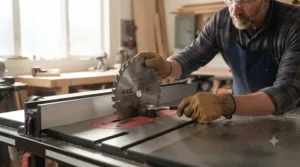
Sometimes the honest answer is that you don’t need a specialist blade — you need two decent blades for the price most manufacturers charge for one. The DEWALT DW3106P5 combo pack bundles a 60-tooth fine-finish blade with a 32-tooth general-purpose blade, both with a thin kerf designed for fast, smooth cuts without bogging down a job-site saw. The 60-tooth blade uses tungsten carbide teeth set with a patented wedge shoulder that adds steel behind each tip for extra strength, and a computer-balanced plate to keep vibration in check during miter and table saw work.
Here’s what to weigh: this isn’t a plywood specialist in the way the Freud or Forrest blades are — it’s a general construction and trim pairing that happens to handle plywood competently rather than exceptionally. Independent testers who ran this blade against pricier competitors found the 60-tooth version left maple plywood edges “nearly jointer-smooth” with zero visible tear-out, which is a genuinely strong result for the price point, even if it’s not quite in the same league as a dedicated 80-tooth Hi-ATB blade on the toughest veneers. The included 32-tooth blade earns its keep for framing and general ripping, so you’re not buying a specialist tool — you’re buying a flexible two-blade starter kit.
✅ Two blades cover both finish cuts and general-purpose work for one price
✅ Computer-balanced plate keeps vibration low during long cut
✅ Tungsten carbide teeth hold an edge longer than typical bargain blades
❌ The 60T blade shows light tearout on the most demanding hardwood veneers
❌ Not built with production-shop duty cycles in mind
At under $55 for the pair, this is the practical starting point for DIYers and hobbyists who want a real upgrade from their saw’s stock blade without spending on a single-purpose tool.
7. Amana Tool A.G.E. MD10-601R — budget industrial pick with German engineering
Amana’s A.G.E. series — the name stands for American German Engineering — occupies an interesting niche: these blades are laser-cut and manufactured in Germany, then finished to Amana’s specifications, which puts them a tier above typical import bargain blades while still landing at a genuinely accessible price. The MD10-601R is a 60-tooth Triple Chip Grind (TCG) blade, which is a different tooth profile than the ATB grinds used on most of this list — TCG alternates a flat-topped tooth with a beveled “trapezoid” tooth, a design that historically excels on laminate, chipboard, and abrasive composite materials as much as it does on plywood.
Based on the spec comparison, the TCG grind’s real advantage shows up on veneered plywood and chipboard specifically, where its resistance to chipping on brittle overlays outperforms a standard ATB blade at a similar price. The blade carries Amana’s ArmorMax PTFE non-stick coating to reduce friction and pitch buildup, tri-foil silver-copper brazing for tooth retention, and stabilizer vents to cut down on vibration — feature-for-feature, a genuinely well-specified blade for its price class. Amana backs it with a lifetime guarantee against material defects, which is a meaningful signal of manufacturer confidence at this price tier.
✅ German-engineered build quality at a genuinely budget-friendly price
✅ TCG grind handles laminate and plywood without chipping the overlay
✅ Backed by Amana’s lifetime guarantee against material defects
❌ TCG finish isn’t quite as glassy-smooth as a dedicated Hi-ATB finish blade
❌ 5/8-inch bore only, so double-check arbor compatibility before ordering
Typically priced in the $45-$60 range, this is the blade for budget-conscious buyers who still want an industrial-grade tooth profile rather than a consumer-grade stamped blade.
How to Set Up Your Saw for Tear-Out Free Plywood Cuts
Buying the right blade solves maybe 70% of your tear-out problem — the rest comes down to setup, and it’s the part most buying guides skip entirely. Start with a zero-clearance throat plate. The stock insert on most table saws has a wide opening around the blade, and as the blade exits the bottom of your plywood, that gap gives the veneer’s exit fibers nothing to lean against, which is exactly where splintering happens. A zero-clearance insert closes that gap down to the width of the blade itself, supporting the wood fibers all the way to the cut line. You can buy a pre-made one for your saw model, or cut a blank insert by slowly raising a stationary blade through it — either way, this single change often does more for a table saw blade reduce tearout plywood outcome than swapping blades ever will.
Second, orient your “show face” up. It sounds backwards, but the blade exits at the bottom of the cut, and that’s where the worst chipping happens — so keeping your best face up means any imperfection lands on the side nobody sees. Third, and this one gets ignored constantly: a dull blade tears plywood no matter how many teeth it has. Even an 80-tooth Hi-ATB blade will chip veneer if the carbide edges have gone soft, because dull teeth push and tear wood fibers instead of slicing them cleanly. Most plywood-focused woodworkers sharpen or replace their blade every 20-30 sheets, or sooner if they notice increased burning, fuzzing, or a rougher-sounding cut. Finally, for veneer face tearout prevention on especially brittle or pre-finished sheets, try scoring the cut line first — lower the blade to about 1/16 inch and make a shallow pass before raising it to full depth for the through-cut. It adds thirty seconds per cut and essentially eliminates top-face chipping on the trickiest materials.
✨ Don’t Miss These Exclusive Deals!
🔍 Take your plywood projects to the next level with these carefully selected blades. Click on any highlighted item to check current pricing and availability. The right blade turns rough sheet goods into cabinet-shop-quality panels your family will actually notice.
Real-World Scenarios: Matching the Blade to Your Project
Picture three different people standing at three different saws. The first is a weekend DIYer building a bookshelf out of ¾-inch birch plywood from the home center, cutting maybe six panels total. For that person, a dedicated $200 Duraline blade is overkill — the Freud Diablo D1060X or the DEWALT combo pack delivers plenty of clean-cut quality without the splurge, and the money saved covers the plywood itself.
The second is a furniture-grade plywood cutting technique hobbyist building a walnut-veneer credenza where every visible edge matters and the plywood alone costs upward of $300 in sheet goods. This is exactly the situation where the extra tooth count on the IRWIN Marples 84-tooth or the Hi-ATB geometry on the Freud LU80R010 earns its price — a single tear-out on a $75 sheet of walnut ply costs more than the blade upgrade would have. The third is a small cabinet shop cutting Baltic birch jigs and drawer boxes five days a week, where blade dulling from constant use is the real enemy — here, the CMT ITK Xtreme’s Italian-made durability, or the Forrest Duraline’s factory resharpening program, pays for itself across dozens of sheets rather than just one project.
The pattern across all three: match the blade’s investment to how much a ruined sheet would actually cost you, not to how impressive the spec sheet sounds in isolation.
Common Plywood Cutting Problems and How to Fix Them
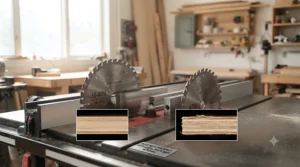
Fuzzy bottom edges on crosscuts almost always trace back to a low tooth count or a dull blade — swap to a 60-tooth-plus ATB or Hi-ATB blade like the Diablo D1060X or the Freud LU80R010, and confirm the blade is actually sharp before blaming technique. Chip-out on the top face, ironically, usually means the opposite problem: the blade is exiting into unsupported material on the entry side. A zero-clearance insert and a scoring pass (described above) solve this in nearly every case.
Burning or dark scorch marks along the cut line typically point to a dull blade, a too-slow feed rate, or a blade that’s binding slightly due to a misaligned fence — check all three before assuming you need a new blade entirely. Blade wander on long rip cuts, where the cut drifts away from your line, is often a thin-kerf-blade-on-underpowered-motor mismatch; a full-kerf blade like the Forrest Duraline or Freud LU80R010 tracks straighter under load. And melamine or laminate-faced plywood that chips no matter what you try almost always needs a blade with a triple chip grind or a very high tooth count — the Amana A.G.E.’s TCG profile or the Marples’ 84 teeth are built specifically for that brittle-overlay problem.
How to Choose a Table Saw Blade for Plywood
Picking the right blade comes down to seven practical decision points, and working through them in order will get you to the right pick faster than scrolling star ratings.
- Match tooth count to your material. 60 teeth handles most veneer-core plywood cleanly; 80-plus teeth is worth it for melamine, pre-finished panels, or anything where the visible face is unforgiving.
- Choose ATB or Hi-ATB grind for veneer. These angled-tooth designs shear wood fibers instead of chopping them, which is the single biggest factor in reducing tear-out.
- Consider kerf width against your saw’s horsepower. Thin-kerf blades suit 1.5 HP job-site and contractor saws; full-kerf blades track straighter but need more power to spin without bogging.
- Check the bore size before buying. Most 10-inch blades use a 5/8-inch arbor, but always confirm against your saw’s manual — a mismatched bore is the single most common return reason.
- Weigh carbide quality against your cutting volume. High-density or submicron carbide holds an edge through dozens more sheets than standard-grade carbide, which matters if you’re cutting plywood weekly rather than occasionally.
- Factor in resharpening support. Some manufacturers, like Forrest, offer factory resharpening that restores near-new tolerances — a real cost consideration over a blade’s multi-year life.
- Set a realistic budget based on how often you’ll actually use it. A $40 blade used twice a year beats a $200 blade gathering dust; the reverse is true for a working shop.
60-Tooth vs 80-Tooth Plywood Blades: Which Should You Buy?
This is the single most common fork in the road when shopping for a table saw blade for plywood, and the honest answer is “it depends on what you’re cutting,” not “always buy more teeth.”
| Factor | 60 Tooth Plywood Blade | 80 Tooth Plywood Blade |
|---|---|---|
| Cut smoothness | Very good, minor tear-out possible on brittle veneers | Best-in-class, near-zero tear-out on most veneers |
| Feed rate | Faster, more forgiving on long rips | Slower, requires steady feed pressure |
| Ideal use | General plywood, moulding, trim carpentry | Melamine, pre-finished panels, fine furniture |
| Best For | DIYers, semi-pro shops, mixed material use | Cabinet shops, visible-face furniture work |
The takeaway from this comparison is that 60-tooth blades like the Freud Diablo D1060X give you the best all-around balance of speed and finish quality for general plywood work, while 80-tooth blades like the Freud LU80R010 or Forrest Duraline are worth the slower feed rate specifically when the material is brittle, pre-finished, or destined for a visible furniture surface. If you’re regularly switching between plywood and solid hardwood, a 60-tooth blade also does double duty more gracefully than an 80-tooth specialist.
Best Blade for Baltic Birch Plywood: What Makes It Different
Baltic birch blade selection deserves its own conversation because Baltic birch behaves differently under a blade than typical veneer-core cabinet plywood. It’s built from all-birch plies with minimal voids and tightly, evenly stacked layers rather than a softwood core with a decorative face veneer — which means every single ply in the stack gets a chance to chip if your tooth geometry isn’t right. According to industry guidance on plywood core construction, veneer core panels built from uniform hardwood layers offer excellent dimensional stability and screw-holding strength precisely because of that dense, consistent layering — but that same density is what makes tear-out control trickier on a table saw.
For Baltic birch specifically, a 60-tooth ATB blade with a well-controlled hook angle, like the CMT ITK Xtreme, tends to outperform a higher-tooth-count blade that wasn’t specifically tuned for tight, uniform grain. The tighter the ply structure, the more consistent the resistance the blade meets across the full depth of cut, so a blade with good heat management (expansion slots, quality coating) and a consistent bevel angle matters more here than raw tooth count. If you’re building drawer boxes, jigs, or shop furniture out of Baltic birch regularly, pairing a dedicated 60-tooth blade with a zero-clearance insert is the combination that consistently produces glass-smooth results reviewers describe.
Best Blades for Birch and Hardwood-Faced Plywood
Best blade for birch plywood and best blade for hardwood plywood searches usually land people in the same conversation, because both materials share a common enemy: a thin, brittle face veneer sitting on top of a cross-laminated core, ready to splinter the moment the blade geometry is wrong. Birch and other hardwood-faced plywoods respond best to an ATB or Hi-ATB grind rather than a flat-top or standard combination grind, because the beveled teeth slice at an angle through the grain instead of pushing straight into it.
Reviewers consistently report that both the Freud LU80R010 and the IRWIN Marples 84-tooth blade produce edges on oak and birch veneer plywood clean enough to skip a sanding pass entirely — a claim that lines up with their tooth geometry and higher tooth counts. For hardwood plywood specifically (species like maple, cherry, or walnut veneer over a standard core), the extra insurance of an 80-tooth blade tends to be worth it if the project is destined to be a visible piece of furniture, since these species tend to show tear-out more visibly than birch’s tighter grain pattern. Budget-conscious buyers cutting hardwood plywood occasionally can still get solid results from the 60-tooth Diablo, provided a zero-clearance insert is in play.
Table Saw Blades for Plywood vs Standard Combination Blades
A standard 40 to 50-tooth combination blade is designed to be a jack-of-all-trades — rip a 2×4, crosscut a piece of trim, and handle the occasional sheet of plywood without complaint. The problem is that “handle” is doing a lot of work in that sentence. Combination blades use larger gullets and a lower tooth count optimized for fast material removal in solid lumber, which is precisely the wrong geometry for shearing a thin, brittle veneer face.
| Factor | Combination Blade (40-50T) | Dedicated Plywood Blade (60-84T) |
|---|---|---|
| Tear-out on veneer | Common, especially on crosscuts | Rare with correct setup |
| Rip speed in solid lumber | Fast | Slower |
| Versatility | High — one blade for most tasks | Lower — best reserved for sheet goods |
| Best For | Mixed lumber and occasional plywood | Regular plywood, melamine, cabinetry |
The analysis here is simple: if plywood shows up in your shop only occasionally, a good combination blade paired with careful technique gets you by. But the moment you’re cutting sheet goods regularly — and especially once you’re paying premium prices for cabinet-grade or hardwood-veneer plywood — a dedicated blade with 60-plus teeth becomes a rounding error compared to the cost of ruining even one sheet.
Common Mistakes When Buying a Plywood Blade
The most frequent mistake is chasing tooth count alone and ignoring grind type — a 60-tooth flat-top-grind blade will tear plywood far worse than a 40-tooth Hi-ATB blade, because the bevel angle matters more than the raw number. Second, buyers often skip checking arbor and bore compatibility, assuming every 10-inch blade fits every 10-inch saw; always confirm the 5/8-inch (or, less commonly, 1-inch) bore against your saw’s specs before ordering.
Third is underestimating kerf mismatch — pairing a full-kerf blade with an underpowered 1.5 HP saw leads to bogging, burning, and a frustrating cutting experience that has nothing to do with the blade’s actual quality. Fourth, some buyers assume the most expensive blade automatically wins, when in reality a $40 Diablo used correctly with a zero-clearance insert can outperform a $150 blade used carelessly on the stock throat plate. Finally, people frequently forget that even the best blade dulls — treating a plywood blade as a lifetime purchase rather than a consumable with a 20-30 sheet sharpening interval is a fast way to blame the wrong culprit for recurring tear-out.
Long-Term Cost & Maintenance: Sharpening and Blade Life
Thinking about a plywood blade purchase purely in terms of sticker price misses the real cost-per-cut math. A $40 blade that dulls after 15 sheets and gets tossed costs more over a year of regular use than a $90 blade that holds its edge for 40-50 sheets and can be professionally resharpened two or three times. Carbide quality drives this more than almost any other spec — high-density or submicron carbide blends, like those used in the Freud and Forrest blades on this list, hold a working edge through significantly more material than standard-grade carbide before needing attention.
Professional sharpening typically costs a fraction of a new blade’s price and, when done well, restores cutting performance close to factory-new tolerances — Forrest’s in-house sharpening service is a notable example, since it’s calibrated to the same tolerances the blade shipped with originally. For shops cutting plywood weekly, budgeting for a sharpening rotation (keeping a spare blade in service while the primary gets sharpened) avoids downtime entirely. For occasional users, simply keeping the blade clean of pitch buildup with a dedicated blade cleaner extends the interval between sharpenings meaningfully, since a pitch-coated blade generates more friction and heat than a clean one, accelerating dulling.
Safety and Best Practices for Fine-Tooth Plywood Blades
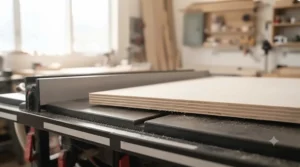
High tooth count blades cut more slowly, which changes how you should feed material compared to a standard combination blade — pushing too fast into an 80-tooth blade increases the risk of binding and kickback rather than speeding up the cut. Following established guarding standards matters here as much as it does with any other table saw blade: OSHA’s guidance on table saw guarding covers blade guards, riving knives, and push-stick use, and it applies just as fully when you’ve swapped in a fine-finish plywood blade as it does with your everyday rip blade.
A few plywood-specific habits are worth building in. Always support large sheets fully — an unsupported panel edge can pinch or twist mid-cut, increasing kickback risk regardless of how sharp the blade is. Keep hands and push sticks well clear of the blade path, since a higher tooth count doesn’t reduce the danger of the spinning edge, only the tear-out it produces. And inspect the blade regularly for chipped or missing carbide teeth — a fine-finish blade with even one damaged tooth can produce vibration patterns that increase kickback risk far more noticeably than the same damage would on a coarser-toothed blade.
Frequently Asked Questions
❓ What is the best tooth count for a table saw blade for plywood?
❓ Does a 60 tooth or 80 tooth blade cut plywood cleaner?
❓ Can I use a regular combination blade on plywood?
❓ What blade works best for Baltic birch plywood?
❓ How often should a plywood blade be sharpened?
Conclusion
If there’s one thing worth carrying away from all of this, it’s that the “best” table saw blade for plywood isn’t a single blade — it’s whichever one matches your material, your saw’s power, and how much a ruined sheet would actually cost you. The Freud LU80R010 earns its reputation as the default recommendation because it balances price, tooth geometry, and coating quality better than almost anything else on the market. The Forrest Duraline is for the shop where tear-out is a real line item on the budget. The Diablo D1060X and the DEWALT combo prove that clean cuts don’t require premium pricing, and the CMT and Amana picks fill in the gaps for Baltic birch and budget-industrial use respectively.
What all seven blades share is a tooth geometry built to shear plywood’s thin veneer face instead of tearing through it — the detail that separates a blade that “handles” plywood from one that’s actually built for it. Pair any of these with a zero-clearance insert and a sharp edge, and the days of sanding tear-out out of your good panels are basically over. Check current pricing on the pick that fits your project, and give your next sheet of plywood the blade it deserves.
✨ Ready to Upgrade Your Cuts?
🔍 Compare current pricing on today’s top plywood blades and find the one that matches your saw and your project. A few minutes now saves hours of sanding later.
Recommended for You
- 7 Best Dado Blade Sets for Table Saws in 2026
- Full Kerf Table Saw Blade: 7 Best Picks for Stability in 2026
- 7 Best Thin Kerf Table Saw Blades (2026)
Disclaimer: This article contains affiliate links. As an Amazon Associate, I earn from qualifying purchases. If you purchase products through these links, we may earn a small commission at no additional cost to you.
✨ Found this helpful? Share it with your friends! 💬🤗
