
In This Article
If you’ve ever ripped a long board and felt the blade bog down, wander off the line, or leave faint scorch marks behind, there’s a decent chance the culprit isn’t your saw — it’s your blade.
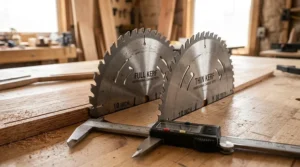
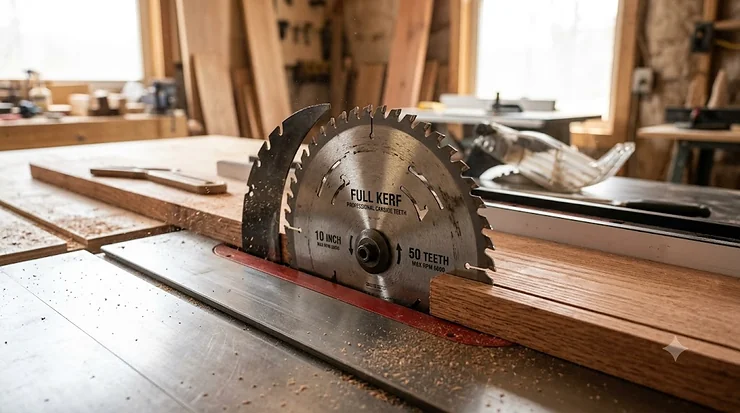
A full kerf table saw blade is the thicker, sturdier cousin in the blade family. Instead of the razor-thin 0.090″-ish plate found on most jobsite blades, a full kerf blade runs roughly 1/8 inch (0.118″–0.135″) from edge to edge.
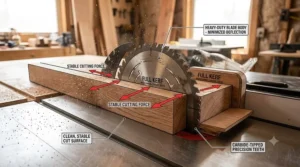
✅ That extra mass resists flex. Less flex means less wobble, less burning, and a straighter cut — especially in dense hardwood or anything over 3/4 inch thick.
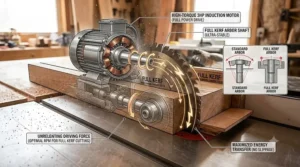
What most buyers overlook is that “full kerf” isn’t a brand or a gimmick; it’s a structural decision. You’re trading a little extra power draw and a touch more sawdust for a blade that simply won’t deflect under load. On a 3HP+ cabinet saw, that trade is almost always worth it.
In this guide, we tested specs, pulled real owner feedback, and compared seven full kerf blades currently sold on Amazon — from a $30-something budget rip blade to a flagship combination blade that woodworking forums have argued about for two decades. By the end, you’ll know exactly which one belongs on your arbor.
Quick Comparison Table
| Blade | Teeth | Kerf | Grind | Best For | Price Range |
|---|---|---|---|---|---|
| Oshlun SBW-100024 | 24 | .126″ | ATB | Budget ripping | Around $30–$40 |
| CMT 201.024.10 | 24 | .126″ | ATB | Hardwood ripping | $45–$60 range |
| Freud LU84R011 | 50 | .126″ | Combo 4+1 | All-around shop blade | $70–$90 range |
| Amana Tool 610504 | 50 | .135″ | Combo 4+1 | Heavy hardwood stock | $70–$90 range |
| Tenryu IW-25560D1 | 60 | .118″ | TCG | Melamine & sheet goods | $65–$95 range |
| Ridge Carbide TS21040 | 40 | .125″ | AR 4+1 | USA-made all-purpose | $70–$100 range |
| Forrest Woodworker II | 40 | .125″ | ATB | Premium all-around | $150–$200 range |
Looking at the spread above, the gap between the Oshlun and the Forrest isn’t really about kerf width — both are genuinely full kerf — it’s about carbide quality and how many resharpenings you’ll get before the blade’s done. If you rip occasionally, the Oshlun or CMT will serve you fine; if a blade lives on your saw for 8 hours a day, the extra cost of the Amana, Ridge Carbide, or Forrest pays for itself in fewer blade changes and cleaner cuts over time.
💬 Just one click — help others make better buying decisions too! 😊
What Is a Full Kerf Table Saw Blade?
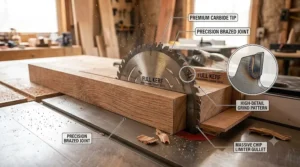
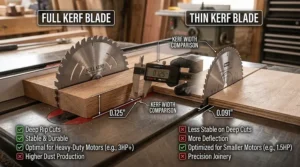
A full kerf table saw blade is a circular saw blade with a cutting width of roughly 1/8 inch (0.118″–0.135″), compared to the 0.090″–0.100″ kerf of thin kerf blades. The thicker plate resists vibration and deflection, making it the standard choice for cabinet saws and motors of 3HP or more…
That single sentence answers the search query, but the real-world implications run deeper, which is exactly what the next several sections dig into.
Top 7 Full Kerf Table Saw Blades — Expert Analysis
1. Oshlun SBW-100024
Oshlun SBW-100024 is the blade that keeps showing up in “best bang for the buck” threads on woodworking forums, and for good reason. This is a 10″, 24-tooth ATB rip blade with a genuine .126″ kerf — not a marketing rounding error, an actual full kerf plate.
That 24-tooth count matters more than it sounds. Fewer teeth means bigger gullets, and bigger gullets mean the blade clears chips fast instead of packing them in and overheating during long rips. Paired with the full kerf body, this blade tracks straight through 4/4 hardwood without the side-to-side wander you’ll get from a flimsier thin kerf rip blade.
In my experience, this is the blade to grab when you want full kerf stability without spending Forrest-level money. Owners on woodworking forums frequently describe it as outperforming its price point, though a handful of long-time users note the carbide softens faster than premium brands after extended hardwood ripping — expect to resharpen sooner than you would a Freud or Amana.
✅ Genuine .126″ full kerf at a budget price
✅ Aggressive 24-tooth design rips fast and stays cool
✅ Cheap enough to keep a spare on hand
❌ Carbide dulls faster than premium blades under heavy hardwood use
❌ Rip-only grind — not a crosscut blade
Sitting in the $30–$40 range, this is the best entry point into full kerf if your saw and your wallet are both on the smaller side.
2. CMT Orange Tools 201.024.10
CMT built its reputation on laser-cut precision, and the 201.024.10 shows it. This is another 24-tooth rip blade at .126″ full kerf, but the plate itself is held to tighter tolerances, with anti-vibration expansion slots and tri-metal brazing that bonds the carbide tips more securely than budget alternatives.
What that means in practice: less chatter at the start of a cut and a noticeably quieter saw overall. CMT’s Italian engineering tradition shows up here — the same precision you’d find in their pricier industrial lines, just configured for straightforward ripping work.
Woodworkers who’ve compared this directly against Freud’s combo blades tend to call it a strong, slightly cheaper alternative for shops that prioritize rip cuts over crosscuts. It’s become something of a sleeper pick among people who do a lot of resawing and dimensioning.
✅ Laser-cut plate keeps vibration and chatter down
✅ Tri-metal brazing holds carbide tips through impact
✅ Resharpenable micrograin carbide
❌ Rip-focused grind, weak on crosscuts
❌ Costs more than the Oshlun for a similar tooth count
In the $45–$60 range, this is the upgrade pick for anyone who rips often enough to notice the difference in vibration and edge retention.
3. Freud LU84R011
Freud LU84R011 is the blade most people picture when they hear “combination blade.” Fifty teeth, arranged in groups of four ATB teeth plus one flat raker, give you a single blade that rips and crosscuts respectably — no swapping blades mid-project.
The spec sheet won’t tell you this, but the raker tooth is doing the heavy lifting here: it clears the kerf ahead of the four finishing teeth, which is why this blade can crosscut almost as cleanly as a dedicated 80-tooth blade while still ripping at a usable speed. Freud manufactures its own TiCo carbide (titanium-cobalt), and it’s part of why this line has stayed a benchmark for over fifty years.
This is consistently one of the best-reviewed blade lines on Amazon, with owners regularly noting it runs quieter than expected and holds an edge longer than off-brand combination blades.
✅ One blade handles both rips and crosscuts well
✅ Freud’s proprietary TiCo carbide holds an edge longer
✅ Anti-vibration laser slots mean no stabilizers needed
❌ Jack-of-all-trades compromise — a dedicated crosscut blade still wins on finish
❌ Full kerf version draws more power than Freud’s thin kerf sibling
At $70–$90, this is the default “one blade for the whole shop” recommendation, especially for saws running 3HP or better.
4. Amana Tool 610504
Amana Tool’s 610504 takes the combination-blade idea and beefs it up. At .135″, this is the thickest kerf on our list, paired with a .095″ plate that’s noticeably more rigid than the Freud or CMT.
Here’s what that thickness buys you: on long rips through 8/4 hardwood, this blade simply doesn’t flex. The large gullets between tooth groups clear chips fast even when you’re feeding aggressively, and Amana’s copper-plug technology in the expansion slots keeps noise and vibration down despite the extra mass.
Cabinet shops that run this blade daily report it staying true — no walking off the cut line — over years of heavy use, which is the main reason it shows up so often in professional shop recommendations rather than hobbyist forums.
✅ Thickest, most rigid plate on this list for long rip stability
✅ Large gullets clear chips fast on thick stock
✅ Tension-rolled to stay flat for years
❌ Widest kerf means the most material removed per cut
❌ Needs real horsepower behind it to perform well
Priced around $70–$90, this is the pick for cabinet-grade work where stability matters more than shaving a few thousandths off your kerf.
5. Tenryu IW-25560D1
Tenryu IW-25560D1 plays a different game than the other six. This is a 60-tooth triple-chip-grind (TCG) blade — the tooth geometry typically reserved for aluminum and laminate — built on a .118″ full kerf plate.
TCG teeth alternate a trapezoid-shaped tooth with a flat raker, and that shape resists chipping on the brittle, glue-laden edges of melamine, MDF, and laminate that would chew up a standard ATB blade. Tenryu’s heavier European-style plate also resists deflection better than lighter blades in this price bracket, which matters when you’re pushing dense sheet goods through.
Cabinet and shop-fitting professionals specifically seek this blade out for exactly one reason: it leaves clean, chip-free edges on melamine without tearing the brittle laminate surface — a problem standard combination blades struggle with.
✅ Triple-chip grind shrugs off abrasive melamine and laminate
✅ Heavy plate resists deflection on dense sheet goods
✅ Oversized carbide allows more resharpenings over its life
❌ Not the best choice for fine crosscuts in solid hardwood
❌ Premium price for a fairly specialized grind
At $65–$95, this is the specialist’s pick — skip it if you rarely touch sheet goods, grab it immediately if you do.
6. Ridge Carbide TS21040-5/8
Ridge Carbide is the kind of brand woodworkers discover after they’ve already burned through a couple of big-box blades. The TS21040 is a 40-tooth “Super Combo” with an AR 4+1 grind, .125″ full kerf, and — notably — a .094″ plate, which is thinner than you’d expect for a full kerf blade.
That thinner plate is the clever part: you get the stability benefits of full kerf without quite as much drag, because Ridge Carbide manufactures every blade in the USA under tighter quality control than most overseas production lines allow. The AR 4+1 grind balances rip speed with a crosscut finish that’s noticeably cleaner than a pure rip blade.
Reviewers who’ve run this back-to-back against Forrest’s flagship blade often call it the better value of the two — not quite as legendary, but close, for less money.
✅ Made in the USA with tight manufacturing tolerances
✅ AR 4+1 grind balances rip speed and crosscut finish
✅ Thinner plate keeps drag lower despite full kerf width
❌ Smaller dealer network than Freud or Diablo
❌ Premium pricing for a boutique brand
In the $70–$100 range, this is the pick for woodworkers who specifically want domestic manufacturing without paying flagship prices.
7. Forrest Woodworker II
If there’s one blade that comes up in literally every “best table saw blade” conversation on woodworking forums, it’s the Forrest Woodworker II. This 40-tooth, .125″ full kerf ATB blade has held legendary status for decades, and the reputation isn’t just nostalgia.
What most buyers overlook is how Forrest gets a 40-tooth blade to cut plywood as cleanly as some 80-tooth blades: hand-tensioning. Each blade plate is individually tensioned at the factory, which keeps it dead flat under heat and load in a way mass-produced blades can’t match. The result is a glass-smooth finish on both rips and crosscuts that genuinely reduces sanding time.
The tradeoff is obvious — this is the most expensive blade on the list by a wide margin, and a handful of hobbyists argue the premium isn’t justified unless you’re cutting daily. For full-time shops and serious hobbyists, the consensus over twenty-plus years has been that it’s worth every penny.
✅ Widely considered one of the best all-around blades ever made
✅ Hand-tensioned plate stays flat under heavy use
✅ Glass-smooth finish on both rips and crosscuts
❌ The most expensive blade on this list, by a significant margin
❌ Overkill for occasional or light-duty use
At $150–$200, this is the splurge pick — buy it once, get it resharpened for years, and never think about blade quality again.
✨ Don’t Miss These Exclusive Deals!
🔍 Take your table saw setup to the next level with these carefully selected full kerf blades. Click on any highlighted pick to check current pricing and availability. The right blade will give you straighter rips, cleaner crosscuts, and a saw that finally feels like it’s working with you instead of against you! 🪵
Full Kerf vs Thin Kerf: Which Should You Choose?
This is the single most common point of confusion for anyone shopping for a new blade, and the answer comes down to one number: your saw’s horsepower.
| Factor | Full Kerf (1/8″) | Thin Kerf (~0.090″) |
|---|---|---|
| Stability | Higher — resists flex and wander | Lower — can flex under load |
| Power required | More — needs 3HP+ to shine | Less — ideal for under 2HP |
| Material waste | Slightly more per cut | Less, saves expensive lumber |
| Best saw type | Cabinet saws, hybrid saws with 3HP+ | Benchtop, jobsite, contractor saws |
In my experience, the mistake people make most often is buying a thin kerf blade because it’s marketed as “faster,” without checking whether their saw has the power to keep that thin, flexible plate from wandering under a hard rip. If you’re on a contractor saw under 2HP, thin kerf genuinely is the better call. If you’re running a cabinet saw or a hybrid saw with a real motor behind it, full kerf will outperform thin kerf every time stability matters more than feed rate.
How to Choose a Full Kerf Table Saw Blade
Match your blade to your saw and your most common cut using these criteria:
- Check your motor’s horsepower first. Full kerf blades need 3HP or more to avoid bogging down; anything less and you’ll fight the saw more than the wood.
- Decide rip, crosscut, or combination. A 24-tooth blade rips fast but crosscuts roughly; an 80-tooth blade crosscuts beautifully but rips slowly — a 40–50 tooth combination splits the difference.
- Match the grind to your material. ATB grinds handle general wood well; TCG grinds resist chipping on melamine and laminate.
- Confirm your arbor size. Nearly all 10″ blades use a 5/8″ arbor, but always double-check before ordering.
- Factor in resharpening cost. Premium carbide costs more upfront but survives more resharpenings — do the long-term math, not just the sticker price.
- Consider your riving knife or splitter width. Some factory splitters are sized for thin kerf only; verify compatibility before switching.
- Buy the best carbide you can justify. A dull blade is a dangerous blade — budget for resharpening, not just replacement.
Full Kerf Blades for Cabinet Saws vs. Hybrid Saws
Cabinet saws and hybrid saws both commonly run full kerf blades well, but the experience differs. Cabinet saws (3-5HP, heavy cast-iron trunnions) barely notice a full kerf blade’s extra power draw — this is genuinely the blade type they were designed around. Hybrid saws (1.5-2HP, lighter construction) can run full kerf blades, but you’ll feel more strain on harder, thicker stock.
If your hybrid saw struggles with a full kerf rip blade on 8/4 hardwood, that’s not a defect — it’s the motor telling you it’s at its limit. In that case, either drop to a thin kerf rip blade for that specific task, or take multiple shallower passes instead of one full-depth cut.
Best Full Kerf Blade for a 3HP+ Saw
If you’re running 3HP or more, here’s a simple decision framework:
- Mostly ripping rough lumber? → Oshlun SBW-100024 or CMT 201.024.10
- One blade for everything? → Freud LU84R011 or Amana Tool 610504
- Heavy daily use, cabinet shop volume? → Amana Tool 610504 or Ridge Carbide TS21040
- Cutting melamine or laminate regularly? → Tenryu IW-25560D1
- Want the best blade money can buy, budget aside? → Forrest Woodworker II
The biggest mistake at this horsepower range is under-buying — a 3-5HP cabinet saw can run circles around a budget blade’s carbide, dulling it faster than the same blade would dull on a smaller saw. If your motor is strong, your blade’s carbide quality should match it.
Usage Guide: Mounting, Stabilizing & Maintaining a Full Kerf Blade
Getting the most out of a full kerf blade starts before the first cut.
✅ Check arbor washer flatness. A warped washer transfers straight to the blade — replace it if it’s not perfectly flat.
✅ Skip stabilizers on quality combination blades. Most full kerf blades from reputable brands are engineered to run without them; adding stabilizers to a blade that doesn’t need them can actually increase friction.
✅ Set blade height correctly. Gullets should clear the material’s top surface by about 1/4 inch — too low increases friction and heat, too high increases kickback risk.
✅ Clean pitch buildup regularly. A blade caked in resin cuts like it’s twice as dull as it actually is — a soak in blade cleaner restores most of the lost performance instantly.
✅ Resharpen before it’s fully dull, not after. Pushing a dulling blade harder is how burn marks and kickback both start.
A common mistake in the first 30 days with a new full kerf blade: cranking up the feed rate to “test” how fast it cuts. Full kerf blades reward a slower, steadier feed far more than a fast, jerky one — let the carbide do the work.
Real-World Scenarios: Matching a Blade to Your Shop
The weekend hobbyist building furniture on a hybrid saw with moderate horsepower will get the most mileage out of the Freud LU84R011 — one blade, handles everything, doesn’t demand premium-blade money.
The cabinet shop owner running a 5HP cabinet saw eight hours a day needs the Amana Tool 610504 or Ridge Carbide TS21040 — the extra rigidity and resharpening life pay for themselves in fewer blade changes per month.
The shop-fitter cutting melamine and laminate shelving daily should skip combination blades entirely and go straight to the Tenryu IW-25560D1 — the chip-free edges alone justify the specialized purchase.
Full Kerf Blade Stability: What to Expect in Real-World Performance
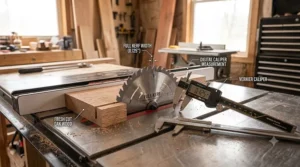
The spec sheet says “full kerf resists deflection,” but here’s what that actually feels like at the saw: significantly less side-to-side chatter when you push a board through a long rip, a cleaner sound (less of that high-pitched whine that signals a struggling thin blade), and noticeably less burning on dense woods like hard maple or white oak.
What you won’t get from a full kerf blade is speed. These blades remove more material per pass, which means more resistance and a slightly slower feed rate than their thin kerf equivalents. That’s the trade you’re making — stability over speed — and on a properly powered saw, it’s almost always the right one.
Common Mistakes When Buying a Full Kerf Table Saw Blade
❌ Buying full kerf for an underpowered saw. If your motor is under 2HP, a full kerf blade will bog down and burn the wood rather than cut it cleanly.
❌ Ignoring tooth count for your primary task. A 24-tooth rip blade used mainly for crosscuts will leave a rough, splintered edge.
❌ Skipping the arbor and bore check. Most are 5/8″, but importing a blade or buying a specialty size without confirming compatibility is a common, avoidable mistake.
❌ Assuming thicker kerf always means better. Past a certain point, extra plate thickness just wastes material without adding meaningful stability.
Features That Actually Matter (And Those That Don’t)
Matters: Carbide grade and tooth count for your task, plate flatness/tensioning, and a hook angle suited to rip vs. crosscut work.
Doesn’t matter nearly as much: Cosmetic coatings (nice for cleanup, irrelevant to cut quality), marketing terms like “laser engraved” branding, and tooth count beyond what your saw and material actually need — an 80-tooth blade on a 2HP saw ripping 2×4s is solving a problem you don’t have.
Long-Term Cost & Maintenance: Resharpening and ROI
A $35 budget blade resharpened twice costs roughly the same, over its life, as a $90 premium blade resharpened five or six times — except the premium blade still cuts cleaner on the last sharpening than the budget blade did on its first. That’s the real math behind “buy nice or buy twice” in the blade world.
Most full kerf carbide blades support anywhere from 3 to 10+ resharpenings depending on carbide grade and how aggressively they’re used. Factor a $15–$25 resharpening cost into your math, and premium blades like the Amana or Forrest start looking considerably cheaper per cut than their sticker price suggests.
Safety Considerations for Full Kerf Blades
A full kerf blade interacts directly with your saw’s riving knife or splitter — and that interaction matters more than most buyers realize. Per OSHA’s woodworking machinery standard, spreaders and splitters must be sized appropriately relative to the blade’s kerf to function correctly and prevent kickback. If you switch from a thin kerf to a full kerf blade, double-check that your splitter or riving knife is still correctly matched — a mismatch is a quiet but serious safety gap.
The Consumer Product Safety Commission has documented tens of thousands of table-saw-related injuries annually, the large majority involving direct blade contact often connected to kickback. A correctly matched full kerf blade, set to the proper height with the riving knife installed, meaningfully reduces that risk compared to a worn or mismatched setup. For a deeper technical breakdown of splitter and guard fundamentals, Popular Woodworking’s safety guide is worth a careful read before your next blade swap.
If you want the full technical definition of kerf and how it’s measured across blade types, Wikipedia’s entry on kerf is a solid, neutral starting point.
FAQ
❓ Is a full kerf blade better than thin kerf?
❓ What size kerf is a standard table saw blade?
❓ Do I need blade stabilizers with a full kerf blade?
❓ Can I put a full kerf blade on a benchtop table saw?
❓ How often should I sharpen a full kerf table saw blade?
Conclusion
Choosing a full kerf table saw blade really comes down to two questions: how much power does your saw have, and what are you cutting most often? Get those two answers right, and any of the seven blades above will serve you well — from the budget-friendly Oshlun for occasional rips to the legendary Forrest Woodworker II for shops that run a blade into the ground and back.
If you only remember one thing from this guide, make it this: full kerf rewards saws with the power to use it. Match that power correctly, pick the tooth count for your actual work, and you’ll get straighter cuts, less burning, and a saw that finally feels like it’s on your side.
✨ Ready to upgrade your cuts?
Check current pricing on any of the seven blades above and find the one that matches your saw’s horsepower and your most common project. 🪵🔧
Recommended for You
- 7 Best Thin Kerf Table Saw Blades (2026)
- 7 Best Combination Blades for Table Saw (2026): Stop Swapping Blades
- 7 Best Crosscut Blades for Table Saws in 2026 (Honest Picks)
Disclaimer: This article contains affiliate links. As an Amazon Associate, I earn from qualifying purchases. If you purchase products through these links, we may earn a small commission at no additional cost to you.
✨ Found this helpful? Share it with your friends! 💬🤗
