
In This Article
A riving knife kit for older table saws without one is an aftermarket add-on that keeps a saw’s kerf open behind the blade to reduce kickback. For most pre-2000s table saws, that means a retrofit splitter system, not a factory-style riving knife, because the original blade-arm design usually has nowhere to mount one.
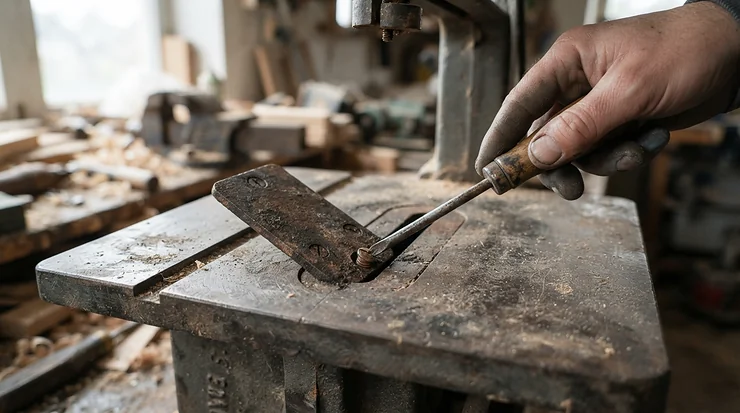
Here’s the plot twist most product pages skip. For the majority of older saws, a true bolt-on riving knife doesn’t exist. Fine Woodworking’s editors have explained that traditional American saws hang the arbor on a pivoting arm at the front of the cabinet, so nothing sits behind the blade to anchor a riving knife. Their practical advice was a zero-clearance insert with a splitter.
That sounds like a dead end. It isn’t. It’s a detour with decent scenery. Modern retrofit splitters, better inserts, and hands-away accessories close most of the gap, and that’s what a realistic riving knife kit for older table saws without one looks like in 2026. If you’ve been hunting for a retrofit riving knife for vintage table saw owners, or wondering how to add riving knife to old saw hardware, consider this your honest map.
Below you’ll find seven real, Amazon-listed products, a compatibility reality check, installation walkthroughs, and the regulatory backdrop. There are no invented testing stories here, just published specs, sourced review signals, and plain reasoning. Prices are ranges because they move constantly, so check current price before you buy.
Quick Comparison: 7 Upgrades at a Glance
| Product | Type | Best For | Price Range |
|---|---|---|---|
| MicroJig MJ Splitter SteelPro Full Kerf (SP-2) | Insert-mounted splitter | Full-kerf 1/8″ blades, 90° through-cuts | $35-$45 range |
| MicroJig MJ Splitter SteelPro Thin Kerf (SP-2TK) | Insert-mounted splitter | Thin-kerf blades (0.090-0.118″) | $35-$45 range |
| Rockler Phenolic Zero-Clearance Insert Blanks (2-Pack) | Blank insert stock | Custom-fit inserts and splitter bases | $35-$45 range |
| ZEROSERT Zero Clearance Inserts | Model-matched insert | Jet, Powermatic, Shop Fox, Grizzly-style saws | Under $50 (varies by fit) |
| Fulton Phenolic Zero Clearance Insert | Phenolic insert | Older Craftsman and Ridgid-style saws | Under $50 (varies by fit) |
| GRR-RIPPER GR-100 | 3D push block | Hands-away control, narrow rips | Under $40 |
| Hedgehog Spiral Featherboard | Featherboard | Fence pressure on the infeed side | $30-$40 range |
Read the table as a system, not a shopping list. The two MJ Splitter SteelPro kits do the actual kerf-keeping, the inserts give them a place to live, and the GRR-RIPPER GR-100 and Hedgehog Spiral Featherboard handle the hands-and-fence side of kickback. If your saw has a loose, worn, or missing stock insert, start with an insert. If your insert is already snug, the splitter is your first purchase.
💬 Just one click — help others make better buying decisions too!😊
Top 7 Picks: Riving Knife Kit for Older Table Saws Without One (and Its Closest Alternatives)
None of these is a magic bolt-on riving knife. Together, they form the most credible upgrade path available to owners of older saws through mainstream retail.
1. MicroJig MJ Splitter SteelPro Full Kerf (SP-2) — best all-round splitter retrofit
Think of it as a pair of steel-cored sentries posted in the kerf, right where kickback is born. The shells are polycarbonate reinforced with a stainless steel core, and the kit covers kerfs from 0.118 to 0.145 inch, which comfortably swallows a standard 1/8-inch full-kerf blade. The splitters flip to give offsets of 0.000, 0.003, 0.006, or 0.009 inch. That matters because aging arbors often run slightly off-center, so you dial in the fit instead of hoping.
Here’s the analytical take. This is the closest most pre-2000s saws can get to riving-knife behavior without machining a casting, because it lives in the insert and stays put for through-cuts. The honest catch is that it’s for 90-degree through-cuts only. The manufacturer also wants a zero-clearance insert with at least 2 inches behind the blade at its highest point.
Review sentiment: individual review text wasn’t verifiable for this guide. One third-party roundup lists the kit around 4.3 out of 5 across several hundred Amazon ratings, so check the live reviews and filter for your saw brand.
Pros:
- ✅ Steel core resists flex under cutting pressure
- ✅ Reversible offsets compensate for blade runout
- ✅ Kerf Keepers help when hardwood stress closes the cut
Cons:
- ❌ Through-cuts at 90 degrees only
- ❌ Requires drilling into a compatible insert
Price range: roughly $35-$45 at the time of research. For what it does, that’s a strong value verdict.
2. MicroJig MJ Splitter SteelPro Thin Kerf (SP-2TK) — built for thin-kerf blades
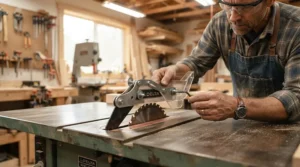
Same philosophy, narrower footprint. This version is rated for 3/32-inch blades with a kerf range of 0.090 to 0.118 inch, and it ships with four splitters, four Kerf Keepers, a drill guide, and screws. The splitters work in tandem to fill the kerf, so the match between your blade and the kit matters more than the logo on the box.
Why does this variant earn its own slot? Thin-kerf blades are popular on lighter contractor-style saws, where they reduce the load on the motor. Based on the spec comparison, pairing a full-kerf splitter with a thin blade (or the reverse) leaves either too much slop or a pinch. Spend two minutes with calipers on your actual blade before ordering, because 0.118 inch sits at the border of both ranges.
Review sentiment: I couldn’t verify a meaningful pool of individual reviews specific to this SKU, so treat it as sharing the design lineage of the full-kerf kit rather than inheriting its ratings.
Pros:
- ✅ Matches 0.090-0.118 inch thin-kerf blades
- ✅ Same steel-cored design as the full-kerf kit
- ✅ Includes four splitters for offset adjustment
Cons:
- ❌ Wrong choice if you swap to full-kerf blades
- ❌ Still limited to 90-degree through-cuts
Price range: about $35-$45. It’s the right buy only if your blade measures in range.
3. Rockler Phenolic Zero-Clearance Insert Blanks (2-Pack) — best foundation for a custom insert
A splitter is only as good as the plate that holds it. These blanks measure about 4-5/8 inches wide by 18 inches long and roughly 13mm (about 1/2 inch) thick, and they ship with twelve M4 leveler screws. Phenolic is dense and stable, which makes it a sensible home for a drilled-in splitter.
The analysis cuts both ways. Because the blank is oversized, you trace your factory insert, cut it to shape, and then adjust height with the leveler screws. That’s great for odd vintage openings where no model-specific insert exists. But half-inch stock won’t drop into a recess built for a thin plate without some rabbeting, so check your recess depth before you celebrate.
Review sentiment: Rockler’s own page shows a perfect score, but from only a couple of reviews, which is far too small a pool to lean on.
Pros:
- ✅ Dense phenolic holds screws and splitters firmly
- ✅ Generous size fits odd, discontinued openings
- ✅ Leveler screws included for flush setting
Cons:
- ❌ Needs cutting, shaping, and recess checking
- ❌ Half-inch thickness may be too thick for some saws
Price range: around $35-$45 for the pair, so it’s solid value if you’re comfortable with a jigsaw and a router.
4. ZEROSERT Zero Clearance Inserts — model-matched shortcut for cabinet and hybrid saws
If shaping your own plate sounds like homework, this is the shortcut. The Amazon listing targets saws such as Jet (note the asterisk on that listing), Powermatic, Shop Fox, and Grizzly, and it’s a laminated two-pack. A pre-shaped insert is often the fastest path from “stock plate with a big gap” to “tight opening ready for a splitter.”
What the listing won’t tell you is how your specific saw’s serial range fits. Vintage machines changed insert dimensions across production years, so retrofit compatibility is a matter of measuring, not trusting a brand name. Measure length, width, and thickness, then compare to the listing.
Review sentiment: I couldn’t verify detailed individual reviews for this guide, so scan the live reviews for your exact model before ordering.
Pros:
- ✅ Pre-shaped for several popular saw families
- ✅ Two-pack gives a spare for experiments
- ✅ Less shop time than cutting a blank
Cons:
- ❌ Fit varies by saw model and production year
- ❌ Not helpful if your saw isn’t on the list
Price range: typically under $50, though it varies by fit. For compatible saws it’s a smart time-saver.
5. Fulton Phenolic Zero Clearance Insert — budget-friendly fit for older Craftsman and Ridgid saws
Fulton Woodworking Tools sells phenolic inserts cut for specific older saws, including a Craftsman/Ridgid version listed at 14 by 3-3/4 by 3/16 inch, which carried an Amazon’s Choice badge at the time of research. Related listings cover two-screw Craftsman, Sears, and Powermatic 64 sizes. That variety is itself a lesson. Insert sizes on older saws are wildly fragmented, so “close enough” is not a thing.
My read: this is the pick for belt-drive, entry-level legacy saws, where a thin 3/16-inch plate matches the factory recess. The tradeoff is material. Thin stock leaves less meat to anchor a splitter, so follow MicroJig’s phenolic throat-plate guidance and test the hold on scrap.
Review sentiment: the Amazon’s Choice badge is a marketplace signal, not a verified review summary, so read the current comments for fit complaints.
Pros:
- ✅ Cut to match several older saw footprints
- ✅ Thin profile suits shallow factory recesses
- ✅ Phenolic resists wear better than MDF
Cons:
- ❌ Thin stock offers limited splitter anchoring
- ❌ Must match your exact insert dimensions
Price range: usually under $50. A good value if your saw is on the list, and a poor one if you have to guess.
6. GRR-RIPPER GR-100 — the hands-away companion
This isn’t a splitter, and it’s worth being honest about that. The GR-100 is a three-legged push block that delivers downward, inward, and forward pressure on the workpiece. The manufacturer calls it a moving blade guard, and the GR-100+ upgrade lists a table saw cutting range of 1/4 to 5 inches. On an older saw with a minimal guard, keeping hands off the board is half the battle.
Where it earns its place in a retrofit plan: kickback often starts when stock drifts from the fence, and consistent pressure keeps the board where it belongs. The manufacturer says it “virtually eliminates kickback,” and that’s a marketing claim, so treat it as a strong aid rather than a guarantee. If you buy the plain GR-100, learn the center-leg adjustment carefully, since the GR-100+ adds the SafeRip system specifically to help prevent cutting into that leg.
Review sentiment: Amazon showed it ranked #3 in Table Saw Accessories at the time of research, which signals broad adoption.
Pros:
- ✅ Keeps hands clear of the blade throughout the cut
- ✅ Handles narrow rips down to about 1/4 inch
- ✅ Works on router tables and jointers too
Cons:
- ❌ Learning curve for leg adjustment
- ❌ Not a substitute for a splitter
Price range: generally under $40. It’s a high-value add for any older saw shop.
7. Hedgehog Spiral Featherboard — one-knob pressure against the fence
A featherboard presses the stock firmly against the fence, which attacks the same failure mode that gets boards pinched. This one uses a spiral shape with curved fingers that allow forward movement but resist backward movement, and it adjusts with a single knob. It’s molded from DuPont nylon, fits standard 3/4-inch miter slots, and can be flipped to the other side of the blade.
The practical bit: place it on the infeed side, ahead of the blade, so it holds the board to the fence rather than squeezing the kerf shut. The only real gotcha is slot width, because it won’t fit 5/8-inch slots on some small saws. Check yours.
Review sentiment: a Family Handyman write-up reported an average of 4.6 out of 5 across more than 1,600 ratings at the time of its review, with users describing it as a handy addition to table saw setups.
Pros:
- ✅ Spiral fingers resist backward movement
- ✅ One-knob, one-hand adjustment
- ✅ Reversible for either side of the blade
Cons:
- ❌ Fits 3/4-inch miter slots only
- ❌ Must be placed ahead of the blade
Price range: about $30-$40. It’s a good value for the fence-control gain.
Two premium alternatives deserve a mention even though they sit outside this Amazon list. The Shark Guard sells custom splitter-based guard systems for many older saws, with 10-inch-blade packages listed in the roughly $300-$460 range on the maker’s site, and its “manual riving knife” approach lets you adjust height and proximity to the blade. The BORK was a bolt-on aftermarket knife that attached to the arbor swing arm for several Grizzly, Delta, Jet, and Craftsman-style saws, but I couldn’t confirm it’s currently sold.
Add Riving Knife to Old Saw: The Practical Installation Guide
Let’s be precise about the goal. You can’t truly add riving knife behavior to most older saws, but you can build a splitter setup that gets you most of the way there. Here’s a clean sequence.
- Confirm your saw’s limits. Check your manual or a manufacturer parts diagram to see whether a factory riving knife option ever existed for your model.
- Measure your blade kerf. Use calipers on the actual blade, and match it to the full-kerf or thin-kerf kit.
- Prepare the insert. Trace the factory plate, cut your blank or fit your pre-shaped plate, and confirm at least 2 inches of material behind the blade at maximum height.
- Drill with the guide. The included drill guide registers off the kerf itself, which keeps the hole centered. Use the bit supplied in your kit.
- Install and offset. Fit the splitters, then flip them to find the offset that keeps the kerf open without rubbing.
- Test on scrap. Run a few rips and check for burning, binding, or rubbing.
Maintenance is light but real. Every month, check that screws are snug and the insert is level, and re-measure the offset whenever you swap blades. Common first-30-day mistake: forgetting that a splitter that fit last week’s blade may not fit a fresher, thicker one.
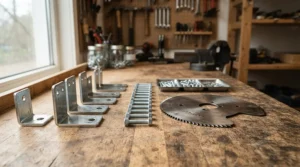
Real-World Scenarios: Which Upgrade Fits Which Shop
Scenario one: the weekend shelf-builder. You own a 1990s belt-drive Craftsman saw, you cut maybe twice a week, and your budget is around $100. The Fulton Phenolic Zero Clearance Insert, the MJ Splitter SteelPro Thin Kerf, and the GRR-RIPPER GR-100 keep you in budget, assuming your blade measures thin-kerf. The upside is a tighter opening, a splitter at the right spot, and safer hands.
Scenario two: the garage cabinet-saw owner. You inherited a heavy cabinet saw whose original splitter went missing years ago, and you rip hardwood several times a week. Pair the ZEROSERT Zero Clearance Inserts with the MJ Splitter SteelPro Full Kerf, then add the Hedgehog Spiral Featherboard for fence pressure. Budget: around $120-$150.
Scenario three: the small cabinet shop. Several employees, daily ripping, and regulatory exposure. The MicroJig kits address the splitter question, but they don’t supply anti-kickback pawls or a full guard. This is where a complete guard package like Shark Guard, or a newer saw, deserves serious comparison.
✨ Ready to Close the Safety Gap on Your Old Saw?
🔍 Take your shop safety to the next level with these carefully selected products. Click on any highlighted item to check current pricing and availability. These tools will help you create the safer, smoother cuts your future fingers will thank you for! 🛠️
Problem → Solution Guide: Fixing the Most Common Retrofit Headaches
Problem 1: burn marks and pinching on long rips. Kerf closure is the usual culprit. Use the offset flips and the Kerf Keepers in the MJ Splitter SteelPro Full Kerf, and double-check fence alignment, because a fence that toes in will burn even a perfect setup.
Problem 2: the insert rocks or sits proud. Leveler screws exist for exactly this. The Rockler Phenolic Zero-Clearance Insert Blanks include twelve M4 screws, so you can fine-tune height until the plate sits flush.
Problem 3: you need non-through cuts or dadoes. A splitter in your insert is for 90-degree through-cuts. Swap to a different insert for dado or bevel work. This is where splitter removal becomes part of your routine rather than an emergency, as we’ll cover below.
Problem 4: hands feel too close on narrow rips. The GRR-RIPPER GR-100 is designed to hold stock down and in, with a cutting range that starts around a quarter inch.
Problem 5: you swapped blades and the cut feels tight. Re-measure kerf, then confirm whether you need the MJ Splitter SteelPro Thin Kerf or the full-kerf kit instead.
How to Choose a Riving Knife Kit for Older Table Saws Without One
- Identify your saw’s design. Check whether the arbor rides on a pivoting arm and whether any factory splitter mount remains. This determines whether anything beyond a splitter is realistic.
- Measure your blade kerf. Calipers beat guessing. Full-kerf kits cover 0.118-0.145 inch, thin-kerf kits 0.090-0.118 inch.
- Check your insert. Look at length, width, thickness, and whether there are at least 2 inches of material behind the blade at full height.
- Confirm retrofit compatibility. Look for model-specific inserts before committing to a blank.
- Match the cut types you make. If you do lots of dadoes, bevels, or non-through cuts, plan on swappable inserts.
- Add hand and fence control. A push block and featherboard reduce the odds that stock drifts in the first place.
A quick decision frame: if your insert is tight and your blade measures thin, buy the MJ Splitter SteelPro Thin Kerf. If your insert is sloppy, fix that first with a Fulton phenolic insert, a ZEROSERT insert, or the Rockler Phenolic Blanks.
Retrofit Compatibility: Pre-2000s Table Saws and What Actually Fits
Pre-2000s Table Saws: What You’re Working With
Saws built before 2000 were designed around a fixed splitter or spreader, a guard, and anti-kickback pawls. The riving knife requirement arrived later: the sixth edition of UL 987, published in January 2005, added requirements for a riving knife, according to the Consumer Product Safety Commission’s rulemaking notice. That’s why pre-2000s table saws simply weren’t engineered around one, and why mounting points are missing.
Retrofit Compatibility Checklist
Treat compatibility as a matrix, not a yes/no. Check blade arm design, insert recess depth, throat plate screw layout, miter slot width (3/4 inch for the Hedgehog Spiral Featherboard), and blade kerf. Next, check whether the saw maker or a specialist still offers parts. When in doubt, a manufacturer’s parts diagram or support line is a better authority than a seller’s compatibility list. Even Grizzly’s support team has noted that older saws with arc-moving blades and stationary splitters are generally not suitable for true riving knife retrofits.
Retrofit Riving Knife for Vintage Table Saw: Why True Kits Are Rare
The engineering reason is simple: on traditional designs, the blade moves in an arc as you raise and lower it. A riving knife stays at a consistent distance from the blade and tracks its height, which needs a mount behind the arbor. Most vintage saws don’t have one.
The BORK was a clever workaround. Reviewers described it as attaching to the arbor swing arm and rising, lowering, and tilting with the blade, though not in perfect proportion, and critics argued it behaved more like a moving splitter than a true riving knife because it sat above the blade and couldn’t handle non-through cuts without removal. The Shark Guard route takes a different approach, with an adjustable splitter that can follow the blade’s radius.
Bottom line for anyone seeking a retrofit riving knife for vintage table saw hardware: the realistic options are an insert-mounted splitter, a model-specific guard-and-splitter package, or a newer saw. None is a perfect riving knife, but each can meaningfully reduce the risk.
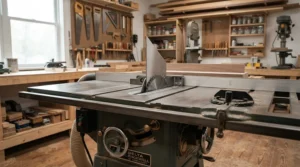
Splitter vs Riving Knife: What You Actually Give Up
A CPSC human factors review noted that a properly installed splitter or riving knife may be the most effective way to prevent kickback. The key phrase is “properly installed,” which is why alignment matters so much.
| Feature | Factory Riving Knife | Insert-Mounted Splitter (MJ Splitter SteelPro Full Kerf) | Stock Fixed Splitter |
|---|---|---|---|
| Follows blade height | Yes | No, fixed in the insert | No |
| Non-through cuts | Often yes | Remove or swap insert | Usually remove |
| Retrofit on older saws | Rarely possible | Yes, with a compatible insert | Already present, if not lost |
| Typical cost | Built into the saw | Roughly $35-$45 range | Included originally |
| Best For | Newer saws | Older saws needing a fix | Saws with intact originals |
The comparison shows why splitters remain relevant: they match riving knives on the through-cut job, which is where most kickback happens, and they fall short on convenience. If your saw has an intact original, keep it aligned. If it’s missing or damaged, the MJ Splitter SteelPro Full Kerf is the better fix than going without.
Splitter Removal: When to Pull It and When to Leave It
Splitter removal is a normal part of life on older saws whenever you make non-through cuts, dadoes, or bevels. The danger is the “I’ll put it back later” habit. Mark a reminder on your fence or switch, and never leave the insert empty after the specialty cut is done.
Features That Actually Matter (And Those That Don’t)
Matters: kerf match, because a splitter that’s too thin or thick either rubs or does nothing. Offset adjustability, because older arbors drift. Material strength, such as the steel core in both MJ Splitter SteelPro kits. A tight insert, because gaps invite small offcuts to jam. A hold-down accessory like the GRR-RIPPER GR-100 or Hedgehog Spiral Featherboard.
Doesn’t matter as much: color, bundled extras you won’t use, and the loudest marketing claim. “Virtually eliminates kickback” is a manufacturer phrase, not a lab certificate. Judge products by specs and repeatable fit.
One more nuance: a splitter doesn’t replace a guard or pawls. On older saws, a hands-away accessory plus a splitter plus careful feeding is a stronger combination than any single gadget.
Legacy Table Saw Safety Upgrade: Long-Term Cost and Maintenance
A legacy table saw safety upgrade is one of the cheapest forms of insurance in woodworking. Here’s how the numbers stack up.
| Upgrade Path | Approx. Range | What You Get | Best For |
|---|---|---|---|
| MJ Splitter SteelPro Full Kerf + Rockler Phenolic Blanks | $70-$90 range | Splitter plus custom insert | DIY-capable owners |
| Splitter + insert + GRR-RIPPER GR-100 + Hedgehog Spiral Featherboard | Under about $170 range | Splitter plus hand and fence control | Regular home-shop users |
| Complete guard package (maker pricing) | About $300-$460 range | Guard, splitter, pawls | Commercial or heavy use |
The middle path usually wins on value. Spread an $80 splitter-and-insert setup across five years and about 50 cutting sessions a year, and it works out to roughly 32 cents per session. Maintenance is cheap too: re-check screws, re-measure kerf when you change blades, and replace worn inserts. If cost is tight, start with the splitter and a good insert, then add the push block and featherboard as budget allows.
Safety, Regulations, and Standards Guide
If you run a business, regulation matters. OSHA’s woodworking rule says each hand-fed circular ripsaw must have a spreader made of hard tempered steel and thinner than the saw kerf, and it must also have nonkickback fingers or dogs. I’m not a lawyer, so confirm with a compliance professional before relying on any retrofit for workplace use.
For home shops, the standards picture explains why your older saw lacks a riving knife: UL 987’s 2005 revision introduced the requirement, and the CPSC later noted that the table saw requirements were superseded by UL 62841-3-1. That doesn’t make your older saw unsafe by definition. It means you’re responsible for upgrading around its gaps: a splitter, a guard where practical, pawls where appropriate, and push tools every time.
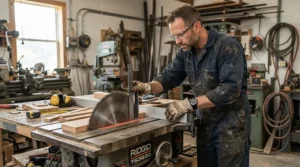
FAQ
❓ How much does a table saw splitter upgrade cost?
❓ Do I need a zero clearance insert for an MJ Splitter?
❓ Can I use an insert-mounted splitter for dado or bevel cuts?
❓ Which kit should I buy for a thin-kerf blade?
❓ Are pre-2000s table saws unsafe to use?
Conclusion
So, is there a true riving knife kit for older table saws without one? For most pre-2000s saws, honestly, no. But a well-built retrofit splitter system gets you most of the way, and that’s a meaningful safety gain for the price of a pizza night. Start with the kerf-matched MJ Splitter SteelPro Full Kerf or MJ Splitter SteelPro Thin Kerf, give it a tight home with a Rockler Phenolic Blanks plate, a ZEROSERT insert, or a Fulton phenolic insert, and back it up with the GRR-RIPPER GR-100 and Hedgehog Spiral Featherboard.
If you came here to add riving knife hardware to an old saw, you’ve now got the real map: a legacy table saw safety upgrade built from parts that exist today, plus clear limits on what they can’t do. If your work is commercial or heavy-duty, price out a guard package or a newer saw instead.
Recommended for You
- Riving Knife System For Contractor Table Saw: 7 Proven Upgrades 2026
- Aftermarket Blade Guard For Cabinet Saw Upgrade: 7 Best Picks 2026
- Overhead Blade Guard Vs Riving Knife Comparison: 7 Proven Picks 2026
Disclaimer: This article contains affiliate links. As an Amazon Associate, I earn from qualifying purchases. If you purchase products through these links, we may earn a small commission at no additional cost to you.
✨ Found this helpful? Share it with your friends! 💬🤗
