

In This Article
Here’s the awkward truth about table saw safety: the device that protects you on a rip cut can turn into a roadblock the second you reach for a dado stack. A splitter sits tall behind the blade. A dado groove is a non-through cut, so the board has to travel over the blade, not past it. Something has to give.
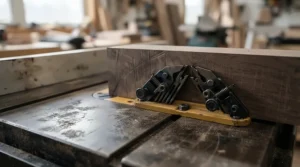
That tension is exactly why a well-planned splitter system for dado cuts matters. It isn’t one gadget. It’s a small ecosystem: the splitter or riving knife you can pull out fast, the insert that closes the gap around a wide stack, and the habits that cover the exposure you just created. Done right, you swap in minutes and keep working safely. Done lazily, you’ll “just this once” leave the splitter off, and then never put it back.
This guide covers seven real products, from drill-in splitters to full saw platforms with dado-ready hardware. It also walks through dado stack setup, splitter adjustment for non-through cuts, and dado compatible kickback prevention. Every pick is explained through specs and aggregated user feedback, not hype. Prices appear as ranges only, because they move constantly.
Quick Comparison: 7 Splitter System for Dado Cuts Options at a Glance
| Product | Type | Role in a Dado Workflow | Price Range | Best For |
|---|---|---|---|---|
| MJ Splitter Standard Kerf (SP-0125) | Drill-in insert splitter | Pops out fast before dado work | Accessory tier; check current price | Older saws with no riving knife |
| MJ Splitter SteelPRO (SP-2) | Dual steel-core splitter | Same quick removal, tougher build | Around $40 range | Frequent users, reactive hardwoods |
| MJ Splitter SteelPRO Thin Kerf (SP-2TK) | Dual splitter, thin kerf | Matches 0.090″–0.118″ blades | $40–$50 range | Thin-kerf blade owners |
| ARK Shark Guard | Adjustable splitter plus guard | Lowers under blade crown for some non-through cuts | Premium accessory; check current price | Compatible Unisaw-style saws |
| SawStop Dado Brake Cartridge + Dado Lock Down Insert (TSDC-8R3 / TSI-DLD) | Dado hardware for a safety saw | Keeps brake protection active with a stack | Kit pricing varies; check current price | SawStop owners |
| DeWalt DWE7491RS | Jobsite saw with removable riving knife | Tool-free knife removal, dado up to 13/16″ | $550–$700 range | Mobile shops |
| Bosch GTS1041A REAXX + TS1006 insert | Jobsite saw with dado insert | Adjustable knife plus dedicated dado plate | Insert around $70–$90; saw varies | Safety-first jobsite users |
Look at the table above and one pattern jumps out: the cheapest options solve a removal problem, while the saw platforms solve a compatibility problem. If you already own a saw, the three MJ Splitter variants are the budget path. If you’re choosing a saw, the DeWalt DWE7491RS and Bosch GTS1041A REAXX both advertise 13/16″ dado capacity, though each requires pulling the riving knife first.
💬 Just one click — help others make better buying decisions too!😊
What Is a Splitter System for Dado Cuts?
A splitter system for dado cuts is the combination of a quickly removable splitter or riving knife, a wide-slot dado insert, and supplemental guarding that keeps a table saw as safe as possible during non-through grooves. Because a standard splitter blocks the workpiece, the system’s job is to let you remove it, cut the groove, and restore protection afterward.
The splitter and the riving knife are close cousins. A table saw splitter mounts to the table and stays put, while a riving knife mounts to the arbor assembly and travels up and down with the blade. That distinction decides almost everything about how each device behaves during dado work.
Top 7 Splitter System for Dado Cuts Products: Expert Analysis
1. MJ Splitter Standard Kerf (SP-0125) — the no-frills drill-in baseline
The original MJ Splitter Standard Kerf (SP-0125) is a low-profile splitter that mounts into a zero clearance insert, so it doubles as a mini featherboard behind the blade. The green kit targets 1/8″ kerf blades, roughly the 0.122″–0.145″ range, and ships with two splitters, a drill guide, and a bit.
Why does that matter? Geometry. The manufacturer says you need about 2 inches between the back edge of the fully raised blade and the end of the throat plate. Measure first, because a splitter that collides with a tall blade is worse than none. For dado work, the payoff is speed: it lifts out in seconds, and you’d swap to a dado insert anyway.
My read: this is the sensible choice for an older contractor saw with no riving knife. It protects rips and gets out of the way for grooves. It won’t tilt with the blade, so think 90-degree cuts only.
Aggregated buyer chatter is split. Some owners say it’s a lifesaver for a saw that couldn’t take a riving knife, and one calls the quick removal for dados a great feature. Others report fit trouble on specific saws where outfeed space is tight, and one reviewer hit blade-height limits using a kerf-mismatched splitter.
Pros:
- ✅ Removes and remounts in seconds
- ✅ Mini-featherboard effect reduces burning
- ✅ Includes drill guide and installation instructions
Cons:
- ❌ Needs clearance behind the blade
- ❌ Doesn’t tilt for bevel cuts
Price range: accessory tier, so check current price. Value verdict: strong if your saw physically fits it.

2. MJ Splitter SteelPRO (SP-2) — stainless core for daily abuse
The MJ Splitter SteelPRO (SP-2) takes the same concept and hardens it. Each splitter pairs a polycarbonate shell with a 301 stainless steel core, and the kit includes four splitters plus an installation jig.
Here’s the clever part. Popular Woodworking describes two offset splitters that apply opposing forces: the front one presses the keeper piece to the fence, and the rear one nudges the offcut away. If the board binds hard, the rear splitter pulls out and wedges in the kerf. Offsets move in tiny steps, about 0.003″ per “+” mark, which is how you dial in pressure without guessing.
Who benefits? Anyone ripping reactive hardwoods who also swaps to a dado stack regularly. Because the splitters pop out so quickly, the swap routine stays painless.
Reviewers and forum users generally treat the SteelPRO as the fix for complaints about the earlier all-plastic version, which some said could pinch or pull out of its holes. Fair warning from the same magazine review: the kit doesn’t include a throat plate and may not suit some blade guards.
Pros:
- ✅ Stainless core resists flexing and wear
- ✅ Dual splitters tune pressure on both pieces
- ✅ Quick on-and-off for dado swaps
Cons:
- ❌ Throat plate sold separately
- ❌ May conflict with some blade guards
Price range: around $40 range at major retailers. Value verdict: the best-value upgrade in this group.
3. MJ Splitter SteelPRO Thin Kerf (SP-2TK) — built for 0.090″–0.118″ blades
The MJ Splitter SteelPRO Thin Kerf (SP-2TK) is the same dual-splitter design, sized for thin-kerf blades in the 0.090″–0.118″ range. Retail listings describe splitter tabs, kerf keepers, a drilling jig, a bit, and screws.
Matching kerf isn’t a nicety, it’s the whole game. Too thick, and the splitter drags the keeper piece against the blade. Too thin, and it stops doing its job of holding the cut open. That’s why the thin-kerf and standard versions are sold separately.
The dado connection is indirect but real. Many shop saws run thin-kerf blades for everyday rips. Your dado stack is a wholly different cutter, so the splitter comes out entirely and goes back in when you return to the rip blade. A kit with a clean install makes that cycle painless.
Aggregated listings praise the jig for aligning holes to the kerf itself, and retailers describe it as simple to install. The recurring theme from forum users is the same as with its siblings: measure your saw’s rear clearance first.
Pros:
- ✅ Sized for thin-kerf blades
- ✅ Drill jig centers on your kerf
- ✅ Dual splitters tune side pressure
Cons:
- ❌ Wrong choice for full-kerf blades
- ❌ Insert not included
Price range: roughly $40–$50 range depending on seller. Value verdict: essential if you run thin-kerf blades; skip it otherwise.
4. ARK Shark Guard — adjustable height that can stay for some non-through cuts
The ARK Shark Guard from Leeway Workshop is the premium answer for older cabinet-style saws. According to Fine Woodworking’s review, it fits many older Delta Unisaws, some older Grizzly cabinet saws, and Unisaw clones, replacing the factory splitter and blade guard.
The feature that matters here: adjustable height. You can lower the splitter beneath the blade’s crown and leave it in place for certain non-through cuts. That’s the splitter-adjustment trick in action, and it keeps protection on the saw longer than a fixed splitter would.
Owners on woodworking forums describe the guard and pawls coming off tool-free, so you can leave the splitter for most cuts and remove the overhead piece only when needed. Many still pull the whole assembly when running a dado stack, which is the safer default.
Mixed sentiment centers on compatibility. Owners love it when it fits, but earlier splitter versions needed removal for all non-through cuts, so confirm which version matches your saw.
Pros:
- ✅ Height-adjustable for some non-through cuts
- ✅ Guard comes off tool-free
- ✅ Replaces a missing factory splitter
Cons:
- ❌ Fits a limited list of saws
- ❌ Still removed for most dado stack work
Price range: premium accessory pricing, so check current price. Value verdict: worth it for a compatible Unisaw-style saw.
5. SawStop Dado Brake Cartridge + Dado Lock Down Insert (TSDC-8R3 / TSI-DLD) — dado hardware that keeps the brake active
If you own a SawStop, the SawStop Dado Brake Cartridge + Dado Lock Down Insert (TSDC-8R3 / TSI-DLD) is your dado path. The cartridge works with standard 8″ dado sets up to 13/16″ thick. The insert uses a tool-free latch, positioning screws, a phenolic core, and a melamine surface, with pre-formed slots for the guard and riving knife.
Practically, the workflow is heavier than on a basic saw. A university shop guide notes that stack installation means removing the blade, the riving knife, and the brake cartridge, then installing the dado cartridge and throat plate. Removing the knife is a lever push, which is quick.
What the spec sheet won’t tell you: forum users describe fiddly moments, including brake error codes tied to cartridge positioning and tight cartridges after dust buildup. Treat the dado brake as a setup step, not an afterthought.
Verdict by analysis: you pay in minutes, and you get brake protection with a stack, which no plain splitter can match.
Pros:
- ✅ Brake protection stays active with dado sets
- ✅ Insert locks in without tools
- ✅ Handles stacks up to 13/16″ wide
Cons:
- ❌ Extra steps swapping cartridges
- ❌ Brake positioning can be finicky
Price range: kit pricing varies, so check current price. Value verdict: justified if you already own the saw.

6. DeWalt DWE7491RS — tool-free guard removal on a jobsite platform
The DeWalt DWE7491RS is a 10-inch jobsite saw with a 15-amp motor, 32-1/2″ rip capacity, and a rolling stand. Its Site-Pro system lets you install the guard and riving knife without tools, which matters when you swap in and out of dado mode.
Dado capacity is listed at up to 13/16″, but with a catch that reviews repeat: the riving knife must come out. One review noted that the saw accepts a dado but doesn’t ship with a dado plate, while another source says the opening accommodates a stack without modification. Sources disagree, so verify before buying, and note that a replacement dado insert (DWE7402DI) is sold separately.
Honest analysis: this is the practical pick for a mobile shop. The knife is the real safety hardware, and tool-free removal makes you more likely to reinstall it afterward.
Reviewers consistently praise the fence and overall value. Deal-tracker listings show ratings in the high-4 range.
Pros:
- ✅ Tool-free riving knife and guard removal
- ✅ Dado capacity up to 13/16″
- ✅ Rack-and-pinion fence for fast setup
Cons:
- ❌ Dado plate may be a separate purchase
- ❌ Knife must come off for any dado work
Price range: about $550–$700 range at the time of research. Value verdict: excellent for portable dado work.
7. Bosch GTS1041A REAXX + TS1006 Insert — adjustable knife plus a dedicated dado plate
The Bosch GTS1041A REAXX pairs flesh-detecting Active Response Technology with the Smart Guard System: an adjustable riving knife, anti-kickback pawls, and a barrier guard. Specs include a 5/8″ arbor, 15 amps, and 3,650 rpm, with 8″ dado stacks up to 13/16″ supported per Bosch’s listing.
The Bosch TS1006 insert is the dado side of the equation: one plate serving as either a zero-clearance insert or a dado insert, with the hardware kit for dado cutting included. Pro tool reviewers describe the knife as easy to raise, lower, or remove, with a screw-and-locking-nut height adjustment.
Why that matters: a knife you can lower precisely is a better candidate for non-through work than a fixed one, though dado stacks generally still need it removed.
Aggregated sentiment praises cut smoothness; the common caveat is price. The saw launched at a $1,499 list, so the buy-in sits well above a basic jobsite saw.
Pros:
- ✅ Knife height adjusts with a locking screw
- ✅ One insert covers zero-clearance and dado
- ✅ Active safety system layered on top
Cons:
- ❌ High buy-in versus basic jobsite saws
- ❌ Replacement cartridges add long-term cost
Price range: insert around $70–$90; saw pricing varies, so check current price. Value verdict: premium, but defensible for safety-first shops.
How to Choose a Splitter System for Dado Cuts
Short on time? Work through these steps in order:
- Check what your saw already has. If it ships with a removable riving knife, you may only need a dado insert. If it has neither knife nor splitter, a drill-in splitter like the MJ Splitter SteelPRO (SP-2) fills the gap.
- Measure rear clearance. The MJ Splitter family needs roughly 2 inches behind the fully raised blade, so a tape measure beats guessing.
- Match kerf to splitter. Standard and thin-kerf versions are not interchangeable.
- Confirm arbor length. An 8″ stack at 13/16″ wide needs about 1-1/4″ of usable arbor, per one buyer’s guide.
- Plan the removal routine. Tool-free knife removal, like the DeWalt DWE7491RS offers, raises the odds you’ll reinstall it.
- Budget for the insert. A wide-slot dado plate is not optional.
- Verify compatibility. Saw-specific guards like the ARK Shark Guard fit only listed models.

Dado Stack Setup: The Walkthrough That Actually Matters
A clean dado stack setup follows a predictable order. Unplug the saw, lower the blade, remove the blade, and remove the riving knife or splitter. A SawStop owner also swaps the brake cartridge before the stack goes on. Then build the stack with the larger outside blades on the outside and chippers between them. Chippers commonly come in 1/8″ and 1/16″ widths, letting you dial the groove width.
Removable Splitter for Dado Blade Use: The Swap Routine
The phrase “removable splitter for dado blade use” is really a habit, not a part. Here’s a routine that works: mark a spot near the saw for the splitter, riving knife, and guard. Put them there every time. Store the dado insert next to them.
A common trap: raising a blade through a blank insert with the knife still installed. Forum reports of a SawStop brake firing describe exactly this mistake, so remove the knife before raising the blade into a new insert. Clamp a sacrificial board over the insert while raising the stack, which prevents tear-out, per one retailer’s walkthrough.
Blade Height Adjustment for Dado Stacks: Getting Depth Right
Blade height adjustment is where grooves succeed or fail. Start shallow. Cut a test groove in scrap, measure the depth with calipers or a combination square, and raise the stack in small increments rather than leaping to full depth.
Why creep up on it? A deeper groove removes more material in a single pass, which demands more torque and exerts more lateral force on the fence, as one dado-saw buyer’s guide notes. Taking two or three lighter passes keeps the motor happier and the cut cleaner.
Also remember the reverse problem: height changes affect splitter geometry. A fixed splitter stays put as the blade moves, while a riving knife follows the arbor. That’s why a tool like the Bosch GTS1041A REAXX lets you tune the knife separately with its locking screw.
Splitter Adjustment for Non-Through Cuts
Non-through cuts are the whole reason dado work conflicts with splitters. As Popular Woodworking explains, typical splitters don’t work for non-through cuts and must be removed. Even a properly installed splitter can’t prevent every kickback scenario.
So what does splitter adjustment for non-through cuts look like in practice? Three options exist:
- Remove it entirely. The standard answer for a dado stack.
- Lower it below the cut line. An adjustable unit like the ARK Shark Guard can sit under the blade’s crown for some non-through work.
- Switch devices. Use an overarm guard or hold-downs that don’t depend on the splitter.
The key rule: only leave a splitter in place if its top sits below the groove floor. If that’s unclear on your saw, remove it and follow the manufacturer’s manual.
Dado-Compatible Kickback Prevention: A Problem → Solution Guide
Dado-compatible kickback prevention is different from rip-cut prevention, because the kerf isn’t closing behind the blade. The risks shift to grab, climb, and the board lifting.
Problem 1: The board lifts or chatters. Solution: use a featherboard and hold-downs so pressure stays on the table and fence.
Problem 2: Your hand gets too close. Solution: use a push block with a platform thick enough that the stack can’t cut into it. One woodworker’s note flagged exactly this need.
Problem 3: Deep cuts bog the saw. Solution: take lighter passes and a stable feed rate.
Problem 4: Sloppy fence alignment. Solution: re-square the fence after a stack install, since the stack shifts side force.
Problem 5: Forgetting to restore guards. Solution: put the knife back on the saw immediately after the last groove, before you do anything else.

Removable Safety Devices: What Stays and What Goes
The category of removable safety devices covers splitters, riving knives, blade guards, and anti-kickback pawls. Per the Cornell machine-shop safety guide, a riving knife or splitter, a blade guard, and anti-kickback pawls are all considered core guarding.
Regulations recognize the dado dilemma. A review commission ruling noted that standard saw guards can’t serve all cuts, such as dados and moulding cuts, and that alternative safety devices are required in those situations. For the underlying standard, see OSHA 29 CFR 1910.213.
My take: treat removal as temporary and deliberate. Remove only what the cut requires, replace it right after, and add compensating protection in the meantime: featherboards, push blocks, and clear body positioning.
Splitter vs Riving Knife vs Overarm Guard
| Option | Moves With Blade? | Dado-Friendly? | Best For |
|---|---|---|---|
| Drill-in splitter (MJ Splitter SteelPRO (SP-2)) | No | Removes in seconds | Older saws, rips |
| Adjustable splitter (ARK Shark Guard) | No, but height adjustable | Partly, if lowered | Compatible cabinet saws |
| Riving knife (DeWalt DWE7491RS, Bosch GTS1041A REAXX) | Yes | Must be removed or lowered | Modern jobsite saws |
| Overarm guard | Independent | Often yes | Dado and rabbet work |
The table shows a clean tradeoff: the more integrated the device, the better it protects rips, and the more deliberately you must remove it for grooves. Notably, an overarm guard solves the non-through problem because it doesn’t rely on a splitter. Pair it with a MJ Splitter SteelPRO (SP-2) on an older saw and you cover both bases.
Real-World Scenarios: Matching Gear to Your Shop
Scenario 1: The garage hobbyist with an older contractor saw, building bookshelves twice a month. There’s no riving knife, and the budget is tight. A MJ Splitter Standard Kerf (SP-0125) and a dado insert cover rips and shelf dadoes. Store the splitter in a labeled bin and skip the temptation to leave it off.
Scenario 2: The mobile trim carpenter running a jobsite saw across several sites weekly. Tool-free removal wins. The DeWalt DWE7491RS lets the guard and knife come off in seconds, and a dedicated insert avoids field improvisation.
Scenario 3: The safety-conscious shop with kids visiting and a bigger budget. The SawStop Dado Brake Cartridge + Dado Lock Down Insert (TSDC-8R3 / TSI-DLD) or the Bosch GTS1041A REAXX + TS1006 Insert adds an active layer on top of the splitter habit.
Long-Term Cost & Maintenance
| Product | Price Range | Value Verdict |
|---|---|---|
| MJ Splitter SteelPRO (SP-2) | Around $40 range | Best budget safety upgrade |
| MJ Splitter SteelPRO Thin Kerf (SP-2TK) | $40–$50 range | Essential for thin-kerf users |
| Bosch GTS1041A REAXX + TS1006 insert | Insert $70–$90 range; saw varies | Premium; cartridge costs recur |
| DeWalt DWE7491RS | $550–$700 range | Strong all-round value |
Reading the table: the splitters are cheap to own but need occasional replacement, while the saw platforms front-load cost. Active-safety saws like the Bosch GTS1041A REAXX add replacement cartridge costs if a trigger event occurs, so factor that into total ownership. Clean inserts, check splitter alignment each season, and replace worn offset tabs on the MJ Splitter SteelPRO (SP-2) before they loosen.

FAQ
❓ Can I leave a riving knife on while using a dado stack?
❓ Do I need a special throat plate for dado work?
❓ Will a drill-in splitter fit every table saw?
❓ What push block works best with a dado stack?
❓ Is a flesh-detecting saw worth it for dado work?
Conclusion
A splitter system for dado cuts is less about buying the fanciest part and more about building a routine you’ll actually follow. The splitter or knife has to come out for the groove, and it has to go back for every rip afterward. Pick gear that makes both steps fast.
Here’s the short version of the picks. For older saws, the MJ Splitter SteelPRO (SP-2) is the best-value upgrade, with the MJ Splitter SteelPRO Thin Kerf (SP-2TK) for thin-kerf blades and the MJ Splitter Standard Kerf (SP-0125) as the baseline. If your cabinet saw is on the compatibility list, the ARK Shark Guard adds adjustability. If you’re shopping for a whole platform, the DeWalt DWE7491RS offers tool-free removal at a friendly price, while the Bosch GTS1041A REAXX + TS1006 Insert and the SawStop Dado Brake Cartridge + Dado Lock Down Insert (TSDC-8R3 / TSI-DLD) stack active safety on top.
Whatever you choose, measure first, verify the fit, and keep a spot for the parts you pull off. Your fingers will thank you.
Recommended for You
- Splitter For Table Saw Kickback Prevention: 7 Proven Picks In 2026
- Riving Knife Kit For Older Table Saws Without One: 7 Safe Fixes 2026
- Riving Knife System For Contractor Table Saw: 7 Proven Upgrades 2026
Disclaimer: This article contains affiliate links. As an Amazon Associate, I earn from qualifying purchases. If you purchase products through these links, we may earn a small commission at no additional cost to you.
✨ Found this helpful? Share it with your friends! 💬🤗
