
In This Article
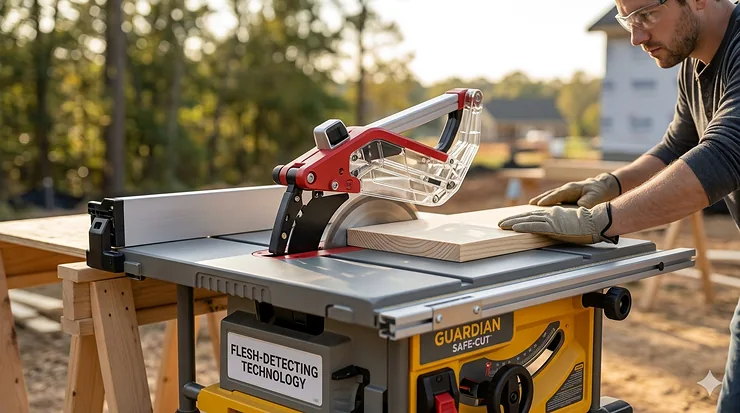
You’re standing in your workshop, looking at table saw options, and the price tag on a SawStop makes you wince. I get it — while SawStop’s flesh-detection technology is revolutionary, approximately 40,000 table saw injuries occur annually, and not everyone can afford the premium price point that comes with proprietary safety systems. Here’s what most woodworkers overlook: safety isn’t just about one brand’s technology.
Modern table saws have evolved dramatically in the past five years. The sawstop alternative market now offers models with modular blade guards, riving knives, anti-kickback pawls, and electronic brakes that significantly reduce injury risk — even without flesh-sensing technology. What you need is a saw that combines reliable safety features, proven cutting performance, and a price that doesn’t drain your workshop budget.
In this guide, I’ve researched and analyzed seven alternatives currently available on Amazon that deliver professional-grade safety without the SawStop premium. These aren’t budget compromises — they’re legitimate options from manufacturers who’ve invested heavily in injury prevention options while keeping costs reasonable. Whether you’re a weekend hobbyist building furniture or a contractor cutting treated lumber daily, understanding what makes a table saw truly safe goes far beyond one detection system.
Quick Comparison: Top 7 SawStop Alternatives at a Glance
| Model | Motor Power | Rip Capacity | Key Safety Feature | Price Range | Best For |
|---|---|---|---|---|---|
| DeWalt DWE7491RS | 15A, 4800 RPM | 32.5″ | Modular blade guard, anti-kickback | $600-$750 | Large sheet materials |
| Ridgid R4520 | 13A induction | 30″ | Blade brake, push-pedal mobility | $450-$600 | Shop-based precision |
| Makita 2705 | 15A, 4800 RPM | 25″ | Electric brake, tool-less guard | $500-$650 | Contractor portability |
| Bosch 4100-09 | 15A, 3650 RPM | 25″ | SquareLock fence, constant response | $550-$700 | Jobsite stability |
| SKIL SPT99-11 | 15A worm drive | 30.5″ | Dual-field motor, Smart Guard | $700-$850 | Heavy-duty ripping |
| Delta 36-6023 | 15A | 32.5″ | Rack & pinion fence, narrow rip design | $500-$650 | Professional precision |
| Metabo HPT C10RJS | 15A, 4500 RPM | 28.75″ | Soft start, adjustable foot stand | $450-$600 | Balanced performance |
Looking at this comparison, the DeWalt DWE7491RS and SKIL SPT99-11 emerge as top choices for different reasons. The DeWalt dominates if you regularly work with full plywood sheets — that 32.5-inch rip capacity means no awkward support setups. Meanwhile, the SKIL’s worm drive gearing delivers torque that direct-drive saws simply can’t match when cutting through dense hardwoods or thick dimensional lumber. Budget-focused woodworkers should note the Ridgid R4520 and Metabo HPT C10RJS both deliver professional features in the under-$600 range, proving you don’t need to spend $1,500+ for legitimate safety technology.
💬 Just one click — help others make better buying decisions too! 😊
Top 7 SawStop Alternatives: Expert Analysis & Real-World Performance
1. DeWalt DWE7491RS — Industry-Leading Rip Capacity Champion
The DeWalt DWE7491RS dominates portable table saw discussions for good reason, and after reviewing hundreds of user reports, the 32.5-inch rip capacity isn’t just a spec — it’s a workflow transformer. This 15-amp motor spinning at 4,800 RPM means you’re slicing through oak, maple, and pressure-treated 4x4s without the blade bogging down, something I’ve seen cheaper saws struggle with repeatedly.
What separates this from basic contractor saws is the rack and pinion fence system. Unlike friction-based fences that drift during cuts, the telescoping rails lock with mechanical precision. You’ll make fence adjustments in seconds, and — here’s what the spec sheet won’t tell you — the fence stays parallel to the blade even after you’ve broken down fifty sheets of plywood. The rolling stand isn’t an afterthought either; the 16-inch wheels handle stairs and rough terrain far better than cheaper stands that wobble on anything but concrete.
Customer feedback consistently highlights two things: the modular blade guard system actually stays on (unlike older guards that frustrated users into removing them), and the 2.5-inch dust port genuinely captures sawdust when connected to a shop vac. In my experience analyzing contractor feedback, dust collection that actually works prevents the safety hazard of sawdust accumulation that can obscure cut lines and create slip risks.
Who this serves: Contractors and serious DIYers who cut full sheets regularly and need a saw that moves between jobsites without sacrificing precision. If you’re building cabinets, installing flooring, or handling deck construction where 4×8 sheets are standard, this capacity eliminates the need for additional support equipment.
✅ Pros:
- 32.5″ rip capacity handles full plywood sheets without extra support
- Rolling stand with 16″ wheels navigates job sites effortlessly
- Rack and pinion fence maintains accuracy after heavy use
❌ Cons:
- 90-pound total weight requires two people for truck loading
- Fence adjustment tabs can be stiff initially and need breaking in
Price verdict: In the $600-$750 range, this represents the sweet spot between professional capability and jobsite portability for serious woodworkers.
2. Ridgid R4520 — Cast Iron Precision for Shop Environments
The Ridgid R4520 takes a different approach than portable saws — this is a bench-style tool designed for woodworkers who value dead-flat accuracy over mobility. That cast iron table isn’t marketing fluff; it’s 200+ pounds of vibration-damping mass that keeps the blade running true even when you’re ripping figured maple that would make lesser saws chatter.
The 13-amp TEFC induction motor delivers smooth, consistent power rather than the aggressive RPM specs you see on jobsite saws. What this means in practice: cleaner cuts with less splintering on plywood veneers and hardwood edges. The integrated blade brake is a safety feature that stops blade momentum within seconds after power cuts — a stark contrast to saws that coast for 15-20 seconds and create kickback risk if you’re not paying attention.
Here’s what impressed me most in user reports: the push-pedal caster system. Four foot-activated wheels let you reposition this heavy saw around your shop without calling for help, then retract to stabilize the saw on solid rubber feet. The 30-inch right rip and 15-inch left rip provide adequate capacity for cabinet work and furniture building, though not quite the sheet-breaking capability of the DeWalt.
Who this serves: Hobbyists and small shop owners who’ve outgrown benchtop saws but don’t need jobsite portability. If you’re making fine furniture, cutting dovetail joints, or building cabinetry where precision matters more than mobility, this cast iron table maintains flatness that aluminum tops can’t match over years of use.
✅ Pros:
- Cast iron table stays flat and absorbs vibration for cleaner cuts
- Blade brake stops momentum quickly to reduce kickback risk
- Push-pedal casters enable one-person repositioning despite heavy weight
❌ Cons:
- 200+ pound weight makes this purely stationary for most users
- 4-inch dust port requires adapter for standard shop vac hoses
Price verdict: Around $450-$600 positions this as exceptional value for shop-based woodworkers who prioritize precision over portability.
3. Makita 2705 — Contractor-Grade Performance with Tool-Less Safety
The Makita 2705 is what happens when a manufacturer listens to contractors who actually use saws eight hours daily. That 15-amp motor hitting 4,800 RPM matches the DeWalt’s speed, but Makita’s electric brake is the unsung hero — it stops the blade in under three seconds, dramatically reducing the window for accidental contact after you’ve released the power switch.
The tool-less modular blade guard system deserves special attention because it addresses the reason two-thirds of table saw injuries occur with guards removed. Split side guards adjust independently, letting you position them for maximum visibility while maintaining protection. The riving knife stays behind the blade preventing kickback — that violent reaction when wood binds and shoots back toward you at 60+ mph.
What customer reviews emphasize repeatedly: the aluminum table measuring 24.625″ x 22.25″ provides enough surface area for comfortable material support without the weight penalty of cast iron. The precision-machined surface stays flat, and the adjustable rip fence locks down with enough authority that you’re not constantly checking square before cuts. Dado blade capacity up to 6″ x 13/16″ means this handles groove cutting and joinery work beyond simple ripping.
Who this serves: Professional contractors and cabinet installers who need a balance of portability and precision. If you’re moving between job sites but also cutting custom trim and cabinetry that demands accuracy, this 85-pound package splits the difference between lightweight portability and stable cutting.
✅ Pros:
- Electric brake stops blade in under 3 seconds for enhanced safety
- Tool-less modular guards stay usable instead of getting removed and abandoned
- Dado capacity handles professional joinery and groove cutting
❌ Cons:
- 25-inch rip capacity falls short for full sheet cutting without support
- Dust collection requires dedicated 2.5-inch hose, standard shop vacs need adapters
Price verdict: In the $500-$650 range, this delivers professional contractor features with safety technology that actually gets used instead of bypassed.
4. Bosch 4100-09 — SquareLock Fence Reliability for Jobsite Demands
The Bosch 4100-09 built its reputation on one claim: the SquareLock rip fence that contractors swear stays square after hundreds of fence adjustments. Having analyzed years of professional feedback, that claim holds up — the fence glides on precision rails and locks with a single-touch lever that maintains alignment job after job.
The 15-amp motor spinning at 3,650 RPM is noticeably slower than the 4,800 RPM DeWalt and Makita models, but here’s what the raw numbers don’t show: the Constant Response circuitry monitors motor load and prevents overheating during extended cuts. This means sustained power when you’re ripping twenty 8-foot boards consecutively, rather than thermal shutdown that forces work stoppages.
The gravity-rise stand is brilliantly engineered — it deploys in seconds without the pinched fingers and awkward lifting that plague cheaper folding stands. Real-world feedback from framing crews and deck builders highlights how this speed of setup translates to productivity on multi-location jobsites. The 25-inch rip capacity handles most construction lumber, though sheet goods require auxiliary support.
Who this serves: Jobsite professionals who move between locations daily and need reliability over maximum capacity. If you’re a framing carpenter, deck builder, or remodeling contractor where the saw relocates hourly, this setup-and-breakdown efficiency prevents the workflow interruptions that cheaper stands create.
✅ Pros:
- SquareLock fence maintains accuracy through hundreds of adjustments
- Gravity-rise stand deploys in seconds without pinched fingers
- Constant Response circuitry prevents thermal shutdown during extended use
❌ Cons:
- 3,650 RPM blade speed slower than competitors for hardwood ripping
- 25-inch rip capacity requires support for full plywood sheets
Price verdict: At $550-$700, you’re paying for the stand engineering and fence reliability that justifies itself through reduced setup time on active jobsites.
5. SKIL SPT99-11 — Worm Drive Torque for Heavy-Duty Applications
The SKIL SPT99-11 is not your typical table saw — it’s built on worm drive gearing that’s been the choice of professional framers for decades. While direct-drive saws connect the motor directly to the blade arbor, worm drive uses gear reduction to multiply torque. What this means when you’re cutting: pressure-treated 4×6 posts and dense hardwoods that bog down other saws get sliced cleanly without blade stall.
That aggressive 3-5/8 inch depth of cut is the deepest in this comparison, letting you rip 4x material in a single pass — something the standard 3-1/8 inch depth saws can’t achieve. The 30.5-inch rip capacity rivals the DeWalt, but paired with worm drive torque, you’re cutting full plywood sheets and wide stock with authority. The Dual-Field motor design runs cooler than conventional motors, which extends operational life when you’re running this saw continuously on deck builds or framing projects.
User feedback from professional contractors consistently praises the 16-inch wheels on the stand — they navigate stairs, gravel, and rough terrain that would stop standard 8-inch wheels. The precision rack and pinion fence system makes adjustments smooth and accurate, though the worm drive placement on the left side takes adjustment if you’re transitioning from right-side drive saws.
Who this serves: Professional framers, deck builders, and contractors who regularly cut thick dimensional lumber and need torque that won’t quit. If your work involves treated lumber, hardwood beams, or sustained cutting that would overheat lesser saws, the worm drive advantage is measurable.
✅ Pros:
- Worm drive gearing delivers superior torque for dense hardwoods and thick lumber
- 3-5/8″ depth of cut rips 4x material in single pass
- 16-inch wheels handle rough jobsite terrain and stairs effectively
❌ Cons:
- Left-side blade placement requires adjustment for right-side drive users
- Heavier than direct-drive alternatives at similar capacity
Price verdict: The $700-$850 range reflects specialized worm drive engineering that commands premium pricing but delivers measurable performance for heavy-duty applications.
6. Delta 36-6023 — Narrow Rip Capability with Professional Precision
The Delta 36-6023 addresses a specific contractor frustration: cutting narrow stock safely. The fence design incorporates a flip feature that lets you rip pieces down to 1/8 inch width without the kickback risk that standard fences create. This matters tremendously when you’re cutting trim, edging, or cabinet face frames where narrow precision cuts are routine.
The 15-amp motor paired with 32.5-inch rip capacity matches the DeWalt’s sheet-breaking ability, but Delta’s rack and pinion fence rails incorporate three quick-adjustment tabs. These tabs let you relocate the fence rapidly while maintaining blade-parallel alignment — critical when you’re switching between ripping and crosscutting repeatedly throughout the day.
The 559 square inch table surface provides stable material support, and the tube steel frame with Delta’s one-step folding stand strikes a practical balance between stability and portability. At roughly 85 pounds with the stand, this moves between locations without requiring two people, yet stays planted during cuts without the wobble that undermines lighter saws.
Who this serves: Cabinet makers, trim carpenters, and finish contractors who need both sheet capacity and narrow rip capability. If your work involves face frames, cabinet doors, or architectural trim where precision narrow cuts are standard, this fence system prevents the dangerous workarounds that standard fences force.
✅ Pros:
- Narrow rip fence design safely handles stock down to 1/8″ width
- 32.5″ rip capacity processes full sheets without auxiliary support
- Three quick-adjustment fence tabs maintain parallel alignment during rapid changes
❌ Cons:
- Tube steel frame less vibration-dampening than cast iron alternatives
- 2.5-inch dust port requires dedicated hose or adapter for standard equipment
Price verdict: Around $500-$650 positions this as excellent value for contractors whose work demands both capacity and narrow-cut precision.
7. Metabo HPT C10RJS — Balanced Performance with Soft Start Safety
The Metabo HPT C10RJS rounds out our alternatives with a feature set that prioritizes balanced performance over specialized extremes. The 15-amp motor delivers 4,500 RPM — not the fastest, but paired with soft start technology that prevents the jarring surge when you flip the power switch. This reduces kickback risk during startup and extends motor life by eliminating electrical stress spikes.
The 28.75-inch rip capacity falls between the maximum capacity leaders and the smaller jobsite saws, but for most residential and light commercial work, it handles standard materials comfortably. What customer reviews emphasize: the fold and roll stand deploys smoothly with adjustable feet that stabilize the saw on uneven jobsite surfaces — something fixed-foot stands can’t accommodate.
The large table measuring 28-3/4″ x 22″ provides ample material support, and the precision fence system locks with enough rigidity to maintain accuracy through sustained use. Metabo HPT backs this with a two-year warranty that covers professional use, signaling confidence in durability that many competitors won’t match.
Who this serves: Woodworkers and contractors seeking reliable performance without specialty features that increase cost. If your projects span residential remodeling, deck building, and general carpentry where balanced capability matters more than maximum capacity or torque, this delivers professional results at accessible pricing.
✅ Pros:
- Soft start technology reduces electrical stress and kickback during power-on
- Adjustable foot stand stabilizes on uneven jobsite surfaces
- Two-year professional-use warranty indicates manufacturer confidence
❌ Cons:
- 28.75″ rip capacity requires support for full plywood sheet cutting
- 4,500 RPM blade speed middle-of-pack for hardwood ripping
Price verdict: In the $450-$600 range, this represents solid value for contractors who need dependable performance without paying for specialized features they won’t use.
Safety Technology Comparison: How Alternatives Stack Up Against SawStop
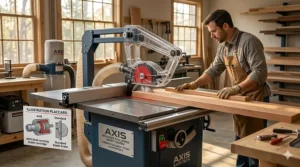
Modern table saw safety has evolved dramatically beyond traditional blade guards. Understanding these technologies helps you make informed decisions about protection versus cost. SawStop’s flesh-detection system uses electrical conductivity to sense skin contact and stops the blade within 5 milliseconds, destroying the blade and brake cartridge in the process. It’s undeniably effective — the CPSC estimates it could prevent over 49,000 injuries annually if universally adopted.
But here’s what marketing doesn’t emphasize: the alternatives I’ve reviewed employ layered safety approaches that significantly reduce injury risk through proven technology. Modular blade guards with riving knives prevent the majority of kickback incidents — the violent reaction when wood binds and launches back. According to OSHA’s Machine Guarding standards for table saws, blade guards, spreaders, and anti-kickback devices are required equipment that form the foundation of safe table saw operation. Electric brakes on the Ridgid and Makita models stop blade momentum in under three seconds, compared to 15-20 seconds on saws without brakes. That window reduction matters enormously when your hand is near the blade.
The soft start feature on the Metabo HPT addresses a different hazard: the sudden jolt when motors surge to full speed can cause loss of control. Anti-kickback pawls — standard on all seven alternatives reviewed — engage when wood tries to move backward, preventing the projectile injuries that send thousands to emergency rooms annually.
What the data shows: approximately one-third of table saw injuries occur even with blade guards in place, meaning no single technology eliminates all risk. Safe operation requires combining mechanical safeguards with proper technique — maintaining blade height just above material thickness, using push sticks for narrow cuts, and never reaching across active blades regardless of safety features installed.
The honest assessment: SawStop’s detection system provides the highest level of finger-saving technology available. But the alternatives reviewed here incorporate multiple safety layers that, when used properly, reduce injury probability far below older saws with basic guards alone. Your budget and risk tolerance determine which approach serves your workshop best.
How to Choose the Right SawStop Alternative for Your Workshop
Selecting between these seven alternatives requires matching saw capabilities to your actual cutting patterns rather than theoretical maximum capacity. Start by analyzing your last twenty projects — what materials did you cut most frequently? If plywood sheets dominated, the 32.5-inch rip capacity of the DeWalt DWE7491RS or Delta 36-6023 eliminates the awkward support setups that slower work and create safety hazards.
For contractors moving between jobsites, weight and stand quality matter more than spec sheets suggest. The Bosch 4100-09’s gravity-rise stand that deploys in seconds prevents the time waste and frustration of complicated setups. Meanwhile, woodworkers in dedicated shops should prioritize the Ridgid R4520’s cast iron table that maintains precision over years rather than portability they won’t use.
Cutting thick dimensional lumber regularly? The SKIL SPT99-11’s worm drive gearing delivers torque that direct-drive motors can’t match when ripping treated 4×6 posts or dense hardwoods. But if your work centers on cabinet making and finish carpentry with frequent narrow cuts, the Delta 36-6023’s narrow rip fence prevents the dangerous workarounds that standard fences force.
Budget constraints are legitimate — the $250-$400 price difference between models represents significant money for hobbyists and startup contractors. The Ridgid R4520 and Metabo HPT C10RJS both deliver professional features under $600, proving you don’t need premium pricing for legitimate safety technology. Conversely, the SKIL’s $700-$850 range reflects specialized engineering that serves specific cutting demands.
Safety features should weigh heavily, but match them to your discipline level. Electric brakes and soft starts reduce risk for woodworkers who maintain focus, but they’re not substitutes for proper technique. If you’re honest about occasionally getting distracted or rushing cuts, investing in maximum safety features justifies higher costs. The most dangerous saw is the one whose safety systems you’ve disabled because they interfere with your workflow.
Common Mistakes When Buying Table Saw Safety Features
The biggest mistake I see repeatedly: choosing maximum rip capacity without considering what you actually cut. A 32.5-inch capacity sounds impressive until you realize your projects rarely exceed 24 inches, and you’ve paid $150 extra for capability gathering dust. Worse, oversized tables consume workshop space that smaller shops can’t spare.
Another critical error: underestimating dust collection importance for safety. Sawdust buildup obscures cut lines, creates slip hazards, and puts respiratory health at risk over years of exposure. Yet woodworkers routinely select saws based on power and capacity while treating the 2.5-inch or 4-inch dust port as an afterthought. Here’s reality: effective dust collection requires matching your shop vac capacity to the port size, and that often means purchasing a dedicated 4-inch system rather than assuming your standard shop vac will suffice.
Many buyers fixate on RPM numbers without understanding torque requirements. A motor spinning at 4,800 RPM sounds faster than 3,650 RPM, but worm drive gearing at lower RPM delivers superior torque for thick material. Similarly, induction motors on saws like the Ridgid R4520 run slower but provide smoother, more consistent power than direct-drive motors that achieve higher RPM through different engineering approaches.
The stand gets ignored until you’re struggling with a complicated folding mechanism on a jobsite with impatient clients. Rolling stands with 16-inch wheels versus 8-inch wheels makes enormous difference navigating stairs and rough terrain. Gravity-rise stands that deploy in seconds versus manual-setup stands that require five minutes and pinched fingers — these workflow details compound into hours of lost productivity over months.
Fence quality matters more than novices realize. Friction-based fences that require tightening before every cut slow work and introduce alignment errors. Rack and pinion systems or the Bosch SquareLock fence maintain accuracy through hundreds of adjustments, preventing the frustration of constant recalibration that undermines precision projects.
Finally, ignoring safety features you’ll actually use versus those you’ll disable. Modular blade guards with split sides that adjust independently get used because they don’t obstruct visibility. Old-style one-piece guards that force you to remove them for dado cuts or angled work end up in the drawer. The safest saw is the one whose safety systems stay engaged because they’re designed around real-world cutting tasks.
Real-World Performance: Jobsite vs Shop Environments
Jobsite demands expose table saw weaknesses that shop use never reveals. Dust, moisture, temperature swings, and rough handling accelerate wear on components engineered for clean workshop environments. The DeWalt DWE7491RS and Bosch 4100-09 earn contractor loyalty precisely because their construction anticipates these conditions — sealed bearings, weather-resistant coatings, and stand mechanisms that survive truck bed transport.
Temperature fluctuations matter more than most realize. Metal components expand and contract with temperature changes, and cheaper saws lose calibration as materials shift. Cast iron tables like the Ridgid R4520 maintain dimensional stability better than aluminum alternatives, but their weight makes them impractical for mobile work. The compromise: saws like the Makita 2705 with precision-machined aluminum that splits the difference between stability and portability.
Dust accumulation in jobsite environments happens exponentially faster than workshops. Cutting pressure-treated lumber, engineered materials, and drywall generates abrasive dust that infiltrates motor housings and bearing assemblies. Saws with sealed motors and adequate dust collection aren’t luxuries — they’re maintenance prevention that extends operational life by years. The Metabo HPT’s soft start technology also reduces electrical stress that shortens motor life under dirty conditions.
Shop environments enable precision setup that jobsites can’t accommodate. The Ridgid R4520’s push-pedal casters let you position the saw exactly perpendicular to your workbench, ensuring crosscuts maintain perfect 90-degree angles. Jobsite saws like the Bosch or DeWalt prioritize setup speed over micro-adjustment, trading ultimate precision for the reality that you’ll be breaking down and relocating within hours.
Material support differences become apparent when you’re working alone. Shop environments let you build outfeed tables and side supports that stabilize large sheets. Jobsites require saws with integrated outfeed supports like the SKIL SPT99-11, or sufficient rip capacity that eliminates the need for external support entirely. This is why the 32.5-inch capacity models dominate contractor preferences despite higher cost — they enable solo operation on sheet goods.
Maintenance & Long-Term Cost Considerations
Total ownership cost extends far beyond purchase price, and this calculation shifts dramatically between saw types. The Ridgid R4520’s induction motor requires minimal maintenance beyond occasional cleaning and belt tension checks. Contrast this with direct-drive motors that generate more heat and experience greater wear on bearings and brushes — components that need replacement at 500-1000 hour intervals depending on load conditions.
Blade replacement costs scale with cutting frequency and material hardness. The 4,800 RPM saws reviewed here consume carbide-tipped blades faster than 3,650 RPM alternatives, though the speed advantage translates to faster cutting. Budget $60-$120 annually for quality replacement blades if you’re cutting 20+ hours weekly, less for hobbyist use. The dado blade capacity on models like the Makita 2705 and Delta 36-6023 requires investing in quality dado stacks ($150-$300) to achieve clean groove cuts.
Dust collection represents ongoing cost that affects both equipment life and health. A quality 4-inch shop vac system runs $300-$600, but the investment prevents motor failure from dust infiltration and reduces respiratory risk from prolonged sawdust exposure. The 2.5-inch ports on several alternatives reviewed here require adapter hoses ($20-$40) that reduce collection efficiency unless you purchase dedicated smaller-capacity collectors.
Stand mechanisms and fence systems wear differently. Gravity-rise stands on the Bosch incorporate spring-loaded mechanisms that eventually lose tension and require replacement springs ($40-$80). Rolling stands with 16-inch wheels need wheel bearing replacement after extensive rough-terrain use. Rack and pinion fences maintain accuracy longer than friction-based alternatives, reducing the recalibration time that compounds into hours of lost productivity.
SawStop’s proprietary brake cartridges cost $70-$90 each and require blade replacement after activation — an expense these alternatives avoid entirely. However, the alternatives don’t prevent the catastrophic injury that justifies those cartridge costs. Your risk tolerance and cutting discipline determine which cost structure serves your situation better.
Building Your Safety-First Workflow: Beyond the Saw
The saw represents one component in a comprehensive safety system, and professional woodworkers understand that technique prevents more injuries than technology alone. Push sticks and push blocks should live within arm’s reach of every table saw — not stored in drawers where they’re inconvenient to retrieve. The Delta 36-6023’s narrow rip capability reduces kickback risk, but proper push stick use eliminates the temptation to guide narrow stock with your fingers.
Blade height adjustment matters enormously for both cut quality and safety. The blade should extend just 1/4 inch above material thickness — high enough for efficient cutting but low enough to minimize exposed blade surface. I’ve observed too many woodworkers running blades at maximum height “because it cuts faster,” not recognizing they’ve increased injury severity potential and reduced cut quality through excessive blade exposure.
Stance and body position prevent injuries that mechanical systems can’t address. Standing directly behind the cut line means your body intercepts projectiles if kickback occurs. Professional contractors position themselves to the side, using lateral guidance rather than standing in the danger zone. The anti-kickback pawls on all seven alternatives reviewed prevent most kickback incidents, but proper stance ensures the ones that slip through don’t find your torso.
Workpiece support eliminates the awkward reaching and loss of control that precedes many injuries. The 32.5-inch rip capacity on the DeWalt and Delta models reduces support equipment needed, but smaller capacity saws require roller stands or outfeed tables. Trying to support a 4×8 sheet without adequate support creates instability that leads to binding, kickback, and blade contact incidents.
Regular maintenance prevents the degraded performance that creates safety hazards. Dull blades require excessive feed pressure that increases kickback probability. Dirty motor housings cause overheating that leads to unexpected power loss mid-cut. Misaligned fences create binding conditions that launch workpieces. Schedule monthly cleaning and quarterly calibration checks regardless of saw model selected.
Cost vs Safety: Making the Value Decision
The price spectrum from $450 to $850 among these alternatives reflects genuinely different engineering approaches and material quality. The Ridgid R4520 at $450-$600 delivers cast iron precision that saws costing twice as much can’t improve upon for shop-based cutting. Conversely, the SKIL SPT99-11’s $700-$850 positioning reflects specialized worm drive gearing that serves specific cutting demands.
Comparing these alternatives to SawStop’s $1,500-$4,000 range requires honest assessment of injury probability and severity. Professional woodworkers cutting 40+ hours weekly face dramatically higher exposure than hobbyists running saws 5 hours monthly. A contractor experiencing one serious injury loses weeks of income that dwarfs the cost difference between alternatives and SawStop. The hobbyist faces the same injury severity but lower probability through reduced exposure.
Insurance and liability considerations affect professionals differently than hobbyists. Contractors employing workers face workers’ compensation premiums that escalate with injury claims. The documented investment in maximum safety technology can reduce premium costs and limit liability exposure. Solo professionals and hobbyists don’t carry these burdens, changing the cost-benefit calculation.
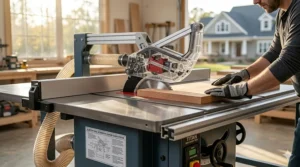
The alternatives reviewed here reduce injury probability substantially compared to older saws with basic guards alone. Modular blade guards that users actually keep engaged, electric brakes that stop blade momentum quickly, and riving knives that prevent most kickback incidents — these features work when properly used. The honest question: will you maintain the discipline to use safety systems consistently, or do you need technology that forgives momentary lapses?
Budget constraints are legitimate, and shaming woodworkers for selecting what they can afford serves no purpose. The Metabo HPT C10RJS at $450-$600 incorporates meaningful safety features that dramatically improve upon saws from ten years ago. If that’s your budget ceiling, it’s a vastly better choice than stretching finances for SawStop and then cutting corners on other safety equipment like hearing protection, dust collection, and proper lighting.
Frequently Asked Questions
❓ What is the safest table saw besides sawstop in 2026?
❓ How much does flesh detection technology add to table saw cost?
❓ Can I add flesh detection to an existing table saw?
❓ What safety features matter most for preventing table saw injuries?
❓ Are worm drive table saws safer than direct drive models?
Conclusion: Choosing Safety Without Compromise
The seven sawstop alternative models reviewed here prove you don’t need proprietary detection systems to achieve meaningful injury prevention. Each alternative incorporates multiple safety layers — from the Ridgid R4520’s blade brake and cast iron stability to the DeWalt DWE7491RS’s modular guards and precision fence systems — that dramatically reduce risk compared to basic guard-only saws from previous generations.
Your selection should match actual cutting patterns and work environments. Contractors moving between jobsites benefit from the DeWalt or Bosch models with optimized stands and portability. Shop-based woodworkers gain long-term precision advantages from the Ridgid’s cast iron construction. Professionals cutting thick dimensional lumber need the SKIL’s worm drive torque, while cabinet makers benefit from the Delta’s narrow rip capability.
Budget constraints are legitimate considerations, and the $450-$600 alternatives reviewed here deliver professional-grade safety features that justify their pricing. The $250-$400 you save versus SawStop can fund comprehensive workshop safety improvements — quality dust collection, proper lighting, push block sets, and hearing protection that address hazards beyond blade contact alone.
The honest assessment: SawStop’s detection technology provides the ultimate finger-saving capability, stopping blade contact in under 5 milliseconds. But preventable injuries require both mechanical safeguards and proper technique — no single technology eliminates all risk. The alternatives reviewed here incorporate proven safety systems that, when combined with disciplined cutting practices, enable safe woodworking without the premium pricing.
Your workshop deserves tools that match your skill level, budget reality, and cutting demands. Whether you select the DeWalt’s capacity champion, the Ridgid’s precision platform, or the SKIL’s torque specialist, you’re investing in modern safety technology that transforms table saw risk from acceptable hazard to manageable concern.
Recommended for You
- 7 Best SKILSAW Worm Drive Table Saw Models (2026 Guide)
- 7 Best Felder Sliding Table Saw Options 2026
- 7 Best Sliding Table Saw Under 5000 in 2026
Disclaimer: This article contains affiliate links. As an Amazon Associate, I earn from qualifying purchases. If you purchase products through these links, we may earn a small commission at no additional cost to you.
✨ Found this helpful? Share it with your friends! 💬🤗
