
In This Article
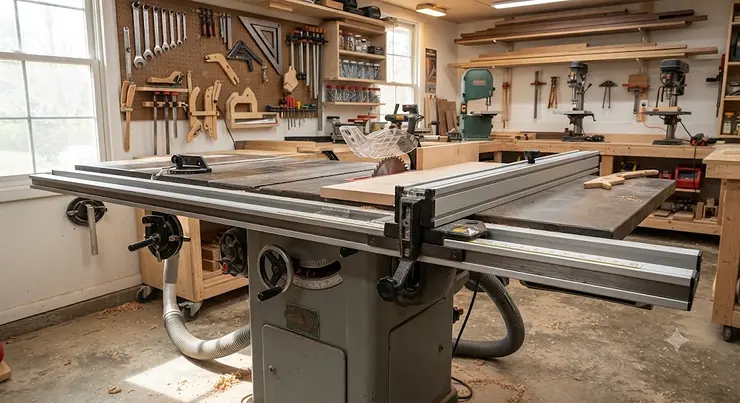
If you’ve ever watched a rip cut drift a sixteenth of an inch off line halfway down a board, you already know why top rated table saw fence upgrades for small shops matter more than almost any other tool purchase you’ll make this year. A table saw fence is, put simply, the guide bar that keeps your workpiece traveling in a straight, parallel line past the blade — and when it’s worn, wobbly, or just cheaply made, every single cut inherits its flaws. That single component decides whether your panels glue up flat or fight you at every seam. For a one-person operation or a two-bay hobby shop, the stock fence that shipped with a contractor saw is often the weakest link in the whole machine, and it’s usually the cheapest, fastest fix available.
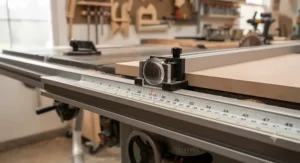
Here’s the thing nobody tells you when you buy a budget saw: the motor and the cast iron table are rarely the problem. It’s almost always the fence. A sloppy locking mechanism, a scale that lies to you by a few thousandths, a body that flexes when you push hard stock through — these are the small annoyances that snowball into wasted lumber and blown afternoons. According to the OSHA machine guarding guidance, keeping stock parallel to the fence is one of the core defenses against kickback, which tells you this isn’t just about accuracy — it’s about safety, too.
This guide walks through seven real, currently available fence systems, spanning true budget upgrades to shop-grade precision tools, and breaks down exactly who each one is built for. We’ll dig into specs, aggregated review sentiment, honest pros and cons, and the kind of practical guidance you won’t find on an Amazon listing.
Quick Comparison Table
Before the deep dive, here’s a scannable snapshot of how these seven systems stack up on the things small shop owners actually care about: rip capacity, build material, and where they land on price.
| Fence System | Rip Capacity (Right) | Body Material | Best For |
|---|---|---|---|
| Vega U26 | 26 in | Steel tube / aluminum | Vintage contractor saws, tight budgets |
| Shop Fox Classic W2005 | 30 in | Steel / plywood face | Biesemeyer-style feel on a budget |
| Shop Fox W1716 Aluma-Classic | 30 in | Aluminum / steel | One-person shops needing quick locking |
| Delta 36-T30T3 | 30 in | Steel tube / aluminum face | Upgrading a Craftsman or Delta 5000-series |
| Vega PRO 50 | 50 in | Aluminum / steel, 4 in. tall | Sheet goods and wider rips |
| Biesemeyer BC50T2 | 50 in | 14-gauge welded steel | Daily production ripping |
| INCRA TS-LS 32″ | 32 in | Steel carriage / lead screw | Joinery-grade repeatable precision |
Looking at this table, a clear pattern emerges: capacity and construction quality tend to move together, but not always in lockstep with price. The Vega U26 and Shop Fox Classic W2005 prove you can get a rigid, self-squaring fence without spending Biesemeyer money, while the INCRA TS-LS justifies its higher cost through a mechanism — a lead screw positioner — that none of the others attempt to replicate. If your shop mostly handles solid lumber under 30 inches wide, the extra capacity on the Vega PRO 50 or Biesemeyer BC50T2 may be more than you need.
💬 Just one click — help others make better buying decisions too!😊
Top 7 Table Saw Fence Upgrades for Small Shops: Expert Analysis
Small shop table saw fence recommendations tend to fall into a predictable trap: bloggers just repeat spec sheets. What actually matters is how each fence behaves under real shop conditions — daily locking and unlocking, humidity swings, and the occasional bump from a stack of plywood. Here’s the honest breakdown.
1. Vega U26 — no-drill install for vintage contractor saws
The standout here is compatibility: Vega engineered the U26 to bolt straight onto the existing holes of old Craftsman, Delta Unisaw, and Powermatic 66 tables, which means you can be cutting again in under 30 minutes. The system pairs a chrome-plated front guide tube with a threaded-rod micro-adjustment mechanism, letting you dial in a setting to within a few thousandths once the main lock is engaged — a genuinely useful feature on a fence at this price point. Reviewers on woodworking forums consistently report that the fence tracks accurately once clamped, though several also note a quirk: the fence can shift slightly the moment you tighten the lever, meaning you need to square it after clamping rather than before. Based on the spec comparison with other budget options, the U26 earns its reputation as the default recommendation for anyone reviving an old cast-iron saw rather than replacing it outright. It’s best suited to hobbyists and semi-pro shops that don’t need more than 26 inches of rip capacity, since furniture parts and cabinet components rarely exceed that width. In the low-$100s to around $250 range depending on retailer, it delivers outsized value for what you’re paying, provided you budget a little patience for the initial squaring process.
Pros:
- ✅ No-drill install on many classic contractor and cabinet saws
- ✅ True micro-adjustment via threaded rod, rare at this price
- ✅ Chrome-plated tube resists rust in humid shops
Cons:
- ❌ Fence can skew slightly when the lever is first clamped
- ❌ 26-inch capacity limits use with full sheet goods
2. Shop Fox Classic W2005 — Biesemeyer-style clone on a tight budget
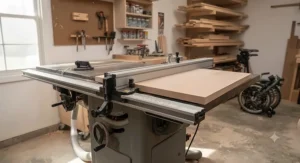
What most buyers overlook about this model is that it’s essentially a Taiwanese-made interpretation of the T-square design that made Biesemeyer famous, at a noticeably friendlier price. The fence rides on a rectangular steel tube with a plywood-faced body, and it locks to the front rail only — the same self-squaring principle used on far pricier systems. Specs alone don’t tell the story: what matters in practice is that this design means one lever locks the entire fence parallel to the blade every time, with no rear-rail fussing. Woodworking forum threads describe it as “a half step down in quality from the big boys” but still functional and reliable for years of home shop use. It’s the right call for a small-business owner who wants T-square geometry and doesn’t want to gamble on an unbranded off-brand fence, but who also isn’t ready to pay Biesemeyer prices. Expect a 30-inch rip capacity to the right of the blade, comparable to the Delta T3 below, making it a strong stand-in on Grizzly-style hybrid or cabinet saws. Pricing generally lands in the low-to-mid $200s, positioning it as one of the more approachable value fence system for small business options on this list.
Pros:
- ✅ Self-squaring T-square design at a budget-friendly price
- ✅ Front-rail-only locking simplifies daily adjustments
- ✅ Fits many Grizzly and similar cabinet-style saws directly
Cons:
- ❌ Plywood facing shows wear faster than solid aluminum faces
- ❌ Fit and finish trail true Biesemeyer-branded hardware
3. Shop Fox W1716 Aluma-Classic — cam-lock speed for one-person shops
The single-lever cam action is what sets this fence apart, and if you’re the only set of hands in your shop, that matters more than it sounds. You lock the entire 57-inch rail assembly with one motion, no rear clamp to chase down, which shaves real seconds off every setup change during a busy cutting session. The torsion-box body construction resists the twisting flex that plagues thinner sheet-metal fences, and the adjustable wear pads let you compensate for slop as the fence ages rather than replacing the whole unit. Aggregated buyer feedback across major retailers consistently praises the magnified cursor lens for quick, accurate readings, though a recurring complaint involves the drilling required for mounting on saws that don’t share Shop Fox’s hole pattern. Here’s what to weigh: for a solo operator moving between ripping, dadoing, and cross-cut setups all day, the one-hand lock is a genuine workflow upgrade, not just a nice-to-do. Its 30-inch capacity to the right of the blade covers the vast majority of furniture and cabinetry tasks. Typically found in the $300–$450 range, it slots in as a mid-tier pick between the entry-level Vega and the heavier commercial systems further down this list.
Pros:
- ✅ Single cam lever secures the whole fence in one motion
- ✅ Torsion-box body resists flex under side pressure
- ✅ Magnified cursor makes fine scale reading painless
Cons:
- ❌ May require drilling new mounting holes on non-matching saws
- ❌ Assembly and initial alignment take real time and patience
4. Delta 36-T30T3 T3 Fence System — Biesemeyer-grade upgrade path
Delta markets this as a direct bridge from a budget fence to Biesemeyer-grade performance, and the construction backs that up: a steel tube fence body rides on a solid angle-iron rail with an extruded aluminum face. What that spec actually means for you is a fence that resists the twisting and racking that causes off-square cuts on lighter aluminum-only designs, which matters most when you’re ripping thick hardwood stock. The system delivers a 30-inch max rip to the right of the blade and 13.5 inches to the left, with a 37-inch fence body riding on 57.5-inch rails — plenty of registration surface for stable cuts on longer boards. Reviewers on major retail sites and woodworking forums are largely positive, with most calling it the best bang-for-the-buck upgrade on the market, though a vocal minority flags occasional quality-control misses like faces that aren’t perfectly flat out of the box. Based on the spec comparison, this fence is built for someone upgrading a Craftsman 113, a Ridgid contractor saw, or an older Delta cabinet saw who wants professional-grade geometry without professional-grade cost. Expect pricing in the low-to-mid $200s for the 30-inch version, occasionally dipping lower during promotions.
Pros:
- ✅ Angle-iron and steel-tube build resists racking under load
- ✅ Quick-removal design works on left- or right-tilt saws
- ✅ Long rail length adds stability for longer rip cuts
Cons:
- ❌ Occasional QC issues with face flatness reported by buyers
- ❌ Packaging is frequently described as inadequate for shipping
5. Vega PRO 50 — widest rip capacity for sheet goods
If plywood and MDF sheet goods are a regular part of your workload, the standout feature here is obvious: 50 inches of rip capacity to the right of the blade and 10 inches to the left, built around a beefier 4-inch-tall fence body than the smaller Vega Utility line. What the spec sheet won’t tell you, but reviewers note, is just how heavy and rigid this fence feels in use — several owners describe installing it solo as a two-hands-full workout, which speaks to the mass that gives it its stability. The precision-cut, rolled aluminum construction with an epoxy coating and chrome-plated glide surface keeps friction low during adjustments, while the same threaded micro-adjust mechanism from the smaller Vega models carries over here. Aggregated feedback is strongly favorable on tracking accuracy and repeatability, with a recurring theme that some owners who originally wanted a Biesemeyer settled here instead simply because the price gap was too large to ignore. For a small shop that regularly breaks down full sheets, this fence closes the capacity gap without stepping up to full commercial pricing. You’ll typically find it priced in the $350–$450 range depending on the retailer and any current promotions.
Pros:
- ✅ 50-inch rip capacity handles full sheet goods comfortably
- ✅ Heavier 4-inch body adds rigidity versus smaller Vega models
- ✅ Threaded micro-adjust delivers repeatable, precise settings
Cons:
- ❌ Substantial weight makes solo installation more difficult
- ❌ Overkill capacity for shops that rarely rip beyond 30 inches
6. Biesemeyer T-Square Commercial Fence System (BC50T2) — production-shop gold standard
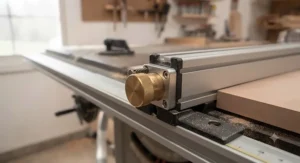
For over two decades, the name Biesemeyer has functioned almost as shorthand for “the fence serious shops actually trust,” and the construction explains why: a one-piece 14-gauge, 2-by-3-inch rectangular steel guide tube mounted to angle iron, with laminated 9-ply birch plywood facing that resists marring far better than raw MDF. The three-point locking system with dual hairline pointers is engineered to hold parallel accuracy to within roughly 0.4mm, which in practical terms means far fewer stop-and-recheck moments during long production ripping runs. Reviewers with decades of ownership frequently describe theirs as “still dead-on” after twenty-plus years of daily use, a level of longevity that’s rare in this category. Honest analysis here has to acknowledge the tradeoff: this is priced meaningfully above every other fence on this list, and some buyers of newer production runs report the current version doesn’t quite match the older commercial units in perceived build quality. Still, for a small business shop billing hours against cut accuracy, that reliability compounds daily rather than being a one-time luxury. Expect this system to land in the $400–$600 range for the 50-inch version with legs included.
Pros:
- ✅ 14-gauge welded steel body holds alignment for decades
- ✅ Three-point locking keeps parallelism within fractions of a millimeter
- ✅ Birch plywood faces resist marring better than MDF
Cons:
- ❌ Highest price point among comparably capable systems here
- ❌ Some buyers note newer units feel lighter-built than older ones
7. INCRA TS-LS 32″ — thousandths-level joinery precision
INCRA built its reputation on one mechanism, and the 32-inch TS-LS is where that mechanism meets a table saw: a patented lead-screw positioner that snaps the fence to the dead center of any 1/32-inch increment with 0.002-inch accuracy across its full range, plus a micro-adjust knob offering 0.001-inch resolution for the fussiest joinery work. What that means in practice is repeatability that borders on absurd — return to any prior setting in under five seconds with essentially zero drift, a claim that independent long-term owners on woodworking forums back up, with one noting it turned a $350 contractor saw into something that outperformed their Biesemeyer-equipped cabinet saw for joinery accuracy. The fence dismounts in under ten seconds for crosscutting operations, a genuinely clever detail that lets you use INCRA precision on both sides of the blade without owning two fences. Based on the spec comparison, this is overkill for someone who mostly rips deck boards to width, but it’s arguably the single best investment for anyone whose small shop revenue depends on tight, repeatable joinery — box joints, dados, and drawer parts that all need to match without measuring twice. Pricing typically runs in the $400–$550 range for the 32-inch system alone, climbing higher with router table or joinery accessory bundles.
Pros:
- ✅ 0.002-inch positioning accuracy across the full range
- ✅ Zero-drift repeatability speeds up repetitive joinery cuts
- ✅ Dismounts in seconds for crosscutting without losing setup
Cons:
- ❌ Premium price relative to raw rip-cutting-only fences
- ❌ Precision advantage is wasted if you rarely repeat cuts
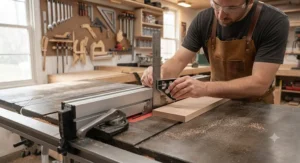
Setting Up and Calibrating Your New Fence: A Practical Guide
Buying the fence is the easy part; getting it to actually deliver on its accuracy promise takes a bit of method. Start by squaring your miter slot to the blade before you even think about mounting new rails — every fence system on this list assumes the blade itself is already parallel to the miter slots, and skipping that step means you’re calibrating a crooked reference. Once the rails are bolted on, use a dial indicator or even a reliable tape measure at the front and back of the blade to confirm the fence reads identically at both points; a 1/32-inch difference front-to-back is enough to cause burning on long rips.
During the first 30 days, the most common mistake is over-tightening mounting bolts before final alignment, which can warp lighter aluminum-bodied fences like the Shop Fox W1716 or Vega U26 ever so slightly out of true. Snug bolts by hand first, verify square, then torque them down in a crisscross pattern. For maintenance, wipe down glide surfaces weekly to keep sawdust from grinding into bushings, and apply a light coat of paste wax to any exposed rails every month or two — this single habit keeps the Vega PRO 50 and Biesemeyer BC50T2 gliding smoothly for years rather than years minus the friction that builds up from dry metal-on-metal contact. Finally, re-check your zero setting seasonally; wood shops that swing through big humidity changes will see cast iron tables expand and contract just enough to shift a fence’s true zero point by a hair.
Real Shop Scenarios: Matching the Right Fence to Your Small Shop
Consider three woodworkers, each representative of a common small shop profile. First, a weekend furniture builder working out of a two-car garage on a 40-year-old Craftsman contractor saw, budget capped around $250, who mostly builds chairs and small tables — the Vega U26 fits this exactly, since it bolts onto that old saw without drilling and its 26-inch capacity comfortably handles furniture parts. Second, a part-time cabinetmaker running a one-person shop out of a rented bay, cutting plywood carcasses several times a week and needing both speed and sheet-goods capacity — here the Vega PRO 50 or the Shop Fox W1716 Aluma-Classic make more sense, trading a bit of budget for wider rip range and faster single-hand locking between setups. Third, a small custom box and drawer business shipping repeat orders where every dovetail and finger joint needs to match the last one exactly — that’s the use case the INCRA TS-LS was built for, since its repeatability directly translates into fewer rejected parts and less time spent re-measuring.
Environment matters here too. A shop with a swinging temperature range (an uninsulated garage in a four-season climate, for instance) benefits from steel-bodied fences like the Biesemeyer BC50T2 or Delta 36-T30T3, which hold their calibration better through seasonal wood and metal movement than lighter aluminum-only designs. Frequency of use is the other deciding factor: a fence you touch twice a week can tolerate a bit more manual squaring fuss than one you’re adjusting a dozen times a day in a production environment.
How to Choose a Table Saw Fence Upgrade for Small Shops
What is a table saw fence upgrade? A table saw fence upgrade is an aftermarket replacement rail-and-fence system that bolts onto an existing saw to improve rip accuracy, locking rigidity, and measurement precision beyond what the factory-installed fence provides.
Choosing the right one for a small shop comes down to a short list of decision points, and working through them in order saves you from buying twice:
- Confirm your saw’s mounting compatibility first. Measure your existing bolt spacing and table thickness before shopping, since several systems here — including the Vega U26 and Delta 36-T30T3 — are designed to reuse existing holes on specific saw families.
- Match rip capacity to your actual material width. Don’t pay for 50 inches of capacity if you rarely rip beyond 30; the extra rail length adds cost and floor space you may not need.
- Weigh locking mechanism against your workflow speed. One-person shops running frequent setup changes benefit disproportionately from single-lever systems like the Shop Fox W1716.
- Decide how much precision you’re actually billing for. If repeatable joinery drives your revenue, the INCRA TS-LS‘s lead-screw accuracy pays for itself faster than raw rip capacity would.
- Factor in construction material for your environment. Steel-bodied fences resist humidity-driven warping better than pure aluminum designs in unconditioned shop spaces.
- Set a realistic budget band, not just a target number. A value fence system for small business use often means spending slightly more up front on something like the Shop Fox Classic W2005 to avoid a second purchase within two years.
- Read aggregated review sentiment, not just star averages. A 4.5-star product with a recurring, specific complaint (like the Vega’s clamp-shift quirk) tells you more than the number alone.
✨ Ready to Stop Fighting Your Fence?
🔍 Compare the seven upgrades above side by side, click through to check current availability, and give your saw the accuracy boost that turns wasted stock into finished projects.
Common Mistakes When Buying a Table Saw Fence Upgrade
The single most common mistake is buying based on brand reputation alone without confirming physical mounting compatibility — a Biesemeyer-style fence built for a Delta Unisaw won’t necessarily drop onto a Ridgid or Craftsman without rail modification. A second frequent misstep is underestimating installation time; several of these systems, including the Delta 36-T30T3, ship in pieces and genuinely need an afternoon, not twenty minutes, for proper alignment. Buyers also routinely skip verifying whether their table saw’s blade is already parallel to the miter slots before installing a new fence, which means even a perfect fence inherits a preexisting alignment problem. Another overlooked detail: assuming a wider rip capacity is automatically better, when in reality longer rails need more clearance behind and beside the saw, which can crowd an already tight small shop footprint. Finally, plenty of shoppers focus exclusively on price and skip reading aggregated owner feedback for recurring complaints, missing patterns like face flatness issues that show up repeatedly across otherwise well-reviewed systems.
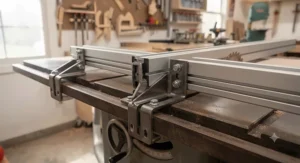
Production Ripping vs Precision Joinery: Which Fence Wins?
These two workflows pull fence design in genuinely different directions, and understanding the distinction saves you from over- or under-buying. Production ripping — cutting the same width repeatedly across dozens or hundreds of boards, common in cabinet shops and furniture production runs — rewards fences that lock fast, stay put under repeated vibration, and resist the wear of constant sliding. The Biesemeyer BC50T2 and Vega PRO 50 both excel here: their steel-heavy construction shrugs off the daily grind, and their locking systems are built for speed over fussy fine-tuning. Precision joinery, on the other hand — box joints, dados, tenons, anything requiring dead-on repeatable positioning to fractions of a thousandth — rewards a completely different feature set, namely the lead-screw and micro-adjust mechanisms found on the INCRA TS-LS.
The practical takeaway: a shop that’s purely production-focused doesn’t need thousandths-level repeatability and would be paying for precision it never uses, while a joinery-focused shop chasing perfectly matched drawer parts will find that raw rip speed matters far less than dial-in accuracy. Plenty of small shops do both, which is exactly why several woodworkers keep a fast-locking fence for rough breakdown work and reach for micro-adjust capability only when fitting joinery — a workflow the INCRA’s quick-dismount design was specifically built to support.
Table Saw Fence Upgrades for the One-Person Shop
A fence upgrade for one person shop use has to clear a different bar than one built for a crew: every setup, every lock, every scale reading happens without a second pair of hands to hold, check, or steady anything. That reality favors systems with fast, single-motion locking — the Shop Fox W1716 Aluma-Classic‘s cam lever is purpose-built for exactly this, letting a solo operator secure the entire fence without walking to a second clamp point. Weight matters more than it seems too; the Vega PRO 50‘s heft is a virtue for stability but a genuine hassle to install alone, something several owners mention explicitly in their reviews.
For a one-person operation, repeatability also compounds differently than in a multi-person shop, since there’s no one else to double-check a measurement before a cut. That’s where a system like the INCRA TS-LS earns its keep: zero-drift repeatability means you’re not relying on a second set of eyes to catch a fence that crept during a long session. Budget-conscious solo shops shouldn’t overlook the Vega U26 either — its no-drill install means a single person really can have it mounted and cutting within a lunch break, a meaningful advantage when you’re both the shop owner and the only labor on the clock.
Cost-Per-Cut Efficiency: The Real ROI of a Fence Upgrade
Cost-per-cut efficiency is the metric that actually matters once the sticker shock of a new fence wears off, and it’s rarely discussed in typical product listings. Here’s the math worth doing: a fence that saves even one ruined board per week — a common outcome when a sloppy stock fence drifts mid-cut — pays for itself in board-foot cost alone within a few months for most hardwood-focused small shops. Add in the labor time spent re-measuring, re-squaring, and second-guessing an inaccurate fence, and the real return climbs further, since that time is either billable hours lost or personal time spent fighting equipment instead of building.
Total cost of ownership also diverges sharply across this list. The Vega U26 carries the lowest upfront cost but may need periodic re-squaring after clamping, adding small recurring time costs. The Biesemeyer BC50T2 costs more initially but multiple long-term owners report decades of stable, low-maintenance use, which spreads that higher price over an unusually long service life. When you divide purchase price by expected years of accurate service and multiply by cuts-per-week, the premium options on this list frequently come out cheaper per cut than the budget systems, even though the sticker price runs in the opposite direction — a value fence system for small business use isn’t always the cheapest one on the shelf.
How a Fence Upgrade Reshapes Small Shop Workflow
On paper, a fence upgrade is a single component swap. In daily use, it changes small shop workflow in ways that ripple through an entire session. A fence that locks in one motion, like the Shop Fox W1716, shortens the dead time between setup changes, which matters enormously when a single project might call for a dozen different rip widths in an afternoon. A fence with reliable digital-adjacent repeatability, like the INCRA TS-LS, lets you batch identical cuts across multiple work sessions days apart without re-verifying the setting each time — genuinely useful when a custom order gets split across a busy week.
What most buyers overlook about this workflow shift is the reduction in “trust tax” — the mental habit of double- and triple-checking a fence you don’t fully trust, which eats minutes on every single cut whether you realize it or not. Reviewers across multiple systems on this list describe a similar arc after installing a quality fence: an initial adjustment period, followed by a noticeable drop in the number of test cuts they run before committing to a final pass. For a small shop billing against time, that shift alone can meaningfully change how many projects fit into a week.
Safety, Alignment, and Kickback: What Small Shop Owners Need to Know
A properly aligned fence isn’t just an accuracy feature — it’s a core safety component. Guidance from OSHA’s woodworking machine safety resources identifies keeping stock parallel to the fence as one of the primary defenses against kickback, since a fence that’s even slightly out of parallel can pinch a workpiece against the back of the blade and launch it toward the operator. A detailed table saw safety awareness guide from Cornell University’s Environmental Health and Safety office reinforces this, listing a properly functioning riving knife alongside blade guards and anti-kickback pawls as essential point-of-operation protections that a well-aligned fence works in tandem with, not in place of.
Practically, this means re-checking fence-to-blade parallelism isn’t optional maintenance — it’s a safety task with the same priority as checking your riving knife or blade guard before a cutting session. Systems with self-squaring, front-rail-only locking designs, like the Shop Fox Classic W2005 and Biesemeyer BC50T2, reduce the chance of accidental misalignment because there’s no rear-rail adjustment to accidentally knock out of true. Whichever fence you choose from this list, pair it with a good push stick, keep the blade guard installed for general ripping, and never stand directly in line with the blade during a cut — the fence protects your accuracy, but it’s one part of a larger safety system, not a replacement for the rest of it.
Frequently Asked Questions
❓ What is the best table saw fence upgrade for a small shop?
❓ How much does a table saw fence upgrade cost?
❓ Do aftermarket fences fit any table saw?
❓ Can I install a table saw fence upgrade myself?
❓ Does a better fence actually reduce kickback risk?
Conclusion
Choosing among these seven top rated table saw fence upgrades for small shops really comes down to matching construction and mechanism to your actual daily workload rather than chasing the biggest number on a spec sheet. Budget-conscious solo shops reviving an older saw will do best with the Vega U26 or Shop Fox Classic W2005, while shops leaning on sheet goods or production ripping should look hard at the Vega PRO 50 or Biesemeyer BC50T2. If your business lives or dies by repeatable joinery, the INCRA TS-LS is worth the premium, and if speed between setups is your biggest daily friction point, the Shop Fox W1716 Aluma-Classic‘s one-hand lock earns its keep fast. Whichever you choose, remember that a fence upgrade pays back in fewer wasted boards, fewer re-checked cuts, and — done right — a genuinely safer shop.
✨ Ready to Upgrade Your Saw’s Accuracy?
🔍 Take a closer look at whichever fence matches your shop’s workload above, click through to check current pricing and availability, and start making straighter, safer cuts on your very next project.
Recommended for You
- Precision Fence Upgrade for Accurate Rip Cuts: 7 Picks (2026)
- Universal Aftermarket Fence System for Benchtop Saws: 7 Picks (2026)
- Fence System for Hybrid Table Saws: 7 Upgrades for 2026
Disclaimer: This article contains affiliate links. As an Amazon Associate, I earn from qualifying purchases. If you purchase products through these links, we may earn a small commission at no additional cost to you.
✨ Found this helpful? Share it with your friends! 💬🤗
