
In This Article
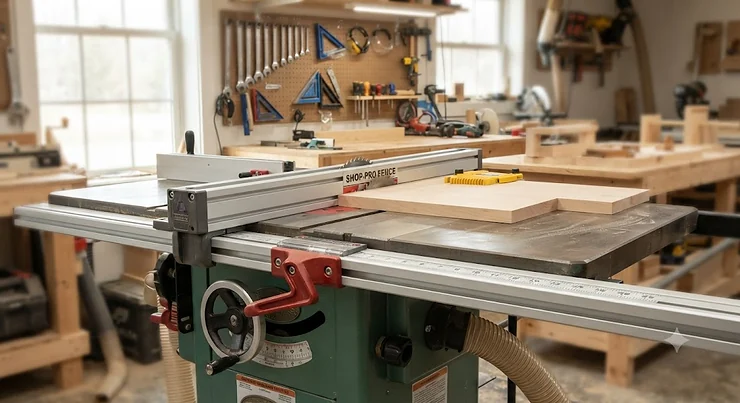
A table saw fence system under $250 is a rail-and-fence upgrade that replaces or reinforces your saw’s factory rip fence, giving you a straighter, more repeatable reference edge for under two-hundred-fifty dollars. If you’ve ever ripped a board and watched the cut wander a sixteenth of an inch wider at the far end than at the blade, you already know why this matters. That drift isn’t you — it’s usually a fence that was never quite square to begin with, or one that flexes the moment you push a two-by-four against it.

I’ve spent time digging through forum threads, manufacturer spec sheets, and aggregated review data from woodworkers who’ve actually lived with these fences for years, not just unboxed them for a photo. What shows up again and again is a split between two camps: full aftermarket fence systems that bolt on and replace your factory rails entirely, and lighter clamp-on upgrades that ride shotgun on the fence you already have. Both paths can land comfortably under $250, and both solve real problems — they just solve different ones.
This guide walks through seven real products currently sold for woodworking shops, breaks down what rip capacity and fence squareness actually mean for your cuts, and explains where aluminum extrusion fences pull ahead of steel ones. According to OSHA’s machine guarding guidance, a properly functioning rip fence is directly tied to kickback prevention — so this isn’t just a convenience upgrade, it’s a safety one too. Let’s get into the specifics.
Quick Comparison Table
| Fence System | Price Range | Rip Capacity (Right) | Construction | Best For |
|---|---|---|---|---|
| Vega U26 | $200–$230 | 26″ | Aluminum extrusion | No-drill Delta/Craftsman upgrades |
| Shop Fox W1716 | $230–$270 | 30″ | Steel + aluminum | Maximum rigidity near budget ceiling |
| BOW XT XTENDER 36″ | $120–$170 | Add-on (varies) | Anodized aluminum | Keeping your factory fence |
| POWERTEC 71489 | Under $150 | 24″ (fence face) | Aluminum extrusion | Entry-level multi-tool use |
| Woodpeckers ARF-BSCS | ~$130 | 36″ | Aluminum extrusion | Made-in-USA precision on a budget |
| DEWALT 5140136-20 | $60–$90 | Saw-dependent | Aluminum rail | Factory-fit DeWalt jobsite saws |
| Bosch 4100 OEM Fence | $100–$165 | Saw-dependent | Aluminum rail | Factory-fit Bosch 4100-series saws |
Looking at the spread above, the cheapest path to a straighter cut is almost always a factory-direct OEM replacement like the DEWALT 5140136-20 or Bosch 4100 OEM Fence Assembly, but those only work if you own the matching saw. For open compatibility, the Vega U26 and BOW XT XTENDER dominate the middle of the pack, while the Shop Fox W1716 pushes right up against the $250 ceiling in exchange for genuine torsion-box rigidity.
💬 Just one click — help others make better buying decisions too!😊
Top 7 Table Saw Fence Systems Under $250: Expert Analysis
1. Vega U26 Utility Table Saw Fence System — best no-drill install for Delta and Craftsman saws
The Vega U26 stands out because it was engineered to reuse the existing bolt holes on Delta Unisaws, Powermatic Model 66s, and most 10-inch Sears saws, which means you’re not drilling new holes into a cast-iron top you can never un-drill. The 36-inch fence bar delivers 26 inches of rip capacity to the right of the blade and 8 inches to the left, and the fence body is extruded from 6005-T6 aluminum — a grade chosen specifically because it resists the slow warping that plagues cheaper stamped-steel fences over years of shop humidity swings. Manufacturer documentation cites a roughly 15-minute install time, which lines up with what installers report in practice.
Based on the spec comparison, this fence is best suited to owners of older contractor saws who want a meaningful accuracy jump without buying full-length replacement rails. Reviewers consistently report that the aluminum faces stay true and the fit against factory bolt patterns is close, though a few owners note the front-lock cam can allow slight movement if it isn’t tightened evenly, so it rewards careful setup rather than a quick slap-and-go install. At the time of research, most retailers list the U26 in the $200–$230 range, and for a fence this compatible with vintage cast-iron saws, that’s a fair trade for the accuracy gain.
Pros:
- ✅ No-drill installation on most Delta and Craftsman saws
- ✅ Aluminum extrusion face resists long-term warping
- ✅ Quick roughly 15-minute setup per documentation
Cons:
- ❌ Some owners report front-lock deflection if under-tightened
- ❌ 26-inch rip capacity limits full sheet-good cuts
2. Shop Fox W1716 Aluma-Classic Fence — sturdiest torsion-box design near the $250 ceiling
The W1716 pairs extruded aluminum with a steel T-shape body, and the torsion-box construction is the real headline here — it’s engineered so the fence locks down with a single front cam-lever and needs no rear locking mechanism at all, which simplifies both installation and daily use. Standard 57-inch rails give you 30 inches of rip capacity to the right of the blade, and the self-adhesive measuring tape paired with a magnified cursor makes fine positioning genuinely easier to read than a bare printed scale. What most buyers overlook about this model is that the torsion-box shape is what actually prevents flex, not the material weight alone — a lighter fence with the right cross-section can out-perform a heavier one with a weaker profile.
Reviewers consistently note that fence lock-up is “rock solid” with no measurable deflection, and mounting holes commonly line up with existing OEM bolt patterns on Jet and similar contractor saws. The one recurring complaint in aggregated reviews is that printed installation instructions contain known errors, so budget extra time for trial-and-error alignment on the first setup. Price is the other catch: this one frequently sits right at or slightly above the $250 mark depending on retailer and whether you choose standard or long rails, making it more of a stretch-your-budget pick than a comfortably-under-$250 one.
Pros:
- ✅ Torsion-box design locks with zero measurable deflection
- ✅ Cam-lever needs no separate rear locking mechanism
- ✅ Magnified cursor makes scale reading noticeably easier
Cons:
- ❌ Printed instructions contain known errors per reviewers
- ❌ Price often lands right at or just above the $250 ceiling
3. BOW Products XT XTENDER 36″ Fence — best add-on upgrade that keeps your factory fence
Rather than replacing your rip fence outright, the XT XTENDER clamps directly onto the fence you already own, adding a 5-inch-tall, 1-inch-wide aluminum extrusion face with a 4-inch flat glide surface. Here’s what to weigh: this is fundamentally a height and control upgrade, not a rip-capacity upgrade, since it doesn’t extend how far right or left your fence travels. The heavy-duty anodized aluminum construction with a sandblasted finish is built to resist shop dust and moisture, and three separate T-slots on the face, top, and back accept 1/4-inch and 5/16-inch T-bolts for featherboards and stock guides.
What most buyers overlook about this category of product is that a taller fence face genuinely changes how tall stock behaves during a rip cut — more contact surface means less rocking and a straighter feed, which matters most on resaw work or anything cut on edge. Reviewers describe it as performing “exactly as advertised” on portable jobsite saws, with one common thread being satisfaction with how quickly it installs and repositions. The catch worth flagging honestly is that the T-track clamps needed to actually mount it are sold separately, so factor that into your real total cost. Typical pricing for the 36-inch fence alone lands in the $120–$170 range, before clamps.
Pros:
- ✅ Clamps onto your existing fence — no full replacement
- ✅ Anodized aluminum resists shop dust and corrosion
- ✅ Three T-slots accept featherboards and stock guides
Cons:
- ❌ Mounting T-track clamps are sold separately
- ❌ Adds face height, not additional rip-side reach
4. POWERTEC 71489 Multi T-Track Fence with Laser Measure — lightest true budget upgrade with a built-in scale
POWERTEC’s entry here is a 3-inch-high, 24-inch-long aluminum extrusion fence built around the same multi-T-track platform the company uses across router tables, drill presses, and band saws, which means one purchase can genuinely do double duty across your shop. The built-in measurement scale — with a laser-measure variant available — speeds up repeat setups, since you’re not constantly re-zeroing a tape measure clamped to the side. On paper this means less setup time per cut, which adds up fast if you’re batching parts.
Based on the spec comparison, this is the option for someone building a shop-made router table fence, a small bandsaw guide, or a jobsite table saw upgrade on a tight budget, rather than someone chasing maximum rigidity on a full-size cabinet saw. Independent, verifiable long-term review data on this specific laser-measure configuration is thinner than for the more established Vega or Shop Fox lines, so what’s confirmed is the build material and design intent rather than years of aggregated owner feedback — worth noting honestly rather than inventing a review consensus that doesn’t exist yet. Pricing across retailers keeps this comfortably in the budget tier, generally well under $150, though the laser-measure version typically costs more than the plain-scale version.
Pros:
- ✅ Genuine aluminum extrusion at an entry-level price
- ✅ Built-in scale speeds up repeat measurements
- ✅ Multi-purpose across table saws, routers, and drill presses
Cons:
- ❌ Independent long-term review data is still limited
- ❌ Shorter 24-inch length suits smaller saws only
5. Woodpeckers ARF-BSCS Compact Auxiliary Rip Fence — most precise made-in-USA clamp-on upgrade
Woodpeckers built the ARF-BSCS specifically for compact machines — jobsite table saws, vintage contractor saws, and smaller band saws — with a 36-inch, 3.5-inch-tall extruded aluminum fence that includes two 7-inch material supports for the infeed and outfeed side of the blade. The fence and clamping-block thickness measures exactly 2 inches, a small detail that matters in practice: it means you can just add 2 inches to your target dimension and set your factory fence accordingly, rather than re-learning your scale from scratch.
What the spec sheet won’t tell you, but the design intent makes clear, is that this is squarely aimed at woodworkers who already have a decent stock fence and want to correct for warp or add support, not replace the whole system. Made in the USA at the company’s Strongsville, Ohio facility, it reflects the tighter manufacturing tolerances Woodpeckers is generally known for across its squares and machinist tools, which should translate to straighter reference edges out of the box. As a newer product in the lineup, aggregated customer-review volume is still modest compared to decades-old designs like the Vega or Shop Fox, so treat the “made in USA precision” angle as a manufacturing claim worth the confidence, backed by the company’s broader reputation, rather than a mountain of owner testimonials. At $129.99 direct from the manufacturer, it’s one of the more affordable true upgrades on this list.
Pros:
- ✅ Made in USA with tighter manufacturing tolerances
- ✅ Dual material supports stabilize infeed and outfeed sides
- ✅ Installs in seconds using standard track clamps
Cons:
- ❌ Premium fit and finish carries a per-inch price premium
- ❌ Still relies on the stock fence underneath for full function

6. DEWALT 5140136-20 OEM Fence Assembly — cheapest true factory-direct fit for DeWalt jobsite saws
If you own a compatible DeWalt jobsite table saw, this OEM fence assembly is the most direct fix available: it’s the exact factory part, engineered to bolt back in without any drilling, filing, or improvisation. That direct-fit compatibility is the entire value proposition — you’re not adapting a universal design to your saw, you’re restoring the saw to its designed accuracy. Reviewers overlook the fact that a worn or bent factory fence is often the actual source of persistent rip-cut drift, not the saw’s motor or blade, and a $70-ish part swap can solve what feels like a bigger problem.
Here’s what to weigh: this isn’t a capability upgrade in the way the Vega or Shop Fox are — you’re not gaining a torsion-box design or a longer rip rail — you’re restoring factory-spec accuracy at the lowest price point on this entire list. For a beginner or budget-conscious buyer whose only complaint is “my fence used to be accurate and now it isn’t,” that’s often the smarter first move before spending $200-plus on a full aftermarket system. Listed pricing for this part typically runs in the $60–$90 range depending on retailer, making it the most affordable option here by a wide margin.
Pros:
- ✅ True factory fit with zero drilling required
- ✅ Lowest price point of any option on this list
- ✅ Keeps the rack-and-pinion adjustment familiar to DeWalt owners
Cons:
- ❌ Only fits specific DeWalt jobsite saw models
- ❌ Rip capacity is capped by the saw’s factory rail length
7. Bosch 4100 OEM Rip Fence Assembly — best factory-fit upgrade for Bosch 4100-series jobsite saws
The Bosch 4100 OEM fence assembly is the mirror image of the DeWalt pick above: a genuine factory replacement part for Bosch’s 4100-series jobsite table saws, designed to restore original accuracy without any modification to the saw itself. Reviewers consistently note that jobsite saws in this class see their fences take the brunt of daily transport and setup abuse, since these machines get loaded in and out of trucks far more than a stationary cabinet saw ever does, and the rip fence is usually the first component to develop play.
Based on the spec comparison, this is the pragmatic choice for a Bosch 4100 owner who wants their factory-specified rip capacity and squareness back without adopting an entirely new fence philosophy or drilling new mounting holes. It won’t give you the torsion-box rigidity of a Shop Fox or the extended rip capacity of a full aftermarket system, but it also won’t ask you to relearn your saw’s scale or rebuild your outfeed setup around a new fence profile. At roughly $100–$165 depending on where you buy it, it sits in the lower-middle of this list’s price range — a sensible, low-risk way to fix a known problem on a known saw.
Pros:
- ✅ Genuine OEM replacement restores factory accuracy
- ✅ Budget-friendly compared to universal aftermarket fences
- ✅ Drop-in compatibility with Bosch 4100-series saws
Cons:
- ❌ Limited to Bosch 4100-series table saw owners
- ❌ Feature set is basic compared to true aftermarket upgrades
Top 7 Products: Full Comparison
| Fence | Rip Capacity (R) | Material | Install Type | Price Range | Best For |
|---|---|---|---|---|---|
| Vega U26 | 26″ | Aluminum extrusion | No-drill (compatible saws) | $200–$230 | Delta/Craftsman upgrades |
| Shop Fox W1716 | 30″ | Steel + aluminum | Bolt-on, drilling possible | $230–$270 | Maximum rigidity |
| BOW XT XTENDER 36″ | Add-on | Anodized aluminum | Clamp-on (clamps sold separately) | $120–$170 | Keeping factory fence |
| POWERTEC 71489 | 24″ face | Aluminum extrusion | Universal T-slot mount | Under $150 | Multi-tool budget builds |
| Woodpeckers ARF-BSCS | 36″ | Aluminum extrusion | Clamp-on | ~$130 | Made-in-USA precision |
| DEWALT 5140136-20 | Saw-dependent | Aluminum rail | Direct OEM fit | $60–$90 | DeWalt jobsite saws |
| Bosch 4100 OEM Fence | Saw-dependent | Aluminum rail | Direct OEM fit | $100–$165 | Bosch 4100-series saws |
This table makes the real trade-off obvious: rip capacity and rigidity climb as price climbs, but only up to a point — the Shop Fox W1716 offers the most rip capacity and stiffness here, while the two OEM assemblies (DEWALT 5140136-20 and Bosch 4100 OEM Fence) offer the least flexibility but the lowest financial risk. If your factory fence is simply worn or damaged rather than fundamentally under-designed, an OEM swap is almost always the smarter first purchase.
✨ Don’t Miss These Exclusive Deals!
🔍 Take your table saw fence system under $250 search to the next level with these carefully selected products. Click on any highlighted item to check current pricing and availability. These fences will help you make cleaner, straighter, more confident rip cuts for years to come!
Practical Usage Guide: Installing and Maintaining Your New Fence
Getting a new fence square on day one matters more than which model you bought, so start by confirming your miter slot is parallel to the blade before you touch the fence rails at all — this is a saw-alignment step, not a fence step, and skipping it means you’ll be chasing a moving target. Once that’s confirmed, most aftermarket fences ask you to lock the fence against the miter slot (or a known-square reference board) and adjust the rail mounting points until both the front and rear measurements match within a few thousandths of an inch.
Making the Affordable Table Saw Fence Upgrade Worth It
An affordable table saw fence upgrade only pays off if you maintain it, and that maintenance is genuinely light: wipe down the rails weekly to keep sawdust from packing into the glide surfaces, apply a light coat of paste wax to any exposed aluminum or steel every few months to reduce friction, and recheck squareness monthly if the saw sees regular use, or after any time the saw gets bumped or moved. In the first 30 days, the single most common mistake is over-tightening the lock lever, which can actually pull a torsion-box fence slightly out of true — snug is usually enough, and if you’re cranking hard to get it to hold, something upstream is misaligned. A second common early mistake is measuring from the fence body itself rather than from the blade to the fence face, which introduces error equal to whatever thickness the fence material adds.
Bookmark your fence’s specific alignment procedure from the manufacturer, since torsion-box designs and clamp-on designs are checked slightly differently, and re-verify square any time you swap between a standard blade and a dado stack, since blade width changes can expose small amounts of play that go unnoticed with a single thin kerf.
Real-World Scenarios: Which Fence Fits Your Shop?
Picture a weekend hobbyist with a 15-year-old contractor saw whose stock fence has developed a persistent quarter-inch of drift over a 24-inch rip — for that person, a Vega U26 or a clamp-on option like the BOW XT XTENDER solves the actual problem without demanding a full rail replacement or new mounting holes in a saw they’re not emotionally attached to upgrading further. Contrast that with a serious hobbyist building kitchen cabinets who’s ripping full sheets of plywood weekly: that person benefits more from the 30-inch capacity and torsion-box rigidity of the Shop Fox W1716, even if it means stretching slightly past the $250 mark, because the accuracy gain compounds across dozens of cuts per project.
Finding the Right Fence System for a Stock Table Saw
A third scenario worth naming directly: someone whose fence system for a stock table saw is fundamentally fine in design but simply worn out from years of jobsite use — a contractor or serious DIYer running a DeWalt or Bosch portable saw daily. For that buyer, chasing a universal aftermarket fence is often the wrong move entirely; a factory OEM replacement like the DEWALT 5140136-20 or Bosch 4100 OEM Fence Assembly restores the exact tolerances the saw was designed around, at a third of the cost of a full aftermarket system, and without introducing a new fence profile that changes how your existing jigs and stops fit.
Problem → Solution Guide
Problem: The fence reads accurately at the front but drifts wider toward the back of a rip cut. This is almost always a parallelism issue, not a scale issue — recheck that the fence is parallel to the miter slot at both the front and rear of the table, not just visually straight.
Problem: The fence moves slightly when the lock lever is engaged. On torsion-box designs like the Shop Fox W1716, this points to an under-tightened cam or a worn pivot point; on clamp-on designs like the BOW XT XTENDER, check that the T-track clamps themselves are torqued evenly on both sides.
The Best Budget Rip Fence for Woodworking on a Tight Budget
Problem: You need better accuracy but a full $200-plus system feels like overkill for occasional use. The best budget rip fence for woodworking on an occasional-use budget is usually a clamp-on auxiliary fence like the Woodpeckers ARF-BSCS or POWERTEC 71489 — both solve the core drift problem for under $150 without committing you to a full rail replacement you may not need yet.
Problem: Your rip fence face is glossy laminate that lets stock slide unpredictably during a feed. A sacrificial UHMW or replaceable-face fence, like the options built into the Shop Fox and Delta-style T3 designs, solves this by giving you a low-friction, flat reference surface that can be swapped when it wears.
Problem: You’re not sure if your fence issue is the fence or the saw. Before buying anything, use a dial indicator or combination square to confirm the miter slot itself is parallel to the blade — if it isn’t, a new fence will just be accurately following a crooked reference.
How to Choose a Table Saw Fence System Under $250
What is a good process for choosing a table saw fence system under $250? Start by confirming your saw brand and table depth, since compatibility eliminates most options immediately, then work through these criteria in order:
- Confirm mounting compatibility first. Check whether your saw’s existing bolt holes match a no-drill option like the Vega U26, since drilling a cast-iron top is a one-way decision.
- Decide between full replacement and clamp-on. A full fence system replaces your rails entirely; a clamp-on auxiliary fence rides on top of what you have and costs less.
- Match rip capacity to your actual projects. If you rarely rip anything wider than 24 inches, paying extra for a 50-inch rail system adds cost without adding value.
- Prioritize squareness verification, not just marketing claims. Look for fences with a stated locking tolerance (often within 1/64 inch) rather than vague “precision” language.
- Weigh aluminum extrusion against steel-and-aluminum hybrids. Pure aluminum extrusion is lighter and corrosion-resistant; steel-reinforced designs typically add rigidity at the cost of weight.
- Check what’s actually included. Some listings price the fence alone, with rails, clamps, or mounting hardware sold separately — factor that into your real total.
- Read aggregated review themes, not star ratings alone. A 4.5-star average can still hide a recurring complaint about instructions or lock-up that matters more to you than to the average reviewer.
Rip Capacity Explained: What the Numbers Actually Mean
Rip capacity is simply the maximum distance between the blade and the fence when the fence is pushed to its farthest setting, and it’s calculated as fence travel plus the blade-to-miter-slot distance — a fence rated for a 50-inch rail plus a 10-inch blade offset gives you roughly 60 inches of usable rip capacity in practice. For most home and hobby woodworkers, the real-world number that matters is whether you can comfortably rip a half-sheet of plywood (24 inches) or a full sheet (48 inches) without repositioning the material mid-cut, since repositioning introduces exactly the kind of error a good fence is supposed to eliminate.
What most buyers overlook here is that more rip capacity always adds cost, weight, and required table depth, so buying more than your actual project list demands is money spent on a spec you’ll rarely use. A weekend furniture builder ripping table legs and face-frame stock rarely needs more than the 26-to-30-inch range offered by the Vega U26 or Shop Fox W1716, while someone regularly breaking down full plywood sheets should prioritize a longer-rail system even if it pushes toward the top of the $250 budget.
Fence Squareness: Why It’s the Most Overlooked Spec
Fence squareness — meaning the fence sits at a true 90-degree angle to the table and parallel to the blade along its entire length — is arguably more important than rip capacity, because a fence that’s out of square doesn’t just produce imprecise cuts, it actively causes kickback by pinching stock against the back of the blade. As OSHA notes, kickback occurs when the blade catches stock and throws it back toward the operator, and a fence angled even slightly toward the blade at the rear increases exactly that risk.
Reviewers consistently note that fence squareness drifts over time even on well-built systems, usually from repeated impacts, dust accumulation in the rail glide surfaces, or seasonal wood-table expansion on saws with wooden extension wings. Rockler’s alignment guide recommends checking this monthly using a reliable square or a dial indicator run along the miter slot, and re-checking any time the saw has been moved or bumped — advice that applies regardless of which fence system from this list you choose. On paper this means squareness isn’t a one-time setup task; it’s ongoing shop maintenance, the same way you’d periodically true up a jointer fence or check blade alignment.
Aluminum Extrusion Fence vs Steel Fence: Which Wins?
An aluminum extrusion fence, like the Vega U26, BOW XT XTENDER, POWERTEC 71489, and Woodpeckers ARF-BSCS all use, is lighter, naturally corrosion-resistant, and can be manufactured with built-in T-slots milled directly into the profile during extrusion — no separate machining step required. A steel-reinforced hybrid like the Shop Fox W1716 trades some of that weight savings for added rigidity, since steel resists flex under lateral pressure better than aluminum of the same cross-section, which matters most when you’re pushing dense hardwood stock hard against the fence face.
Here’s what to weigh: for a benchtop or jobsite saw that gets loaded in and out of a truck regularly, aluminum’s lighter weight is a genuine practical advantage, while a stationary cabinet or contractor saw that never moves benefits more from steel’s added stiffness. Neither material wins outright — Wikipedia’s overview of table saws notes that fence design varies significantly by saw class for exactly this reason, since portability and rigidity pull in opposite directions. Reviewers consistently report that well-designed aluminum extrusion fences, when built with a proper torsion-box or ribbed profile rather than a flat bar, can match steel-hybrid rigidity at a lower total weight, so the material alone isn’t the deciding factor — the cross-sectional design is.
Common Mistakes When Buying a Table Saw Fence Upgrade
The most common mistake buyers make is assuming any aftermarket fence will bolt directly onto their saw without checking table depth and existing bolt-hole spacing first, which leads to unplanned drilling into a cast-iron top that can’t be undone. A second frequent misstep is buying based on rip capacity alone while ignoring squareness tolerance specifications, when squareness is the spec most directly tied to both cut quality and kickback safety. A third mistake, common with clamp-on auxiliary fences specifically, is forgetting that mounting hardware like T-track clamps is often sold separately, which can turn an apparently budget-friendly purchase into a surprise add-on order.
Buyers also frequently skip verifying whether their table saw’s miter slot is actually parallel to the blade before installing a new fence, which means even a perfectly square fence will still produce inconsistent cuts if that underlying reference is off. Finally, many buyers chase premium features — digital readouts, laser measures, micro-adjust wheels — before confirming the fundamental mounting and rigidity of the base fence itself, when those extras add convenience but don’t fix a fence that flexes under pressure.
Long-Term Cost & Maintenance: Is the Upgrade Worth It?
Total cost of ownership on a table saw fence system under $250 is almost entirely front-loaded: outside of occasional wax and hardware replacement, these fences have no consumable parts and no ongoing costs beyond the purchase price, unlike blades or dust collection filters. Where the real ROI shows up is in reduced material waste — an inaccurate stock fence that causes even a sixteenth-inch of drift per rip cut adds up to real dollars in scrapped hardwood over a year of regular projects, and a single accurate fence purchase typically pays for itself within a handful of larger builds.
Maintenance cost is close to zero: a $10 can of paste wax and an occasional replacement of worn UHMW or laminate fence faces (where applicable) is the entire ongoing expense. Compare that to the cost of a single ruined sheet of hardwood plywood from a drifting cut, and the case for spending $130 to $250 once on a reliable fence system becomes straightforward math rather than a luxury purchase.
Features That Actually Matter (And Those That Don’t)
Features that actually matter: squareness-locking tolerance, torsion-box or ribbed cross-section design, no-drill compatibility with your specific saw, and replaceable fence faces. These directly affect cut accuracy, install difficulty, and long-term durability. Features that matter less than marketing suggests: digital readouts and laser measures are genuinely convenient but don’t improve the underlying mechanical accuracy of the fence — a $400 digital fence with a loose lock lever will still drift, while a $130 mechanical fence with a solid lock will hold true indefinitely.
What most buyers overlook is that fence color, cosmetic finish, and brand name carry essentially no functional weight compared to the cross-sectional rigidity and lock mechanism design. Reviewers consistently note that the single feature correlating most strongly with long-term satisfaction is lock-up rigidity — how solidly the fence holds position under lateral pressure — over any digital or cosmetic feature.
Table Saw Fence Systems for Different Woodworkers
A total beginner building their first few projects should prioritize the lowest-cost path to squareness, which usually means an OEM factory replacement like the DEWALT 5140136-20 if their saw is compatible, since it removes the learning curve of aligning an entirely new fence profile. An intermediate hobbyist ready to commit to the craft longer-term benefits most from a genuine aftermarket system like the Vega U26, which offers a meaningful accuracy jump without the cost of a premium cabinet-saw-grade fence. A serious hobbyist or semi-professional running frequent sheet-good breakdowns should lean toward the Shop Fox W1716’s rigidity and extended rip capacity, even at the top of this budget range, because the accuracy compounds across higher cut volume. Budget-conscious buyers of any skill level who mainly need to correct an existing fence’s drift, rather than replace it outright, are best served by a clamp-on auxiliary option like the Woodpeckers ARF-BSCS or BOW XT XTENDER.
✨ Ready to Upgrade Your Rip Cuts?
🔍 Whichever fence matches your saw and budget, check current pricing and availability before you buy — stock and pricing shift often in this category. A more accurate fence pays for itself the first time it saves a sheet of plywood from a bad cut.
Frequently Asked Questions
❓ What is the best table saw fence system under $250?
❓ Can I install an aftermarket fence without drilling my table saw?
❓ How do I know if my table saw fence is square?
❓ Does rip capacity matter more than fence squareness?
❓ Are aluminum extrusion fences as strong as steel fences?
Conclusion
Choosing a table saw fence system under $250 really comes down to matching the fix to the actual problem: a worn factory fence on a compatible saw is often best solved with a cheap OEM replacement, while a fundamentally under-built stock fence benefits more from a genuine aftermarket system like the Vega U26 or Shop Fox W1716. Squareness and rigidity matter more than flashy digital extras, and rip capacity should be sized to your real projects rather than padded for hypothetical future ones. Whichever direction you go, verifying your saw’s miter slot alignment before installing anything new will save you from chasing a moving target. A straighter fence isn’t just about tidier cuts — it’s a meaningful step toward safer ripping every time you turn the saw on.
Recommended for You
- Table Saw Blade Storage: 7 Best Solutions to Try in 2026
- Table Saw Blade Sharpening Service: 7 Blades Worth It in 2026
- Table Saw Blade Cleaner: 7 Top Picks That Actually Work (2026)
Disclaimer: This article contains affiliate links. As an Amazon Associate, I earn from qualifying purchases. If you purchase products through these links, we may earn a small commission at no additional cost to you.
✨ Found this helpful? Share it with your friends! 💬🤗
