
In This Article
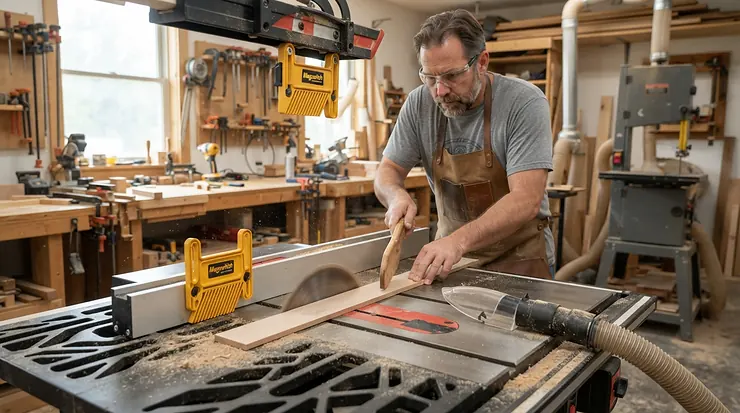
Rip a 1-1/2″ strip of walnut on a table saw without any hold-down, and you’re basically betting your knuckles against physics. Narrow stock wobbles. It drifts off the fence. And the second it pinches the blade, you’ve got a projectile moving faster than you can flinch. That’s exactly the gap a dual featherboard kit for narrow stock is built to close — two spring-fingered pressure boards, one holding the workpiece flat against the table, the other pinning it sideways against the fence, so a skinny board can’t wander in either direction.
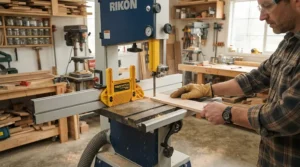
This guide skips the marketing fluff and gets into what actually matters at the point of purchase: which kits genuinely handle narrow, thin, or tall re-saw stock, which ones are glorified single featherboards in a two-pack box, and where your money is best spent whether you’re outfitting a hobby shop or a production cabinet line. We researched seven real kits currently sold for table saws, router tables, and band saws, compared their mounting hardware, adjustment range, and aggregated owner feedback, and matched each to the buyer it actually fits. Table saw kickback happens when part of the workpiece is propelled back toward the operator at high speed — and OSHA’s machine-guarding standard specifically recommends anti-kickback fingers to hold stock down during ripping, which is precisely the job a featherboard does. Let’s get into it.
Quick Comparison Table
| Kit | Mounting Style | Best For | Price Range |
|---|---|---|---|
| POWERTEC 71393 Dual Universal Featherboards | Miter slot + T-track | Budget dual-axis setup | Under $30 |
| Milescraft 1407 D/T FeatherBoard | Miter bar, dual/tandem convertible | Narrow re-saw stock | $30-$50 range |
| BOW Products FeatherPRO FP4 | Reversible AnchorPRO miter bar | EVA feather durability | $40-$60 range |
| Rockler Adjustable Table Featherboards | Expandable miter slot bar | Fine adjustment travel | $40-$55 range |
| Fulton Dual Deluxe Stackable Kit | Stackable riser blocks | Tall, narrow re-saw boards | $45-$65 range |
| SawStop RT-HFD Double Horizontal | SawStop RT miter slot | SawStop router table owners | $80-$110 range |
| Zeglavi Extended Feather Loc Board Set | Miter/T-track dual bar | Long, thin stock coverage | Under $35 |
Looking at the spread, the Milescraft 1407 D/T FeatherBoard and Fulton Dual Deluxe Stackable Kit stand out specifically for narrow-stock work because both include riser or spacer hardware designed to guide tall, skinny boards through the blade without tipping. Budget shoppers land well with the POWERTEC 71393 or Zeglavi Extended Feather Loc Board Set, while anyone running a SawStop router table extension is locked into the SawStop RT-HFD by fit alone. The middle of the pack — BOW Products FeatherPRO FP4 and Rockler Adjustable Table Featherboards — trades a little bit of price for noticeably better adjustment range and feather durability.
💬 Found a combo that fits your setup already? A quick share helps other woodworkers avoid the trial-and-error.
Top 7 Dual Featherboard Kits for Narrow Stock: Expert Analysis
1. POWERTEC 71393 Dual Universal Featherboards — cheapest true dual-axis kit
The POWERTEC 71393 is where most narrow-stock shoppers start, and it earns that position honestly. This is a genuine two-piece kit, not a single board doubled in the box copy — you get two featherboards with a Miter Lock System that seats in either a 3/4″ miter slot or standard T-track. Each board carries multiple flexible fingers under spring tension, and the hardware set includes brackets for horizontal mounting on the table plus vertical mounting on a fence-mounted track, which is exactly the configuration narrow stock needs — one board pinning the board down, the other pinning it sideways.
Based on the spec comparison, the reversible profile is the sleeper feature here: instead of buying separate left- and right-hand boards, you flip the same unit, which matters when you’re setting up dual-axis pressure on a narrow fence extension with limited real estate. What most buyers overlook about this kit is that the plastic spacers included for stacking let you convert it into a tandem setup for taller re-saw cuts later, so it’s not a dead end if your projects grow past basic ripping.
Reviewers consistently report that the orange feather fingers hold firmly on 3/4″ hardwood but flex out on stock thinner than about 1/4″, which tracks with the plastic-molded construction rather than the stiffer EVA or metal-reinforced designs further up this list. A common complaint in user reviews is that the miter bar can rock slightly in worn or non-standard slots until the lock knob is fully torqued down.
Pros:
- ✅ True two-board dual-axis kit at a genuinely low price
- ✅ Works in both miter slot and T-track without adapters
- ✅ Stackable spacers included for tandem/tall-stock use
Cons:
- ❌ Plastic fingers flex less reliably on ultra-thin stock
- ❌ Miter bar needs firm torque to eliminate slot play
Priced under $30, the POWERTEC 71393 is hard to beat as an entry point — it’s the rare budget tool that doesn’t force a compromise on the dual-axis concept itself.
2. Milescraft 1407 D/T FeatherBoard — most narrow-stock specific design
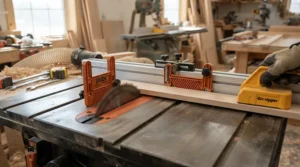
Ideal for routers, table saws, and band saws, the Milescraft 1407 D/T FeatherBoard is built for safely and precisely cutting boards on edge with exceptional balance and consistent tension. The “D/T” stands for dual/tandem, and that naming isn’t just branding — it includes two 3/4-inch and two 5/8-inch miter bars along with four T-slot bolts, letting you run it as either a dual side-by-side pair or a tandem stacked pair depending on what a given cut demands.
Here’s what to weigh: the split-rail construction is the real engineering story. The Milescraft D/T FeatherBoard has maximum holding pressure created by unique split rail construction, with a pre-load tension design that maintains consistent pressure across the face of the feather board. In practice, that pre-load means it grips thin, narrow strips — the kind that would just deflect a single-tension featherboard — without you having to crank the knob to the point of bowing the fingers. A sturdy spacer is also included specifically to guide tall stock through the blade, and the dual slide motion with S-style knobs makes installation quick.
What most buyers overlook about this model is that it started life as an upgrade to Milescraft’s original 1406 single board — the split rail and pre-load tension were carried over specifically to solve the “loose grip on thin stock” complaint that plagued cheaper designs. Reviewers consistently note that the first featherboard is intentionally shorter than the second, which speeds up alignment because you can see your reference edge before locking down the second board.
Pros:
- ✅ Split-rail pre-load tension grips thin stock evenly
- ✅ Converts between dual side-by-side and tandem stacked modes
- ✅ Includes tall-stock spacer for re-sawing narrow boards
Cons:
- ❌ Mounting hardware takes longer to configure than snap-in kits
- ❌ Yellow plastic fingers show wear faster than EVA alternatives
In the $30-$50 range depending on retailer, the Milescraft 1407 D/T FeatherBoard is the single best-argued purchase on this list if narrow stock — not general-purpose ripping — is your actual priority.
3. BOW Products FeatherPRO FP4 — most durable feather material
Most plastic-fingered featherboards eventually take a set — the fingers stop springing back and start just bending — and that’s the specific failure the BOW Products FeatherPRO FP4 was engineered against. Instead of injection-molded plastic feathers, it uses high-density EVA inserts, which flex thousands more cycles before fatiguing and won’t mark or discolor lighter woods the way some plastics do over time.
What the spec sheet won’t tell you, but reviewers note, is how much that EVA density matters specifically for narrow stock. Thin strips need firm, even pressure without so much resistance that they buckle sideways, and the denser EVA finger holds that middle ground better than softer plastic alternatives. The patented AnchorPRO hardware and 3/4″ miter bar system is also fully reversible — no dedicated left or right board — which simplifies setting up horizontal and vertical pressure featherboards on a cramped fence.
Aggregated review sentiment is largely positive on grip strength and ease of setup, with the most repeated praise being how quickly the boards seat and lock without fiddling. A recurring theme in critical reviews is that a small number of buyers needed to shim or lightly modify the miter bar to stop it popping out of oversized or worn 3/4″ slots on older saws — a fit issue tied to slot tolerance rather than the featherboard itself.
Pros:
- ✅ EVA feathers resist fatigue better than molded plastic
- ✅ Reversible AnchorPRO hardware needs no left/right pairing
- ✅ Firm, even pressure suited to narrow and thin stock
Cons:
- ❌ Some owners report a loose fit in worn or oversized slots
- ❌ Premium material pushes price above basic plastic kits
Expect to pay in the $40-$60 range for the FP4 two-pack, positioning it as the durability-focused upgrade over the POWERTEC and Milescraft options above.
4. Rockler Adjustable Table Featherboards (2-Pack) — most adjustment travel
This kit uses a two-feather system where the first feather is intentionally shorter for faster alignment and proper pressure engagement, and the bench-top slots offer 5-1/2 inches of travel for flexible positioning and optimal stock support. That 5-1/2″ travel figure matters more than it sounds — cheaper kits often max out around 3″ to 4″ of adjustment, which becomes a real limitation once you’re trying to bracket a narrow board with dual-axis pressure near the edge of a router table fence.
The set includes two Rockler Adjustable Table Featherboards, two featherboard risers, two expandable miter slot bars, two five-star knobs, and the full bolt and washer hardware needed for setup. Based on the spec comparison, the expandable miter bar is the standout: rather than relying on a fixed-width bar that either fits snugly or rattles, it expands to lock against the slot walls from the inside, which all but eliminates the side-play complaint that shows up in cheaper universal kits.
Reviewers consistently note the rubber-overmolded five-star knobs as a small but appreciated touch — they don’t bite into your palm the way bare plastic knobs do after repeated setup changes. What most buyers overlook is that the shorter first-feather design doubles as a built-in alignment gauge: you can register your narrow stock against it before tightening the second, taller board, which speeds up repeat setups on production runs.
Pros:
- ✅ 5-1/2″ of adjustment travel, well above most competitors
- ✅ Expandable miter bar eliminates slot side-play
- ✅ Rubber-overmold knobs stay comfortable on repeat use
Cons:
- ❌ Higher price than basic universal dual kits
- ❌ Riser hardware adds a setup step versus snap-in designs
Priced in the $40-$55 range, this kit earns its premium mainly through the expandable bar and travel range, both of which pay off specifically when you’re dialing in pressure on inconsistent, narrow stock.
5. Fulton Dual Deluxe Stackable Featherboards Kit — best for tall, narrow re-saw stock
Re-sawing — slicing a board into thinner slabs edge-first — is where narrow-stock instability is at its worst, because you’re feeding a tall, skinny piece through the blade with almost nothing to keep it from tipping. The Fulton Dual Deluxe kit answers that directly: when the featherboards are stacked with the included 2-inch tall spacers, you get a full 3-7/8 inches of holding-pressure height, enough to support taller stock during re-sawing on table saws and band saws.
Used separately, one board installs in a miter slot while the other mounts on a fence track, and the stacked configuration exists specifically so tall stock doesn’t teeter while being fed through. Here’s what to weigh: this is less a “dual featherboard kit” in the side-by-side sense and more a purpose-built narrow-stock bundle, since its main selling point is height-stacking rather than horizontal-plus-vertical pressure. The redesigned aluminum miter lock bar is built for a tight, secure fit on both table saws and band saws, and separating the boards for individual use later is as simple as backing the large knobs off the long bolts.
Aggregated buyer sentiment leans strongly positive on the stacking mechanism itself, with repeated mentions that it solved chronic tipping on thin re-saw slabs that previous single-board setups couldn’t handle. A fair number of reviews flag that assembly instructions could be clearer on first setup, though most report the second and third setups going quickly once the sequence clicks.
Pros:
- ✅ Stackable risers give nearly 4″ of holding height for re-saw stock
- ✅ Aluminum miter lock bar resists flex under pressure
- ✅ Separates into two independent boards when needed
Cons:
- ❌ First-time assembly has a learning curve
- ❌ Overkill if you don’t do tall re-saw work regularly
In the $45-$65 range, the Fulton Dual Deluxe Stackable Kit is the clearest answer on this list to the specific problem of narrow, tall stock wanting to tip mid-cut.
6. SawStop RT-HFD Double Horizontal Feather Board — best fit for SawStop router tables
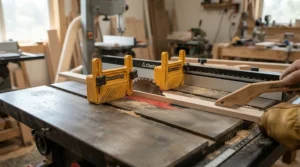
Designed to fit SawStop RT table miter slots, the RT-HFD ships with phenolic inserts graduated in size for quick-change versatility — a detail that separates it from the universal kits above. If you already own a SawStop router table extension, this is a factory-matched fit rather than an adapted-to-fit universal bar, and that tight tolerance directly benefits narrow-stock work, since there’s no slot play to compensate for before pressure even gets applied.
Based on the spec comparison, the graduated phenolic inserts are the real value-add over a generic plastic finger. Phenolic is stiffer and more dimensionally stable than injection-molded plastic, so it holds its shape under sustained clamping pressure instead of slowly deforming — a meaningful difference if this board lives permanently mounted on a production router table. What most buyers overlook is that being a “double horizontal” design, this kit is optimized for two boards working the same axis (both pressing the stock down or in), rather than the horizontal-plus-vertical dual-axis layout of the general kits above — worth knowing before you assume it replaces a true dual-axis setup.
Reviewers who own SawStop equipment consistently cite the exact-fit miter slot engagement as the deciding factor over universal alternatives, since a loose-fitting third-party bar on a precision router table extension undercuts the whole point of owning SawStop-grade equipment.
Pros:
- ✅ Purpose-built fit for SawStop RT miter slots
- ✅ Phenolic inserts resist deformation under pressure
- ✅ Graduated sizing for quick reconfiguration
Cons:
- ❌ Limited to SawStop RT-compatible tables
- ❌ Noticeably pricier than universal dual kits
At roughly $80-$110, this is the premium, brand-matched option — worth it only if you’re already inside the SawStop ecosystem, where fit tolerance outweighs price.
7. Zeglavi Extended Feather Loc Board Set — longest reach for thin, long stock
The Zeglavi Extended Feather Loc Board Set is a 6.3-inch double featherboard designed for miter gauge slots across router tables, fences, table saws, and general DIY woodworking use. The “extended” naming refers to a longer finger span than typical budget kits, which practically translates to more contact points spread along a long, narrow board — reducing the chance of a skinny strip flexing between pressure points and drifting off the fence mid-cut.
Based on the spec comparison, the extra finger length is the whole value proposition here, and it’s a smart trade-off specifically for narrow stock bundling — running long trim strips, thin edge-banding stock, or slender moulding blanks through repeated passes. What most buyers overlook is that longer fingers do mean slightly less pressure concentration per finger than a shorter, stiffer design, so it favors consistent light-to-medium stock over dense, heavy hardwood that needs firm point pressure.
A common theme in aggregated review sentiment is strong value-for-price satisfaction, with buyers frequently comparing it favorably against pricier name-brand kits for basic narrow-stock ripping tasks, while a smaller number of reviews note the plastic construction feels less substantial than metal-reinforced alternatives.
Pros:
- ✅ Extended 6.3″ fingers suit long, narrow stock
- ✅ Budget price point for a true two-board set
- ✅ Simple miter-slot mounting with no extra adapters
Cons:
- ❌ Less pressure concentration than shorter, stiffer fingers
- ❌ Build feels lighter-duty than premium alternatives
At under $35, the Zeglavi Extended Feather Loc Board Set is the pick for anyone running long, thin material who wants coverage over concentrated pressure.
Practical Usage Guide: Setting Up a Dual Featherboard Kit the Right Way
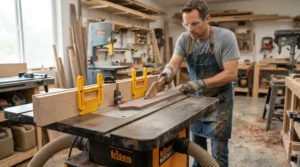
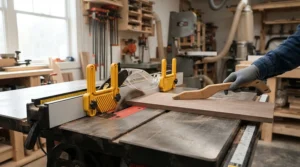
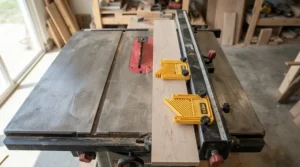
Getting a two-wheel — sorry, two-board — dual-axis setup dialed in takes about ten minutes the first time and under two the next. Start with the horizontal board: seat it in the miter slot ahead of the blade, butt your stock against the fence, and slide the board in until the fingers just barely deflect — about 1/8″ of flex, not a hard bow. Lock the knob, then feed a test piece by hand before the saw is even running to confirm smooth, one-direction travel.
The vertical board goes on next, mounted on the fence track or a shop-made auxiliary fence, positioned just ahead of the blade so it presses the stock down against the table without extending over the blade path itself. This is where dual-axis pressure earns its name — the horizontal board stops side-drift, the vertical board stops lift, and together they keep narrow stock locked to a single, predictable path.
A common first-30-days mistake is over-tightening both boards to “maximum grip,” which actually increases feed resistance so much that thin stock can stall or bind rather than glide. Aim for the lightest pressure that still stops backward pull when you tug the test piece by hand. Re-check tension monthly — Rockler’s guide to safe featherboard setup confirms the fingers are meant to flex and press the workpiece against the fence and table throughout the cut, not clamp it rigid — and swap worn or fatigued fingers before they stop springing back cleanly.
Real-World Scenarios: Who Actually Needs a Dual Featherboard Kit for Narrow Stock
The weekend furniture builder. Ripping 3/4″ edge-banding strips for a walnut dining table on a budget contractor saw, working in a one-car garage shop with maybe six hours a week of bench time. This buyer doesn’t need SawStop-grade tolerances — the POWERTEC 71393 or Zeglavi Extended Feather Loc Board Set covers the job at a price that doesn’t compete with the lumber budget.
The small-batch cabinet shop. Running narrow face-frame stock through a router table dozens of times a week, where setup speed and consistent pressure across repeated cuts directly affect labor cost. Here the Rockler Adjustable Table Featherboards‘ 5-1/2″ travel and expandable bar pay for themselves in fewer re-adjustments per shift.
The re-saw hobbyist building instrument tops. Slicing tall, narrow blanks into thin book-matched slabs on a band saw, where tipping ruins a cut instantly. This is the exact use case the Fulton Dual Deluxe Stackable Kit and its riser blocks were designed around — nearly 4″ of holding height keeps a teetering blank locked flat through the whole pass.
How to Choose a Dual Featherboard Kit for Narrow Stock
Picking the right kit comes down to matching hardware to your actual cut geometry, not just grabbing the cheapest two-pack. Work through these in order:
- Confirm your slot type first. Measure your miter slot or T-track before ordering — a kit with the wrong bar width will rattle or won’t seat at all, undermining the whole point of dual-axis pressure.
- Decide if you need stacking height. If re-sawing tall, narrow blanks is a regular task, prioritize kits with riser spacers like the Fulton over flat side-by-side designs.
- Check adjustment travel. More inches of slide range means fewer situations where your narrow stock sits just outside the sweet spot of the fingers.
- Weigh feather material against your wood species. EVA and phenolic hold pressure longer on dense hardwoods; softer plastic is fine for pine, poplar, and general shop use.
- Match brand ecosystem if relevant. SawStop, Rockler, and other proprietary-slot tables benefit from matched hardware over universal bars.
- Budget for wear parts. Feather fingers are consumables — factor in eventual replacement cost, not just the sticker price.
- Read aggregated reviews for your specific stock width, since a board that grips 3/4″ hardwood confidently may struggle on 1/4″ veneer strips.
Horizontal and Vertical Pressure Featherboards: Why the Combo Matters
A single featherboard only solves half the narrow-stock problem. Press a board down against the table and it can still drift sideways off the fence; press it sideways against the fence and it can still lift under blade torque. This is exactly why a two featherboard combo kit — one horizontal, one vertical — exists as its own category rather than shoppers just buying two identical boards.
What most buyers overlook is that the vertical board’s job isn’t really about safety alone; it’s about cut quality. Narrow stock that lifts even slightly produces an inconsistent kerf depth and can leave burn marks where it momentarily binds. Reviewers across nearly every kit in this roundup mention cleaner, more consistent cuts once they moved from a single board to a proper dual-axis setup — not just fewer close calls, but visibly straighter rip lines.
Dual Featherboard Kit vs. Single Featherboard
A single featherboard is cheaper and faster to set up, and for wide stock — anything 4″ or more — it genuinely does most of the job on its own, since wide boards have enough surface contact with the fence to resist drifting even under light pressure. Narrow stock doesn’t have that margin. A strip under 2″ wide has almost no fence contact area, so a single horizontal board leaves the top edge free to lift, chatter, or angle into the blade.
The practical trade-off is setup time and hardware cost against consistency and safety margin. Based on the spec comparison across all seven kits here, every manufacturer that specifically markets a “dual” or “tandem” version does so because narrow and tall stock is the scenario where a single board’s limitations show up fastest. If your shop cuts anything under roughly 2-1/2″ in width regularly, the dual setup isn’t a luxury upgrade — it’s closing a real, measurable gap in stock control.
Common Mistakes When Buying a Featherboard Kit
Buyers regularly default to whichever kit shows up first in search results without checking miter slot width, which leads to returns and wasted setup time. Another frequent misstep is assuming “dual” always means horizontal-plus-vertical, when some kits (like the SawStop RT-HFD) are actually double-horizontal designs meant for a different purpose — stacked height rather than crossed-axis pressure. Shoppers also tend to underestimate how much finger material matters: a plastic board that works fine on pine can genuinely underperform on dense narrow hardwood strips, leading to a false impression that “featherboards don’t really work,” when the real issue was material mismatch. Finally, skipping the adjustment-travel spec is a common oversight — a board that can’t slide far enough to reach a narrow fence position is functionally useless no matter how good its fingers are.
Narrow Workpiece Stability: What to Expect in Real-World Performance
On paper, every kit in this roundup claims to reduce kickback and improve control. In practice, narrow workpiece stability comes down to three things working together: consistent finger pressure, a snug miter bar with zero slot play, and correct positioning just ahead of the blade rather than beside it. Get all three right and a 1″ strip of maple feeds through as predictably as a 6″ board. Get any one wrong — loose bar, worn fingers, or a board mounted too far back — and narrow stock will still drift regardless of how premium the kit is.
According to woodworking safety research, kickback most commonly occurs when a workpiece pinches the blade or gets caught between the blade and the rip fence — precisely the failure mode dual-axis pressure is designed to prevent by keeping the stock riding a fixed, predictable line the entire length of the cut.
Long-Term Cost & Maintenance
Featherboard fingers are wear items, not lifetime hardware. Plastic fingers on budget kits like the POWERTEC or Zeglavi typically hold up for a year or two of moderate use before losing spring-back; EVA and phenolic options on the BOW and SawStop kits generally outlast them by a meaningful margin, which is worth factoring into total cost of ownership if you’re running a production shop rather than occasional weekend cuts. Replacement parts for name-brand kits like Milescraft are individually available, so a $30-$50 kit doesn’t become disposable once one finger wears out — you’re typically looking at a few dollars per replacement part rather than a full kit repurchase. Across the board, the real long-term cost driver isn’t the kit price, it’s how often you’re re-tensioning worn hardware versus simply swapping a $5 finger insert.
Safety, Regulations, and Compliance Guide
OSHA’s rough mill standard requires ripsaws to use a spreader to prevent material from squeezing the saw or kicking back during ripping, and specifically calls for anti-kickback fingers to hold stock down in the event the saw does kick back the material. A dual featherboard kit satisfies the practical intent of that second requirement in most shop settings, though it’s worth noting featherboards work alongside a riving knife or splitter, not as a replacement for one — OSHA’s saw-specific guidance also recommends standing to the side of the blade to avoid kickback injury and guiding stock parallel to the fence to minimize kickback risk regardless of what hold-down hardware is installed. None of the seven kits reviewed here are marketed as OSHA-certified devices in themselves — they’re accessories that support safe practice, not a substitute for blade guards, riving knives, or basic shop discipline.
Frequently Asked Questions
❓ What is a dual featherboard kit used for?
❓ Do I need two featherboards or is one enough?
❓ Can a featherboard kit fit both a table saw and a router table?
❓ How tight should featherboard pressure be on narrow stock?
❓ Do featherboard fingers wear out over time?
Conclusion
Narrow stock doesn’t forgive sloppy hold-down setups the way wide boards do, and that’s really the whole case for a dual featherboard kit for narrow stock over a single-board setup. Budget shoppers get genuinely solid dual-axis coverage from the POWERTEC 71393 or Zeglavi Extended Feather Loc Board Set. Anyone doing regular narrow-stock work should look hard at the Milescraft 1407 D/T FeatherBoard for its split-rail pre-load tension, while re-saw-focused shops get the clearest purpose-built answer from the Fulton Dual Deluxe Stackable Kit. Durability-focused buyers land well with the BOW Products FeatherPRO FP4, precision-adjustment shoppers with the Rockler Adjustable Table Featherboards, and SawStop owners simply go with the SawStop RT-HFD for the fit alone. Whichever you choose, the underlying principle stays the same: pressure from two directions, not one, is what actually keeps a thin, skinny board running true from the first inch of the cut to the last.
Recommended for You
- Featherboard For Resawing Thin Stock: 7 Picks 2026
- Adjustable Featherboard For Cabinet Saw Fence: 7 Safest Picks (2026)
- Adjustable Featherboard For Router Table And Table Saw Combo: 7 Best
Disclaimer: This article contains affiliate links. As an Amazon Associate, I earn from qualifying purchases. If you purchase products through these links, we may earn a small commission at no additional cost to you.
✨ Found this helpful? Share it with your friends! 💬🤗
